Amon Carter Museum of American Art: Hours, Parking, and Tips
The Amon Carter Museum of American Art is a free Fort Worth museum in the Cultural District, and it gives you a clean, practical art stop at 3501 Camp Bowie Blvd. If you want the official visitor page before you go, start with the museum’s plan-your-visit page and use the current hours, parking notes, and visitor rules to shape your day.
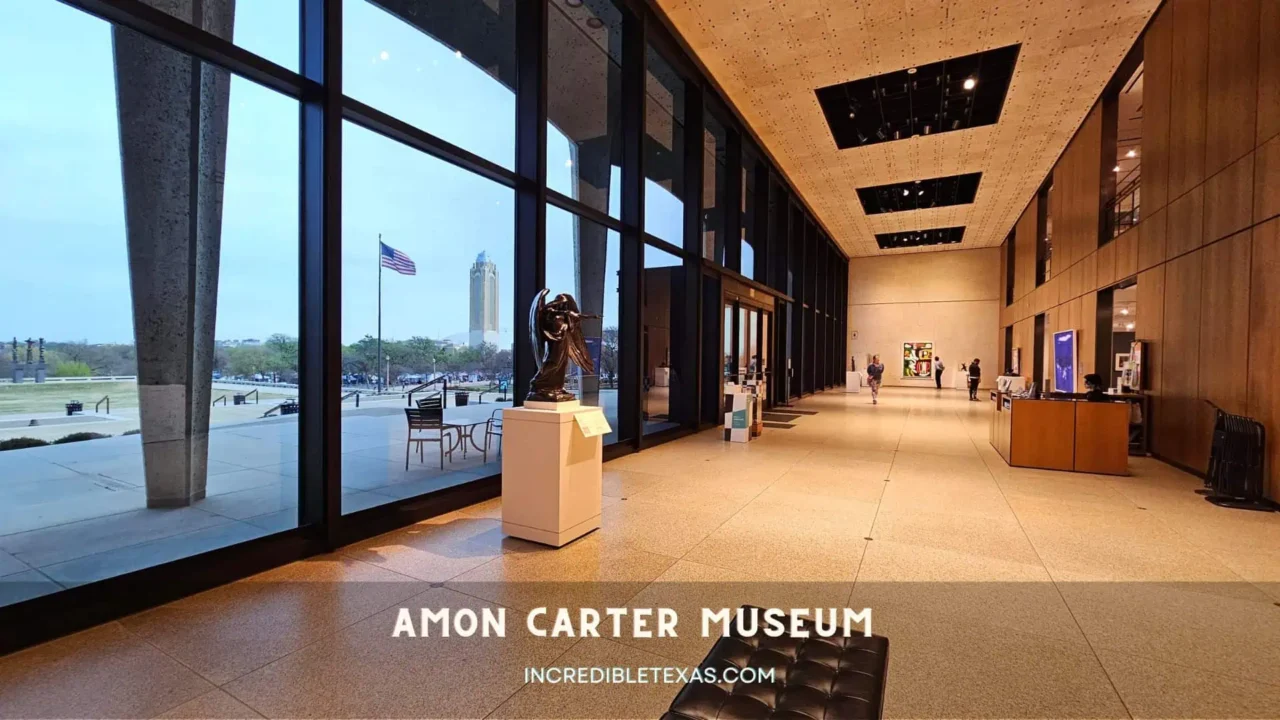
You can treat the Carter as a compact museum day instead of a long, complicated outing. The collection is large, the admission is free, and the Fort Worth location makes it easy to pair with another museum, a downtown meal, or a slow Cultural District afternoon.
You do not need a ticket, but you do need to work around the weekday and Thursday hours. It is a good fit when you want a low-friction stop with clear boundaries.
Amon Carter Museum of American Art at a Glance
| Quick fact | Current detail |
|---|---|
| Address | 3501 Camp Bowie Blvd., Fort Worth, TX 76107 |
| Admission | Free every day, though some events may have a fee |
| Hours | Sunday noon to 5 p.m.; Monday closed; Tuesday, Wednesday, Friday, and Saturday 10 a.m. to 5 p.m.; Thursday 10 a.m. to 8 p.m. |
| Parking | Free museum lot, accessible spaces, and nearby Cultural District options |
| Reservation note | Public docent-led tours are free and do not require reservations |
Admission is always free, and some events may have a fee. If you want a quick second source before heading out, the FAQ page covers the same point in the museum’s own words.
The Carter sits in the heart of Fort Worth’s Cultural District, so the museum works well as the anchor stop for a broader arts day. You get a focused collection, easy access, and enough neighborhood context to build the rest of the outing around it.
That combination matters if you are visiting Fort Worth for a weekend or if you are a local trying to fit a museum into a free afternoon. You do not need a complicated logistics plan to make the stop worthwhile.
What the Amon Carter Museum Collection Focuses On
The Carter’s story begins with Amon Carter Sr and his holdings of Frederic Remington and Charles Russell works. The museum now collects, preserves, and exhibits American art across a much wider span.
The museum says its collection includes more than 175,000 artworks. That total pushes the Carter far beyond western art alone and gives you enough material for a rich first visit.
The museum’s About page describes the collection as a way to explore the breadth and complexity of American creativity. You see that idea in paintings, sculpture, photographs, and works on paper from the 18th century to the present.
If you like art museums that stay focused without feeling small, the Carter gives you that balance. You can spend time with a few strong works instead of trying to memorize an endless checklist.
The western roots still matter, and they give the museum a clear origin story. At the same time, the collection reaches into modern and contemporary American art, so the visit feels broader than the founder’s first holdings suggest.
The collection can feel especially readable when you let the museum set your pace. You might move from western holdings to photographs or works on paper in a single sweep, and the mix helps you see how American art changes across media.
The museum never loses the western story that started it, but it does not stop there. The galleries give you American art as a living field, with enough range to move from historic pieces to later works without breaking the museum’s identity.
If you want to read the collection in a simple order, start with the western holdings and then move toward the broader American galleries. That route gives you a clear sense of how the museum expanded from a founder’s collection into a wider cultural institution.
If you are planning a second North Texas museum stop, the Carter also pairs well with the Arlington Museum of Art. The contrast helps you compare a Fort Worth American-art collection with a different local museum experience.
The scale also helps if you want a museum stop that feels calm instead of overwhelming. You can move through the galleries at your own pace, and the collection gives each room enough variety to feel distinct.
Changing exhibitions keep the visit fresh for repeat visitors. You can come back later and still feel like you are seeing a different side of the museum.
The permanent collection also makes room for slower viewing because it ties early American work to later pieces without changing the museum’s tone. You can notice the shift in subject, medium, and time period without losing the thread of the visit.
Amon Carter Museum Hours, Admission, and Best Time to Visit
The Amon Carter Museum’s current hours are straightforward. Sunday runs noon to 5 pm, Monday is closed, Tuesday, Wednesday, Friday, and Saturday are 10 am to 5 pm, and Thursday runs 10 am to 8 pm.
The best timing depends on what kind of visit you want. A weekday morning usually gives you the quietest pace.
Thursday evening works if you want the museum after work or want to keep the rest of the day open. It also gives you a little more room to turn the visit into dinner nearby afterward.
Admission is free, which makes the Carter easy to fit into a broader Fort Worth plan. You can spend your time on the galleries instead of weighing a ticket price against your available hours.
Public docent-led tours are free and do not require reservations, while private tours need to be scheduled at least three weeks in advance.
Public docent-led tours add structure without forcing a reservation. If you like context, they are an easy way to make the visit feel more complete.
Some events may have a fee, so free admission does not mean every program is free. If an event matters to your trip, check the program page before you commit to the date.
A weekday daytime visit gives you the cleanest possible plan. You get the permanent collection, the current exhibitions, and enough flexibility to stay longer if something catches your attention.
If you are building a longer Fort Worth day, a Thursday evening visit gives you more flexibility than a rushed midday stop. It also leaves a clean slot for dinner nearby after you leave the galleries.
Amon Carter Museum Parking, Directions, and Camp Bowie Construction
Parking is a practical part of the Carter visit because the Amon Carter Museum lot is free and the museum also lists accessible parking there and on the south side of the building on Lancaster Avenue. If you want the citywide overview of nearby options, the Fort Worth Cultural District parking page lays out the meter structure and the district’s public parking choices.
The museum’s Camp Bowie construction page says construction continues through 2026 and the parking lot should remain open. During construction, access to the Carter parking lot is only from Montgomery Street to eastbound Camp Bowie Boulevard.
| Parking option | Current detail |
|---|---|
| Museum lot | Free parking off Camp Bowie Blvd. |
| Accessible parking | Available in the museum lot and on the south side of the building on Lancaster Ave. |
| Backup free parking | UNT Health Science Center lots after 5 p.m. on weeknights and all day on weekends if the museum lot is full |
| Paid backup | Gendy Street lots |
| Member option | Western Heritage Garage vouchers during museum hours |
| City meters | 0-120 minutes $6; more than 120 minutes $12; more than 180 minutes $15 |
If the museum lot is full, the Carter directs you to realistic backup options instead of leaving you to guess. Free weekend parking at UNT Health Science Center lots is especially useful if you are planning a Saturday museum day.
Paid Gendy Street lots give you another nearby choice, and member vouchers for Western Heritage Garage can make sense if you are already part of the museum community. The city meter structure is also useful if you decide to park on the district streets and walk in.
The location itself keeps the day simple because the museum sits inside a district with other cultural stops within a short drive or walk. You can stay in the same neighborhood without building a separate parking strategy for every stop.
If you are visiting on a weekday, the lot and the nearby district parking work especially well together because the area is less crowded than it can feel on a busy weekend. On a Saturday, the backup options matter more, so it pays to know them before you leave home.
If you are coming from outside Fort Worth, set the museum as your map pin before you leave and then let the construction detour shape the last part of the drive. That current parking note is the part that matters most, because Camp Bowie access can change how you approach the lot.
A little planning here saves time later because you can go straight to the right side of the block instead of circling for a better approach. The parking setup is simple once you know the construction pattern, and it stays simple if you write the turn onto Montgomery Street into your directions.
Amon Carter Museum Accessibility, Bags, Food, and Photography Rules
The Carter keeps the visitor rules clear, and that helps when you want a low-stress first visit. No food or drinks belong in the galleries, and smoking is not allowed on museum grounds.
Bag rules are just as specific, because large bags, backpacks, umbrellas, tripods, and selfie sticks are not permitted in the galleries. If you like to travel with extra gear, leave it in the car before you head inside.
Photography is allowed without flash only where posted, so the simplest rule is to keep your camera quiet and watch for signs. That protects the work and keeps the galleries calmer.
The museum also offers access-focused touring options for visitors with special needs. Even if you do not use that option, it shows the Carter expects a wide range of visitors to move through the building.
Accessible parking sits in the museum lot and on the south side of the building. If mobility is part of your planning, sort that out before you think about which gallery to see first.
The visitor rules keep the galleries focused on the art instead of on extra equipment or food service. The fewer distractions you carry in, the easier it is to settle into the visit.
If you are visiting with kids, the bag and photo rules are still manageable as long as you keep the gear light. A simple setup usually works better here than trying to bring everything you might need for a whole day outdoors.
The rules also help if you are carrying a camera but want to stay focused on the art. When you keep the visit light, the galleries feel calmer and the museum feels easier to enjoy with kids or a mixed-age group.
If you are planning a group visit, that calmer setup helps everyone stay together without turning the entry process into a project. The Carter feels easier when each person knows the basic rules before the visit starts.
How to Pair the Amon Carter Museum With a Fort Worth Day
The easiest way to plan the rest of the outing is to use the Carter as the first or middle stop in a Cultural District day. If you want a wider list of options, start with best things to do in Fort Worth and use that page as the map for the rest of your plan.
You can then finish the day with Sundance Square, which gives you a simple move from museum time to food, walking, and a more urban evening. That pairing keeps the trip balanced and gives you a natural place to switch from galleries to a downtown dinner.
If you want a museum-heavy day, stay in the same part of the city and add another Fort Worth art stop rather than jumping across town. The schedule stays light and you spend your energy on the galleries instead of traffic.
The Carter also works well as a stop between lunch and a later evening plan because the museum is free and the parking options are practical. You can enter, look closely, and still leave room for the rest of Fort Worth without feeling rushed.
A second museum stop can work too, especially if you want to compare Fort Worth’s art identity with another North Texas museum. The Carter’s focused American collection gives you a different rhythm from a broader museum visit.
That contrast is especially useful if you like building a day around different museum personalities rather than around sheer size. You can leave one stop with a clear sense of what it does best and use the next stop to fill in a different angle.
The Carter is an easy indoor anchor in a city that can swing from intense heat to rain. You get a dependable stop rather than an outdoor attraction that depends on the forecast.
A district day also works because you are not locked into a single neighborhood rhythm. You can leave room for lunch, a walk, or a second stop without making the trip feel overplanned.
For locals, the museum is especially useful when you want one meaningful stop instead of a packed itinerary. A quiet visit here can still leave enough time for dinner, a walk, or a downtown plan afterward.
For visitors, the Carter gives you a strong sense of Fort Worth without forcing you to cover the whole city in one afternoon. That is a good trade if you want quality over quantity on a short trip.
If you revisit Fort Worth museums over time, the Carter is the kind of stop that rewards a second look. The collection changes enough to stay fresh, and the district location keeps it easy to return to.
Why the Carter Matters in American Art
The Amon Carter Museum matters because it grew from a personal western-art collection into a museum that presents the sweep of American creativity. The mission comes straight from Amon Carter Sr, but the result now reaches far beyond a single founder’s taste.
The museum’s place in Fort Worth gives it cultural weight beyond the galleries themselves. You are seeing one of the city’s central art institutions in the neighborhood that concentrates much of its museum identity.
If you want another point of comparison in North Texas, the Dallas Museum of Art gives you a different scale and a different museum rhythm. That contrast helps you see the Carter more clearly as a focused Fort Worth experience rather than just another general museum stop.
The Carter also sits in conversation with regional events. The Main Street Fort Worth Arts Festival shows how Fort Worth’s arts calendar stays active.
The collection itself gives the museum staying power because it covers paintings, sculpture, photographs, and works on paper from many periods of American art. That breadth lets the Carter speak to both casual visitors and people who care deeply about the history of American visual culture.
You also get a museum that does not ask you to choose between history and a good visitor experience. Free admission, clear hours, and straightforward parking keep the practical side easy.
The collection gives the day enough intellectual weight to feel worthwhile. You can come for the logistics and stay for the art, or you can come for the art and appreciate how easy the museum makes the rest of the visit.
The Amon Carter Museum handles both a quick visit and a deeper look without changing the basic plan. A visitor who wants a short stop and a visitor who wants a longer stay can both leave with a clear sense of the place.
The range also gives the Carter staying power in Fort Worth. It feels specific enough to remember and flexible enough to fit a wide variety of trips.
The Cultural District setting gives you a useful starting point if you are comparing Fort Worth art stops. It is a strong place to build a museum afternoon without turning the day into a long drive.
The museum’s role in the city is practical as well as cultural. It gives you a clear art stop that can stand on its own or fit into a much larger Fort Worth day without losing its identity.
For a first-time Fort Worth visitor, the museum works as an introduction to the city’s art side without requiring a huge time commitment. For a repeat visitor, it gives you a reason to slow down and look again.
Amon Carter Museum FAQ
Is the Amon Carter Museum of American Art free?
Yes, admission is free every day. The museum notes that some events may have a fee, so a special program can still carry its own ticket or registration rules.
What are the Amon Carter Museum’s hours?
- Sunday: noon to 5 pm.
- Monday: closed.
- Tuesday, Wednesday, Friday, and Saturday: 10 am to 5 pm.
- Thursday: 10 am to 8 pm.
Where is the Amon Carter Museum located?
The museum is at 3501 Camp Bowie Blvd., Fort Worth, TX 76107. It sits in Fort Worth’s Cultural District, so you can pair it with nearby arts stops and downtown plans.
What is the Amon Carter Museum known for?
The museum is known for American art, a collection that began with Amon Carter Sr’s Remington and Russell holdings, and a broader collection that now includes more than 175,000 artworks. You also get a museum that sits squarely in the heart of Fort Worth’s Cultural District.
Who founded the Amon Carter Museum of American Art?
The museum was established through the generosity of Amon Carter Sr to house his collection and to collect, preserve, and exhibit American art. His name stays on the building, but the institution now serves a much wider range of American art visitors.