Alamo San Antonio TX: Hours, Tickets, Parking & Tips
Alamo San Antonio TX sits at the center of downtown San Antonio and remains one of the easiest historic landmarks in Texas to plan around. The core site is free to visit, but a free timed entry ticket is required for the Church, and the exhibit center and guided experiences use separate tickets and hours.
The official Alamo site keeps the current visit details on its main visitor pages, including hours, tickets, parking, and access rules at thealamo.org. For a first visit, the practical takeaway is simple: the Church, Long Barrack, and grounds are free, while the exhibit center and specialty experiences add a ticketed layer for visitors who want more history in one stop.
| Quick Fact | Current Detail |
|---|---|
| Address | 300 Alamo Plaza, San Antonio, TX 78205 |
| Main hours | Open daily 9:00 a.m. to 5:30 p.m. |
| Collections Center hours | Open daily 9:00 a.m. to 5:00 p.m.; last entry at 4:00 p.m. |
| Church, Long Barrack, and grounds | Free |
| Church entry | Free timed ticket required |
| Parking | Not provided by the Alamo; public lots, garages, and street parking are nearby |
| Closed | Christmas Day |
The Alamo also fits naturally into a downtown route that includes the River Walk, historic plazas, and mission-district stops. San Antonio itineraries often pair the site with a meal, a walking route, or another landmark without adding much drive time.
Alamo San Antonio TX Hours, Tickets, and Reservations
According to the official FAQ page, the grounds, Long Barrack, and Church are free. The Church uses free timed entry tickets, and the Alamo Exhibit in the Ralston Family Collections Center uses timed admission with separate pricing.
According to the official FAQ page, the Alamo is open daily from 9:00 am to 5:30 pm, and the Collections Center is open daily from 9:00 am to 5:00 pm.
The last entry for the site is 30 minutes before closing. The site closes on Christmas Day.
The current details are published on the official Alamo FAQ page online.
| Ticket Type | Current Detail |
|---|---|
| Alamo Church | Free timed entry ticket required |
| Alamo grounds and Long Barrack | Free |
| Ralston Family Collections Center | Adult $14; child 12 and under $10; adult military with ID $12; child military 12 and under with ID $9; Friends of the Alamo members free |
| Timed exhibit entry | Available every 15 minutes from 9:00 a.m. to 4:00 p.m. |
| Guided tour and audio tour | Available separately through the Alamo ticketing system |
According to the Alamo exhibit page, the Ralston Family Collections Center adds a museum-style layer with preserved artifacts, interpretation, and a 300-year span of history. Visitors who want the fullest version of the site should plan on the exhibit, not just the plaza.
Visitors who are planning a longer San Antonio stay can use the Alamo as the first anchor in a full downtown day, then add a River Walk meal, another mission, or a museum afterward. The timing becomes much easier once the Church reservation and exhibit window are set first.
The Alamo also offers optional guided experiences and audio tours, which let visitors choose between a faster self-guided stop and a more structured visit. That flexibility helps when the trip is part of a larger city plan rather than the only stop on the itinerary.
San Antonio itineraries often group the Alamo with other downtown and mission-district stops. The city’s historic core makes that mix easy to plan in a single day.
What Visitors Can See Inside Alamo San Antonio TX
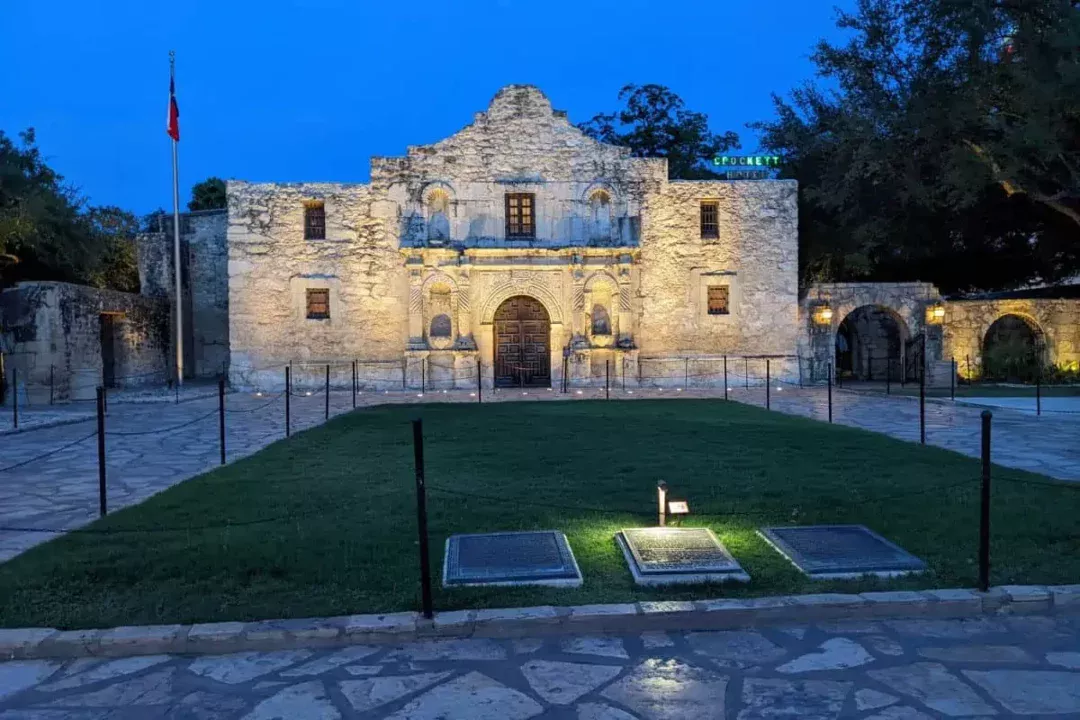
The Alamo San Antonio TX is more than a single church facade. Visitors can walk through the Church, the Long Barrack, the grounds, the gardens, and the exhibit center, then connect those spaces to the broader story of Mission San Antonio de Valero and the Texas Revolution.
The historic core works best when visitors slow down enough to notice the contrast between the preserved structures and the interpretive spaces around them. The Church and Long Barrack hold the site’s most recognizable architecture, while the exhibit center adds artifact-driven context and a newer way to read the history of the site.
Visitors who spend time in the exhibit center will see how the site’s story moves from mission life to battle memory and then to preservation work. The added context makes the Church feel less like a single monument and more like the center of a larger historical landscape.
- The Alamo Church: the site’s most iconic structure and the center of the free timed-entry reservation.
- The Long Barrack: one of the oldest surviving structures on the grounds and a major interpretive stop.
- The Ralston Family Collections Center: the home of the ticketed Alamo Exhibit and major artifact displays.
- The living history encampment: demonstrations and historical interpretation that bring the daily life of the period into focus.
- The gardens and grounds: a calmer part of the visit that helps break up the heavier history stops.
Visitors who want to see how the Alamo fits into the larger mission network can continue beyond downtown and compare it with Mission San José and Mission Concepción. Mission San José usually gives visitors the strongest sense of scale, while Mission Concepción feels quieter and older in tone.
Together those missions show how the story extends beyond the plaza without asking visitors to cross half the city. They also make the Alamo easier to place within the wider Spanish colonial history of San Antonio.
The exhibit pairs best with the open-air monument because the museum layer explains the objects and names that the plaza alone cannot cover. A visitor who wants the fastest possible stop can still stay on the grounds, but the exhibit gives the site a much fuller historical range.
Visitors who care about the battle history should still allow time for the earlier mission period. The site’s story begins long before 1836, and the deeper background makes the battle-era interpretation easier to follow once the visit reaches the famous final stand.
The Alamo is part of Texas’s only UNESCO World Heritage Site, so it belongs in the same historical conversation as the wider San Antonio Missions landscape. The National Park Service explains that connection on the San Antonio Missions World Heritage Site page.
Alamo San Antonio TX Parking, Directions, and Arrival Tips
The Alamo San Antonio TX does not provide its own parking, so visitors need to plan for downtown San Antonio parking instead. According to the official FAQ, nearby options include city-owned garages, surface lots, and street parking, and visitors can reserve and pay for parking in advance through SP+ Parking or ParkWhiz.
That downtown setup is helpful for visitors who want to combine the Alamo with the River Walk, a meal, or another nearby stop. The short walking distance between central landmarks makes the area easier to use on foot than a typical suburban attraction cluster.
Visitors arriving by car should treat the Alamo as a downtown stop rather than a stand-alone parking destination. A confirmed reservation, an early arrival window, and a parking plan already in hand make the visit smoother than a last-minute search after traffic gets busy around Alamo Plaza.
- Check parking before arrival: downtown garages and lots are easier to use when the reservation is already saved.
- Allow extra time: downtown traffic and pedestrian movement can slow the final approach.
- Walking works well: the Alamo pairs naturally with nearby plazas, the River Walk, and lunch stops.
- Keep ticket timing in mind: the Church reservation and exhibit entry both work better when arrival is not rushed.
The official visit pages make it clear that the Alamo is not a parking-centered attraction. It is a downtown historic site, and the best approach is to park once, walk the core area, and treat the rest of the visit as a short city outing rather than a single isolated stop.
That approach also keeps the visit close to the River Walk, nearby churches, and museum stops that sit within a short walk or a short ride away. Downtown mobility matters here as much as the parking choice itself.
Visitors who want a fuller downtown route can combine the Alamo with a River Walk stroll afterward. The San Antonio River Walk guide is the easiest companion piece for that kind of plan because it keeps the day in the same walkable part of the city.
Alamo San Antonio TX Accessibility, Rules, and Visitor Comfort
The Alamo San Antonio TX’s accessibility pages are useful because they spell out the practical side of a historic site visit. The grounds, Long Barrack, and Church all require different levels of care in a 300-year-old setting, so visitors should expect some preserved surfaces and managed access points rather than a modern museum layout from end to end.
According to the Alamo accessibility page, accessible public areas are available, wheelchairs can be requested, and interpretive support includes Braille scripts and ASL assistance with advance notice. The Church has one wheeled access doorway, and staff support helps visitors move through the historic spaces without treating accessibility as an afterthought.
Visitors can review those details on the official accessibility and access page. That page is especially useful for families, older visitors, and anyone who wants to know what the preserved surfaces and historic buildings mean in practice before arriving.
- Wheelchairs: available by request.
- Church access: one wheeled access doorway with staff assistance.
- Braille support: Braille guides and scripts are available.
- ASL support: interpreter access is available with advance notice.
- Service animals: permitted in the grounds, Church, and historic buildings.
The site rules also matter for comfort and planning. Food and drink are not permitted inside the historic buildings, and the Alamo allows trained service animals but not pets inside the Church or other protected spaces.
Other common sense rules remain in place as well. Flash photography, smoking, vaping, alcohol, and drones do not belong in a historic monument setting, and visitors should assume the same level of care they would use in any protected heritage site.
The FAQ says guests should plan ahead for reservations and respect the site’s preservation rules. The site combines high visitor traffic with historic structures that need lighter handling than a modern attraction.
Visitors who carry less, reserve early, and arrive with enough time usually move through the Church and exhibit center more easily.
How Long to Stay and Best Time to Go
A practical planning window for Alamo San Antonio TX is about 90 minutes to half a day, depending on how much of the ticketed experience visitors add. A quick historic stop can move faster, while a Church reservation, exhibit visit, and guided tour can easily expand the stop into a fuller downtown outing.
The site opens at 9:00 a.m., so early arrivals can move through the Church and grounds before the day feels crowded. That timing also works well for visitors who want to pair the Alamo with lunch or a River Walk stop without running into the busiest part of the afternoon.
Late afternoon can also work well, especially when the plan is a shorter historic stop rather than a museum-heavy day. Visitors who like a calmer pace often find that the final few hours before closing are easier to shape around photos, a self-guided walk, and a nearby dinner.
The main advantage of the Alamo is that it does not demand an all-day commitment. That makes it an easy anchor for visitors who are already in downtown San Antonio for food, history, or a broader city weekend.
Readers building a larger city itinerary can use the Alamo as the centerpiece, then add the rest of the trip around it. The broader San Antonio attractions guide is the fastest way to see how the site fits with other downtown stops, family activities, and mission-area visits.
Weather can also influence the visit. The grounds are easiest to enjoy when temperatures are comfortable, while the open-air portions feel much longer during summer heat or heavy weekend crowds.
For visitors who care most about the history, a slower stop usually pays off more than a rushed photo pass. The Church, Long Barrack, and exhibit center each reward time with a different layer of the story, and the site feels more complete when those layers are not skipped.
A slower visit also leaves more time for photos and the exhibit.
Nearby Stops That Fit a Downtown Day
The Alamo San Antonio TX works especially well as the first stop in a downtown San Antonio day because several other landmarks sit close enough to pair naturally with it. The River Walk, San Fernando Cathedral, and the city’s mission trail all help turn a short historic visit into a fuller day without long drive times.
The easiest nearby pairing is the River Walk. Visitors who want to extend the day into dining, walking, or a scenic riverfront route can use the San Antonio River Walk guide to move from the Alamo into the rest of downtown without starting over from scratch.
San Fernando Cathedral is another strong add-on because it keeps the visit in the same historic zone while changing the mood from battlefield memory to living parish and downtown landmark. Visitors can follow the Alamo with the San Fernando Cathedral guide for a compact historic route that stays close to the plaza core.
Visitors who want a deeper mission-day plan can also step out toward Mission San José and Mission Concepción after the downtown stop. Mission San José and Mission Concepción add scale, quieter settings, and a stronger sense of the wider mission system.
That route works especially well for visitors who already know they want the battle history at the Alamo and the broader Spanish colonial story in the same day. It turns a downtown stop into a fuller San Antonio history day without creating a complicated drive.
The Alamo’s place in the San Antonio Missions network becomes even clearer when the visit expands beyond the plaza. The National Park Service explains the larger World Heritage connection on the San Antonio Missions World Heritage Site page, which helps visitors understand why the Alamo matters inside a much bigger historic landscape.
Visitors who want a single downtown loop can build it in a simple order: Alamo first, River Walk second, and a cathedral or meal stop after that. That sequence keeps the day walkable and avoids wasting the site’s central location.
Mission-driven travelers can flip the order and spend the second half of the day farther south along the Mission Trail. That route works especially well for visitors who already know they want the battle history at the Alamo and the wider mission system in the same day.
Either approach works because the Alamo sits in the middle of the city’s historic geography. The stop is not isolated, and the surrounding landmarks give it a much stronger planning value than a quick standalone visit would have on its own.
Visitors who leave the plaza with time still left in the day can use that central location to pivot into food, worship, art, or another mission stop. That flexibility is one reason the Alamo remains one of the most useful landmarks in downtown San Antonio.
Alamo San Antonio TX FAQ
Do visitors need a reservation to enter the Alamo Church?
Yes. Admission to the Church is free, but a free timed entry ticket is required.
The reservation system helps control visitor flow inside the historic structure and keeps the experience manageable during busy hours.
Visitors who only want to walk the grounds and Long Barrack can do that for free, but Church entry still requires the timed ticket. That distinction matters because the free part of the visit and the reserved part of the visit are not the same thing.
How much does it cost to visit the Alamo San Antonio TX?
The core site is free. The Church, Long Barrack, and grounds are always free, while the Alamo Exhibit in the Ralston Family Collections Center uses paid timed entry for non-members and free admission for Friends of the Alamo members.
Current exhibit pricing is listed by the Alamo as Adult $14, Child 12 and under $10, Adult military with ID $12, and Child military 12 and under with ID $9. Visitors who only want the free historic grounds can skip the exhibit ticket and still have a meaningful visit.
How long should visitors plan for the Alamo San Antonio TX?
A practical plan is 90 minutes to half a day. A shorter visit works for the Church and grounds alone, while the exhibit, guided tour, or audio tour adds enough depth to justify a much longer stop.
Visitors who like to read exhibits carefully or take photos in the plaza should lean toward the longer end of that range. Visitors who want to connect the Alamo with the River Walk or another downtown stop should also leave enough time for walking between landmarks.
Where can visitors park near the Alamo?
The Alamo does not provide parking. Downtown San Antonio offers public garages, surface lots, and street parking, and the official FAQ notes that parking can be reserved and paid for in advance through SP+ Parking or ParkWhiz.
Visitors usually have the smoothest experience when parking is treated as part of the downtown plan rather than as something to solve at the curb. That approach saves time and reduces the chance of arriving late to the reserved Church entry.
Is the Alamo accessible for wheelchairs and service animals?
Yes, the Alamo provides accessibility support for visitors who need it. Wheelchairs are available by request, the site offers Braille materials and ASL support with advance notice, and trained service animals are permitted in the grounds, Church, and historic buildings.
Historic surfaces and access points still require care, so visitors with mobility concerns should review the accessibility details before arrival. The official access page gives the most useful current snapshot of what the preserved buildings can support.
Bottom line: Alamo San Antonio TX is easiest to enjoy when the visit is treated as a downtown historic experience rather than a quick photo stop. Free Church reservations, current parking planning, and a short list of nearby landmarks make the day simpler and more rewarding.