Texas State Railroad: Tickets, Routes, History and Visitor Tips
Texas State Railroad is one of East Texas’s most memorable day trips, pairing a 50-mile roundtrip through the Piney Woods with historic depots and vintage rail cars. The route still feels rooted in the region’s railroad past.
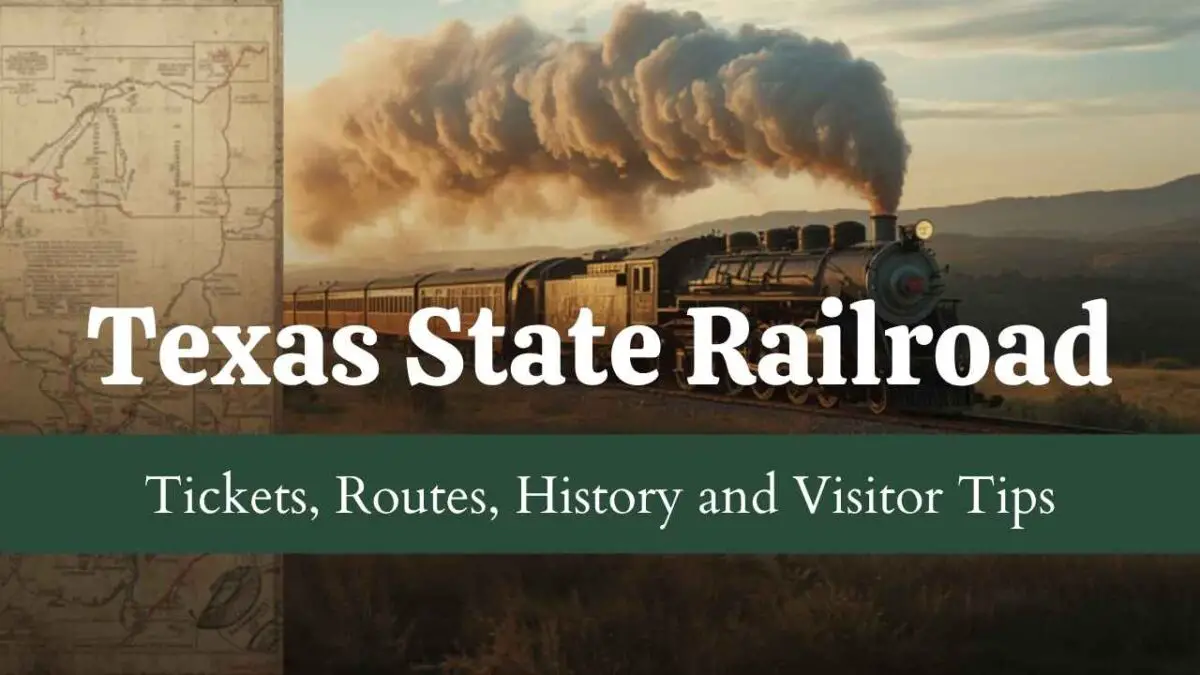
According to the railroad’s home page, the experience combines steam and diesel power, a four-hour outing, and a scenic run between Palestine and Rusk. Travelers looking for more East Texas inspiration can pair the ride with hidden gems in East Texas.
The current Texas State Railroad schedule changes by season, which makes the booking calendar worth checking before a road trip is locked in. The Piney Woods Express is the railroad’s best-known excursion train name, and it anchors most first-time visits.
For visitors who want a scenic outing that is easy to plan, Texas State Railroad delivers a clear answer. The current 2026 booking pages show seasonal departures and climate-controlled cars.
The railroad also gives East Texas travelers a strong sense of place. Palestine’s Victorian-era depot, Rusk’s historic layover grounds, and the wooded route itself all support a trip that feels more like a moving heritage experience than a simple transfer from one town to another.
Texas State Railroad at a Glance
| Detail | Current Information |
| Primary route | Palestine to Rusk and back on a 50-mile roundtrip |
| Main departure depot | 789 Park Road 70, Palestine, TX 75801 |
| Layover depot | 535 Park Road 76, Rusk, TX 75785 |
| Current diesel season | March to October 2026 on select departure dates |
| Typical departure times | 11:00 a.m. and 3:00 p.m. on the current diesel page |
| Arrival rule | Arrive at least 45 minutes before departure |
| Typical excursion length | About four hours, including a layover in Rusk |
| Reservations | Required; tickets are valid only for the date and time shown |
| Reservations phone | 855-632-7729 |
| Official site | texasstaterailroad.net |
That summary reflects the railroad’s current official pages rather than old brochure copy. The FAQ and Terms of Service both stress punctual arrival, while the booking pages show seat-by-seat pricing and a reservation-first system that changes by excursion.
Texas State Railroad Tickets and 2026 Seat Classes
The current booking pages show that Texas State Railroad does not use one flat fare. Instead, the price depends on the excursion, the car type, and whether the trip is diesel or steam, with a $3 historical preservation fee added at checkout on the current booking pages.
That fee matters because it is explained directly by the railroad. The steam and diesel pages both say the money supports depots and railroad structures, which makes the charge part of the preservation story rather than a generic service add-on.
| Seat Class | Diesel Page | Steam Page |
| Open Air | $30 adult, $15 child, $35 lap child | $40 adult, $25 child, $45 lap child |
| First Class | $60 adult, $35 child, $65 lap child | $70 adult, $45 child, $75 lap child |
| Dome | $80 adult, $55 child, $85 lap child | $90 adult, $65 child, $95 lap child |
| Private Caboose | $900 flat rate for up to 8 | $975 flat rate for up to 8 |
These examples come from the current Piney Woods Express Diesel page and the current Piney Woods Express Steam page.
They show slightly different price points depending on the locomotive and the date. According to the diesel page, the 2026 season currently runs from March through October with morning and afternoon departures.
The steam page leans a little more nostalgic and a little more premium. It describes a four-hour round-trip excursion from Palestine to Rusk with an approximately 1 hour and 15 minute layover, which gives visitors time to eat, browse the depot, or linger around the grounds.
For travelers deciding between the options, the diesel ride is usually the more practical family choice, while the steam ride carries more of the classic heritage-rail feel. The current pages also list premium cars such as the Presidential Car 1511 and the locomotive cab, which are better suited to special-occasion planning than casual budget travel.
For Texas State Railroad ticket prices 2026, the current booking pages show that open-air seats remain the lowest-cost option, while dome cars and private cabooses carry stronger premiums. That pricing spread helps the railroad serve both casual families and special-occasion travelers without changing the route itself.
An open-air car suits travelers who want more breeze and more sound from the train. A dome car suits travelers who want a quieter view without giving up the scenery.
Travelers comparing East Texas outings may also want to browse Top 12 Best East Texas State Parks And Nature Reserves. That roundup helps place Texas State Railroad in a broader weekend itinerary that includes both heritage stops and outdoor destinations.
What the Ride Feels Like
The most useful way to think about Texas State Railroad is as a moving day trip with a built-in layover. According to the official FAQ, the train travels round-trip to Rusk Depot, and most excursions stop long enough for lunch, depot browsing, and a short stretch away from the cars.
The booking pages also make the onboard experience sound more polished than a basic excursion. Most cars are climate-controlled, many have restrooms, and the concession car stays available for snacks and beverages, including adult beverages on many departures.
- Open-air cars suit travelers who want the classic rail feel and do not mind a more exposed bench-seat ride.
- First-class cars suit visitors who want table service, windows, and a more comfortable seating layout.
- Dome and premium cars suit special occasions, photography, and guests who want a more elevated view.
- Private cabooses suit groups that want a reserved space and a more private celebration-style outing.
The railroad’s current pages also note an ADA-compliant car for certain departures, which is helpful for visitors who need more accessible boarding or seating arrangements. The railroad says that space is limited and that certain accommodations require a direct reservations call rather than a standard online purchase.
Families often find the layover especially useful because it breaks the trip into manageable pieces. Rather than a long uninterrupted train ride, the excursion creates a pacing pattern of boarding, scenic travel, depot time, and a return leg that usually feels relaxed rather than rushed.
Seasonal Excursions and Best Times to Ride
Texas State Railroad works differently by season, which is why the 2026 calendar matters more than a fixed daily timetable. The diesel page currently shows March through October departures, and the railroad uses that seasonal pattern for most of its public excursion schedule.
Spring usually gives the best scenery because the Piney Woods look green and mild. Summer shifts the value toward air-conditioned comfort, while fall tends to appeal to travelers who want a quieter heritage feel and more event-driven departures.
Holiday rides can be the hardest to book because families build traditions around them. That is one reason the reservation system matters even for visitors who do not plan to travel during the busiest months.
- Spring: Best for scenery, mild temperatures, and a classic Piney Woods backdrop.
- Summer: Best for climate-controlled comfort and seated time in shaded cars.
- Fall: Best for a quieter heritage mood and a stronger chance of special departures.
- Holiday season: Best for family traditions, themed rides, and advance planning.
Weekday departures often feel calmer at the depot and give photographers more time around the cars. Weekend departures feel livelier and are better for families that enjoy a busier boarding scene.
Travelers booking with children or grandparents often do better by pairing first-class seating with a slower lunch plan in Palestine or Rusk. That keeps the excursion relaxed when the train returns.
- Open-air cars: Best for breeze, sound, and a more casual rail feel.
- First-class cars: Best for comfort, table seating, and a quieter ride.
- Dome cars: Best for scenery, rail photography, and a wider view.
Seat choice changes the experience too. Open-air cars feel more social, dome cars feel more relaxed, and premium cars make a good fit for birthdays, anniversaries, or rail fans who want a slower trip.
Rail fans often appreciate the depot details as much as the scenery, because the trip includes a preserved timetable, vintage car classes, and a real layover rather than a quick photo stop. It is one of the few East Texas outings where the transportation itself remains the main attraction.
How to Plan the Visit
Planning matters more at Texas State Railroad than it does at a standard roadside attraction. The railroad’s FAQ page explains that late arrivals cannot be held once the train is scheduled to depart.
The railroad’s Terms of Service say tickets are valid only for the date and time on the confirmation.
That makes advance timing part of the travel plan, not a suggestion. Texas State Railroad reservations required is the practical rule, because the ticket is tied to a date, time, and seat class.
Texas State Railroad arrive 45 minutes early is the other rule that matters, since the train does not hold for late arrivals.
| Planning Item | Why It Matters |
| Book early | Popular dates, especially themed rides, can sell out quickly. |
| Arrive 45 minutes early | The railroad does not hold trains for late arrivals. |
| Match the depot to the ticket | Palestine is the main departure point for most excursions, but some events depart from Rusk. |
| Bring confirmation | Electronic ticket confirmation is accepted at the depot. |
| Check the car type | Some premium cars and adult-only options have age or booking restrictions. |
The railroad’s contact page is also useful for travelers who need to confirm details before driving in. It lists the Palestine and Rusk depot addresses, which can matter on days when specialty events change the departure location or when travel plans are built around a precise morning arrival.
Late planning can be risky on weekends and holiday dates, so the railroad’s contact details are worth saving before the drive begins. The same caution applies to specialty excursions, which can shift the rhythm of the standard Piney Woods Express trip.
Weather and clothing choices deserve a little attention as well. The best seats for photo-friendly views are not always the same seats that feel best on a warm or windy day, so visitors often do better when they choose comfort first and novelty second.
People building a broader East Texas weekend can also use the railroad as a midpoint stop. A helpful companion guide is 11 Best Small Towns In East Texas: Things To Do And Places To Visit, which works well when the railroad trip becomes part of a larger East Texas loop.
The official travel resource linked by the railroad is Visit Palestine. That site is useful for nearby dining, lodging, and downtown planning, which makes it a smart companion source for a day trip that starts and ends in Palestine.
Nearby East Texas Stops Worth Adding
Texas State Railroad works best as part of a larger East Texas loop. A traveler who only rides the train misses the larger appeal of the region, which includes small towns, forested backroads, and a surprisingly deep mix of heritage attractions.
For a broader route, the railroad pairs well with downtown Palestine, the Rusk area, and other East Texas towns that still feel shaped by rail and timber history. A useful companion read is 11 Best Small Towns In East Texas: Things To Do And Places To Visit, which helps travelers turn one excursion into a fuller weekend plan.
Visitors interested in more scenic stops can also browse Beautiful Places To Visit In Texas Bucket List. That list is broader than East Texas alone, but it helps frame the railroad as part of a larger statewide travel pattern rather than a one-off outing.
Spring travelers may want to time the railroad with flowers and mild weather. Summer travelers may prefer the climate-controlled cars, while fall and holiday visitors tend to focus on themed events and family traditions instead of scenery alone.
One practical takeaway is that Texas State Railroad does not need a long list of add-ons to feel complete. The depot, the layover, the countryside, and the return trip already form a full-day experience, and the surrounding town stops simply make the itinerary feel more rounded.
Why Texas State Railroad Matters
Texas State Railroad matters because it preserves a route that once powered East Texas commerce and now gives visitors a slower, more interpretive way to see the Piney Woods. The railroad’s “On the Rails” page says the line began with inmate labor in the 1880s, when crews laid the original narrow-gauge rails to move timber and industrial materials through the region.
That origin story still shapes the experience today.
According to the railroad’s At the Depot page, Rusk is where the line began, and the route eventually became a tourist excursion between the two towns after a 1972 state park designation.
The modern trip is therefore part transportation history, part preserved landscape, and part local storytelling. It is also a classic heritage railroad outing, and Texas State Railroad history is visible in the depot architecture and the route itself.
Visitors interested in other East Texas history stops often make the railroad part of a broader route. A helpful companion read is Old Tunnel State Park Hours, Tickets, Hiking Trail, Bat Viewing, Camping In 2026, which also turns a railroad corridor into a memorable visitor experience.
The depot district deepens that feeling. The Palestine side presents Victorian-era railroad architecture, while the Rusk side adds a working sense of place with the Mail Car Cafe, grounds by the lake, and the kind of public-facing railroad atmosphere that keeps the history accessible instead of locked behind a display case.
Filming history adds another layer.
The railroad’s depot page says the line has appeared in more than 35 productions, including 1883, O Brother, Where Art Thou?, and The Great Debaters.
That helps explain why the railroad feels familiar even to first-time visitors.
Frequently Asked Questions
Where does Texas State Railroad depart from?
For readers asking where does Texas State Railroad depart from, most excursions begin at 789 Park Road 70 in Palestine, Texas. The second depot is at 535 Park Road 76 in Rusk, which is the layover point for most excursions.
That setup matters because departure location can change by event. Travelers should verify the ticket confirmation carefully and match the depot to the exact excursion being booked.
How long is Texas State Railroad ride?
For readers asking how long is Texas State Railroad ride, the answer is about four hours round-trip according to the current booking pages. The actual moving time is broken up by a layover in Rusk, which gives the excursion its relaxed, full-day rhythm.
Texas State Railroad steam vs diesel is mostly a choice between atmosphere and price. The steam page says the layover is approximately 1 hour and 15 minutes, while the diesel page uses similar language.
The steam ride keeps more of the old-time locomotive character and tends to carry slightly higher pricing on the current booking page. Both options use the same Piney Woods route between Palestine and Rusk, but the atmosphere is not identical.
Do visitors need to arrive early?
Passengers should arrive at least 45 minutes before scheduled departure. The FAQ and Terms of Service both say the train leaves at the scheduled time and cannot wait for late arrivals.
That rule is one of the most important planning details on the official site. It is especially useful for first-time visitors who may need extra time to find parking, check tickets, and move through the depot area.
Is Texas State Railroad good for families?
Yes, the railroad is family-friendly on many departures. The current booking pages list open-air, first-class, and dome options that are suitable for mixed-age groups, while certain premium cars and special events may carry age restrictions or more limited seating rules.
Families usually benefit most from the open-air or first-class cars because the price is lower and the seating feels flexible. Travelers who want a quieter or more commemorative outing may prefer dome or private-caboose options instead.
Texas State Railroad steam vs diesel?
The diesel ride is the more straightforward current season option, with March through October 2026 departures shown on the official page. The steam ride keeps more of the old-time locomotive character and tends to carry slightly higher pricing on the current booking page.
Both options use the same Piney Woods route between Palestine and Rusk, but the atmosphere is not identical. Travelers who care most about classic rail nostalgia often favor steam, while travelers who care most about convenience or price often choose diesel.
What can visitors do during the layover in Rusk?
The official steam page says the Rusk stop gives travelers time for lunch, a walk around the depot grounds, and a visit to the gift shop or historic depot interior. That makes the layover an active part of the trip instead of dead time between rail segments.
The railroad’s own depot page highlights the Mail Car Cafe and the surrounding grounds, which means there is enough to do for a short, relaxed break. Travelers who like rail history usually treat the layover as one of the best parts of the excursion.
Final Takeaway
Texas State Railroad remains one of the easiest heritage trips to recommend in East Texas because it combines scenery, preserved rail history, and a reservation system that is straightforward once the depot rules are understood. The current 2026 pages also make the attraction easy to compare by price, car class, and departure time.
For travelers who want a day trip with real character, Texas State Railroad is stronger than a quick novelty ride and simpler than a full vacation. It delivers a classic East Texas outing that feels rooted in the region, and that is a rare combination worth planning around.