Lake Houston Wilderness Park: Hours, Fees, Trails & Camping
Lake Houston park usually means Lake Houston Wilderness Park, the City of Houston’s forested park in New Caney. The park sits about 30 miles north of Houston, covers nearly 5,000 acres, and is the city’s only park that allows overnight stays in cabins and campsites.
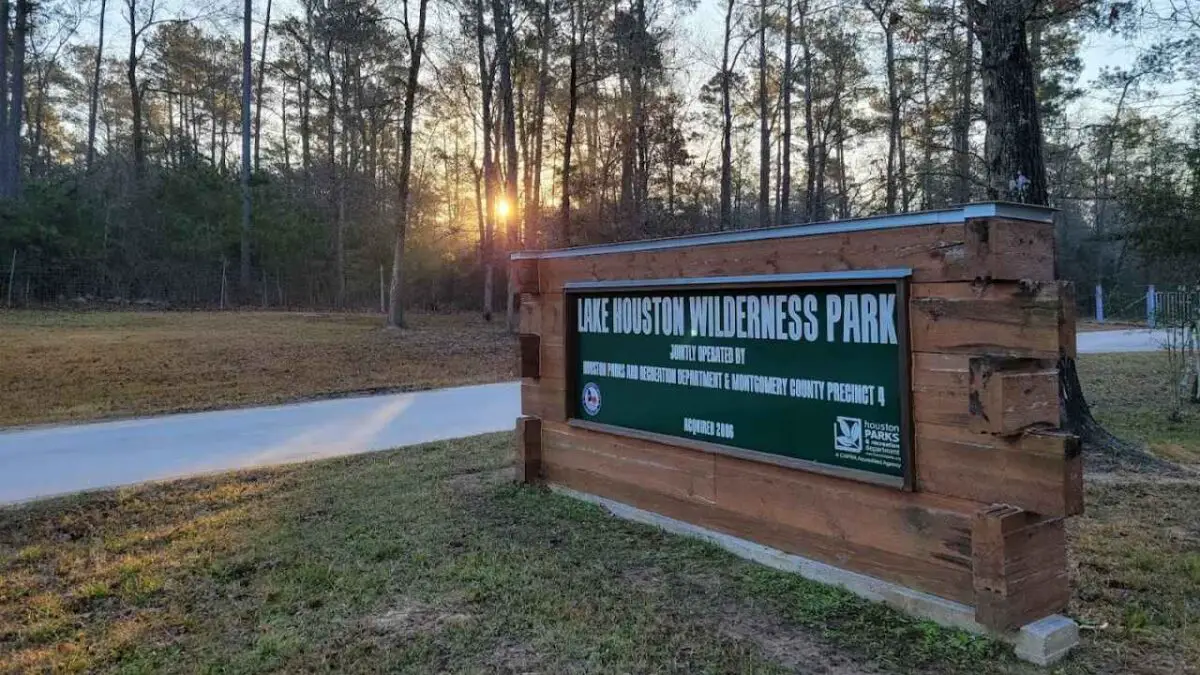
For visitors planning a north Houston outing, it fits naturally beside other day trips from Houston. The park is useful for a short trail walk, a family picnic, a nature-center stop, or an overnight stay.
The name can be misleading at first because the park backs up to Lake Houston but does not front onto the lake itself.
| Quick fact | Lake Houston Wilderness Park |
|---|---|
| Common search name | Lake Houston Park |
| Official name | Lake Houston Wilderness Park |
| Address | 25840 FM 1485, New Caney, TX 77357 |
| Park size | Nearly 5,000 acres |
| Day-use fee | $3 for visitors ages 13-64; children, seniors, and military with ID are free |
| Hours | Sun, Mon, Wed, Thu 7:00 a.m. to 6:00 p.m.; Fri and Sat 7:00 a.m. to 8:00 p.m.; closed Tuesday |
| Nature center | Joe Turner Nature Center |
| Best for | Hiking, biking, paddling, horseback riding, camping, cabins, and birding |
| Important note | Not a public boat access point to Lake Houston |
The trail map adds route-level detail for hiking and overnight planning. Readers comparing free or low-cost outings can also look at things to do in Houston for free.
Lake Houston Wilderness Park Hours, Location, Fees, and Reservations
The current official hours are straightforward once the weekday and weekend schedule is separated. Day use runs Sunday, Monday, Wednesday, and Thursday from 7 am to 6 pm, then Friday and Saturday from 7 am to 8 pm.
Tuesday is closed, and the park page says day-use hours end at dusk.
| Planning detail | Current information |
|---|---|
| Address | 25840 FM 1485, New Caney, TX 77357 |
| Day-use hours | Sun, Mon, Wed, Thu 7:00 a.m. to 6:00 p.m.; Fri and Sat 7:00 a.m. to 8:00 p.m.; closed Tuesday |
| Nature center days | Wednesday through Sunday |
| Day-use cutoff | Hours end at dusk |
| Payment | Credit cards are accepted except Discover |
| Reservations | Available through ActiveNet |
The entrance fee is $3 for visitors ages 13 to 64. Children, seniors, and military visitors with ID are free.
Overnight guests pay the entrance fee for each night of stay in addition to the site rental.
For readers comparing low-cost outdoor outings, the admission price keeps the park in the same practical category as other city day trips rather than higher-cost destination parks. The park fits especially well for people who want to save the bigger budget for food, gear, or an overnight cabin.
More options live in the site’s broader list of best things to do in Houston.
Reservations matter more for overnight stays than for a short daytime visit. The park page says reservations can be made up to 180 days out from the check-out date, and online reservations cannot be booked less than 3 days in advance.
Visitors who plan to arrive after hours should arrange entry with park personnel during operating hours. That detail matters most for cabin guests, primitive campers, and anyone who wants to arrive late after work traffic or a dinner stop in Houston.
Parking and arrival planning are easier when the trip starts early. Weekday mornings are calmer, and the park’s close-in location also makes it a workable day trip from Houston without an all-day drive.
Consider reading: Top 20 Best Houston Parks to Visit
What Lake Houston Wilderness Park Is
Lake Houston Wilderness Park is a city park with a wooded, rural feel rather than an urban picnic layout. According to the City of Houston park page, it has more than 20 miles of trails and is the only City of Houston park that allows overnight stays in cabins and campsites.
The park feels different from a neighborhood green space. Visitors can walk, bike, paddle, fish, or ride horses without leaving the Houston area.
The park is not on Lake Houston itself, so the name can create unrealistic expectations for visitors looking for a marina or a lakefront boat ramp. The park backs up to Lake Houston but is not a public access point for boating on the lake.
The park is better understood as a forest preserve with creek, trail, and cabin access than as a shoreline park. The woods, campsites, roads, and trail network fit together on the park map.
Visitors who want a broader city plan can use the park as one stop inside a larger Houston itinerary, especially if the goal is an outdoor day with a low entry cost and a manageable drive. A longer city plan can still include the park alongside other romantic things to do in Houston or family-friendly stops.
Houstonia’s 2018 camping feature describes the park as a close-to-home place for cabins and glamping-style stays. Houstonia’s Lake Houston Wilderness Park feature is a useful local look at that side of the park.
Lake Houston Wilderness Park Trails, Paddling, Biking, and Horseback Riding
The trail system is the park’s biggest draw for most first-time visitors. The park has more than 20 miles of trails, with short loops, longer connector routes, and trail access around Lake Dabney, Peach Creek, and the deeper wooded sections of the park.
The trail map also shows that the park is laid out for movement rather than only for sightseeing. AmeriTrail, Loggers Loop, North River Trail, South River Trail, Palmetto Trail, Magnolia Trail, Dogwood Trail, Peach Creek Loop North, Peach Creek Loop South, Forest Trail, Yaupon Trail, and Hoot Owl Trail all appear on the map.
| Trail | Miles | Good use |
|---|---|---|
| AmeriTrail | 3.8 | Longest route and main hiking objective |
| Loggers Loop | 3.6 | Longer loop through the forest |
| Forest Trail | 1.6 | Moderate wooded walk |
| Peach Creek Loop South | 1.6 | Creek-side route with more variety |
| North River Trail | 1.2 | Shorter connector hike |
| South River Trail | 1.0 | Easy in-and-out outing |
| Yaupon Trail | 1.0 | Quick family-friendly walk |
| Peach Creek Loop North | 0.9 | Short creek loop |
| Palmetto Trail | 0.7 | Short nature stop |
| Magnolia Trail | 0.6 | Very short add-on walk |
| Dogwood Trail | 0.3 | Quick connector route |
| Hoot Owl Trail | 0.3 | Short add-on or return path |
The trails are dirt or natural terrain, not paved. All trails are bike accessible, though roads work best for thin-wheeled bikes and thick tires handle the sandy sections more comfortably.
The park is a better fit for mountain bikes, hybrid bikes with wider tires, trail runners, and walkers who do not mind a natural surface. Visitors who want a paved city-style route can look elsewhere.
The AmeriTrail is about 4 to 5 miles one way depending on the starting point, while the trail map lists it at 3.8 miles. Either way, it is the park’s longest route and it is not a loop.
The trail closes 2 hours before dark so visitors do not get stranded after sunset.
For paddlers, the park has a different kind of appeal. Canoes can navigate south from the canoe launch along Peach and Caney Creek, and Lake Dabney allows canoeing.
The park is not a public boating access point for Lake Houston.
The park works for creek paddling and nature-time on the water, not for a big lake boating day. It is easier to plan when the visit starts as a paddle or trail outing instead of a boat-launch day.
Horseback riders have a serious option too. There are more than 13 miles of equestrian trails along the eastern and southern sections of the park, and the official map marks a horse trail map separately from the main hiking routes.
Visitors bringing horses must use designated equestrian trails and should confirm trail conditions before riding.
Anyone planning a more social outdoor outing can treat the trails as a backdrop for a slower day rather than a hard workout. The park combines easy logistics, quiet scenery, and enough trail variety to keep a short visit interesting, which fits other Houston date ideas.
The current trail map PDF shows route layout, parking, and the relationship between the forest roads, trail loops, and camping areas. The map is here: Lake Houston Wilderness Park trail map PDF.
Lake Houston Wilderness Park Camping, Cabins, and Overnight Stays
Camping is where Lake Houston Wilderness Park separates itself from most other city parks. It is the only park in the department that allows overnight stays in cabins and campsites.
That makes it a rare option for a close-to-Houston outdoor weekend.
Houstonia’s camping coverage described the park as a close-in place to camp in style, which matches the park’s mix of primitive sites, screened shelters, cabins, and RV spots. Houstonia’s Lake Houston Wilderness Park camping feature captures that tone well.
| Overnight option | Price | Best fit | Key detail |
|---|---|---|---|
| Individual campsites | $7 | Simple tent camping | 24 sites, 8 people per site, up to 2 tents, water and electricity nearby |
| Primitive campsites | $7 | Backpack-style stay | 4 sites, 8 people per site, about 1 to 2 miles hike in on AmeriTrail |
| Screen shelters | $25 | Covered group shelter | 5 sites, 6 people per site, fire ring, picnic table, lights, and outlets |
| Lakeside A-Frames | $35 | Small family stay | 5 sites, 6 people per site, screened shelter near Lake Dabney |
| Group campsites | $40 | Scouts and large groups | Peach Creek and Chinquapin group areas near the nature center |
| Rustic cabin | $85 plus security deposit | Simple cabin stay | Bathroom, shower, AC, heat, and no pets |
| Lakeside cabins | $125 plus security deposit | More furnished cabin stay | Queen beds, sofa bed, kitchen, porch, and no pets |
| RV sites | $27 to $32 | RV or camper stay | 12 back-in sites with water and electricity; some sites also have sewer |
Check-in runs from 3 pm to 6 pm, and no arrivals after 10 pm are permitted. Check-out is 12 pm, and the park requires a refundable security deposit for many rentals.
Entrance fees are separate from the site rental.
Visitors who want a cabin stay should also budget for the two-night minimum attached to several cabin and lodge rentals. The rustic cabin, lakeside cabins, forest cottage, and lazy creek lodge all use that longer-stay structure.
Fire rules matter as much as the bed count. Fires are only permitted inside fire rings, generators and dry camping are prohibited, amplified music is prohibited, and quiet time runs from 10 pm to 6 am.
Firewood is sold at the front gate. One section of the park page lists bundles at $6, and another lists $5, so visitors should confirm the current bundle price before arrival.
The park is a practical fit for people who want a slower pace, especially couples or small groups looking for something more memorable than a standard park picnic.
The cabins and shelters give the park a stronger weekend identity than a quick stop, and they fit beside other romantic things to do in Houston.
The overnight stay is still a park stay. Visitors should expect wildlife, natural terrain, limited lighting in some areas, and a camp-style rhythm rather than resort-style amenities.
Joe Turner Nature Center, Wildlife, and Park Rules
The Joe Turner Nature Center gives the park much of its educational value. The center includes ecosystem rooms with live fish and turtles, insects and spiders, reptiles and amphibians, and a display focused on local plants and animals.
Naturalist-led programming and classroom-style interpretation add the educational side of the visit.
Joe Turner Nature Center is open Wednesday through Sunday and lists information and reservation numbers for visitors who want programs, school field trips, or archery access.
Field trips are available Wednesday through Friday, and the park’s nature-based programs are built to tie the woods, creeks, and wildlife together into one visit.
- Guided hikes are generally under an hour and can focus on edible plants, tracks, or history.
- Bird watching programs help visitors identify local birds.
- Freshwater ecology sessions use nets and buckets to study what lives in the water.
- Basic fishing programs teach tackle, knots, casting, and regulations.
- Snake, frog, spider, turtle, and campfire programs round out the schedule.
For families, the nature center can turn a park visit into a learning day without making it feel formal. The programming is hands-on, but it still keeps the setting outdoors and park-centered instead of classroom-heavy.
Dogs are allowed, but they must stay on a leash, cannot be left unattended, and may not enter park buildings or the Lakeside Cabins.
Visitors should also stay on designated trails and avoid feeding or harassing wildlife.
Several rules are absolute. Alcohol, smoking, glass bottles, hunting, amplified music, confetti, fireworks, drones, rope swings, metal detectors, artifact hunting, generators, gasoline-powered equipment, off-road vehicles, and dumping or burning trash are all prohibited.
Those rules help preserve the wooded setting and keep the park quieter.
The quiet environment fits birding, slow walks, wildlife watching, and a less crowded forest visit inside the city limits.
The park is also a good place to keep expectations realistic about water and wildlife. Snakes, hogs, raccoons, deer, and insects all live in the park, and the safest response is to leave wildlife alone and stay on the trail.
Water shoes are required for swimming in Peach Creek, and natural waterways can change without warning.
The natural setting helps explain why the park can support a wide range of visitors without feeling overdeveloped. It is still a city park, but it behaves like a forest park.
Readers who want a wider city plan can pair it with the site’s broader guide to best things to do in Houston.
How to Plan the Visit From Houston
The easiest first visit is usually a half-day outing with one clear goal. A trail walk, a nature-center stop, or a picnic gives the park a simple plan.
Early morning is the quietest time to arrive, especially on weekdays. The air is cooler, the trailheads are less crowded, and the park feels more like a forest escape than a local stopover.
What to bring depends on the plan, but the basics stay the same: closed-toe shoes, bug spray, sunscreen, water, a flashlight for later hours, and any gear needed for paddling, biking, or horseback riding. Visitors who bring horses should call ahead to confirm trail conditions before leaving home.
Families usually do best with a short trail objective and a picnic. Couples usually do best with a slow walk, a cabin stay, or a sunset stop.
Houston date plans can include a trail walk, a cabin stay, or a sunset stop, and the park fits other Houston date ideas around that kind of outing.
Visitors who want a more complete city day can start at the park and then add food, coffee, or another Houston stop after the walk. The park is a practical fit for readers searching for affordable outdoor options, since the entrance fee stays low while the activity list stays broad.
Summer visits are easier when they start early because heat and humidity build quickly in the woods. Visitors planning paddling or horseback riding should also confirm trail conditions before leaving Houston, since weather can change creek crossings and route access.
The park is not a Lake Houston boat launch, so a boat trailer should not be the starting assumption.
The better approach is to decide first whether the visit is a hike, a camp, a paddle, or a nature-center stop, then build the rest of the day around that choice.
For a broader outing, the park can anchor a north Houston weekend and still leave room for other city stops.
FAQ: Lake Houston Wilderness Park
Is Lake Houston Wilderness Park actually on Lake Houston?
No. The park backs up to Lake Houston, but it is not a public access point for boating on the lake.
Visitors who want to paddle toward the lake can use the canoe launch, and the trip is about 5 miles one way.
How much does Lake Houston Wilderness Park cost?
Day use costs $3 for visitors ages 13 to 64. Children, seniors, and military visitors with ID are free.
Overnight guests pay the entrance fee each night in addition to the site rental, and some rentals also require a refundable security deposit.
Can visitors camp at Lake Houston Wilderness Park?
Yes. The park offers individual campsites, primitive campsites, screened shelters, Lakeside A-Frames, group campsites, rustic cabins, lakeside cabins, forest and lodge-style rentals, and RV sites.
The overnight options support either a tent stay or a cabin stay.
What is the longest trail at Lake Houston Wilderness Park?
AmeriTrail is the longest route in the park. The trail map lists it at 3.8 miles, and the park FAQ describes it as about 4 to 5 miles one way depending on the starting point.
It is not a loop, and the park says it closes 2 hours before dark.
Are dogs allowed at Lake Houston Wilderness Park?
Yes, but only on leash. Dogs cannot be left unattended, cannot enter park buildings, and are not allowed in the Lakeside Cabins.
Visitors who bring dogs should also stay alert for wildlife and keep to designated trails.
Can visitors bring bikes or horses?
Visitors can bring their own bikes and horses, and the trails are bike accessible, with thin-wheeled bikes best on the roads and thick tires better for sandy trail sections.
Horses must stay on the designated equestrian trails, and trail conditions should be checked ahead of time.
Conclusion
Lake Houston Wilderness Park works best as a forest-first Houston escape. It gives visitors a low-cost day trip, a serious trail network, a rare city-run camping setup, and a nature-center stop that adds more than a quick walk through the woods.
For visitors who want one park that can handle hiking, paddling, biking, horseback riding, and overnight stays, the park offers more range than its name suggests. The smartest plan is to treat it as a wooded north Houston park with cabins and trails, not as a lakefront boat destination.
The current official park page and trail map are the best starting points before a visit, especially if the trip includes camping, horses, or a late arrival.