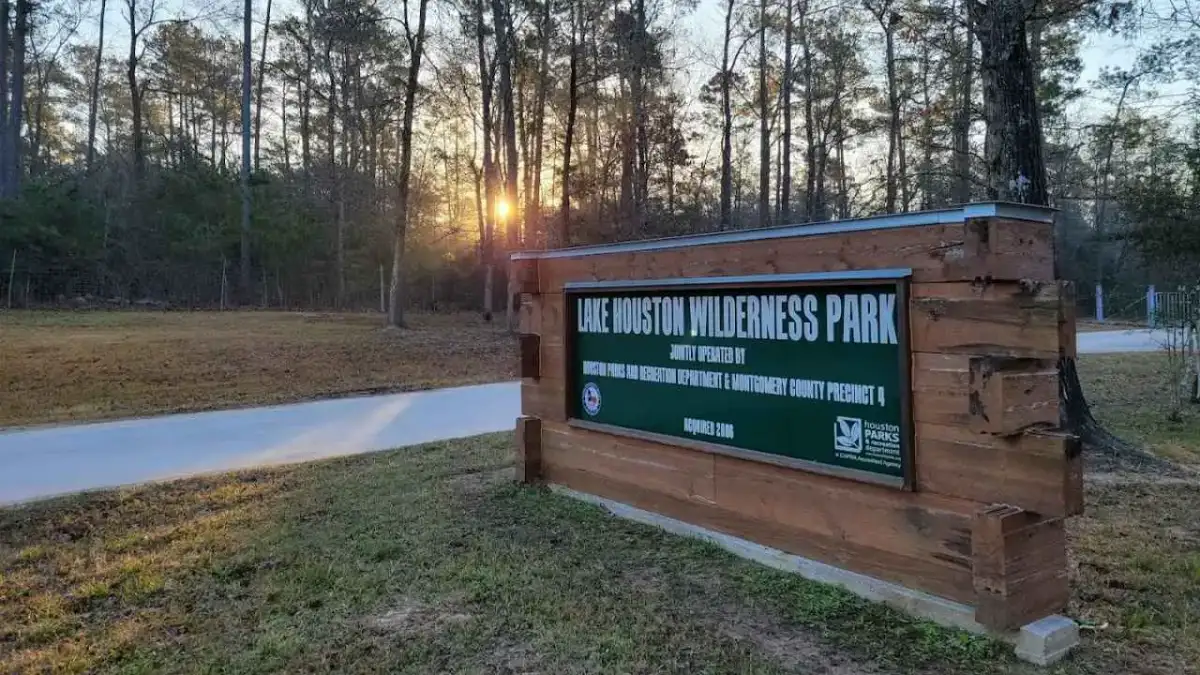
When outdoor enthusiasts search for a forested escape near Montgomery County, Lake Houston park usually refers to Lake Houston Wilderness Park in New Caney. Positioned roughly 30 miles north of downtown, this sprawling 4,786-acre preserve is the only municipal park managed by the Houston Parks and Recreation Department that permits overnight camping and cabin stays.
Key takeaways
- Location & Schedule: Situated at 25840 FM 1485 in New Caney; open six days weekly (closed Tuesdays) with general day-use ending at dusk.
- Affordable Gate Fee: Day entry costs $3 per adult (ages 13 to 64), while seniors, active military, and children 12 and under enter free.
- Trail System: Features over 20 miles of dirt hiking and mountain biking paths plus 13 miles of dedicated equestrian trails along Peach Creek.
- Waterfront Clarification: The park does not front open motorboat waters on Lake Houston; water access is strictly non-motorized paddling on Peach Creek and Lake Dabney.
- Overnight Lodging: Offers walk-in tent sites, screened shelters, and climate-controlled cabins bookable through the Houston Parks Department.
For travelers organizing regional road outings, this wooded retreat ranks among the most convenient day trips from Houston. The park accommodates trail runners, day hikers, youth groups, and families seeking a quiet natural setting close to the metroplex.
Plan your visit
- Location
- 25840 FM 1485, New Caney, TX 77357 (approximately 30 miles north of downtown Houston)
- Hours
- Sun, Mon, Wed, Thu: 7:00 AM – 6:00 PM; Fri – Sat: 7:00 AM – 8:00 PM; Closed Tuesdays; Day use ends at dusk
Lake Houston Wilderness Park Hours, Location, Fees, and Reservations
The gate schedule changes slightly depending on the day of the week. Official lake houston wilderness park hours run Sunday, Monday, Wednesday, and Thursday from 7:00 AM to 6:00 PM, and extend Friday through Saturday from 7:00 AM to 8:00 PM. The park remains closed to day visitors every Tuesday for maintenance and resource management.
As confirmed by the City of Houston Parks and Recreation Department, gate admission is $3 per person for visitors between 13 and 64 years old. Children aged 12 and under, adults aged 65 and older, and active military personnel presenting valid identification enter without charge. Overnight visitors must pay the entry fee for each night of their stay alongside their lodging fees.
Advance booking is essential for lodging. Campers can reserve sites up to 180 days ahead of their checkout date through the municipal reservation portal, though web reservations close three days prior to arrival. Compared to other Houston city and regional parks, the low entry price makes this wilderness area accessible for budget-friendly recreation.
What Lake Houston Wilderness Park Is
Lake Houston Wilderness Park functions as an expansive ecological preserve rather than a manicured suburban lawn. Unlike neighborhood green spaces with playground equipment and athletic turf, this property protects dense mixed pine-hardwood woodlands, creek bluffs, and wetland habitats along the San Jacinto River basin.
The geographical name frequently causes confusion for newcomers. The park parcel connects to the northern watershed of Lake Houston, but it contains no open shoreline, public beach, or motorized boat launch onto the reservoir itself. Instead, visitors encounter secluded riparian corridors along Peach Creek, Caney Creek, and small inland ponds.
Travelers comparing low-cost outdoor options can also explore various free things to do in Houston. However, this north-side forest provides a true backcountry atmosphere where visitors walk amidst towering loblolly pines, water oaks, and sweetgums without traveling to distant state forests.
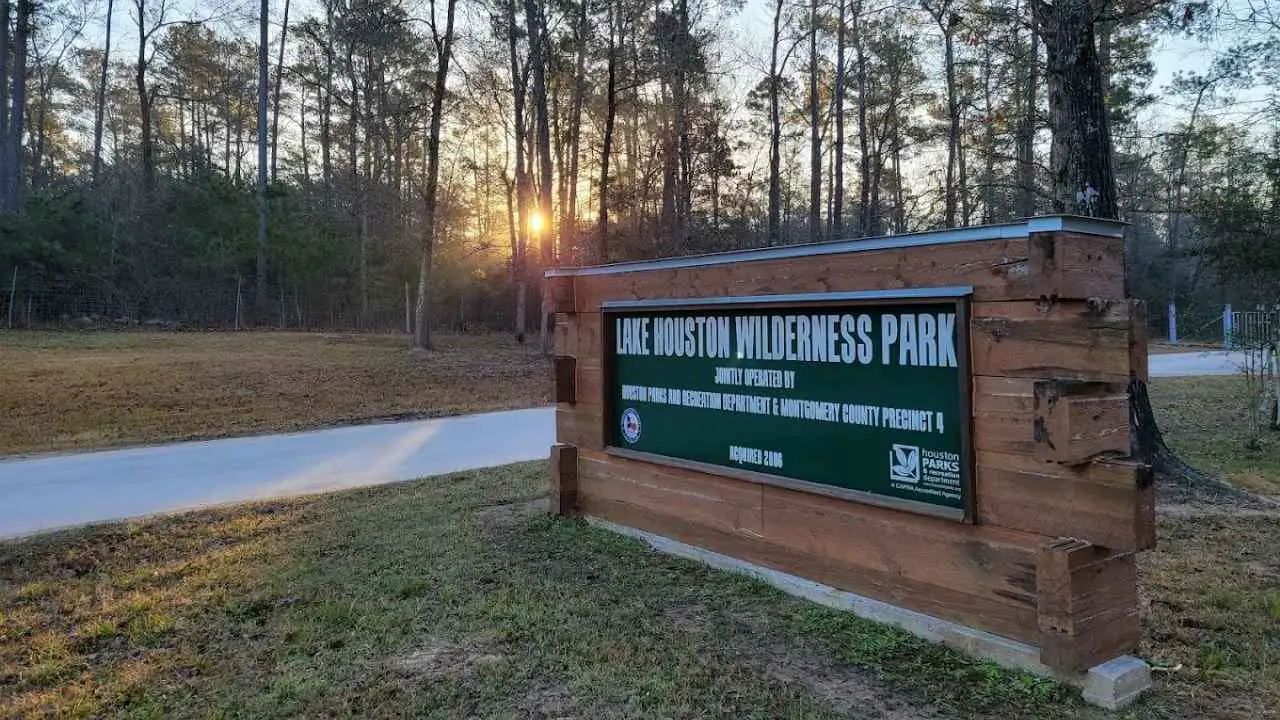
Lake Houston Wilderness Park Trails, Paddling, Biking, and Horseback Riding
The core attraction for day visitors is the network of lake houston wilderness park trails, spanning more than 20 miles across natural dirt and sand terrain. Prominent marked paths include Loggers Loop, Forest Trail, Yaupon Trail, Dogwood Trail, and the Peach Creek loops. Trail surfaces remain unpaved, making sturdy walking footwear or trail running shoes necessary after seasonal rainfalls.
Cyclists are welcome across all multi-use trails, though wide mountain bike or gravel tires perform substantially better than road tires in loose sand.
According to the official City of Houston Lake Houston Wilderness Park map, AmeriTrail represents the longest single path in the system at 3.8 miles. Because AmeriTrail is a linear point-to-point hike rather than a loop, hikers must monitor time carefully to return before the trail closes two hours ahead of dusk.
Paddlers can launch kayaks and canoes at the dedicated launch on Peach Creek or explore the calm waters of Lake Dabney. According to the Texas Parks and Wildlife Department Coastal Birding Trail Guide, these riparian waterways offer exceptional viewing for migratory warblers, belted kingfishers, and wading herons. Couples seeking peaceful scenic settings often incorporate these quiet creek channels into their outdoor Houston date ideas.
Equestrian visitors have access to roughly 13 miles of designated horse trails positioned on the eastern and southern perimeters of the preserve. Horse owners must furnish a negative Coggins test certificate for each animal upon entry and stick strictly to designated bridal trails.
Lake Houston Wilderness Park Camping, Cabins, and Overnight Stays
Overnight hospitality sets this location apart from all other municipal properties. With comprehensive lake houston wilderness park camping facilities, visitors can pick between primitive tent clearings, screened shelters, group sites, and fully furnished rental units.
Rental cabins feature air conditioning, electricity, and basic kitchen amenities, while lakeside A-frame units offer rustic waterside seclusion. As highlighted in Houstonia Magazine, the wooded setting creates a comfortable glamping atmosphere for couples seeking romantic things to do in Houston without driving hours away from town.
| Lodging Type | Capacity | Utilities & Amenities | Key Rules & Requirements |
|---|---|---|---|
| Walk-In Campsites | Up to 8 people | Fire ring, picnic table, nearby water spigots | No direct vehicle parking; pack-in gear required |
| Screened Shelters | Up to 6 people | Roof, screen walls, electrical outlet, ceiling fan | Bring personal sleeping pads or cots; no pets inside |
| Lakeside A-Frames | Up to 4 people | Screened sleeping loft, porch overlooking Lake Dabney | Rustic layout; shared central bathhouse facilities |
| Lakeside Cabins | Up to 6 people | A/C, heat, microwave, mini-fridge, private bathroom | Two-night weekend minimum; strict pet prohibition |
| Forest Lodges | Up to 26 people | Full kitchen, dining hall, bunk rooms, central HVAC | Ideal for family reunions; security deposit required |
Travelers reserving lake houston wilderness park cabins should account for the standard check-in window between 3:00 PM and 6:00 PM. Gate personnel must be alerted ahead of time for arrivals between 6:00 PM and 10:00 PM, and no entries are allowed after 10:00 PM when quiet hours take effect across all campgrounds.
Joe Turner Nature Center, Wildlife, and Park Rules
The Joe Turner Nature Center acts as the interpretive core of the property. Open Wednesday through Sunday, the facility houses ecosystem displays, touch tables, terrariums containing native snakes and turtles, and educational aquariums featuring regional freshwater species.
Staff naturalists lead interactive field workshops, night walks, and youth archery clinics. Families organizing vacations around the best things to do in Houston find that these naturalist-led sessions offer children an engaging introduction to native Gulf Coast ecology.
Because the park safeguards wild bottomland habitat, visitors must exercise awareness. Venomous copperheads, cottonmouths, and coral snakes inhabit forest underbrush, while white-tailed deer and feral hogs frequently cross remote paths. Hikers should remain on established trails, carry insect repellent, and refrain from approaching wildlife.
City ordinances strictly enforce safety guidelines. Possessing alcoholic beverages, glass bottles, fireworks, drones, generators, or off-road vehicles is prohibited. Ground fires are restricted to designated metal campfire rings, and gathering deadwood from the surrounding forest is forbidden.
How to Plan the Visit From Houston
Getting to the park from downtown Houston takes roughly 35 to 45 minutes along Interstate 69 (US Highway 59 North). Take the FM 1485 exit in New Caney, travel east for approximately 2.5 miles, and follow signs to the main park entrance road.
Packing essentials include two liters of drinking water per person, broad-spectrum sunscreen, insect protection, sturdy walking footwear, and water shoes if wading in Peach Creek. Because cellular coverage can drop along distant woodland hollows, carrying a printed trail map or downloading an offline satellite map is strongly recommended.
FAQ: Lake Houston Wilderness Park
Is Lake Houston Wilderness Park actually on Lake Houston?
No, the park does not sit directly on open water of Lake Houston. While the park borders the northern boundary of the Lake Houston watershed, there is no public motorboat ramp, swimming beach, or direct lakefront shoreline. Water activities center on Peach Creek, Caney Creek, and small ponds like Lake Dabney.
How much does Lake Houston Wilderness Park cost?
Day-use entrance costs $3 per adult aged 13 to 64. Entry is free for children 12 and under, adults 65 and older, and active military members with identification. Overnight visitors pay the $3 entrance fee for each night of their stay in addition to campsite or cabin rental rates.
Can visitors camp at Lake Houston Wilderness Park?
Yes, overnight camping is allowed and includes walk-in tent sites, screened shelters, and climate-controlled cabins. It is the only municipal park operated by the City of Houston that provides overnight accommodations, accommodating single backpackers up to large group reunions.
What is the longest trail at Lake Houston Wilderness Park?
AmeriTrail is the longest route, measuring 3.8 miles one way. Hikers completing the entire out-and-back trek log roughly 7.6 miles. Park regulations require hikers to begin their return early, as AmeriTrail closes two hours before dusk for guest safety.
Are dogs allowed at Lake Houston Wilderness Park?
Yes, leashed dogs are permitted on outdoor trails and primitive campsites. Pets must stay on a handheld leash no longer than six feet and cannot be left unattended. Dogs are strictly prohibited inside park buildings, screened shelters, and Lakeside Cabins.
Can visitors bring bikes or horses?
Yes, visitors may bring both bicycles and horses to the park. Multi-use dirt trails accommodate mountain bikes with wide tires, while 13 miles of dedicated equestrian trails serve horseback riders who furnish proof of a negative Coggins test.
Conclusion
Lake Houston Wilderness Park delivers an authentic backcountry experience just beyond Houston's suburban corridor. From shaded hiking along Peach Creek to cozy overnight cabin getaways, this expansive green space rewards outdoor travelers seeking nature without an extensive road trip.
Before heading out, verify weather conditions, download the official trail map, and book overnight sites through the City of Houston Parks Department. For anyone who loves the Piney Woods, this close-to-home sanctuary remains one of the Gulf Coast's most rewarding outdoor destinations.