Government Canyon State Natural Area: Map, Hours, Fees, Camping, and Trails
According to Texas Parks and Wildlife Department, Government Canyon State Natural Area protects about 13,000 acres on the northwest edge of San Antonio. The park combines more than 40 miles of trails, 23 walk-in campsites, two group tent camps, and the 1.23-mile Discovery Trail.
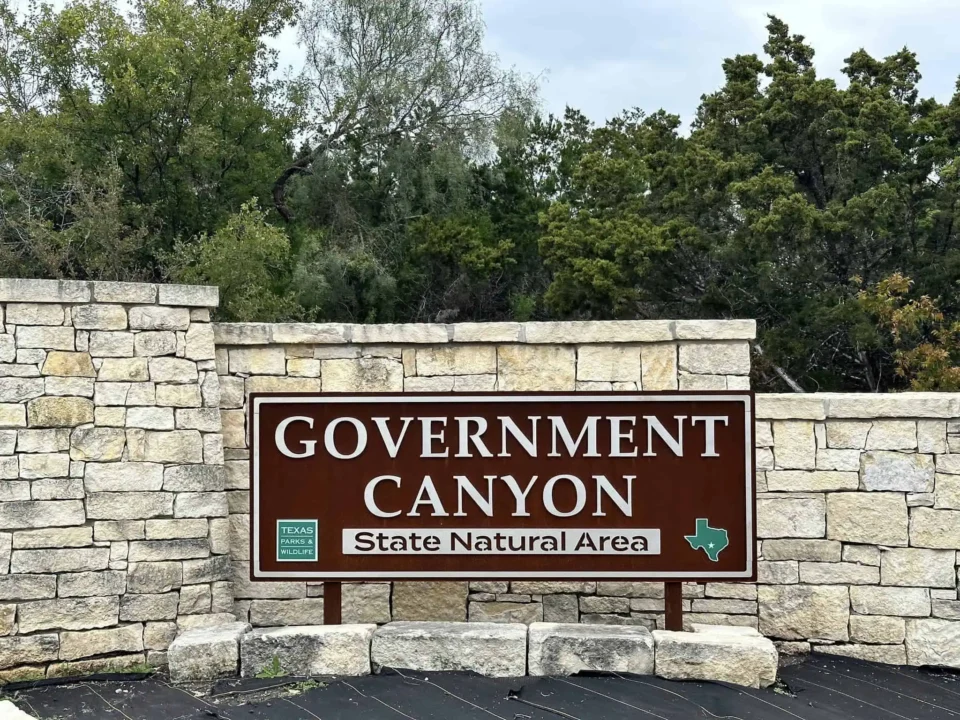
The current adult day-use fee is $6, and children 12 and under enter free. Gate hours are Friday through Monday from 7 AM to 10 PM and Tuesday through Thursday from 7 AM to 8 PM, while office hours run from 8:30 AM to 4:30 PM.
Related San Antonio planning ideas include best places for camping near San Antonio and top 20 best parks in San Antonio. The official park page carries current alerts, maps, and reservation details.
Government Canyon State Natural Area Quick Facts and Planning Basics
| Park name | Government Canyon State Natural Area |
| Location | 12861 Galm Rd, San Antonio, TX 78254 |
| Phone | (210) 688-9055 |
| Open | Daily |
| Gate hours | Friday through Monday: 7 AM to 10 PM Tuesday through Thursday: 7 AM to 8 PM |
| Office hours | 8:30 AM to 4:30 PM |
| Day-use fee | Adult: $6 daily Child 12 and under: free |
| Reservations | TPWD recommends reservations for both camping and day use |
| Camping options | 23 walk-in tent campsites and 2 walk-in group tent camps |
| Signature accessible feature | Discovery Trail, 1.23 miles, with a packed decomposed granite surface |
TPWD recommends reservations for both camping and day use. Current alerts are posted on the official park page before arrival.
Camping at Government Canyon State Natural Area
Camping at Government Canyon State Natural Area is walk-in rather than drive-up. According to TPWD, both campsite types sit 20 to 60 yards from Parking Lot D, which keeps the campground close to the frontcountry while still leaving the area quiet and lightly developed.
| Camp type | People per site | Number of sites | Nightly rate | Access notes |
| Campsites with water | 8 | 23 | $18 plus daily entrance fee | Picnic table, fire ring, tent pad, water nearby, restrooms with showers nearby |
| Group camps | 16 | 2 | $40 plus daily entrance fee | Picnic tables, fire ring, tent pad, water nearby, restrooms with showers nearby |
The campsites sit in a sensitive natural and cultural resource area, so TPWD asks campers to follow Leave No Trace principles. All tents must stay on the tent pads, hammocks may not be tied to trees or other vegetation, and excess vehicle fees apply once the site-specific vehicle limit is exceeded.
- Sites 1, 14, 16, and 18 have accessible picnic tables and hard-packed gravel access.
- Camping area restrooms include accessible sinks and showers, plus an accessible family restroom with shower.
- Water is nearby, but not at every individual site.
- Information and prices can change, so checking the campsite page before reserving remains important.
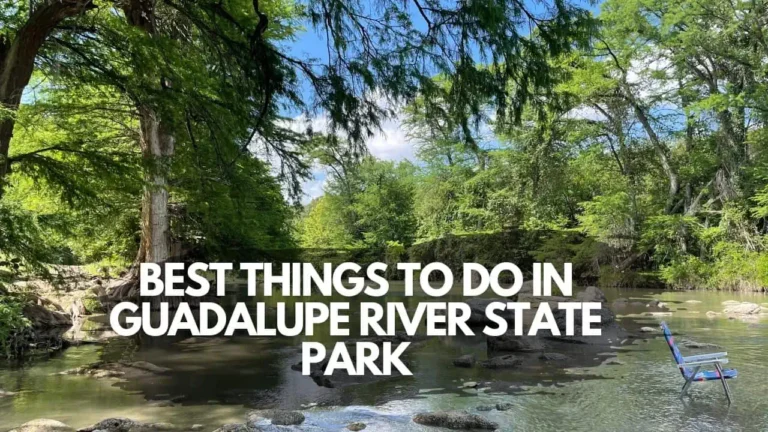
Other overnight options nearby include best state parks in Texas with cabins and Guadalupe River State Park. Both are camping alternatives in the Hill Country.
The official campsites page lists current availability, photos, and notes for each campsite type.
Government Canyon State Natural Area Trails and Hiking Options
Nearly 40 miles of trails cross grasslands, canyons, and limestone ridges at Government Canyon. TPWD describes the trail network as a mix of hiking, biking, and trail-running routes, with some trails reserved for hiking only.
| Trail | Distance | Difficulty | Planning note |
| Discovery Trail | 1.23 miles | Level and accessible | Packed decomposed granite, boardwalks over low areas, benches at intervals, usually open after rainfall |
| Savannah Loop | 2.6 miles round trip | Easy | Frontcountry route that works well for a relaxed walk |
| Lytle’s Loop | 5.0 miles round trip | Easy to moderate | Good wildlife-viewing route through savannah habitat |
| North Bluff Spurs Overlook | 3.4 miles round trip | Moderate | Climbs to a limestone bluff with a broad view of the canyonlands |
| Joe Johnston Route to Zizelmann House and back | 5.7 miles round trip | Moderate to challenging | Historic route with steep sections, dinosaur tracks nearby, and a 1880s house site |
| Far Reaches and Twin Oaks Loop | 9.0 miles round trip | Challenging | Longer route that covers several park features in one outing |
| The Outer Loop | 11.8 miles round trip | Challenging | Rough, rugged, and rewarding for experienced hikers |
The official trails information page says all trails allow hiking and biking unless otherwise indicated. Biking is prohibited in the Protected Habitat Area, on Discovery and Overlook trails, and on Bluff Spurs.
Pets are allowed in the Frontcountry only, so trail selection matters before arrival. All other trails are open year-round, while the Protected Habitat Area trails open annually from September through February.
Discovery Trail stays level and stays close to the frontcountry. Savannah Loop and Lytle’s Loop provide a moderate step up without moving straight into the longer backcountry routes.
The longer routes reward stronger hikers with wider views, more solitude, and more elevation change. Joe Johnston Route, Far Reaches, Twin Oaks, and The Outer Loop all demand better pacing than the short routes near the entrance area.
Government Canyon State Natural Area Trail Rules and Seasonal Access
Government Canyon State Natural Area is a conservation-first natural area, so weather and resource protection shape trail access. TPWD says trails may close due to poor conditions or weather, and hikers should check current conditions before leaving home.
The dinosaur tracks sit about 2.5 miles up the Joe Johnston Route, just past Marker #19. TPWD also says the round trip is about five miles, so the hike calls for plenty of water, snacks, and a realistic pace.
Those tracks are the only known dinosaur footprints on public land in Bexar County. Scientists believe theropods and sauropods left them nearly 104 million years ago when the area was part of the Gulf of Mexico shoreline.
- Frontcountry trails are the main option for visitors traveling with pets.
- The Joe Johnston Route reaches Zizelmann House, a historic 1880s structure tied to the canyon’s settlement history.
- Longer loops like Far Reaches, Twin Oaks, and The Outer Loop demand extra water and sun protection.
- Discovery Trail is the most forgiving route after rain because of its durable surface and boardwalk sections.
Government Canyon State Natural Area Accessibility and Family Features
TPWD lists several assistive chairs for use in the park, including a Grit Freedom Chair, a Motorized Trackchair, and a TerrainHopper motorized chair. The chairs can be reserved by email or phone, and the accessibility page lists the current options before a visit.
The official accessibility page says Discovery Trail is 1.23 miles long, level, and surfaced with packed decomposed granite. Benches line the route, and boardwalks cover low areas that would otherwise be harder to cross.
- The nature playscape has open space, tactile surfaces, climbing features, and padded play areas.
- Accessible picnic sites have hard surfaces, extended picnic tables, and raised grills.
- Frontcountry restrooms are accessible, including the restroom near the day-use area and the camping-area restroom.
- Campsites 1, 14, 16, and 18 have the most direct accessible access among the walk-in campsites.
Government Canyon State Natural Area also offers gallery and group-pavilion spaces with nearby accessible restrooms and sidewalk access. Those facilities matter for school groups, reunions, and other gatherings that need a more structured setup than the trailheads.
Government Canyon State Natural Area History and Conservation
The landscape tells a water story as much as a trail story. According to TPWD, Government Canyon protects parts of the Edwards Aquifer recharge zone, and the natural area grew out of local concern for water, land, and habitat protection.
TPWD says land acquisition began in 1993 with help from the Edwards Aquifer Authority, San Antonio Water System, the Trust for Public Land, the City of San Antonio, and Bexar County. The natural area opened on October 15, 2005, after more than a decade of preservation work.
The history page traces the canyon name to an 1850s military supply route and the Joe Johnston Road. It also connects the canyon to Native American travel, 19th-century settlement, the Zizelmann House, and the ancient shoreline that preserved the dinosaur tracks.
The same limestone cliffs, aquifer zones, and canyon walls shape the terrain underfoot and the park’s conservation priorities.
Best Time to Visit and What to Pack
Spring and fall usually bring the most comfortable hiking conditions at Government Canyon State Natural Area. The air is milder, the ground feels less punishing underfoot, and the trail network sees a steady mix of day hikers, birders, and campers.
Summer visits call for earlier starts because the open limestone terrain can heat up quickly. Winter usually feels gentler than summer, but early mornings and shaded canyon sections can still feel cool enough to justify a light layer.
Rain changes the equation because trail conditions can shift quickly after storms. Discovery Trail is the route most likely to remain usable after bad weather, while the more exposed routes may close or feel slower than usual.
- Bring water for every person in the group, even on shorter walks.
- Carry snacks or lunch if the plan includes the dinosaur-track route or a longer loop.
- Wear closed-toe shoes with good traction because the limestone can be loose or uneven.
- Pack sun protection for open savannah stretches and bluff-top sections.
- Keep a backup plan for rain days, especially when trails are being monitored for closures.
- Print or save the park map before arrival so route choices stay clear without a data connection.
Reservations are especially helpful when the plan includes camping, a long hike, or a weekend visit. A slower schedule leaves more room for parking, trail checks, and the extra distance needed for walk-in sites.
Sample Visit Plans for Government Canyon State Natural Area
Government Canyon State Natural Area works for a short morning outing or a full-day trail plan. The right route depends on whether the goal is a first look at the natural area, a history-heavy hike, or an overnight stay.
| Visit style | Best fit | Practical note |
| Short first visit | Discovery Trail plus the visitor center area | Best for checking accessibility, trail conditions, and the general layout of the park |
| Half-day hike | Savannah Loop or Lytle’s Loop | Good middle-distance routes that keep the outing manageable |
| History-focused hike | Joe Johnston Route | Combines the dinosaur tracks with the Zizelmann House route and a stronger workout |
| Overnight stay | Walk-in campsite plus an early trail start | Works best when the reservation is confirmed and the vehicle count is known in advance |
A short first visit usually benefits from a small loop and a relaxed pace. Discovery Trail, the nature playscape, and a quick look at the frontcountry facilities give a clear picture of the park without a major time commitment.
A full-day visit usually includes the dinosaur tracks or one of the longer backcountry routes. Longer days require more water, more rest stops, and a stronger sense of direction from the trail map.
Camping turns the park into an overnight base rather than a single hike. The walk-in setup keeps the campground quieter than a typical drive-up site, especially when the group stays focused on the trail schedule and the quiet hours on site.
Common Mistakes to Avoid While Visiting Government Canyon State Natural Area
Most visit problems at Government Canyon State Natural Area come from underestimating the terrain or skipping a pre-trip check. A few simple habits reduce the chance of starting the day with the wrong route, the wrong gear, or the wrong timing.
- Assuming every trail stays open after rain can lead to a closed-gate surprise at the trailhead.
- Choosing the dinosaur-track route without enough water can turn a memorable hike into a slow slog.
- Bringing pets onto backcountry routes can create unnecessary conflict with trail rules.
- Expecting drive-up camping can create problems at a park where sites are walk-in.
- Arriving late on a weekday can shorten the visit because gate hours are tighter Tuesday through Thursday.
Checking the official park page before departure confirms active alerts, camping notes, and any temporary access changes. It also lists the current park contact details and reservation guidance.
Trip Length Options for Government Canyon State Natural Area
Government Canyon State Natural Area fits more than one type of outing. A short visit, a half-day hike, and a full-day backcountry plan all start from the same entrance zone, but each one uses the trail system differently.
Weather, daylight, and campsite plans shape the best route choice. A visitor with a camp reservation can start earlier, rest in the middle of the day, and return for a second trail segment in the evening.
| Trip length | Route focus | Time window | Planning note |
| Short stop | Discovery Trail and the frontcountry area | 1 to 2 hours | Best for checking the layout, the accessible route, and the visitor-area facilities |
| Half-day hike | Savannah Loop and Lytle’s Loop | 3 to 4 hours | Good middle-distance choice for a slower walk with room for breaks |
| Dinosaur-track day | Joe Johnston Route | 5 to 6 hours | Builds in the uphill distance to Marker #19, the track site, and the return walk |
| Backcountry day | Far Reaches, Twin Oaks, or The Outer Loop | 5 to 8 hours | Calls for strong pacing, a map, and extra water because the routes stretch farther from the entrance |
| Overnight stay | Walk-in campsite plus a morning hike | 1 night or more | Works well when the campsite reservation and the first trail choice are settled in advance |
- Discovery Trail is the most dependable first option when the goal is a low-effort walk.
- Savannah Loop and Lytle’s Loop fit visitors who want a moderate hike without a long backcountry commitment.
- Joe Johnston Route works for a route built around the dinosaur tracks and the historic house site.
- Far Reaches, Twin Oaks, and The Outer Loop need more daylight than the frontcountry routes.
- Overnight stays add flexibility because the campsite and the trail day do not need to happen at the same pace.
Government Canyon State Natural Area hours matter most for longer hikes because the gate closes earlier Tuesday through Thursday than it does Friday through Monday. A morning start gives more room for the backcountry routes and the return walk to the parking area.
Government Canyon State Natural Area fees stay straightforward. Adult day use is $6, children 12 and under are free, and camping adds the nightly site fee plus the daily entrance fee.
Government Canyon trails cover frontcountry walks, longer backcountry loops, and a trail system that changes with weather and season. Government Canyon Discovery Trail is the most accessible starting point, while the Government Canyon dinosaur tracks sit farther out on the Joe Johnston Route.
One how to visit Government Canyon State Natural Area approach is to check hours, fees, and the trail map before leaving home. The best trail at Government Canyon State Natural Area depends on time available, with Discovery Trail for a short visit and Joe Johnston Route for the dinosaur tracks.
How the Trail Network Fits Together
Government Canyon State Natural Area is easiest to understand as a frontcountry core with longer routes branching into deeper canyon terrain. Discovery Trail, the playscape, and the main visitor-area facilities sit closest to the entrance, while the more demanding loops stretch farther into the natural area.
The layout separates the frontcountry entrance area from the longer backcountry routes. A family group can stay near Discovery Trail, while stronger hikers can use the same park visit to reach the longer routes without leaving the natural area.
- Discovery Trail is level, accessible, and easy to shorten if the weather changes.
- Savannah Loop and Lytle’s Loop create a practical middle ground for hikers who want more distance than the frontcountry route.
- Joe Johnston Route connects history, geology, and the dinosaur-track hike in one outing.
- Far Reaches, Twin Oaks, and The Outer Loop are the routes that demand the most time, water, and pacing.
The trail map shows where the easier routes end and where the more remote segments begin. It also shows which routes fit a short visit, a half-day outing, or a longer backcountry day.
Parking Lot D sits near the walk-in campsites and the frontcountry trailhead. That layout keeps the entrance zone separate from the longer route network and gives campers a simple starting point for a short warm-up walk.
Nearby San Antonio Stops
Government Canyon State Natural Area can anchor a broader San Antonio outing. The day trips from San Antonio roundup expands the day into missions, museums, and other Hill Country stops.
Mission San Jose, Mission Concepcion, San Antonio Missions National Historical Park, and downtown San Antonio all make practical add-ons after a morning on the trails. A park visit followed by one of those stops creates a full day without forcing a long drive.
All-outdoors itineraries can stay closer to the northwest side of town and combine Government Canyon with other San Antonio parks. The route stays centered on open space, trail time, and a shorter drive back to the city.
Government Canyon State Natural Area Frequently Asked Questions
How much does Government Canyon State Natural Area cost?
The adult day-use fee is $6, and children 12 and under enter free. Camping costs $18 for walk-in campsites with water and $40 for walk-in group camps, before the daily entrance fee is added.
What are the current hours at Government Canyon State Natural Area?
The park is open daily. Gate hours are Friday through Monday from 7 AM to 10 PM and Tuesday through Thursday from 7 AM to 8 PM, while office hours run from 8:30 AM to 4:30 PM.
Can visitors camp overnight at Government Canyon State Natural Area?
Yes. TPWD lists 23 walk-in campsites with water and 2 walk-in group camps, and both options use short walks from Parking Lot D rather than drive-up sites.
Are bikes and pets allowed on every trail?
No. Biking is prohibited in the Protected Habitat Area, on Discovery and Overlook trails, and on Bluff Spurs, while pets are allowed in the Frontcountry only.
How far is the dinosaur-track hike?
The dinosaur tracks are about 2.5 miles up the Joe Johnston Route, and TPWD says the round trip is about five miles. The route is strenuous and calls for water, snacks, and extra time.
Is Discovery Trail the best option for an easier visit?
Discovery Trail is the most accessible and least demanding route in the park. It is 1.23 miles long, level, and surfaced with packed decomposed granite, with benches and boardwalks along the way.