Gerald D Hines Waterwall Park Houston: Hours, Parking, and What to Expect
Gerald D Hines Waterwall Park in Houston is one of Uptown’s easiest landmarks to fit into a day.
The Gerald D Hines Waterwall Park sits at 2800 Post Oak Boulevard, opens daily from 9 am to 8 pm, and stays free to the public. Williams Tower sits just south of the wall, so the stop is simple to locate once the route reaches Uptown.
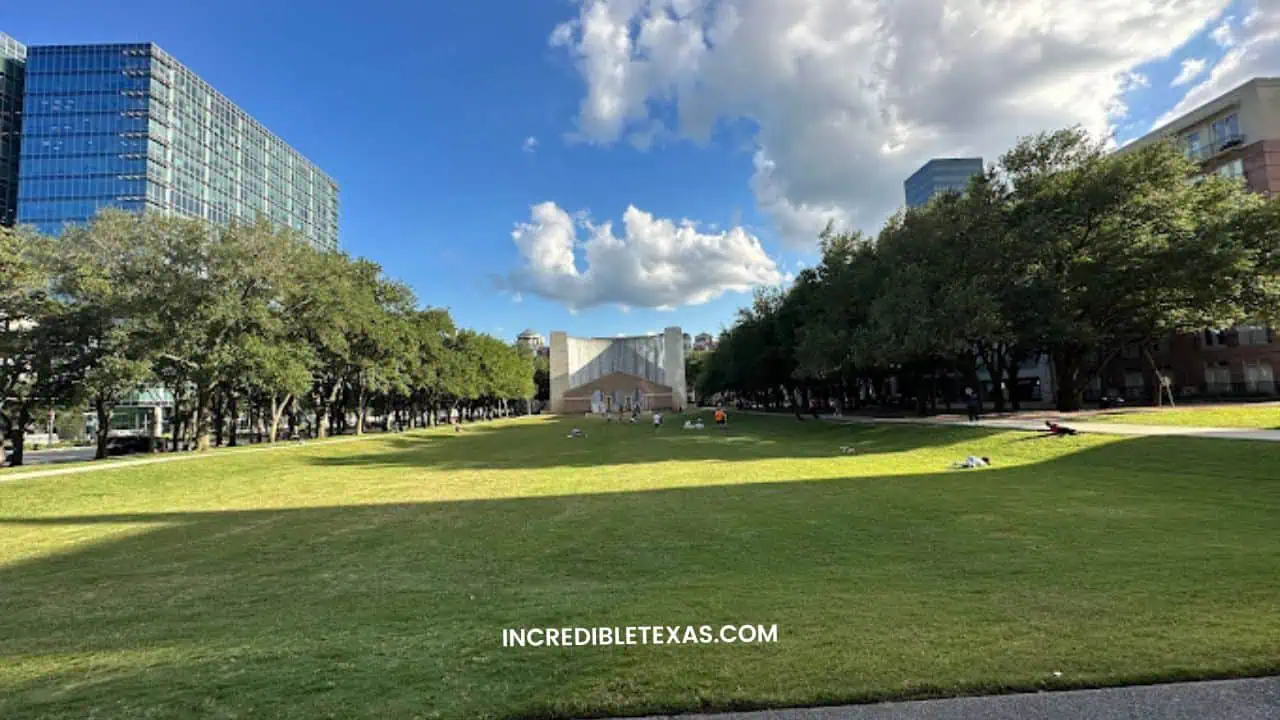
The visit works because it is compact, recognizable, and easy to understand at a glance. The 64-foot semi-circular wall and the live oak canopy give the park more presence than its footprint suggests, and that makes it feel like a destination instead of a quick turnoff.
That balance is what keeps the Waterwall in so many Houston itineraries. It can work as a first stop, a photo break, or a short finish to a longer Uptown afternoon without adding much planning burden.
The park also has a shape that makes it easy to explain to first-time visitors. The wall is the main event, the lawn softens the edge of the site, and the surrounding streets make the visit feel urban rather than isolated.
That combination of scale and setting is rare in a city landmark. It is also the reason the Waterwall continues to appear in travel roundups, neighborhood guides, and photo-focused Houston lists.
The stop also works well for visitors who want one clear landmark and a simple route around it. A short walk can still feel complete because the wall carries most of the visual weight, while the lawn and trees make the setting feel calmer than the surrounding district.
The result is a place that can be read quickly and remembered easily. That is useful in a city where many attractions ask for a larger time block and a more complicated plan.
| Quick Fact | Current Details |
|---|---|
| Official name | Gerald D. Hines Waterwall Park |
| Address | 2800 Post Oak Boulevard, Houston, TX |
| Hours | Daily, 9 am to 8 pm |
| Admission | Free to the public |
| Parking | Some parking may require payment |
| Closest parking | Williams Tower Visitor Parking Garage |
| Park size | 2.77 acres |
| Waterwall height | 64 feet |
| Water flow | 11,000 gallons per minute |
Gerald D Hines Waterwall Park Hours, Location, and Parking
Uptown Houston’s Waterwall Park page lists the current hours, address, admission, and parking note in one place.
For visitors, that means the main planning details are easy to confirm before leaving home. The official page is the best place to check if a trip depends on hours or parking.
Waterwall Park is open daily from 9 am to 8 pm, admission is free, and some parking may require payment.
The closest parking reference is the Williams Tower Visitor Parking Garage. That keeps the visit simple to plan, even when the park is only one stop in a longer Uptown route.
For a trip that also includes free things to do in Houston, that mix makes the Waterwall easy to slot into a broader day without ticket math. It gives a budget-friendly route one strong visual stop.
The closest parking reference on the official page is the Williams Tower Visitor Parking Garage. That does not turn the visit into a long walk, but it does mean the parking choice matters more than it would at a suburban park with a large free lot.
The park’s location also makes it useful in an Uptown route. A stop at the Waterwall can sit beside lunch, shopping, or a short walk through the district, and it can also work as one chapter in a larger Houston day-trip route when the goal is a compact but memorable outing.
A simple visit plan usually works best. Arriving with the parking note already checked, keeping the stop short, and leaving room for a nearby meal all fit the way the park is designed to be used.
The park is also easy to pair with a flexible schedule because the stop does not require a reservation or a long wait window. That makes it useful for travelers who are trying to build a city day without locking every hour in advance.
According to Uptown Houston, the park covers 2.77 acres and includes 186 live oak trees. That compact footprint explains why the visit stays short even when the surrounding district feels busy.
- Use the official Uptown page as the last stop before leaving home.
- Keep the parking note in mind if the goal is the shortest possible walk.
- Expect the visit to work best as part of a larger Uptown plan rather than as a long standalone outing.
- Leave enough flexibility for photos, a short walk, and a nearby meal or coffee stop.
That is one reason the Waterwall feels easy to recommend. The logistics stay simple, and the park does most of the visual work once visitors arrive.
The visit can also stay compact without feeling rushed. A few extra minutes usually make the stop feel complete, because the wall, the trees, and the surrounding district are all doing different parts of the work.
What the Visit to Gerald D Hines Waterwall Park Feels Like
The Gerald D Hines Waterwall Park feels larger than its footprint suggests. Uptown Houston says the park covers 2.77 acres and includes 186 live oak trees, so the space reads as compact but layered rather than open and empty.
The wall itself does most of the visual work. At 64 feet tall, it creates a strong frame inside a very urban setting, and the lawn and trees soften the hard edges of the surrounding district without turning the site into a separate nature preserve.
The scale also makes the visit easy to pace. A brief stop can cover the main view, while a slower visit can include a loop around the park, a short pause on the lawn, and a glance back toward the towers and streets that define Uptown.
That simple layout also helps visitors stay oriented. The wall never feels hidden, and the surrounding streets keep the stop tied to the city rather than separated from it.
Because the footprint is small, the stop rarely expands beyond what the day can comfortably handle. A short pause still feels complete because the landmark is built for a quick read.
That flexibility matters because the Waterwall is rarely the only stop on the calendar. Visitors using romantic things to do in Houston as a planning reference may want a slower pace, while others may only need enough time for the photo and the walk back to the car.
The park’s scale also makes it easy to describe to someone who has never visited. It is not a long trail or a major museum stop, and that simplicity is part of the appeal when the goal is to add one memorable landmark without taking over the whole itinerary.
Why the Gerald D Hines Waterwall Park Became a Houston Landmark
The Gerald D Hines Waterwall Park has a real civic backstory, not just a photo-friendly profile.
Hines’ 2009 announcement says the park was renamed Gerald D Hines Waterwall Park to honor Gerald D Hines, and the same release notes that the site remained open to the public after the dedication.
That renaming matters because it ties the attraction to the larger story of Uptown’s growth. The Uptown Houston history page places the Waterwall inside the district’s broader development story, which helps explain why the landmark carries so much local recognition.
The design side is just as important. Hines says the Waterwall was designed by John Burgee Architects with Philip Johnson, and the fountain recirculates 11,000 gallons of water per minute.
Those details help explain why the wall feels dramatic even though the park itself is compact. The structure also helps explain the landmark’s staying power, because the scale, the sound, the tree canopy, and the civic setting combine to create a space that can function as both a public park and a recognizable city symbol.
Readers who want the naming and dedication story in its original form can use the Hines dedication announcement as the primary reference.
It is the clearest source for the park’s history, and it pairs well with the Uptown page when the goal is to verify both the story and the current visitor details. That pairing is useful for any rewrite that needs both historical context and practical planning facts.
The history is also part of the reason the landmark feels local rather than generic. It belongs to Uptown in a way that makes the park more than a decorative feature in the district.
According to Hines, the park was designed by John Burgee Architects with Philip Johnson, and it recirculates 11,000 gallons of water per minute. That combination of design and movement is part of why the Waterwall still reads clearly from the street.
Gerald D Hines Waterwall Park Photo Timing and Visit
The Gerald D Hines Waterwall Park is one of the most recognizable photo stops in Uptown. Visit Houston includes it in its selfie guide, and that framing matches the way many visitors actually use the park: a quick visual stop that still feels like a destination.
The attraction works well for photos because the wall provides a strong vertical backdrop while the trees and lawn keep the scene from feeling too hard-edged. That combination is useful in a city setting, where a landmark needs enough visual identity to stand on its own.
Timing still matters. Softer light tends to make the wall and the surrounding greenery easier to read, and the park can feel especially flexible when the stop needs to fit between other plans rather than anchor the entire afternoon.
That makes the site especially useful for a short photo break. The visitor does not need a complex setup because the wall, the mist, and the trees already create a complete frame.
The attraction also rewards a low-effort approach to photography. A simple phone photo can be enough, because the landmark supplies the backdrop and the setting already does the styling.
That makes the park a natural fit for romantic things to do in Houston, especially when the day needs one visually memorable stop before dinner or a walk elsewhere in Uptown. It also works for visitors who want a short break rather than a long attraction visit.
The most useful photo strategy is usually the simplest one. Keep the stop brief, use the wall as the anchor, and let the park’s scale and sound do the rest of the work.
The park also works well when the visit has to stay efficient. The landmark gives the day a clear visual stop without asking for more time than the rest of the schedule can spare.
According to Visit Houston, the Waterwall remains a recognizable selfie stop because the wall, mist, and live oaks create a frame that works instantly in a photo. That makes the landmark especially efficient for content planning.
Gerald D Hines Waterwall Park Nearby Stops and Route Ideas
The Gerald D Hines Waterwall Park is especially helpful when it sits inside a larger Houston route. It pairs easily with shopping, dining, and other Uptown stops, and that makes it useful for visitors who want the day to feel full without becoming overplanned.
For family visitors, the park can be one stop before or after another attraction. A nearby Houston Interactive Aquarium guide or a Houston Zoo planning page can give the day a second anchor when the goal is to build more than one stop into the same outing.
That kind of route planning works because the Waterwall does not demand a long time commitment. It gives the day a recognizable landmark and leaves enough room for a meal, a second attraction, or a simple walk through the district.
Visitors who prefer a slower pace can also use the park as a transition point between neighborhoods. The landmark sits close enough to the Galleria area to feel central, yet it still has enough visual identity to make the stop feel intentional rather than incidental.
That flexibility is the real value of the site. The Waterwall can play the role of a quick landmark, a photo stop, a date-night pause, or a family-friendly break without needing a different article for each version of the visit.
For broader planning, the park also works well as part of free things to do in Houston. It gives budget-conscious itineraries a strong visual stop while keeping the day’s structure simple and easy to follow.
That flexibility also makes it useful for visitors who want a more relaxed route through the city. The Waterwall can serve as the anchor and still leave room for a museum stop, a meal, or a short drive to another neighborhood.
Gerald D Hines Waterwall Park Frequently Asked Questions
What is Gerald D. Hines Waterwall Park?
Gerald D Hines Waterwall Park is a public Houston landmark centered on a 64-foot semi-circular water wall in Uptown.
It is one of the city’s best-known open spaces because the design is distinctive, the location is central, and the park remains easy to visit.
Is Waterwall Park free to visit?
Yes. Uptown Houston lists the park as free to the public, although some nearby parking may require payment.
That makes the park itself an easy addition to a Houston itinerary without turning the whole visit into a ticketed stop.
What are the current hours for Waterwall Park in Houston?
Uptown Houston lists daily hours from 9 am to 8 pm.
The district’s own page is the best reference for same-day planning because it is the source that manages the park’s public information.
Where is Waterwall Park located?
The park is at 2800 Post Oak Boulevard in Houston, just south of Williams Tower and close to the Galleria area.
That location places it inside Uptown, where the park can sit naturally beside shopping, dining, and short neighborhood walks.
Is parking available near Waterwall Park?
Yes. Uptown Houston notes that some parking may require payment and points to the Williams Tower Visitor Parking Garage as the closest parking reference.
That information is usually enough to keep the arrival plan simple.