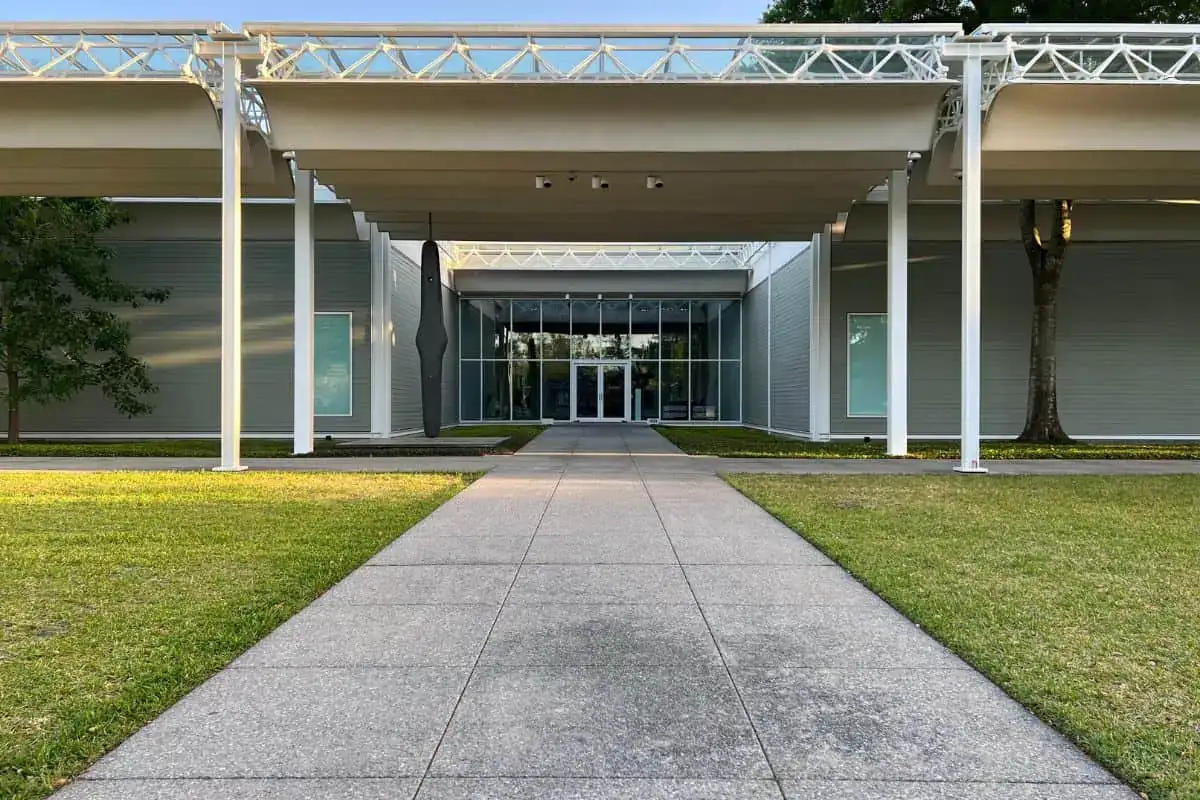
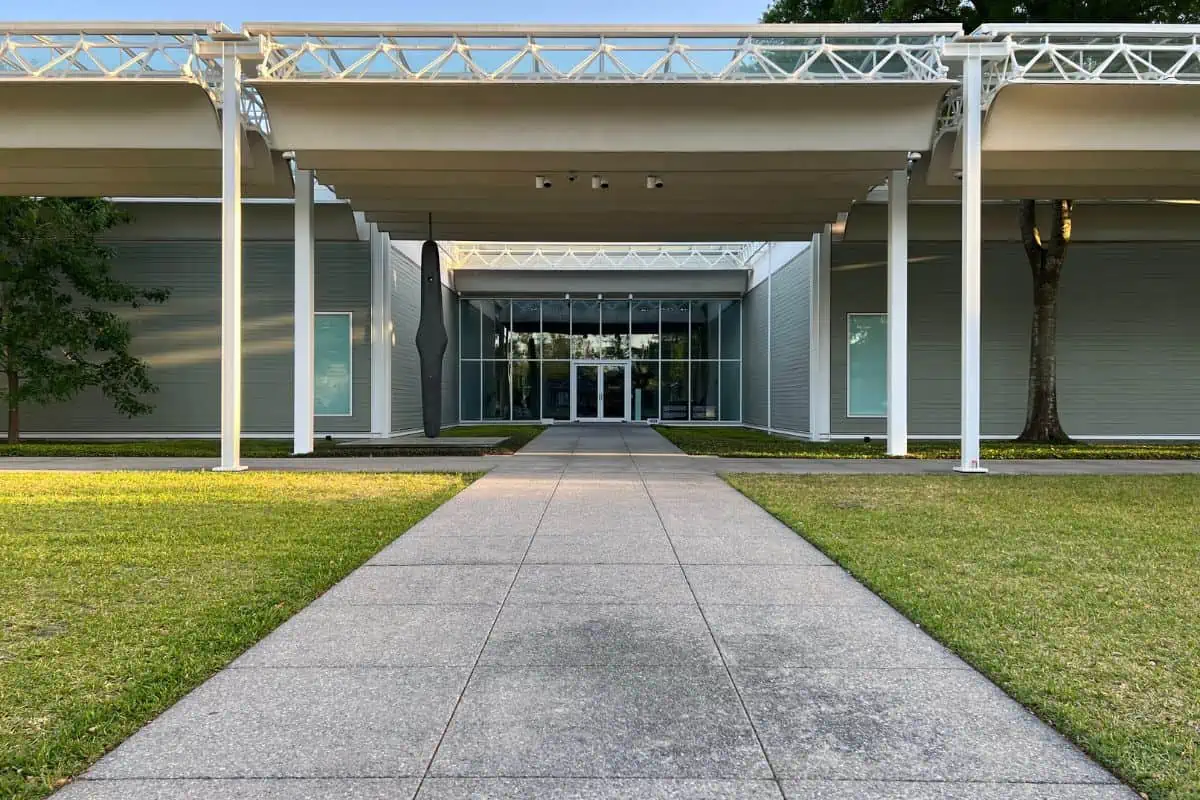
The Menil Collection is an extraordinary 30-acre art sanctuary located in the historic Montrose neighborhood of Houston. Conceived by visionary art patrons John and Dominique de Menil, the institution opened in 1987 as a tranquil alternative to conventional urban museums.
Comprising multiple freestanding exhibition pavilions, expansive green spaces, and shaded residential bungalows, the campus balances world-class art with neighborhood charm. Best of all, general admission and visitor parking remain completely free to the public every day the doors open.
Key takeaways
- The Menil Collection offers completely free general admission and free surface parking, operating Wednesday through Sunday from 11:00 AM to 7:00 PM.
- The 30-acre Montrose campus features the Renzo Piano-designed Main Building, Menil Drawing Institute, Cy Twombly Gallery, and Dan Flavin installation.
- The permanent collection holds more than 17,000 artworks spanning Surrealism, modern masterworks, ancient Mediterranean relics, and African sculptures.
- Photography is prohibited in exhibition galleries, preserving an undisturbed contemplative environment for all visitors.
Plan your visit
Verified
- Location
- 1533 Sul Ross St, Houston, TX 77006
- Hours
- Wednesday to Sunday: 11:00 AM to 7:00 PM; Closed Monday & Tuesday
- Admission
- Free general admission; free visitor parking
- Best time to go
- Weekday afternoons for quiet contemplative viewing
Menil Collection Houston at a Glance
The Menil functions as an unhurried cultural neighborhood where architecture and art engage in continuous dialogue. Visitors can easily spend an entire afternoon wandering through distinct gallery pavilions and shaded tree lawns.
Budget-conscious cultural travelers can explore our guide to free things to do in Houston to discover how the Menil anchors the city’s complimentary museum landscape. The table below outlines key campus pavilions and what to expect during your tour.
| Pavilion | Architect / Year | Primary Collection Focus | Admission & Access |
|---|---|---|---|
| Main Building | Renzo Piano (1987) | Surrealism, Antiquities, African Art, Modern Art | Free; open Wed through Sun |
| Menil Drawing Institute | Johnston Marklee (2018) | Modern and contemporary drawings and works on paper | Free; open Wed through Sun |
| Cy Twombly Gallery | Renzo Piano (1995) | Dedicated permanent retrospectives of Cy Twombly | Free; open Wed through Sun |
| Dan Flavin Installation | Richmond Hall (1998) | Site-specific neon fluorescent light sculptures | Free; open Wed through Sun |
| Menil Park & Grounds | Michael Van Valkenburgh | Outdoor monumental sculptures and picnic lawns | Free; open daily dawn to dusk |
Planning a Visit: Hours, Parking, and Admission
All indoor museum galleries welcome visitors Wednesday through Sunday from 11:00 AM to 7:00 PM. The museum remains closed on Mondays and Tuesdays for conservation maintenance and curatorial installation.
General admission is always free, and visitors do not need advance reservations or entrance tickets to tour the buildings. Current visitor policies and special event details are maintained on The Menil Collection Official Visit Portal.
The primary designated parking lot is located at 1515 West Alabama Street, directly across from the Menil Drawing Institute. An auxiliary free surface lot sits beside Richmond Hall at 1500 Richmond Avenue, while parallel curbside parking lines neighboring residential streets.
Public transit riders can conveniently reach the campus via routes operated by the Metropolitan Transit Authority of Harris County. METRO bus lines stop within two blocks along Montrose Boulevard and Richmond Avenue.
Campus Architecture and Renzo Piano Design
The Menil Main Building represents the first major American civic commission by celebrated Italian architect Renzo Piano. Completed in 1987, the structure revolutionized museum design by prioritizing soft natural daylighting over theatrical artificial illumination.
Piano designed a specialized roof louver system featuring hundreds of ferroconcrete leaves that filter shifting Texas sunlight into the galleries. This innovative design allows paintings and sculptures to breathe with changing weather and passing clouds.
Surrounding residential bungalows painted in the trademark Menil Gray hue house museum administrative offices and research foundations. This harmonious domestic integration preserves the quiet, unpretentious atmosphere of the historic Montrose neighborhood.
Couples exploring romantic cultural itineraries will find that the peaceful campus architecture pairs naturally with activities in our Houston date ideas guide. Its reflective setting provides a restorative escape from busy city life.
Permanent Collection Highlights and Themes
The permanent holdings encompass more than 17,000 paintings, sculptures, drawings, photographs, and rare historic artifacts. The de Menil founders collected art across diverse centuries and continents, seeking universal human spiritual connections.
The Surrealism collection ranks among the most comprehensive and renowned in the Western Hemisphere. Visitors can admire defining masterworks by Rene Magritte, Max Ernst, Salvador Dali, Giorgio de Chirico, and Yves Tanguy.
Antiquities galleries display prehistoric figures, classical Greek vessels, Roman marble busts, and Byzantine sacred icons. Review comprehensive holdings and curatorial histories via The Menil Collection Curatorial Overview.
- Surrealist Masterpieces: Iconic canvases and dreamlike assemblages by Magritte, Ernst, and Man Ray.
- Indigenous Arts: Monumental ancestral carvings and ceremonial masks from West Africa and the Pacific Islands.
- Ancient Civilizations: Intricately carved Cycladic idols, Roman glass relics, and Egyptian statuettes.
- Post-War Modernism: Seminal color field works and sculptures by Mark Rothko, Barnett Newman, and Jasper Johns.
Campus Buildings: What to See First
Because the Menil Collection encompasses several separate facilities across multiple blocks, planning an efficient walking route maximizes your visit. Starting at the Main Building provides an ideal artistic foundation before exploring specialized satellite pavilions.
Travelers organizing multi-day urban excursions can coordinate stops using our Houston attractions guide. Each building offers an intimate setting tailored to its featured medium.
Main Building Galleries
The 30,000-square-foot ground floor of the Main Building hosts rotating thematic presentations alongside permanent galleries. Broad central hallways surfaced with stained pine floorboards guide visitors through spacious, uncluttered exhibition halls.
Wall labels remain intentionally brief and discreet throughout the galleries to encourage direct personal engagement with the artwork. Free printed gallery guides in English and Spanish are available in each room for deeper historical context.
Menil Drawing Institute
Opened in 2018 and designed by architects Johnston Marklee, the Menil Drawing Institute is the first freestanding American facility dedicated exclusively to modern drawings. Its elegant steel-and-glass design centers around three open-air courtyards filled with bamboo and live oaks.
The institute hosts specialized exhibitions exploring drawing techniques from early preparatory sketches to contemporary mixed-media paper works. The intimate scale creates an engaging environment for studying delicate works on paper.
Cy Twombly Gallery
Designed by Renzo Piano in close collaboration with the artist, this permanent installation opened in 1995 to house works spanning Cy Twombly’s career. The pavilion features nine distinct galleries illuminated by a sailcloth ceiling that diffuses overhead sunlight.
The installation displays monumental canvases, delicate bronze sculptures, and calligraphic drawings that Twombly created over five decades. Its contemplative pacing provides one of the most peaceful viewing experiences on the campus.
Dan Flavin Installation at Richmond Hall
Located several blocks south at 1500 Richmond Avenue, Richmond Hall occupies a restored 1930s grocery store. The building houses a permanent site-specific installation created by minimalist pioneer Dan Flavin shortly before his death in 1996.
Flavin utilized commercial fluorescent light tubes in brilliant neon hues of green, pink, yellow, and blue to transform the interior architecture. Guests bathe in pure color fields that stretch from the rafters to the polished concrete floor.
Outdoor Sculpture and Neighborhood Parklands
The outdoor grounds function as a welcoming community park shaded by century-old live oak trees. Visitors frequently spread blankets on the grassy lawns of Menil Park to read, sketch, or enjoy quiet afternoon picnics.
Monumental modern sculptures by renowned artists are strategically positioned throughout the green spaces. Notable works include Mark di Suvero’s soaring steel sculpture Bygones and Michael Heizer’s subterranean earthwork Isolated Mass / Circumflex.
Outdoor travelers interested in comparing central green spaces can consult our Buffalo Bayou Park guide for another remarkable Houston landscape. The open-air setting makes art accessible at any hour of the day.
- Menil Park: Broad green lawns framed by Mulberry Street and Sul Ross Street, perfect for resting between gallery visits.
- Bistro Seating: Shaded outdoor benches positioned beneath spreading live oaks provide peaceful rest stations.
- Bistro and Bookstore: The Menil Bookstore across from the Main Building offers curated art monographs, literature, and unique gifts.
Best Times to Visit and Itinerary Planning
Weekday afternoons on Wednesday, Thursday, or Friday offer the quietest gallery atmosphere and easiest parking access. Visiting between 1:00 PM and 4:00 PM allows you to experience the natural daylighting at its most radiant.
Weekends bring a lively neighborhood gathering to the surrounding lawns, with local families and dog walkers enjoying Menil Park. Regional drivers can review regional highway conditions via TxDOT Houston District Corridor Updates to navigate cross-town traffic smoothly.
Allow two to three hours to thoroughly tour the Main Building, the Drawing Institute, and the Cy Twombly Gallery. Travelers with additional time can easily spend an entire afternoon relaxing across the park grounds.
For visitors planning regional journeys, explore complementary itineraries in our day trips from Houston directory. Combining art appreciation with scenic Texas routes creates an unforgettable vacation.
Practical Visitor Tips and Gallery Etiquette
To preserve the contemplative environment and protect delicate artworks, the Menil enforces strict gallery etiquette rules. Visitors must check large bags, umbrellas, and backpacks at the complimentary security coat check in the Main Building foyer.
Cell phones must be silenced, and photography is strictly forbidden inside all gallery rooms. Caregivers should ensure children remain closely supervised, and outside food and beverages cannot be brought into exhibition pavilions.
- Check Bags Early: Large backpacks and bulky luggage must be left at the free security coat check counter.
- Dress in Layers: Galleries are maintained at a cool, constant temperature to protect historic canvas materials.
- Respect Quiet Zones: Maintain hushed speaking voices to support an atmosphere of calm contemplation.
- Service Animals: Trained service animals are welcome inside all buildings, while pets are restricted to outdoor park lawns.
Frequently Asked Questions
Is admission free at the Menil Collection?
Yes, general admission to all museum buildings, special exhibitions, and outdoor sculpture green spaces is completely free for all guests. The institution was founded on the belief that art should remain accessible to everyone without entrance fees.
What are the operating hours for the Menil Collection?
All Menil campus museum buildings are open Wednesday through Sunday from 11:00 AM until 7:00 PM. The galleries remain closed to the public on Mondays and Tuesdays, though surrounding park lawns open daily from dawn to dusk.
Where should visitors park at the Menil Collection?
Free visitor surface parking is available in the designated lot at 1515 West Alabama Street and beside Richmond Hall at 1500 Richmond Avenue. Additional free street parking borders the perimeter of the surrounding residential neighborhood.
Is photography allowed inside the galleries?
No, photography and video recording are strictly prohibited inside the main exhibition galleries to safeguard private art loans and maintain quiet contemplation. Casual handheld snapshots are permitted only in entry vestibules, public foyers, and outdoor sculpture parks.
Do visitors need advance reservations?
Individual visitors and small parties do not need advance reservations or admission tickets to tour the galleries. Guided group tours numbering 15 or more guests must register through the museum visitor services department in advance.
Final Take
The Menil Collection remains one of America’s finest cultural treasures, offering an unhurried encounter with world-class art in a peaceful neighborhood setting. Renzo Piano’s luminous architecture, coupled with extraordinary Surrealist and modern masterworks, makes every visit deeply enriching.
Travelers studying delicate sketches in the Drawing Institute, contemplating Cy Twombly’s expressive canvases, or lounging beneath live oaks in Menil Park will discover an inspiring cultural destination. Best of all, free admission ensures this exceptional museum campus remains open to all.