Brackenridge Park San Antonio TX: Hours, History, and Tips
Brackenridge Park San Antonio TX is one of the most practical low-cost park days in the city. The park is free and open daily from 5 am to 11 pm.
Visitors can combine riverfront walking, historic landmarks, playground time, and nearby museums without leaving the Brackenridge corridor. The park sits north of downtown San Antonio near the San Antonio River, with free parking in the park and at nearby garages.
| Quick Fact | Current Detail |
|---|---|
| Official name | Brackenridge Park |
| Location | 3700 N. St. Mary’s St., San Antonio |
| Hours | Open daily from 5 a.m. to 11 p.m. |
| Admission | Free |
| Parking | Free in the park, with free garages near Avenue B and Tuleta Drive plus a surface lot near the Japanese Tea Garden |
| Dogs | Allowed on leash, except in playgrounds |
| Fishing | Allowed with a fishing license |
| Best known for | The Japanese Tea Garden, the San Antonio Zoo, the Witte Museum, the Sunken Garden Theater, and historic riverfront landmarks |
| Access note | Lambert Beach Playground is closed until further notice |
Brackenridge Park functions as a working city park with trails, picnic areas, playgrounds, art installations, and historic sites. Those features still shape how San Antonio residents use the land today.
Brackenridge Park Hours, Parking, Rules, and 2026 Access Notes
According to the official park listing, Brackenridge Park is free and open every day from 5 am to 11 pm. That schedule leaves little room for guesswork.
Parking is also unusually forgiving for a central city park. The Conservancy lists free parking inside the park and free garages near Avenue B and Tuleta Drive.
A surface lot is also available near the Japanese Tea Garden, along with many designated accessible spaces and ramps.
Visitors should check the City of San Antonio park closures page before arriving if the trip depends on a specific playground, trail segment, or parking area.
- Dogs: Allowed in the park, but they must stay on a leash and cannot enter playground areas.
- Fishing: Allowed, but a fishing license is required.
- Swimming: Not allowed.
- Scooters and horses: Not allowed in the park.
- Metal detecting and geocaching: Not allowed.
- Alcohol: Not allowed except in Koehler Pavilion with a permit.
- Concessions: Not allowed except with a permit.
- Overnight camping: Not allowed except during Easter weekend by city order.
Lambert Beach Playground is closed until further notice, and the city closure page lists the Brackenridge Park playground as closed for that reason.
That note matters for families because the park still looks open from the outside even when part of the play area is unavailable. A Nature Playscape is also listed as coming soon near Joske Pavilion.
Visitors planning around small children should treat the playground side of the park as a live access situation rather than a fixed snapshot.
Visitors who want to keep the day in the same broad part of the city can move from Brackenridge Park to the San Antonio River Walk afterward.
The park and the riverfront both reward slow walking rather than fast transit between attractions. The practical rule of thumb is to arrive with a little flexibility.
The park itself is straightforward to enter, but specific amenities inside it can change while the city handles closures, construction, or preservation work.
Brackenridge Park Quick Facts
The short answer is simple: Brackenridge Park is a free, large, and highly usable San Antonio park with enough history and nearby attractions to fill most of a half day. Visitors looking for a quiet walk, a family stop, or a compact city itinerary can build a good visit without buying a ticket.
According to the official Brackenridge Park Conservancy things-to-do page, the park is free and open daily from 5 am to 11 pm.
Visitors comparing San Antonio green spaces can place Brackenridge Park alongside the city’s other major parks, including the best parks in San Antonio roundup. Brackenridge stands out because it behaves like a full district, not just a patch of lawn.
- Low-cost outing: The park itself does not charge admission.
- Mixed itinerary: Trails, museums, gardens, and food stops sit close together.
- Family visit: Playground space, open lawns, and picnic units support an easy park day with children.
- History visit: The land holds centuries of San Antonio history and several nationally recognized landmarks.
The park also serves as a north-of-downtown anchor for a quick walk, a museum visit, a meal, and a return to the city center.
What to Do in Brackenridge Park
Brackenridge Park is built for variety. Visitors can walk near the river, picnic under mature trees, fish, attend events, or use the park as a base for larger San Antonio stops such as the zoo, the Witte Museum, and the Japanese Tea Garden.
The park also belongs in the same conversation as the city’s larger outdoor attractions. Travelers comparing neighborhoods can use the best things to do in San Antonio page to see how Brackenridge Park fits into a wider city plan.
According to the Brackenridge Park Conservancy history page, the park’s public spaces include art installations, fishing, Miraflores, pavilions, picnics, playgrounds, the San Antonio River, softball fields, the Sunken Garden Theater, and walking trails.
- Walk the river corridor. The park’s riverfront sections are the easiest way to understand the site, and they give visitors a shaded route that feels calmer than many central city sidewalks.
- Spend time at the Japanese Tea Garden. The garden sits inside Brackenridge Park and adds a quieter, more formal landscape to the visit.
- Visit the zoo or the Witte Museum. Both neighbors are close enough to turn the park into a full family day rather than a single stop.
- Use the picnic units. The park has historic picnic areas and modern places to sit, rest, and eat without leaving the grounds.
- Catch an event. The Sunken Garden Theater and other park spaces host concerts, markets, and seasonal programming.
- Take children to play. Playgrounds and open space make the park one of the easier San Antonio parks for families to use for more than just a walk.
- Fish or stroll. Fishing is allowed with a license, and the trails support a slower, low-effort visit.
Visitors who want a quieter stop can stay near the river and the trees. Visitors who want a fuller outing can build a route around the park and then continue to the zoo, the museum, or a downtown lunch afterward.
Brackenridge Park can function as a destination on its own or as the pause between two much busier San Antonio stops.
Visitors who prefer one north-side base can move from the riverbanks to the garden, then finish the day with a museum, a meal, or a short drive downtown.
A simple first-visit route
A first visit can start at the Japanese Tea Garden parking lot or near Tuleta Drive by the river crossing. That choice keeps the garden, the water, and the older stonework inside the same short walking loop.
After that, visitors can add the zoo side or the Witte side without changing the basic route. The park’s compact north-side layout keeps the day from turning into a drive-heavy schedule.
- Step 1: Park near the garden or river crossing.
- Step 2: Walk the river edge and historic features first.
- Step 3: Add one nearby attraction, not all of them at once.
Brackenridge Park History and Historic Sites Worth Knowing
Brackenridge Park has deep historical roots. The Conservancy says the park’s history reaches back more than 12,000 years, and the City of San Antonio describes the land as a place of human occupation going back at least 11,000 years.
In 1899, George W. Brackenridge donated 199 acres to the city.
The donation set the stage for a riverfront public space that later expanded into one of San Antonio’s most layered urban landscapes.
Historic designation is part of the park’s identity too. The conservancy identifies Brackenridge Park as a site on the National Register of Historic Places and as a Texas State Antiquities Landmark, which reflects both its age and the density of structures that survive inside the park.
The park’s older sites help explain why it feels so different from a modern suburban park. The landscape includes a low water crossing, historic bridges, pump houses, the Sunken Garden Theater, the Brackenridge Golf Course, and the Japanese Tea Garden.
Visitors who want to understand that history in a broader city context can compare it with the best things to do in San Antonio page. Brackenridge Park sits inside the same story as the city’s river, missions, and cultural landmarks.
| Historic Site | Why It Matters |
|---|---|
| Japanese Tea Garden | One of the park’s best-known garden spaces, with a waterfall, walking trails, and a formal landscape |
| Low Water Crossing | A historic crossing at Tuleta Drive that has connected park areas for generations |
| Sunken Garden Theater | A long-running performance space that gives the park a cultural side beyond daytime recreation |
| Brackenridge Golf Course and Clubhouse | Part of the park’s long recreational history and a reminder that the site has never been only decorative |
| Water Works Pump House No. 1 | An important historic utility structure tied to the riverfront landscape |
According to the Conservancy’s historic-sites page, the park contains more than thirty named landmarks. The page turns the park into a walkable timeline.
One of the strongest examples is the Low Water Crossing on Tuleta Drive, which dates to around 1917 and has long linked the park’s attractions across the river.
Another is the Japanese Tea Garden, which appears in the historic inventory alongside the Sunken Garden Theater and the Witte Museum.
Visitors are not just walking through open land.
They are moving through a preserved civic landscape that still carries old routes, old structures, and old relationships to the river.
The setting also rewards visitors who like to connect parks with city heritage, because the river crossings, museum neighbors, and garden spaces are visible without a formal tour.
How the site changed over time
The park’s identity moved from riverfront land to city park, then to a layered public landscape with preserved structures and civic recreation spaces. That shift explains why the area feels historic without feeling frozen.
The historic-sites page includes landmarks tied to waterworks, stonework, gardens, theater space, and carved art. Visitors who notice those details get a better read on how San Antonio built and reused the site over time.
The same pattern appears in the river edge, the Tea Garden, the golf course, and the theater spaces. Each one shows a different chapter in the park’s long public life.
Choosing the best season
Spring and fall usually give the park its most comfortable walking weather. Mild temperatures make it easier to move between the riverbanks, the garden, and the museum neighbors without a long indoor break.
Summer visits often work better in the morning. The park opens early, and an early start leaves time for a zoo stop, lunch, or the River Walk before the hottest part of the day.
Wet-weather days also deserve a quick closure check because trails and play areas can change with maintenance or rain. The city closures page is the most reliable place to confirm that the route still matches the plan.
- Morning visits: Best for cooler air, easier parking, and softer light around the river.
- Afternoon visits: Best for museum add-ons, lunch, and a slower garden loop.
- Rainy days: Best handled with a closure check before leaving home.
Nearby Attractions and Easy San Antonio Add-Ons
Brackenridge Park is strongest when it is paired with one or two nearby attractions.
The Japanese Tea Garden, Witte Museum, San Antonio Zoo, and the River Walk all sit close enough to turn the park into a full day without forcing a long drive elsewhere in the city.
The same route can also connect to bigger city planning tools, including the San Antonio Stock Show and Rodeo 2026 guide and the Annual Festivals Celebrated in Texas calendar.
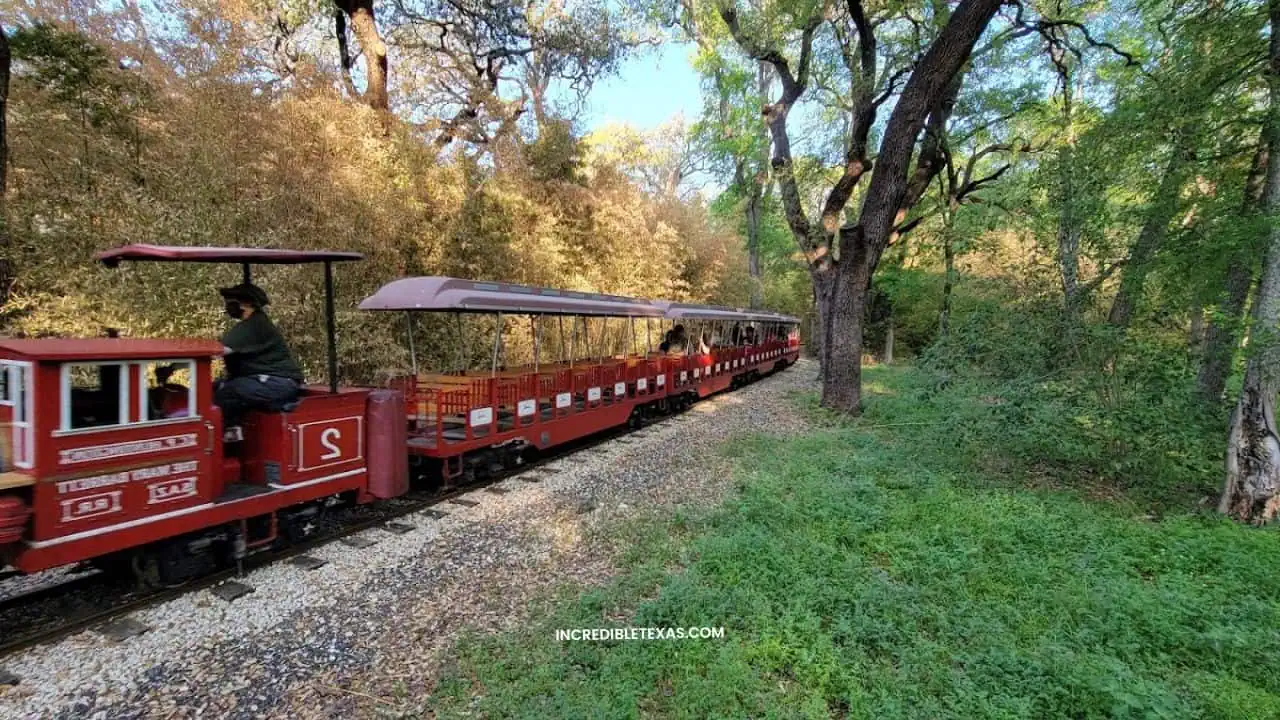
The Brackenridge Park Conservancy’s official things-to-do page lists the Japanese Tea Garden and Jingu House Cafe, the Witte Museum, the zoo train depot, Brackenridge Golf Course, and the park’s other built-in neighbors.
The park’s north-side layout keeps the most important stops close together, so visitors can choose a short loop or a longer half-day plan without resetting the route.
That same layout makes it easier to leave one attraction and continue to the next on foot, which keeps the outing calm instead of crowded.
| Nearby Stop | What It Adds | Current Detail |
|---|---|---|
| Japanese Tea Garden | A quieter scenic stop with a waterfall, pond views, and a formal garden layout | Free, open daily from dawn to dusk; Jingu House Cafe is open daily from 10 a.m. to 5 p.m. and the garden is wheelchair accessible |
| Witte Museum | A paid museum stop with dinosaurs, Texas history, and rotating exhibits | Admission is $17 for adults, $16 for seniors 65+, $16 for teens 13-18, $11 for children 4-12, and free for children 3 and under; Free Tuesdays for Bexar County residents run from 3 to 6 p.m. |
| San Antonio Zoo | A classic family add-on just outside the park’s historic core | Separate admission applies |
| River Walk | Dining, walking, and downtown sightseeing in the same outing | Easy to combine with the park in a single San Antonio day |
The Japanese Tea Garden is free and close to the park’s other north-side attractions.
The Witte Museum adds indoor depth for visitors who want history, science, and art in one building.
According to the Witte Museum visitor page, the museum is open Monday from 10 am to 5 pm, Tuesday from 10 am to 6 pm, Wednesday through Saturday from 10 am to 5 pm, and Sunday from noon to 5 pm.
Parking is free for visitors in the Brackenridge Park Parking Garage on Avenue B.
The zoo works for families who want a full animal-focused outing instead of a simple stroll.
The park’s own neighbor list connects the zoo, the train depot, and the golf course, so a visitor can decide how active or how relaxed the day should be.
Visitors building a longer San Antonio calendar can also match the park with major annual events.
Rodeo season, spring festivals, and school breaks are natural points to add it.
Brackenridge Park is a strong anchor for both locals and visitors.
It can be the main outing, the scenic break between larger attractions, or the calm start to a busier San Antonio day.
A compact north-side loop
A compact north-side loop can begin at Brackenridge Park, move through the Japanese Tea Garden, and continue to the Witte Museum or zoo. That route keeps the day focused on the same stretch of San Antonio instead of splitting it into unrelated stops.
The Witte Museum’s current schedule includes Monday through Saturday hours and a Sunday noon opening, and the museum also offers Free Tuesdays for Bexar County residents from 3 pm to 6 pm. Free parking in the Brackenridge Park Garage on Avenue B makes that stop simpler to add.
Visitors who want more riverfront time can keep going toward downtown after the park loop. That approach ties the park to the River Walk, a meal stop, or a later evening plan without forcing a second round of parking.
Brackenridge Park FAQ
Is Brackenridge Park free?
Yes. The park itself is free. The current official listing says Brackenridge Park is free and open every day from 5 am to 11 pm.
Some nearby attractions inside or next to the park use separate admission, including the Witte Museum and other ticketed attractions. The park grounds alone do not require an entry fee.
What time does Brackenridge Park open?
Brackenridge Park opens daily at 5 am and closes at 11 pm. That schedule leaves the quietest window for walkers, runners, birdwatchers, and anyone who wants a calmer park before the day gets busy.
The park’s long daily window gives families enough flexibility to use the grounds before or after other San Antonio plans.
Visitors do not need to time the stop around a narrow opening period.
Where can visitors park for Brackenridge Park?
Parking is free in the park, and the Conservancy lists additional free parking in garages near Avenue B and Tuleta Drive. A surface lot is also available near the Japanese Tea Garden.
The Avenue B garage suits the Witte side, Tuleta Drive suits the zoo side, and the Japanese Tea Garden lot suits a scenic start.
Can dogs go to Brackenridge Park?
Yes. Dogs are welcome in the park as long as they stay on a leash and remain out of playground areas.
The park does not have a dog park, so owners should plan on normal leash walking rather than off-leash play.
Is fishing allowed in Brackenridge Park?
Yes. Fishing is allowed, but a fishing license is required. The river setting adds another way to use the park beyond walking and sightseeing.
What is closed or changing in 2026?
The main current change is the Lambert Beach Playground closure. The City of San Antonio lists that playground as closed until further notice, so families should not assume the play area will be available on arrival.
The Conservancy also lists a Nature Playscape as coming soon near Joske Pavilion. Visitors who care most about play space should check closures before the trip.
How visitors can pair Brackenridge Park with the rest of San Antonio
The simplest pairing is Brackenridge Park first, then the River Walk, the Witte Museum, or the zoo depending on the time available. That route keeps the day in one part of the city and avoids unnecessary driving between attractions.
Visitors who want a broader plan can also fold the park into seasonal trip planning through the city’s event calendar. Rodeo season, spring festivals, and school breaks are natural points to add it.
Bottom line: Brackenridge Park San Antonio TX is a free park with real history, parking options, and enough nearby attractions to support a short visit or a full day.
Visitors who plan around the playground closure and the park rules can enjoy one of San Antonio’s most layered outdoor spaces.