10 Best Places for Camping in Houston, TX
According to Texas Parks & Wildlife Department and the U.S. Forest Service, the strongest camping near Houston TX options fall into four buckets: beachside state parks, lakefront state parks, forest campgrounds, and full-hookup RV resorts.
For the quickest path to a good choice, start with the setting first, then narrow it by site type and drive time.
Galveston Island State Park works for coastal camping, Lake Livingston State Park fits classic lake camping, Lake Houston Wilderness Park gives the best overnight forest escape inside the metro area, and Cagle Recreation Area is the easiest full-service lake option close to town. For a broader Texas beach comparison, browse Top 10 Best Beaches in Texas.
Camping options at a glance
Use this quick comparison first, then move into the sections below for the details that matter when packing, booking, and choosing a campsite.
| Place | Best for | Standout detail |
|---|---|---|
| Galveston Island State Park | Coastal camping | Beachside electric, tent-platform, and primitive sites |
| Lake Livingston State Park | Lake-view camping | Full-hookup loops with a lake view and a Friday/Saturday two-night rule |
| Stephen F. Austin State Park | Tent, RV, and cabin stays | Full hookups, water-only sites, primitive sites, and one cabin |
| Lake Houston Wilderness Park | Forest camping close to Houston | Only park in the city system with overnight cabins and campsites |
| Northlake RV Resort | RV resort comfort | Daily rates start at $49 on the resort’s rates page |
| Cagle Recreation Area | Full-hookup lake camping | 47 full-service RV sites on Lake Conroe |
| Double Lake Recreation Area | Trail-heavy camping | CCC-era forest setting with bike and hiking access |
| Huntsville State Park | Traditional state-park camping | Electric sites, full hookups, screened shelters, and a minimum two-night weekend stay |
| Brazos Bend State Park | Wildlife camping | Alligators, birding, and both electric and primitive sites |
| Stubblefield Lake Recreation Area | Budget forest camping | Simple sites, lake access, and a one-hour-north-of-Houston setting |
1. Galveston Island State Park
Galveston Island State Park is the best coastal pick for beach camping without leaving the Houston region entirely. TPWD currently lists beachside electric sites, tent-platform sites, primitive beach sites, and bay-side camping, so campers can choose comfort or a more stripped-back stay.
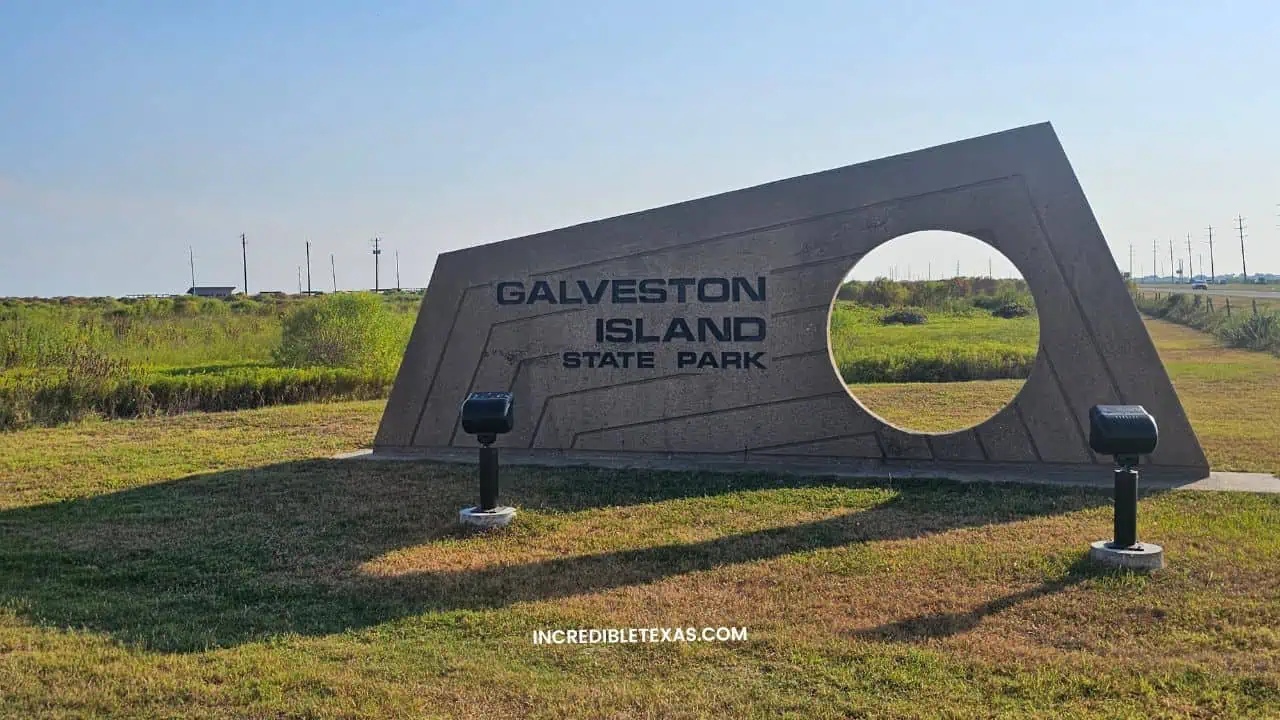
According to TPWD, the beachside electric sites run $30 to $35 per night, the tent-platform sites are $20, and the primitive beach sites are $15. The bay-side water sites are also $15, which makes the park one of the more flexible coastal options for a short trip or a longer weekend.
- Beachside sites give direct coastal access and showers nearby.
- Tent-platform sites keep campers close to the sand without parking at the campsite.
- Primitive beach sites are the simplest choice for a lighter setup.
Reservations matter here, especially during warm-weather weekends and holiday periods.
TPWD also notes accessible beachside sites, a tent platform site with some accessible features, and a trail side with mostly level ground and hard-packed sand in dry weather.
The accessibility notes matter when a beach trip needs a paved approach, raised grills, or flatter day-use terrain.
2. Lake Livingston State Park
Lake Livingston State Park is the strongest all-around lake option for a classic Texas state-park stay with room to spread out, and TPWD lists the park as open daily from 6am to 10pm.
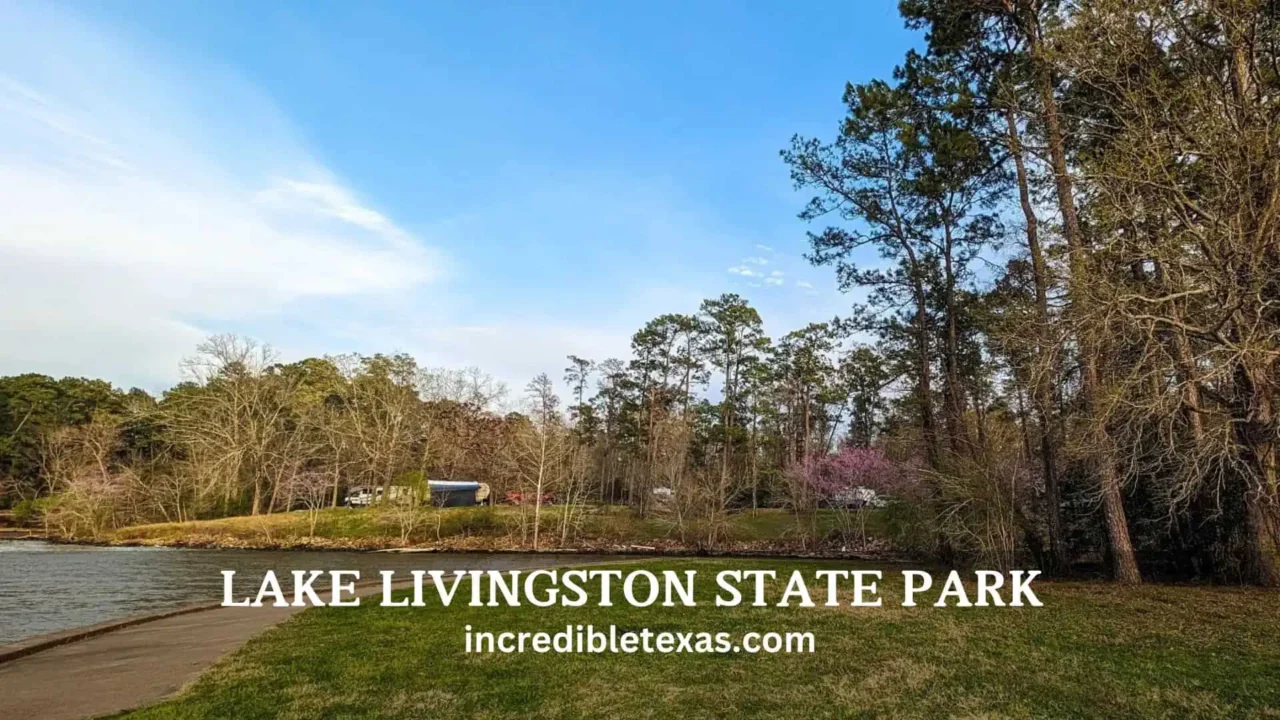
The park store and marina are open 8:30am to 4:30pm, which keeps basic supplies and boat access inside the park during the day.
According to TPWD, adults pay $6 for entry and children 12 and under enter free. The campsite lineup is broad, with full-hookup loops, electric sites, and tent-only water sites, so campers can match a stay to a rig, a tent, or a budget.
- Full-hookup sites in Piney Shores, Red Oak, Yaupon, and Pin Oak cover the most comfortable stays.
- Tent-only sites in Briar Loop keep the experience simple and affordable.
- Many Friday and Saturday reservations require both nights, so book early for a weekend stay.
The mix of loops makes the park useful for campers who want a lake view without giving up standard state-park amenities.
The Hercules Club Loop includes 26 campsites with electricity, water, picnic tables, and showers nearby.
For the full fee-and-loop breakdown, open Lake Livingston State Park: Ultimate 2026 Visitor’s Guide and compare the site types before booking.
3. Stephen F. Austin State Park
Stephen F. Austin State Park offers one of the cleanest mixes of RV, tent, and cabin camping near Houston, with full-hookup campsites at $30 per night, campsites with water at $20, primitive walk-in sites at $15, and a cabin at $75.
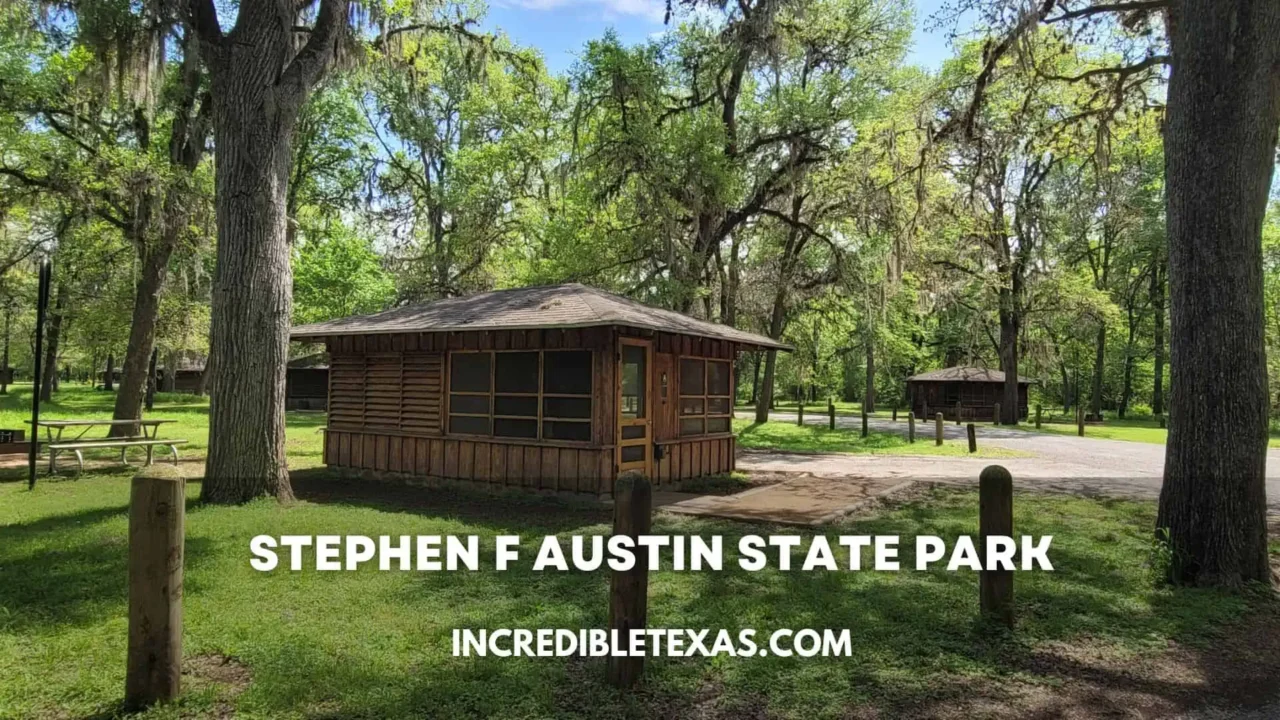
That spread makes the park a useful choice when a group does not all camp the same way. According to TPWD, the full-hookup sites are for RVs or pop-up campers, the water-only sites are for tent camping, and the primitive sites are walk-in spots with no electricity.
- Full-hookup sites work best when sewer, water, and power need to stay in one place.
- Water-only and primitive loops fit a simpler tent trip.
- The single cabin is handy when one traveler wants a bed, AC, and a lighter packing list.
TPWD also lists group facilities and screened shelter options for larger gatherings at the park.
For more cabin-focused Texas ideas after this stop, compare the park with Best State Parks in Texas with Cabins.
4. Lake Houston Wilderness Park
Lake Houston Wilderness Park is the best overnight forest escape inside the Houston park system. The city says it is nearly 5,000 acres, includes more than 20 miles of trails, and is the only park in the department that allows overnight stays in cabins and campsites.
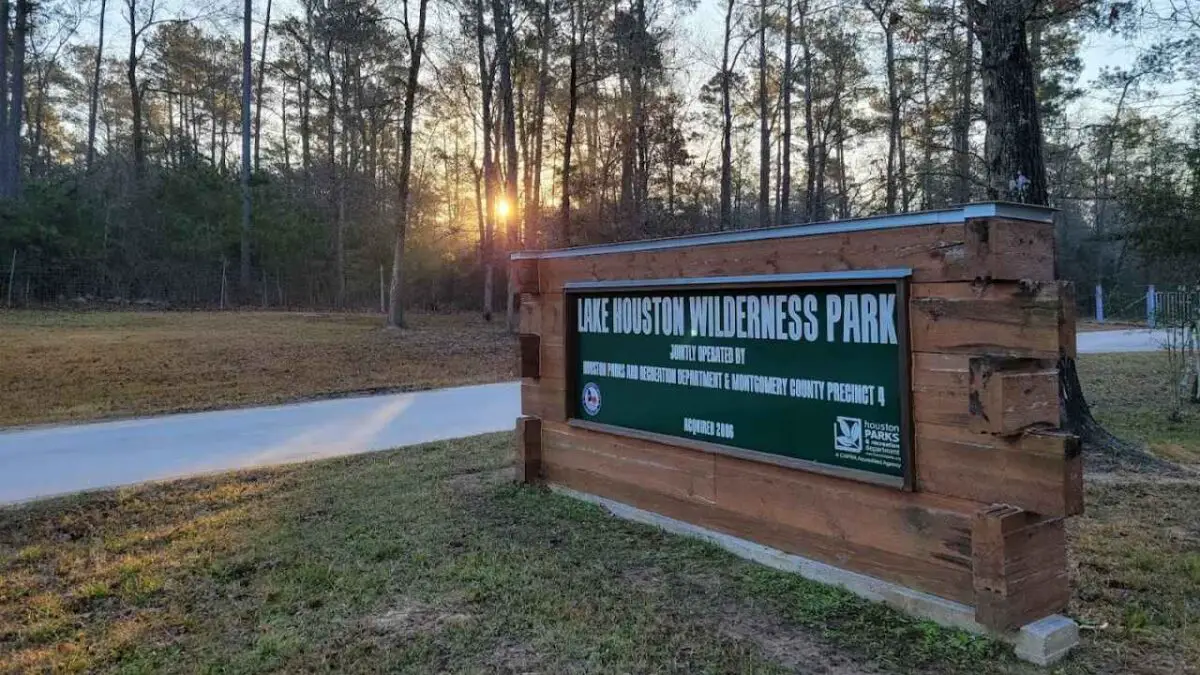
According to the City of Houston, individual campsites are $7, primitive campsites are $7, screen shelters are $25, and the rustic cabin is $85. The park also lists a $3 entrance fee per person ages 13 to 64, plus quiet hours, fire-ring-only fires, and a ban on generators.
- Individual campsites work well when water and electricity need to be close to the loops.
- Primitive campsites work well when a longer walk and a quieter setup are preferred.
- The rustic cabin works well when a simple roofed stay with less gear is the goal.
For a cabin-first comparison, use the cabin guide linked above before deciding.
The Joe Turner Nature Center sits inside the Lake Houston Wilderness Park, and the park page also offers trail map downloads for the horse trail and park trail system.
5. Northlake RV Resort
Northlake RV Resort works best for a Houston RV stay with resort-style extras instead of a back-to-basics campsite. The resort’s official rates page lists back-in RV sites starting at $49 per day, with pull-thru, lake, and covered back-in options priced higher.
The resort leans into comfort: a stocked fishing lake, pool, jacuzzi, fitness room, outdoor kitchen facilities, fire pits, and a dog wash station all appear on the property page.
The rates page also lists back-in, pull-thru, lake, and covered back-in site types, which keeps the RV setup options straightforward.
- Use it when full hookups and a smoother RV arrival matter most.
- Use it when Wi-Fi, laundry, and on-site recreation need to stay in one stop.
- Use it when a commercial resort fits a trip better than a public campground.
6. Cagle Recreation Area
Cagle Recreation Area is one of the easiest full-service campground choices near Houston because it puts campers on Lake Conroe with 47 full-service RV sites. The Forest Service says the sites include water, electricity, sewer hookups, a tent pad, a lantern post, and a fire ring.
According to the Forest Service, reservations must be made at least 48 hours in advance through Recreation.gov or by phone. The nightly camping rate is $30, and the park sits about 45 minutes north of Houston, which keeps the drive short enough for a simple weekend plan.
The site details also show a 45-foot maximum for trailers and RVs, plus water, sewer, and electric hookups on the standard electric sites.
- This is the best nearby match for lake access plus full hookups.
- This is the easiest public campground here for RV travelers who want a lakefront setting.
- This is also a good pick for fishing, hiking, and a boat ramp in the same place.
7. Double Lake Recreation Area
Double Lake Recreation Area gives a more wooded Sam Houston National Forest feel than the lakefront parks closer to Houston. The Forest Service says the area was built in 1937 by the Civilian Conservation Corps and now offers camping, fishing, swimming, picnicking, hiking, and a 21-mile mountain bike trail around the lake.
According to the reservation listing, the campground includes tent, RV, and group sites, and the day-use fee is $7 per vehicle.
New arrivals cannot enter from 10pm to 6am, which makes this a better choice for a planned arrival than for a late-night roll-in.
The trail setting matters here as much as the campsite, because the 21-mile mountain bike trail and the lake access are part of the reason campers book ahead.
- Pick it for a forest setting with more trail time than resort time.
- Pick it when swimming, biking, and hiking matter as much as the campsite.
- Pick it for a public campground with a long outdoor resume.
For a quick sense of how much the National Forest system offers near Houston, the Forest Service also notes that several more developed spots in Texas use Recreation.gov for reservations and trail access.
8. Huntsville State Park
Huntsville State Park is a reliable choice for a traditional state-park stay with enough site variety to fit tents, RVs, or a screened shelter. TPWD currently lists full-hookup sites at $25, electric sites at $20, water sites at $15, and screened shelters at $30.
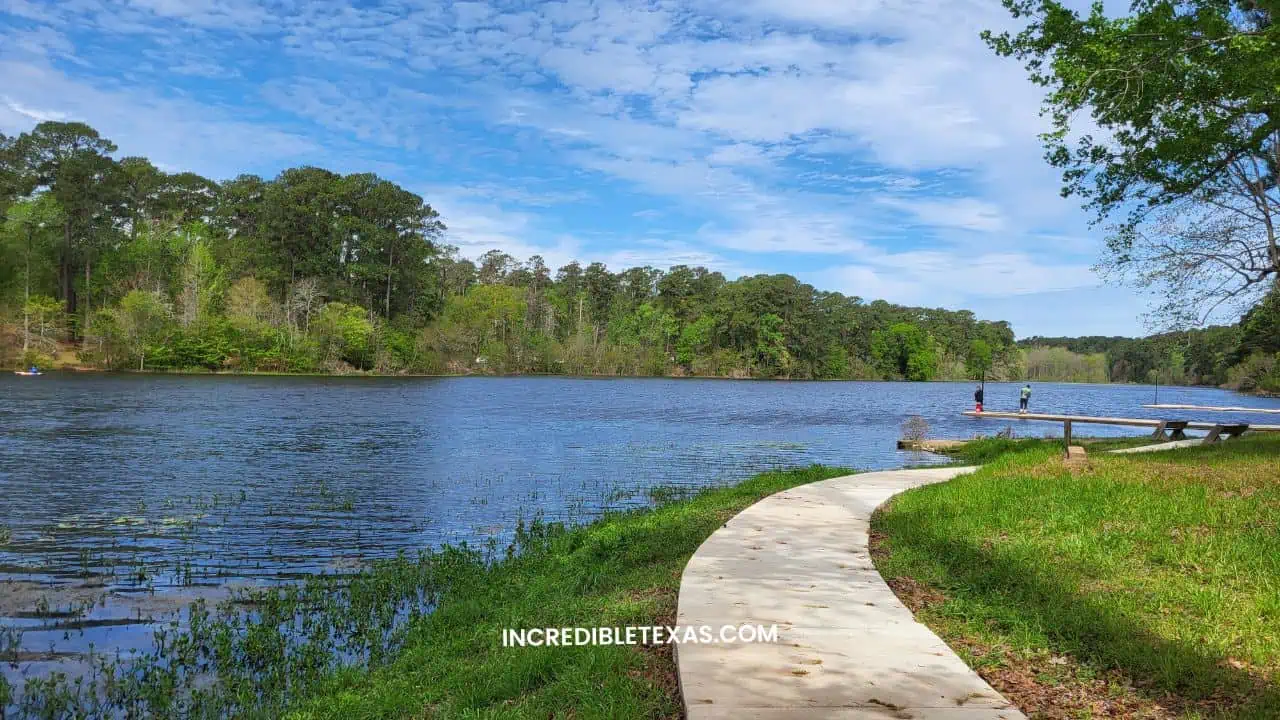
The park also charges $7 for adults and is open year-round, with a minimum two-night stay on Friday and Saturday nights for overnight facilities. That rule matters for a weekend stay, because the cheapest-looking option may still need a two-night booking.
TPWD also groups the park around electric sites, water sites, full-hookup sites, and screened shelters, so the booking choice stays straightforward once the site type is known.
- The full-hookup loop is best for larger rigs and longer stays.
- The screened shelters work well when airflow, a roof, and some RV utility access outside matter most.
- The water and electric loops are the middle ground for a simple but comfortable stay.
9. Brazos Bend State Park
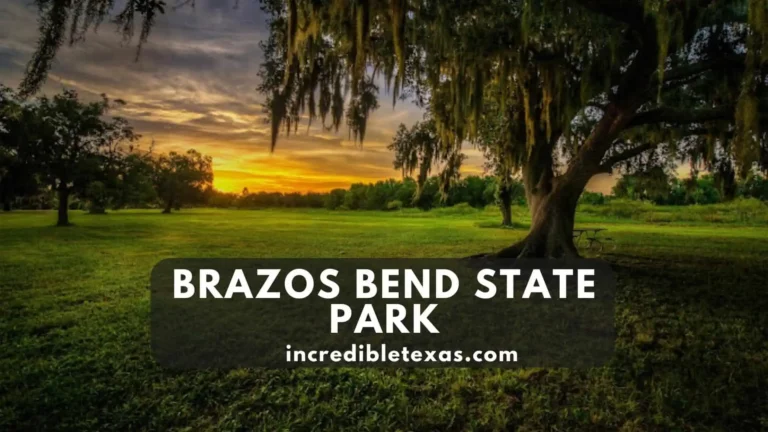
Brazos Bend State Park is the best wildlife-focused campsite near Houston for alligators, birding, and big-sky trails with an overnight stay.
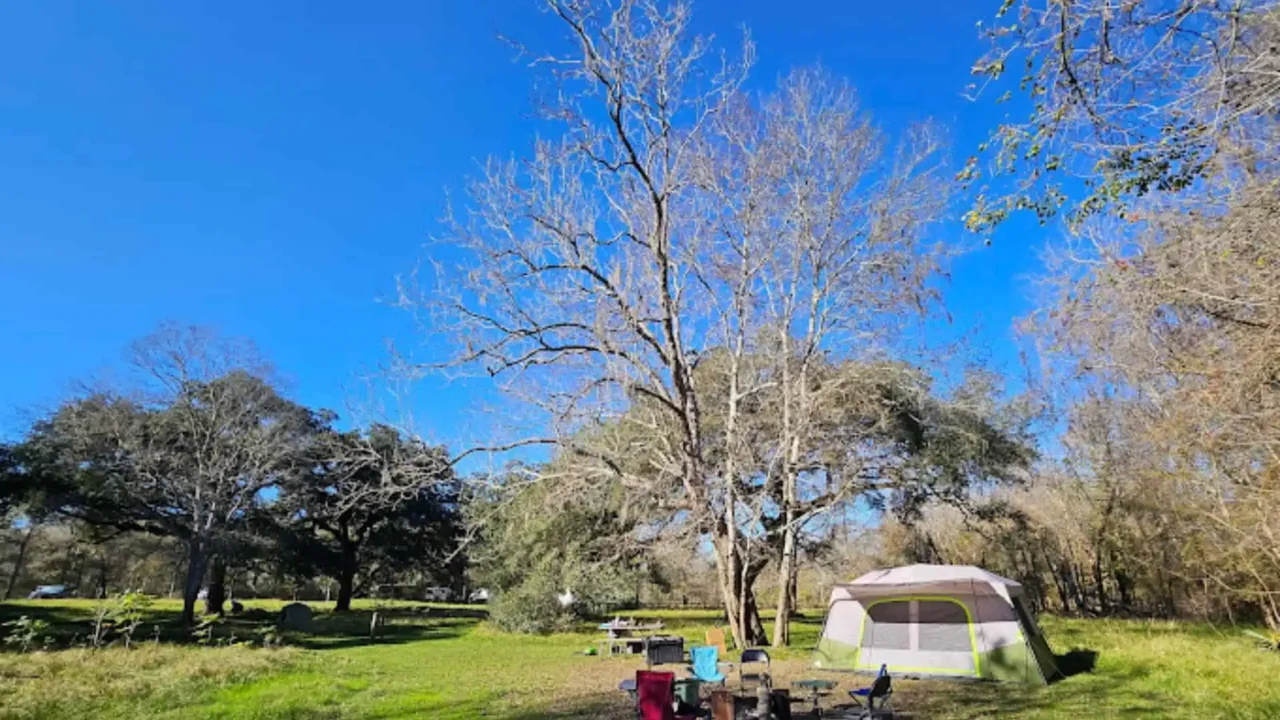
TPWD says the park opens daily from 8am to 10pm, and the adult entry fee is $7 per person.
According to TPWD, the park currently offers premium electric campsites at $25, regular electric campsites at $25, primitive walk-in campsites at $12, and youth group sites for larger organized trips. That range covers simple walk-in camping and more comfortable RV-style sites.
The Red Buckeye camping area includes the electric sites with showers nearby, which keeps the park practical for longer wildlife-heavy stays.
- Choose it if wildlife viewing is a major part of the camping plan.
- Choose it if a well-known Texas state park with enough site variety to fit different budgets is the goal.
- Choose it if a camping base near the Brazos Bend trails and observation areas is the goal.
10. Stubblefield Lake Recreation Area
Stubblefield Lake Recreation Area is the budget-friendly forest pick for a simple National Forest campground about an hour north of Houston. The Forest Service says the area was built in 1937, sits in the Sam Houston National Forest, and offers camping, canoeing, fishing, hiking, and picnicking.
According to the Forest Service, day use runs from 6am to 10pm and overnight use is $15 per night for a single site, with a reduced rate for Senior or Access Pass holders.
For a quieter, lower-cost alternative to the more developed campgrounds, this is a practical place to start.
The same recreation page links camping to canoeing, fishing, hiking, and picnicking, so the site works well when a simple overnight stop needs a few lake activities too.
- This is a strong fit when the forest setting matters more than resort amenities.
- This is a good fit when keeping costs down matters without giving up a real campground.
- This is a good fit when easy access to lake activities and woodland time matters.
How to choose the right Houston camping spot
The best match usually depends on how much comfort matters versus how much scenery matters. For a short drive and the easiest reservation path, Cagle and Lake Houston Wilderness Park are high on the list; for more room to spread out, Lake Livingston and Huntsville usually give campers more campsite styles to choose from.
Coastal campers should start with Galveston Island State Park, while people who want wildlife and trails should start with Brazos Bend. For a comparison against a different region, use Best Places for Camping Near San Antonio TX as a second planning point.
- Pick the coast for sand, salt air, and beach access.
- Pick the lake for fishing, paddling, and easier water views.
- Pick the forest for shade, trails, and a quieter setting.
- Pick the RV resort for laundry, showers, and more polished amenities.
Trip-planning tips before booking
Book early when a preferred park has Friday and Saturday minimums, because Lake Livingston, Stephen F Austin, Huntsville, and several other public campgrounds can fill faster than expected.
For a holiday weekend, treat the reservation window like part of the trip itself.
Pack for heat and humidity even when staying under trees, because Houston-area weather can change the feel of a campsite fast. Water, bug spray, charged lights, and a printed copy of the reservation details are simple items that make the trip smoother.
- Check park alerts before departure, especially for coastal and forest sites.
- Keep a backup campground in mind if the first-choice park is near capacity.
- Match the site to the vehicle length before reserving, not after arrival.
What to book first
If the weekend is short, the first booking order is usually Cagle for full-hookup lake camping, Galveston for beach sites, Lake Houston Wilderness Park for cabins, Lake Livingston for state-park lake camping, and Northlake for resort stays.
- Book Cagle first when Lake Conroe access and RV hookups are the priority.
- Book Galveston first when coastal camping is the main goal.
- Book Lake Houston Wilderness Park first when a cabin or forest stay is the priority.
- Book Lake Livingston first when a classic state-park lake trip is the priority.
- Book Northlake first when a private RV resort is the priority.
Best fit by trip type
The fastest way to narrow the list is by trip type. A coastal weekend, a lake weekend, a cabin weekend, and an RV-resort weekend each ask for a different kind of booking.
The same park can work for more than one style, but the best choice usually becomes obvious once the main priority is set.
- Coastal campers should start with Galveston because beach access and sand are the draw.
- Lake campers should start with Lake Livingston or Cagle when water access matters most.
- Cabin campers should start with Lake Houston Wilderness Park or Stephen F Austin when a roof matters.
- RV travelers should start with Northlake or Cagle when hookups and site length matter.
- Trail-first campers should start with Double Lake when biking and woods matter.
- Wildlife campers should start with Brazos Bend when birding and alligators matter.
- Budget campers should start with Stubblefield when price matters most.
- Mixed groups should start with Huntsville when tents, RVs, and shelters all need a place.
For a one-night stop, favor the shortest drive; for a two-night weekend, favor the site with the best loop and minimum-stay fit.
Reservations can change the best fit as much as scenery does. A site with a two-night minimum, a longer vehicle limit, or a smaller loop can be the better pick once the trip length and vehicle size are known, especially on holiday weekends when one campground fits a quick overnight and another needs a more deliberate plan.
- Short trips usually favor the shortest drive.
- Long rigs usually favor the widest RV loops.
- Cabin stays usually favor the parks with clearer lodging rules.
Best Places for Camping in Houston, TX Frequently Asked Questions
Where are the main camping options near Houston?
Camping near Houston is available at state parks, city parks, national forest campgrounds, and private RV resorts. The strongest options in this list are Galveston Island State Park, Lake Livingston State Park, Lake Houston Wilderness Park, Cagle Recreation Area, and Huntsville State Park.
Which state-park option is closest to Houston?
Lake Houston Wilderness Park is the closest true overnight forest escape inside the city system, and Cagle Recreation Area is one of the quickest public campground drives to the north side of the metro area. For a state-park feel with a short drive, Galveston Island State Park is another strong choice.
Which Houston-area spot works best for RV camping?
Cagle Recreation Area is the best public RV campground in this group for full hookups on a lake, while Northlake RV Resort is the stronger choice for a resort-style stay with more amenities. Huntsville and Lake Livingston also work well when a state park is preferred over a resort.
Can beach camping happen near Houston?
Yes, beach camping happens near Houston at Galveston Island State Park. TPWD currently lists beachside electric sites, tent-platform sites, and primitive beach sites, so campers can choose how close to stay to the water.
Which Houston-area campgrounds have cabins?
Lake Houston Wilderness Park and Stephen F Austin State Park are the most relevant cabin options in this group, while Huntsville State Park offers screened shelters that work like a hybrid between camping and cabin-style shelter.