Mayfield Park and Preserve Austin TX: Hours, Parking, Trails
Mayfield Park and Preserve Austin TX is a compact west Austin landmark with historic gardens, lily ponds, free-roaming peafowl, and a 21-acre preserve that frames the cottage grounds. The site sits at 3505 W 35th St and opens daily from 5 in the morning to 10 at night.
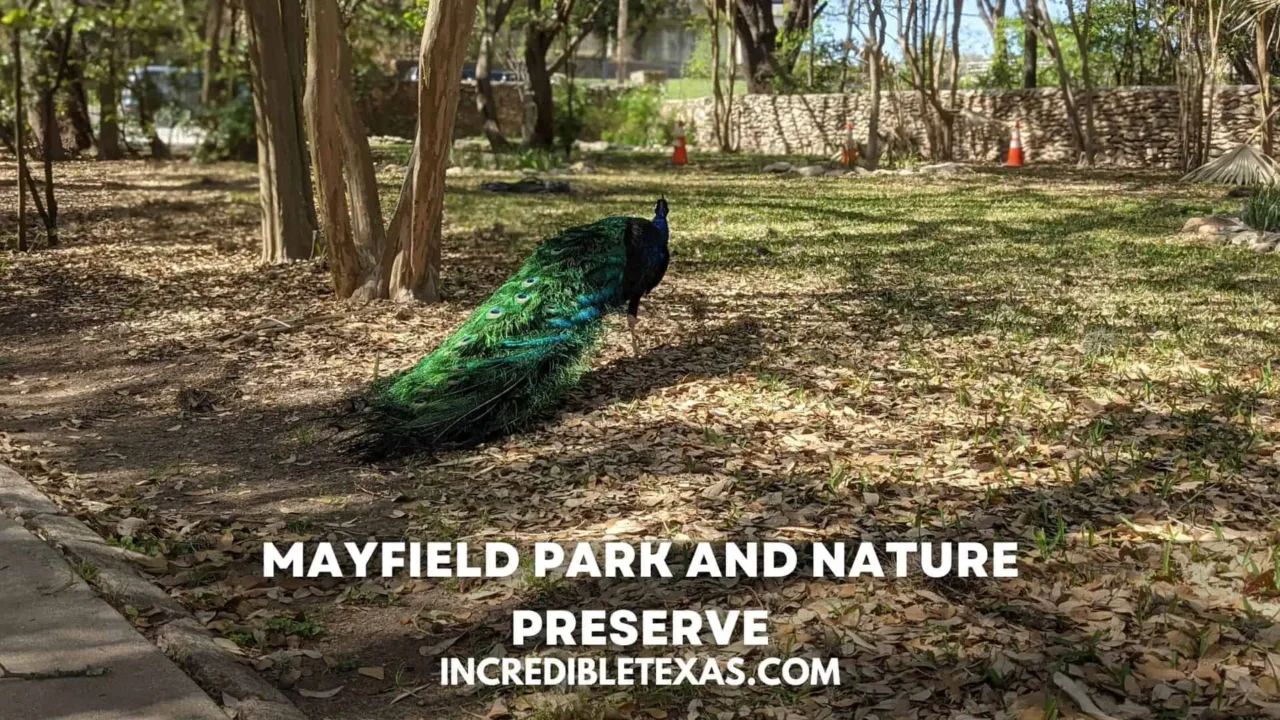
The park gives visitors a calm place to pair a short nature walk with one of the city’s most recognizable historic landscapes. Its west Austin location also places it near other Austin attractions and more unusual city stops such as unique things to do in Austin.
| Quick Fact | Details |
|---|---|
| Location | 3505 W 35th St, Austin, TX 78703 |
| Hours | Open daily, 5:00 a.m. to 10:00 p.m. |
| Park Size | 23 acres total |
| Preserve Size | 21-acre nature preserve surrounding the grounds |
| Main Features | Historic cottage, gardens, lily ponds, peafowl, walking trails |
| Parking | Limited parking inside the gates; street parking along W 35th is also available |
| Pet Policy | No pets or emotional support animals; service animals are the exception |
| Trail Style | Short, scenic walking paths with wildlife habitat and uneven surfaces |
Mayfield Park and Preserve Austin Hours, Parking, And Current Rules
According to the City of Austin Mayfield Park page, the public hours are daily from 5 in the morning to 10 at night.
The gardens inside the stone walls are typically open when they are not reserved for events, which is commonly most Mondays through Thursdays and holiday weekends when the site is available.
One entrance sits at 3505 W 35th St across from Mt Bonnell Rd. Parking inside the gates is limited, including wheelchair-accessible spaces, and street parking is also available along W 35th.
The practical rules are part of what keeps the space peaceful. Pets and emotional support animals are not permitted anywhere on the property, service animals are the exception, and visitors are asked to stay on formal paths, remain out of flower beds, and avoid climbing, sitting, or standing on the rock walls.
- Commercial and professional photography require the city’s permit process.
- Fishing is not allowed in the ponds.
- Events, classes, and concessions need the proper city permit.
- Amplified sound is not allowed at the cottage and gardens rental area.
- Footing can vary from dirt to grass to cobblestone, so stable shoes make sense.
The Mayfield rental guidebook repeats the pet rules, the sound restriction, and the photography policy. It also makes clear that the cottage-and-gardens reservation window can change how much of the interior grounds are available on a given day.
What Mayfield Park And Preserve Is
According to the Mayfield Park overview, the estate blends a compact cottage garden with a larger natural buffer of woods and trails. The City of Austin also treats it as a 23-acre park with the 21-acre preserve surrounding the home and gardens.
The estate began as a private summer home before Mary Mayfield Gutsch left it to the City of Austin in 1971. The property is listed on the National Register of Historic Places, and the setting still feels shaped by the same stone walls, ponds, palm trees, and garden rooms that made the site notable in the first place.
The history and the landscape work together here. The cottage, the formal gardens, and the preserve trails make Mayfield feel smaller than many Austin parks, but the setting carries enough depth to justify a slow visit instead of a quick photo stop.
The 1870s cottage, the lily ponds, and the layered plantings give the site a preserved-estate feeling that is hard to find elsewhere in the city. The park’s historic character is part of the reason it remains such a familiar west Austin reference point.
Mary Mayfield Gutsch’s family shaped the gardens and stone features over time, and the city later folded the property into the public park system. That history shows up in the way the walls, pathways, and plantings still frame the grounds today.
Visitors comparing it with the rest of the city usually find that Mayfield belongs in the same conversation as a broader day of day trips from Austin, because the park adds a quiet west-side stop without pulling a whole itinerary off course.
What Visitors See Inside The Mayfield Park and Preserve
According to the official Mayfield peafowl page, the flock remains one of the park’s defining features. Visitors usually notice the birds before they reach the cottage because the peafowl roam the grounds freely and call across the lawns, trees, and stone paths.
The second draw is the garden setting itself. Towering palms, water lilies, ponds, and the historic cottage create a compact but layered landscape that feels different from the bigger municipal parks across Austin.
That visual mix also explains why the park comes up in city roundups and photo-focused Austin lists so often. It gives visitors a rare combination of preserved architecture, wildlife, and a controlled garden environment within a single stop.
The peafowl and their ancestors have lived at Mayfield for decades, and the park treats them as residents rather than decoration. The right way to observe them is from a distance, with slow movement and no attempt to feed or touch them.
The park’s guidance is direct about never approaching, touching, feeding, or chasing them, and that rule applies to the rest of the wildlife as well.
Readers who are building a longer Austin route can use an Austin weekend itinerary as a broader planning anchor, then place Mayfield as a quiet west-side morning stop or a late-afternoon break before dinner.
The ponds add another layer to the stop. Water lilies, koi, turtles, and the stonework around the water give the grounds a formal feel that rewards slower observation rather than a quick pass through the front gate.
The Cottage, Ponds, And Volunteer Gardens
The cottage-and-garden core is only about two acres, but it carries most of the site’s visual identity. Formal plantings, water lilies, and the stone edges around the ponds make that part of the park feel carefully composed from the first step inside the walls.
The city materials also note a remarkable stand of Sabal Texana palms, which is said to be the largest north of the Rio Grande. That canopy gives the grounds a shaded, almost tropical look that feels unexpected in west Austin.
Volunteer gardeners maintain 32 beds around the property, and those beds keep heritage plants mixed into the landscape through the year. The garden stays lively because the planting is layered rather than purely ornamental.
The Mayfield Park / Community Project has worked from a preservation master plan since 1986, with restoration moving forward as funds become available. That slow approach has helped the cottage and gardens keep their historic character without turning the property into a museum room.
Event rentals are capped at 65 people, and amplified sound is not allowed in the cottage and gardens area. Those limits keep the site close to its original scale and leave the public areas quiet enough for a normal park visit.
The transition from formal garden to preserve is one of the clearest features on the property. Inside the walls, the layout stays close to the cottage, ponds, and peafowl, while the surrounding preserve opens into woods and wildlife habitat.
That split makes the park feel larger than the acreage suggests. Visitors can move from a carefully maintained historic garden into a natural area without leaving the same property or changing the pace of the visit by much.
The public-access pattern also matters on busy days. Reservation windows can shift how much of the interior grounds is open, but the larger park and preserve still keep their own identity as a place for short walks, quiet time, and low-effort west Austin planning.
How The Preserve Trails Fit Into The Visit
The preserve is not a long-distance hike destination. It is a 21-acre natural area with walking trails and wildlife habitat that wraps around the historic grounds, so the experience feels more like an easy woodland stroll than a backcountry route.
Trail access points sit near the home, and the preserve works well for visitors who want shade, birds, and a small amount of elevation change without leaving the city. The city’s historic parks page notes that the trails teeming with wildlife surround the estate on the bluff above Lake Austin.
The walking surfaces can change quickly from packed dirt to grass, cobblestone, and sidewalk. That makes Mayfield more comfortable in sturdy walking shoes than in sandals, especially if the visit includes the preserve trails instead of just the garden core.
- Shade is a real advantage on the preserve side because the woods soften the heat.
- Birdwatching tends to be better on the trail edges than in the open garden spaces.
- The walk is short enough for families, but it still feels like a proper nature stop.
- The preserve works well for a quiet pause between two busier west Austin landmarks.
It also makes sense as part of a broader Austin outdoors plan. Travelers sorting through places for camping in Austin or comparing a few different nature stops can treat Mayfield as the short, urban-facing option that still feels rooted in a larger landscape.
The preserve can pair with a bluff overlook, a neighborhood lunch, or another short west Austin stop instead of a full park circuit.
The preserve also works as a reset between larger destinations because the trail system is compact enough to stay low-effort. A visit can feel complete without covering a lot of ground, which is unusual for a city park with this much historic context.
A Simple Route Through The Property
A first visit usually starts at the entrance, where the historic cottage and gardens provide the strongest visual cue that the site is more than a neighborhood green space. From there, the ponds and peafowl create a natural middle point before the route shifts toward the preserve trails.
That route keeps the walk easy to follow and leaves the most active wildlife moments in the middle of the visit. It also gives visitors a clear transition from formal garden spaces into the quieter wooded edge of the property.
The preserve side usually rewards a slower pace than the garden side. The trail system is compact, but the shift in sound and shade makes the walk feel broader than the acreage suggests.
After the trail loop, the final look back toward the cottage and ponds is often the part people remember. The contrast between the curated gardens and the natural preserve is the reason the park works as a short visit rather than a one-note stop.
Visitors who prefer a longer outing can add a nearby lunch stop, a second west Austin landmark, or a downtown afternoon without rushing the park itself.
Best Time To Go, Photos, And Short Visit Plans to Mayfield Park and Preserve
Early morning and late afternoon tend to be the calmest times for a visit. The light is softer for photographs, the peafowl are usually easier to observe at a distance, and the paths feel less crowded than they do during the middle of the day.
Weekdays are especially useful when the gardens are open and not reserved. Monday through Thursday often gives visitors the clearest shot at seeing the formal garden area inside the walls without trying to work around an event.
A short visit can still be satisfying if the timing is realistic. The park rewards a slower pace because the garden details, the ponds, and the wildlife are what make the stop memorable rather than sheer size or trail mileage.
When the sun sits lower, the palms and rock walls throw longer shadows across the grounds, and the preserve feels quieter. Those conditions make the site easier to photograph without crowding the birds or drifting off the path.
| Visit Window | What Fits Comfortably | Best Use |
|---|---|---|
| 20 to 30 minutes | Entry, cottage views, lily ponds, a quick peafowl watch | Fast photo stop |
| 45 to 60 minutes | Gardens, pond loop, a short preserve walk | Relaxed first visit |
| 90 to 120 minutes | Full garden stroll, preserve trails, slower wildlife viewing | Unhurried west Austin outing |
Photography works best when the visit stays respectful and low-impact. The park is a popular photo location, but the grounds are still a living habitat, and that balance matters more than getting close to the birds or stepping off the designated paths.
Visitors who want to combine Mayfield with a more expansive city plan can use the stop as one piece of a larger route through things to do in Austin without forcing the park to carry the whole day.
The same timing also helps visitors catch the peafowl when they are most active. A slower walk through the grounds gives more room to notice the pond reflections, the garden lines, and the preserved stonework that define the site.
Nearby Austin Stops To Pair With Mayfield Park and Preserve
Mayfield Park and Preserve works well with other west Austin and central Austin stops because it is compact and easy to place at the start or end of a day. A visit can pair with a neighborhood meal, a museum stop, or another outdoor landmark without creating a long drive between activities.
That flexibility is part of the reason the park fits neatly into a longer city plan. Travelers who are already looking at a broader day trips from Austin list can keep Mayfield as the quiet, historic side of the route.
For visitors staying longer, the park also works as a warm-up for a weekend itinerary. It can be the gentler first stop before a downtown afternoon, or the last green space before a dinner reservation and a drive back to the hotel.
West Austin routes stay efficient when one stop adds history and another stop adds a different kind of view. Mayfield supplies the history piece without turning the day into a long or crowded outing.
That same logic applies to people building a nature-heavy visit around Austin. A route that includes Mayfield plus one of the city’s other outdoor stops often feels more balanced than trying to squeeze in several major parks at once.
Readers planning a broader overnight stay can also use the park as a small scenic break before checking out the rest of the region in an Austin weekend itinerary or comparing other camping options near Austin.
There is no need to rush the stop into a larger schedule. The park’s compact scale makes it easy to visit between breakfast and lunch, or between a museum and an evening plan on the same side of town.
Mount Bonnell fits the same west Austin corridor and adds a higher overlook over Lake Austin. Pairing the two stops gives the day both a garden-first view and a skyline-style lake view without turning the outing into a long drive.
Mayfield Park and Preserve FAQ
Is Mayfield Park and Preserve the same place?
The site functions as one destination with two connected parts. Mayfield Park and Preserve covers the historic cottage and gardens, while the preserve is the surrounding 21-acre natural area with walking trails and wildlife habitat.
Are dogs allowed at Mayfield Park and Preserve?
No. The park’s current guidance does not allow pets or emotional support animals anywhere on the property, and service animals are the exception.
How long does a visit usually take?
Most visits fit into 30 to 60 minutes when the route focuses on the garden stroll and the peafowl. A slower preserve walk can stretch the visit to 90 minutes or more.
Is parking available at Mayfield Park?
Parking is limited inside the gates, including wheelchair-accessible spots, and street parking is also available along W 35th.
Can visitors walk the preserve trails without a long hike?
Yes. The preserve is built for short, scenic walking rather than distance hiking, so the trails work well for a quick nature break or a gentle wander between other Austin stops.
Are the peacocks safe to approach?
No. The park asks visitors to keep a respectful distance and never approach, touch, feed, or chase the peafowl.
Why Mayfield Belongs On A West Austin Route
Mayfield Park and Preserve includes a historic cottage, garden rooms, ponds, peafowl, and a surrounding preserve. The cottage, the ponds, the peafowl, and the preserve trails make the stop distinct.
That makes the park especially useful for visitors who want one memorable nature break instead of a long outdoor commitment. It also works well for travelers who are already comparing Austin’s best-known attractions with quieter places that reward slower observation.
Mayfield Park and Preserve remains one of west Austin’s most distinctive historic green spaces. The cottage, gardens, and preserve line up into a single stop that feels rooted in Austin history rather than borrowed from a generic park template.
The site’s value is in its balance: enough structure to feel cared for, enough wildlife to feel alive, and enough trail space to turn a quick visit into a meaningful one. That combination is what makes the park easy to recommend for a first-time or repeat Austin outing.
According to the City of Austin’s historic parks page, the grounds include scenic hiking trails teeming with wildlife on the bluff above Lake Austin. That setting keeps Mayfield useful for visitors who want a nature stop that still feels close to the city.
The park also works as a useful benchmark for comparing west Austin stops because it combines open access, historic character, and a clear wildlife identity in one place.
Visitors who prefer a slower pace can use Mayfield as the quiet anchor of a west Austin half-day. The site does not require a full itinerary to feel complete, and that makes it useful for both repeat visits and first-time stops.
The park also complements nearby city landmarks that reward a shorter visit. A west Austin morning can stay focused on gardens, peafowl, and preserve trails before the schedule moves on to lunch, a viewpoint, or another indoor stop.
The entrance, gardens, and preserve sit close together. The route from arrival to exit stays short and easy to follow for families, photographers, and anyone who wants one compact west Austin stop.