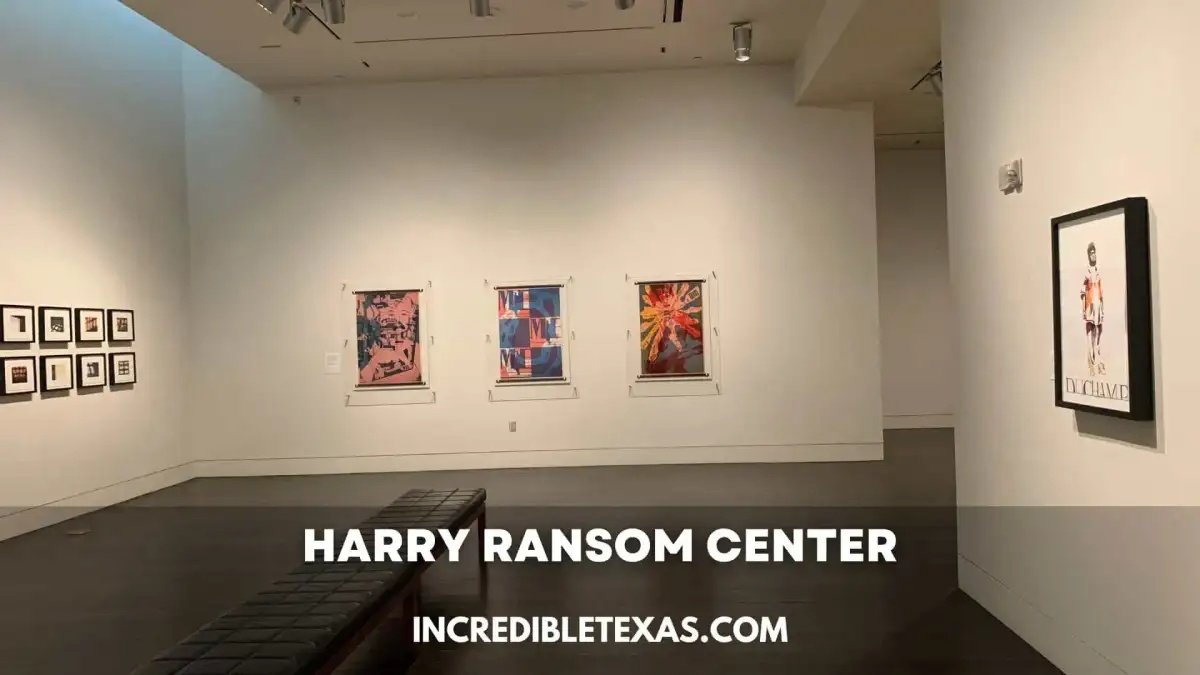
The Harry Ransom Center at The University of Texas at Austin stands as an internationally renowned humanities research archive and free cultural museum. Located at 300 West 21st Street on the southwest edge of campus, this cultural institution houses the historic Gutenberg Bible, the world's first surviving permanent photograph, and extensive literary collections.
Key takeaways
- The Harry Ransom Center offers free public admission to all permanent and rotating museum galleries on the UT Austin campus.
- Exhibition galleries operate Tuesday through Friday from 10:00 AM to 5:00 PM and weekends from 12:00 PM to 5:00 PM (closed Mondays).
- Permanent lobby highlights include one of only five complete Gutenberg Bibles in the United States and the 1827 Niépce heliograph.
- Public visitors and researchers can access rare books, archives, and manuscripts in the Reading Room with a valid photo ID.
- Convenient paid visitor parking is available at the University Co-op Garage on San Antonio Street or metered stalls along Guadalupe Street.
Plan your visit
- Location
- 300 W 21st St, Austin, TX 78712 (UT Austin Campus)
Harry Ransom Center Austin TX Quick Facts
Holding nearly 1 million rare books, 42 million manuscripts, 5 million photographs, and 100,000 works of art across a 135,000-square-foot facility, the Harry Ransom Center serves over 80,000 annual museum visitors and provides research access to scholars from more than 30 countries. Founded in 1957 by University of Texas dean Harry Huntt Ransom, the center preserves original creative artifacts spanning literary arts, film history, and visual culture.
Historical archives cataloged by the Texas State Historical Association archive of the Harry Ransom Center reveal how ambitious acquisition programs established Austin as an international center for archival research. Travelers exploring unique things to do in Austin appreciate that this world-class institution remains free to the public year-round.
| Category | Facility Detail | Visitor Planning Advice |
|---|---|---|
| Physical Address | 300 W. 21st St., Austin, TX 78712 | Southwest corner of 21st Street and Guadalupe Street |
| General Admission | Completely Free | No tickets or reservations required for gallery entry |
| Exhibition Galleries | Tue-Fri 10 AM-5 PM; Sat-Sun 12 PM-5 PM | Closed Mondays; arrive by 4:00 PM for ample viewing |
| Research Reading Room | Mon-Sat 9:00 AM to 5:00 PM | Open to public researchers with valid government ID |
| Primary Parking | University Co-op Garage (2214 San Antonio) | Two blocks west; standard hourly garage credit card rates |
| Permanent Anchors | Gutenberg Bible & 1827 Niépce Heliograph | Displayed prominently in climate-controlled lobby cases |
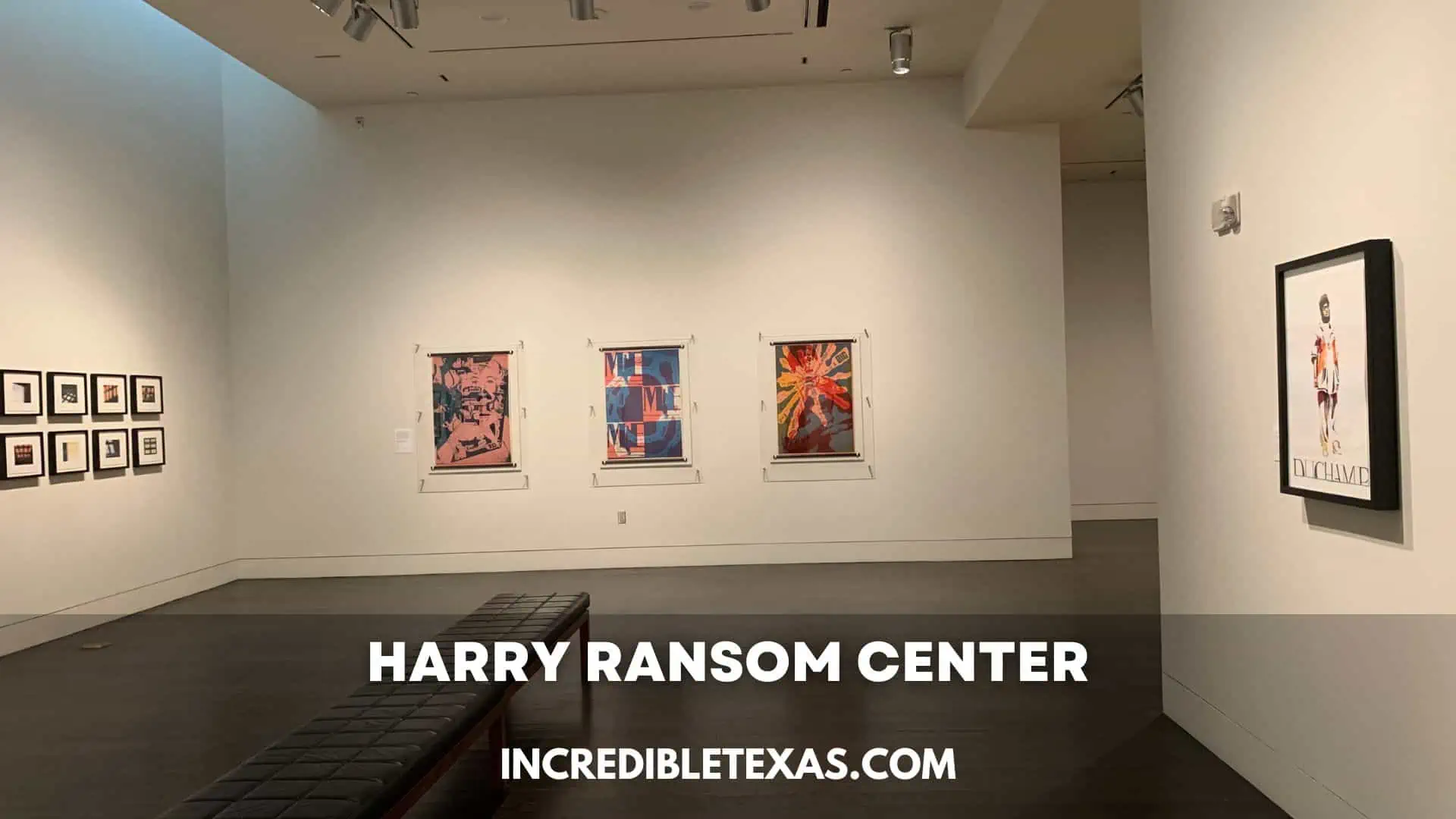
Gallery Hours, Admission, and Entry Rules
The Harry Ransom Center welcomes guests into its ground-floor exhibition galleries without charging an admission fee. Galleries operate Tuesday through Friday from 10:00 AM to 5:00 PM, and Saturday through Sunday from 12:00 PM to 5:00 PM. The galleries remain closed to the public on Mondays.
Before planning your arrival, review the official Harry Ransom Center official visitor guidelines and exhibition hours to confirm holiday closures and special exhibition schedules. Arriving early on weekday mornings ensures a contemplative, uncrowded viewing experience.
Security rules require all visitors to store backpacks, large bags, umbrellas, and liquids in complimentary lobby lockers before entering the exhibition rooms. Small handheld purses and smartphones are permitted, and personal non-flash photography is allowed throughout all general galleries.
Iconic Treasures: Gutenberg Bible and Niépce Heliograph
Two foundational monuments of human communication greet visitors upon entering the center's central lobby. These permanent installations offer rare opportunities to observe foundational milestones in printing and photography up close.
Specialized protective lighting and microclimate display enclosures safeguard these fragile historic treasures, ensuring their preservation for future generations of students and travelers.
The Gutenberg Bible on Permanent Display
Printed in Mainz, Germany, around 1455 by Johannes Gutenberg, this landmark volume represents the first substantial book printed in the West using movable metal type. The Ransom Center copy is one of only five complete specimens located in the United States and one of just 21 complete copies surviving worldwide.
Bound in two massive folio volumes with handwritten rubrication and illuminated decorative initials, the Bible rests within an environmentally sealed case. Visitors can examine the crisp Latin typeface and rich ink quality that launched the European printing revolution.
The First Photograph: The 1827 Niépce Heliograph
Adjacent to the Bible stands Joseph Nicéphore Niépce's 1827 heliograph, titled View from the Window at Le Gras. Recognized as the earliest surviving permanent photograph produced by a camera obscura, this pewter plate represents the birth of photographic imagery.
Niépce coated the polished pewter plate with bitumen of Judea, exposing it through an open window in Burgundy, France, for roughly eight hours. The subtle metallic image requires viewers to shift their perspective against angled lighting to perceive the historic rooftop silhouette.
Reading Room and Public Research Access
Unlike many institutional research libraries, the Harry Ransom Center opens its extensive archives to the general public, not just tenured university faculty. Any adult visitor with serious curiosity or a research project can request original materials in the second-floor Reading Room.
Scholars and writers can consult the Harry Ransom Center Reading Room and public research portal to search the online database and create an advance research account. The Reading Room operates Monday through Saturday from 9:00 AM to 5:00 PM, remaining closed on Sundays.
Researchers must present a valid government-issued photo ID, complete a brief registration session, and view a collection handling orientation. Lockers are provided to store personal electronics cases, notebooks, and pens, as only pencils and approved laptop computers are permitted at research tables.
Parking Options and Public Transit Access
Visiting the UT Austin campus requires understanding university parking rules. Campus surface lots and curbside stalls generally require official university staff or student permits, meaning visitors should utilize public garages or city meters.
The most convenient commercial option is the University Co-op Parking Garage at 2214 San Antonio Street, situated just two short blocks west of the center. Drivers pay standard automated hourly rates via credit card upon exit.
City of Austin metered street stalls along Guadalupe Street and West 21st Street offer pay-by-app parking through the Park ATX system. Transit riders can take CapMetro bus routes 1, 3, 5, or 801, all of which stop directly on the Guadalupe Drag within steps of the entrance.
Rotating Exhibitions and Cultural Collections
Beyond its permanent treasures, the center curates dynamic rotating exhibitions drawn from its world-class archives. Highlights regularly include author drafts by Edgar Allan Poe, James Joyce, and Gabriel García Márquez, alongside iconic cinema materials like the original Gone with the Wind production records.
Art lovers can view major paintings including Frida Kahlo's iconic Self-Portrait with Thorn Necklace and Hummingbird, which returns periodically from international museum tours. Exploring these rotating galleries ranks among the best things to do in Austin for cultural travelers seeking intellectual enrichment.
Exhibitions rotate twice annually, ensuring fresh historical themes for returning campus visitors. Informative wall texts, interactive video screens, and audio guides provide rich educational context for all ages.
Pairing Your Visit With Nearby Austin Attractions
Situated in the heart of the university district, the center pairs easily with neighboring cultural venues and dining corridors. Guests can stroll two blocks east to explore the contemporary galleries at the Blanton Museum of Art or walk north to photograph the landmark 307-foot UT Tower.
The contemplative, air-conditioned galleries offer a sophisticated setting for romantic Austin date ideas, especially when combined with coffee at an independent cafe on the Drag or dinner in nearby downtown Austin.
Whether spending an hour with Gutenberg's masterpiece or dedicating an entire afternoon to literary archives, the center delivers an unforgettable window into human achievement.
Frequently Asked Questions About Harry Ransom Center
Is admission to the Harry Ransom Center free?
Yes. General admission to all public exhibition galleries at the Harry Ransom Center is completely free for all visitors, with no advance tickets or reservations required for standard self-guided tours.
Where is the best place to park when visiting the center?
The most convenient parking options include the University Co-op Parking Garage at 2214 San Antonio Street and metered street stalls along Guadalupe Street and 21st Street. Campus surface lots are restricted to university permit holders.
What are the museum gallery operating hours?
Exhibition galleries are open Tuesday through Friday from 10:00 AM to 5:00 PM, and Saturday through Sunday from 12:00 PM to 5:00 PM. Galleries remain closed on Mondays, while the Reading Room operates Monday through Saturday from 9:00 AM to 5:00 PM.
Can ordinary visitors use the Reading Room archives?
Yes. The Reading Room is open to the public for individual research. Visitors simply present a government-issued photo ID at the second-floor registration desk and complete a brief orientation regarding collection handling rules.
Is photography permitted inside the exhibition galleries?
Non-flash personal photography with handheld smartphones or cameras is welcomed in public exhibition galleries unless specifically restricted by loan agreements. Flash, tripods, selfie sticks, and video lights are strictly prohibited.