Lake Travis Austin TX Guide: Things to Do, Parks, and Tips
Lake Travis Austin TX is one of Central Texas’s most useful outdoor destinations because it combines reservoir scenery, public parks, boat ramps, swimming coves, and sunset views in one stretch of the Highland Lakes. TPWD places Lake Travis northwest of Austin in Travis and Burnet counties, with a surface area of 18,622 acres and a maximum depth of 190 feet.
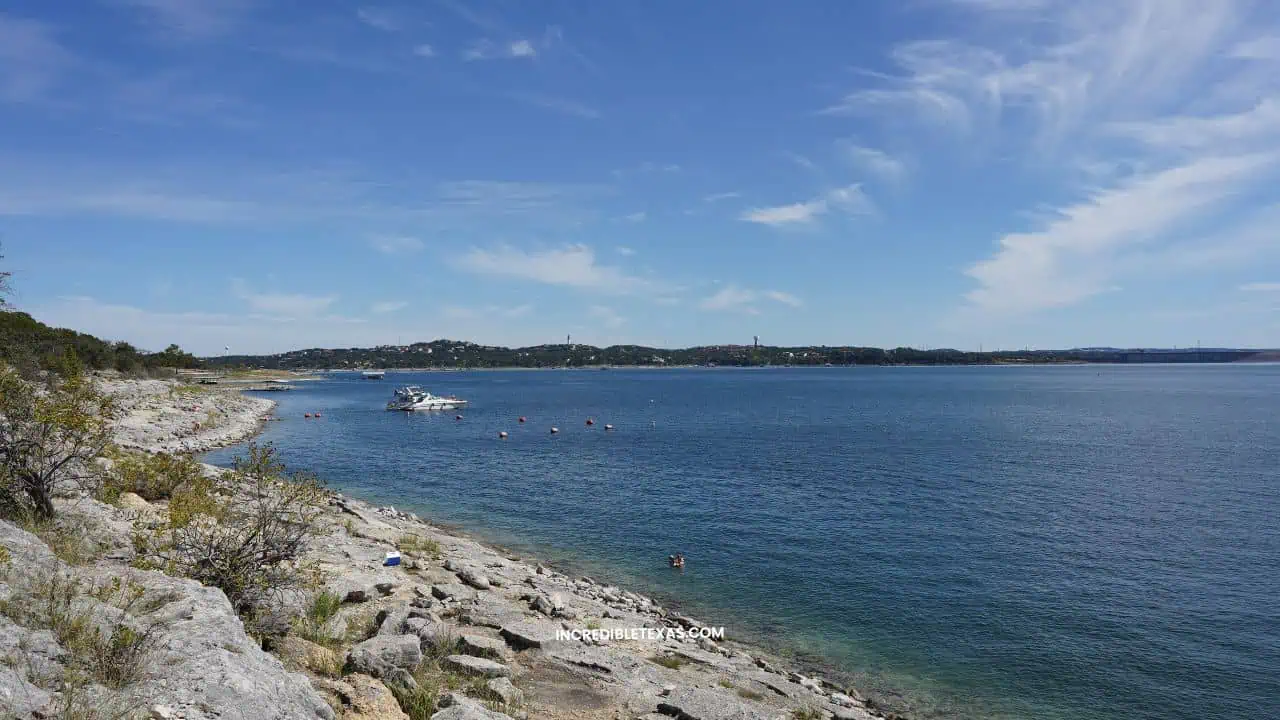
Visitors can treat the lake as a boat day, a swim day, a picnic day, or a camping day. The easiest first visit usually focuses on one access point rather than trying to cover the whole shoreline in a single trip.
| Quick fact | Lake Travis Austin TX |
|---|---|
| Type | Reservoir on the Colorado River |
| Location | Northwest of Austin in Travis and Burnet counties |
| Surface area | 18,622 acres |
| Maximum depth | 190 feet |
| Impounded | 1942 |
| Controlling authority | Lower Colorado River Authority |
| Best for | Boating, swimming, shoreline picnics, fishing, and sunset views |
| Main caution | Water levels fluctuate and zebra mussels are present |
What Lake Travis Is and Why Visitors Go
According to TPWD, Lake Travis is a flood-control and water-supply reservoir, not a natural lake, and that shape matters to every trip planning decision. LCRA manages the reservoir, while TPWD notes that the lake’s conservation pool elevation is 681 feet above mean sea level even though the lake is usually below that level.
The lake’s water level can swing by 10 to 20 feet, which changes the look of the shoreline and the usefulness of some ramps and coves. That is why Lake Travis feels more like a flexible water system than a fixed beach destination.
TPWD also lists Lake Travis as a productive fishing reservoir with largemouth bass, Guadalupe bass, white bass, striped bass, catfish, and sunfish. Anglers often use the lake as much for a quick half-day session as for a full fishing trip.
The lake’s biggest appeal is its range. A visitor can choose a public ramp, a family picnic park, a non-motorized shoreline stop, or a cliffside campground and still stay inside the same lake system.
- For boaters: The lake offers public ramps and wide open water.
- For swimmers: Designated coves and park access points make short water days realistic.
- For photographers: Sunset light on the western shoreline is one of the lake’s strongest draws.
- For anglers: The reservoir has a long-standing fishery with multiple species and open-water structure.
The best overview sources stay practical. TPWD’s Lake Travis page covers lake characteristics and the zebra mussel advisory, while the LCRA dams and lakes page explains the reservoir’s place in the Highland Lakes system.
For visitors comparing this lake with a wider Austin itinerary, the main Austin things-to-do guide and the site’s Austin date ideas guide fit naturally beside a lake day.
Best Things to Do on Lake Travis Austin
Lake Travis works best when the trip has one clear goal. Some visitors want a boat day, some want a swim cove, and some want an easy shoreline stop with a meal and a sunset.
Couples can also pair a lake visit with the site’s Austin date ideas or a dinner reservation from Austin restaurants with a view.
| Activity | Best access point | Why it works |
|---|---|---|
| Boating | Mansfield Dam Park | It has the most straightforward public boat access among the parks covered here. |
| Swimming | Bob Wentz Park or Pace Bend Park | Both parks offer direct water access and shoreline recreation areas. |
| Picnicking | Bob Wentz Park | Covered picnic tables and sheltered shoreline space make short visits easy. |
| Camping | Pace Bend Park | It combines campsites, cliffs, and long shoreline views. |
| Fishing | Any public access point with room for safe shoreline casting | The reservoir supports a broad mix of game fish and creek-arm structure. |
| Scuba diving | Bob Wentz Park | The park page specifically lists SCUBA diving among the allowed activities. |
Boating remains the classic Lake Travis experience because the water is broad enough to feel open but still close enough to Austin for a day trip. Jet skis, pontoons, and wake boats are common on busy weekends, but the best lake day still starts with a ramp or marina plan.
Swimming is more satisfying when it is tied to a park rather than a random shoreline pull-off. That is especially true when visitors want restrooms, picnic tables, a place to unload gear, or a defined shoreline zone with better crowd control.
Fishing is a better fit for early mornings and midweek trips, when the lake is quieter and the wind is easier to manage. TPWD notes that Lake Travis is known for good numbers of largemouth bass, while white bass runs show up in the spring and catfish are spread throughout the reservoir.
Sunset viewing is the easiest low-effort version of a Lake Travis visit. The western shoreline and cliffside parks are built for an end-of-day stop, especially when the plan does not require a full boating schedule.
Lake Travis Austin Best Parks and Access Points
Lake Travis becomes much easier to understand when the parks are treated as different tools rather than interchangeable stops. Mansfield Dam Park works best for boaters, Bob Wentz Park works best for relaxed shoreline time, and Pace Bend Park works best for a longer hill-country day with camping and coves.
| Park | Hours | Day-use fee | Best for | Current note |
|---|---|---|---|---|
| Mansfield Dam Park | Sunrise to civil twilight | $5 per person; children 12 and under no charge; seniors $3; trailer fee $7 per trailer | Boating, water access, and a quick lake stop | Courtesy dock is closed for repair, and the page says the park has a burn ban in effect. |
| Bob Wentz Park | Every day, 8 am to 7:30 pm | $5 per person; children 12 and under no charge; seniors $3 | Swimming, picnics, and non-motorized watercraft | Park entry fees are cash only, and hydrilla at the non-motorized launch requires caution. |
| Pace Bend Park | Sunrise to civil twilight | $5 per person; children 12 and under no charge; seniors $3 | Camping, beaches, and long shoreline views | Park entry fees are cash only, and some coves are designated for swimming only. |
Mansfield Dam Park
Mansfield Dam Park is the clearest choice for a visitor who wants straightforward lake access. The park sits on the lake’s western side near the dam, and Travis County Parks lists it as a place for swimming, picnicking, and boating access with a public boat ramp open 24 hours.
The park page also lists day-use fees of $5 per person, $3 for seniors, and no charge for children 12 and under, with a $7 trailer parking fee. That makes it one of the most practical paid access points for a short Lake Travis stop.
The current park page notes a burn ban and says charcoal or wood grills are not permitted. It also says the courtesy dock is closed for repair, so boaters should not assume that every dock feature will be available on arrival.
The official Mansfield Dam Park page is the best place to confirm the latest access details before a boating day.
Bob Wentz Park
Bob Wentz Park is the more relaxed shoreline option. Travis County Parks describes it as a favorite location for water sports, swimming, and relaxing on the shores of Lake Travis, and the park page lists covered picnic tables, restrooms, showers, swimming, windsurfing, sailing, and SCUBA diving.
The park is open every day from 8 am to 7:30 pm, with boat-ramp access during regular park hours. Park entry and amenity fees are cash only, which is an important detail for a same-day visit.
The current notice on the park page warns about hydrilla at the non-motorized boat launch, and it advises swimmers, pets, and windsurfers to use extreme caution. The page also notes that the park reaches capacity on some holiday weekends.
Bob Wentz Park keeps day-use entry cash only, so a shoreline visit there works best when visitors bring cash before arrival.
Visitors comparing Lake Travis with quieter Hill Country water days can also look at Inks Lake State Park or Pedernales Falls State Park.
Pace Bend Park
Pace Bend Park is the best choice for visitors who want the lake to feel like a full outdoor weekend rather than a short stop. Travis County Parks describes it as a place for camping on the cliffs overlooking Lake Travis, swimming on a beach, boating, and miles of hike, bike, and equestrian trails.
The park page lists day-use hours from sunrise to civil twilight, with new entries closing an hour before civil twilight. It also lists three boat-ramp setups: Collier ramp open 24 hours, Tatum ramp from 8 am to civil twilight, and Tournament Point from 8 am to civil twilight.
Pace Bend’s current fee page says park entry and amenity fees are cash only. The camping section also shows improved campsites at $30 per site per night and primitive camping at $15 per site per night, with reservations recommended.
The official Pace Bend Park page is the right source for campsite rules, ramp access, and any short-term changes.
For a quick comparison, Pace Bend gives the strongest mix of camping, shoreline time, and sunset views, while Mansfield Dam gives the cleanest boating setup and Bob Wentz gives the simplest swim-and-picnic stop.
Lake Travis Austin Parks Compared by Trip Type
Searchers who look for the best parks on Lake Travis usually want one of three things: a quick boat launch, a simple swim day, or a long camping weekend. The easiest answer is to match the park to the trip instead of treating every shoreline stop as interchangeable.
| Trip type | Best park | Why it fits |
|---|---|---|
| Boat launch and ramp access | Mansfield Dam Park | It has the clearest public boating setup among the parks in this guide. |
| Easy swim and picnic day | Bob Wentz Park | It pairs shoreline access with picnic tables, showers, and swimming. |
| Camping and sunset views | Pace Bend Park | It combines cliffs, shoreline, campsites, and long western views. |
| Non-motorized water day | Bob Wentz Park | The park page specifically restricts the boat ramp to non-motorized watercraft. |
| Longer Hill Country stay | Pace Bend Park | It gives visitors the most room to turn a lake stop into a weekend. |
Mansfield Dam Park works well when the priority is a straightforward arrival and a faster launch. Bob Wentz Park works well when the day needs a softer shoreline rhythm, and Pace Bend works well when the visit needs time to unfold.
Visitors who are planning the best parks on Lake Travis search often should start with the activity first and the park second. That simple filter usually narrows the choice quickly.
Lake Travis Austin Swimming, Boating, and Safety Notes
Lake Travis Austin rewards good planning because the lake is deep, the shoreline changes with the water level, and not every access point is built for the same type of visit. TPWD notes that the reservoir can fluctuate by 10 to 20 feet, which is enough to change how a shoreline feels from one season to the next.
One of the most important current warnings is the zebra mussel advisory. TPWD says zebra mussels have invaded the reservoir, and boaters should clean, drain, and dry boats, trailers, livewells, bait buckets, and other gear before moving to another body of water.
That advisory matters even for short lake days. A quick pull-out, an unseen shell fragment, or water trapped in a livewell can spread invasive species to the next stop.
- Wear a life jacket: Travis County Parks specifically reminds visitors to wear one on the Highland Lakes.
- Never swim alone: Open water on a reservoir is not the same as a guarded pool.
- Use designated swim areas: Pace Bend lists several coves for swimming only, and the park page says there is no lifeguard on duty.
- Check the launch area: Bob Wentz warns about hydrilla at the non-motorized launch, which can tangle swimmers and pets.
- Check park status first: Burn bans, ramp repairs, and capacity closures can change the day-of experience.
Boaters also need to think about access more than distance. Lake Travis is large enough that the right ramp, marina, or cove matters more than the fact that the lake is “near Austin.”
Families should pay special attention to Pace Bend’s swim-cove guidance. The park page says Mudd Cove, Kate’s Cove, and Gracy Cove are for swimming only, and it specifically warns that no lifeguard is on duty.
That caution is useful at Bob Wentz as well, where the non-motorized launch and shoreline vegetation can make the water less forgiving than it looks from the picnic area. The park still works well, but it rewards a slower, more attentive approach.
The official Bob Wentz Park page is the right place to confirm the hydrilla warning and cash-only entry before a swim day.
For a current view of water conditions and lake management, the official lake pages remain the most authoritative references.
Boat Rentals and the No-Boat Version of Lake Travis Austin
Lake Travis is easy to enjoy without owning a boat, but boat rentals remain one of the most searched parts of the lake experience. Visitors usually compare marinas by pickup location, minimum rental time, fuel policy, captain availability, and whether the boat can stay on the water for a half-day or a full day.
A pontoon rental usually works best for groups that want an easy cruise and space for coolers, towels, and shaded seating. Jet skis, wake boats, and guided charters fit a faster lake day, but the right choice depends on the group’s comfort with traffic, wind, and wake on open water.
The no-boat version of Lake Travis is often the better version for families and first-time visitors. A shoreline picnic at Bob Wentz, a sunset stop at Pace Bend, or a short ramp-side look at Mansfield Dam can still feel like a full lake day without the cost or logistics of a rental.
- For rentals: Search for pickup near the part of the lake that matters most.
- For groups: Choose a boat with enough seating and shade for the full trip.
- For first-timers: Start with a half-day rental before committing to a longer outing.
- For shore-only days: Pick one park, one meal plan, and one sunset stop.
What to bring to Lake Travis matters more than people expect. Water shoes, towels, sunscreen, hats, a dry bag, drinking water, and cash for park entry are the basics that keep the day simple.
Visitors who search for lake travis boat rentals usually also want a low-effort plan that does not depend on a reservation full of hidden extras. The safest approach is to choose the water activity first, then compare the rental terms second.
When to Visit Lake Travis Austin
Lake Travis works in every season, but the best timing depends on the plan. Spring and fall are usually the most comfortable for shoreline visits, while summer is the strongest season for swimming and boating.
Early arrivals also leave more room for parking, shade, and a slower pace at the water.
That matters most when the visit includes children, a trailer, or a picnic that depends on finding a good spot near the shore.
| Season | What it feels like | Best use of the lake |
|---|---|---|
| Spring | Mild weather, active weekends, and better comfort for walking and picnicking | Boating, fishing, and mixed park visits |
| Summer | Busiest season with the strongest swim demand | Swimming coves, ramp days, and sunset outings |
| Fall | Comfortable temperatures and good water-view weather | Camping, picnics, and longer shoreline stays |
| Winter | Quieter parks and fewer boats | Fishing, photography, and low-key walks |
Weekdays are easier than weekends at nearly every access point. Bob Wentz can reach capacity on holiday weekends, Pace Bend closes new entries before civil twilight, and boat ramps are far less stressful before the late-morning rush.
Sunset is the one time of day that reliably makes the shoreline feel special, especially at Pace Bend and along the western side of the reservoir. Visitors who want photos or a calm picnic usually do better arriving early and staying through the evening light.
Summer afternoons are still fine for water-based plans, but early starts leave more room for parking, shade, and a slower pace. That matters most when the visit includes children, a trailer, or a picnic that depends on finding a good spot near the water.
Visitors who want a lake day with less heat can shift toward spring and fall without losing the basic Lake Travis experience. The water stays central to the trip even when the season changes.
Nearby Austin Pairings and Sample Itineraries
Lake Travis fits best when it is treated as part of a larger Austin day rather than a stand-alone errand. The lake can anchor a morning, a midday break, or a full sunset route.
A simple city pairing starts with the morning in Austin, then moves to Lake Travis for a swim, a boat stop, or a cliffside picnic. That keeps the day centered on Austin without making the lake feel rushed.
Couples can build a stronger evening around the site’s Austin date ideas guide and finish with dinner from Austin restaurants with a view. Lake Travis works especially well in that kind of route because the lake gives the evening a natural pause before dinner.
Visitors who want an all-day water theme can compare Lake Travis with Inks Lake State Park or Pedernales Falls State Park. Those parks create a different Hill Country rhythm, but they share the same outdoor-first appeal.
| Trip style | Suggested plan | Best Lake Travis stop |
|---|---|---|
| Half-day boating trip | Arrive early, launch at Mansfield Dam, then leave before the afternoon wind builds | Mansfield Dam Park |
| Family swim day | Start with picnic supplies, use a designated swim area, and keep the visit short and shaded | Bob Wentz Park |
| Camping weekend | Book ahead, carry cash, and plan around sunset and trail time | Pace Bend Park |
| Romantic Austin outing | Pair lake time with a scenic dinner and keep the evening flexible | Pace Bend Park or a sunset stop near Bob Wentz |
The lake works especially well for visitors who want Austin without the downtown pace. A shoreline stop can feel active, scenic, and easy to shorten if the day changes.
The final decision usually comes down to access. Mansfield Dam serves the boating-first crowd, Bob Wentz serves the picnic-and-swim crowd, and Pace Bend serves the campers and sunset watchers.
Visitors who want the cleanest first-timer experience usually do better with one park and one clear goal. That approach leaves more time for the water and less time for circling the shoreline in search of a second option.
Lake Travis gives Austin visitors a lake trip that can be as simple or as full as they want it to be. The best version starts with the right park, the right gear, and a plan that respects the water level and the current access rules.
FAQs about Lake Travis Austin TX
What is Lake Travis known for?
Lake Travis is known for boating, swimming, cliffside views, fishing, and Hill Country sunsets. It is also one of the most recognizable reservoirs in the Highland Lakes system, which gives it a much bigger role than a simple neighborhood lake.
Can visitors swim in Lake Travis?
Yes, but the safest visits use designated park areas rather than random shoreline access. Bob Wentz Park and Pace Bend Park both support swimming, and Pace Bend specifically marks several coves for swimming only.
What is the best park for a first visit?
Bob Wentz Park is often the easiest first stop for a casual shoreline day, while Mansfield Dam Park is the better first stop for boating. Pace Bend Park is the strongest choice for a longer camping or beach-style trip.
How deep is Lake Travis?
TPWD lists Lake Travis at a maximum depth of 190 feet. That depth is one reason the reservoir supports boating and a broader range of water recreation than many smaller Hill Country lakes.
What is the water level at Lake Travis?
TPWD says the conservation pool elevation is 681 feet above mean sea level, but the lake is usually below that level and can fluctuate by 10 to 20 feet. Visitors should check current conditions before a ramp day or shoreline swim.
What should visitors bring to Lake Travis?
Water shoes, towels, sunscreen, a hat, drinking water, and cash for park entry are the simplest essentials. A dry bag and a cooler help on longer boating or picnic days.
Where can visitors rent a boat on Lake Travis?
Boat rentals are usually handled through marinas and lakefront operators around the reservoir rather than through one single central facility. The best search filters are pickup location, captain options, and the rental length that matches the day’s plan.
Is Lake Travis safe to swim in?
Lake Travis can be a safe swim day when visitors use designated areas, watch for boat traffic, and follow current park warnings. Bob Wentz and Pace Bend both call out water-access caution on their park pages, so checking the latest park notice matters.
Do visitors need a boat to enjoy Lake Travis?
No. A visitor can have a full Lake Travis day with swimming, picnicking, fishing, photography, or a sunset walk at a park.
A boat simply opens a larger version of the same lake experience.
Is Lake Travis a good day trip from Austin?
Yes. Lake Travis sits northwest of Austin, so it works naturally as a half-day or full-day escape from the city.
The lake is close enough to fit around breakfast, lunch, or dinner without turning the drive into a major outing. Visitors who want a broader Austin plan can still use the lake as one stop inside a longer city trip.
Boaters should also remember the zebra mussel advisory. TPWD asks visitors to clean, drain, and dry equipment before leaving the lake, and that is the easiest habit to carry from one water trip to the next.
For the most current park rules, each official park page remains the final checkpoint before departure. That matters more on holiday weekends, when ramp access, capacity, and park fees are easiest to overlook.
Lake Travis gives Austin visitors a lake trip that can be as simple or as full as they want it to be. The best version starts with the right park, the right gear, and a plan that respects the water level and the current access rules.
The lake is big enough to support boating, swimming, fishing, camping, and sunset watching, but it still rewards a focused visit. One strong access point usually beats a hurried attempt to see everything at once.