Japanese Tea Garden San Antonio TX: Hours, Parking & Pets
Japanese Tea Garden San Antonio TX is a free public garden in Brackenridge Park. Leashed pets are welcome, casual photos do not require a permit, and the upper garden, pavilion, and Jingu House are reachable by ramp.
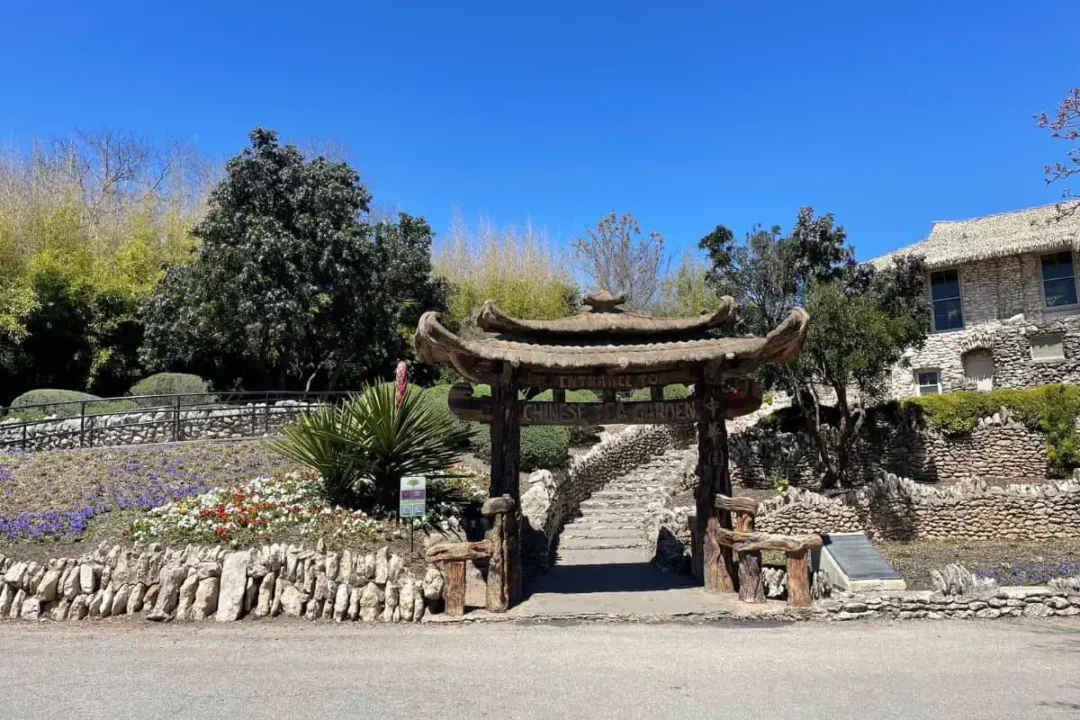
The garden fits naturally into a larger city itinerary that also includes the zoo, downtown landmarks, and a longer San Antonio day. Visitors looking for a short scenic stop, a lunch break, or a low-cost photo location usually find that the tea garden is easy to fit without turning the day into a long excursion.
| Quick Fact | Current Detail |
|---|---|
| Official name | Japanese Tea Garden |
| Address | 3853 N. St. Mary’s St., San Antonio, TX 78212 |
| Public hours | San Antonio Parks Foundation lists daily hours as 7 a.m. to 5 p.m.; the City of San Antonio describes the garden as open from dawn to dusk |
| Admission | Free |
| Parking | Free public parking is available in the garden lot, with designated accessible spaces |
| Pets | Leashed pets are welcome |
| Photo rules | No photo permit is required for casual photography; professional sessions need advance scheduling |
| Accessibility | Upper garden, pavilion, and Jingu House are ramp accessible; the lower garden is stairs only |
| Dining | Jingu House is on site and currently operates with walk-in service |
The tea garden works best for visitors who want one calm, visually rich stop rather than a full museum block. The stone bridges, koi ponds, waterfall, and shaded paths give the place a slower pace than the surrounding city streets, and that contrast is a large part of its appeal.
Why Visitors Go To The Japanese Tea Garden San Antonio
The Japanese Tea Garden is both a historic landscape and a practical urban escape. It began as a stone quarry, later became a civic garden, and now gives visitors a compact place to walk, rest, take photos, and add a quiet stop to a broader San Antonio route.
The City of San Antonio identifies the garden as a historic landmark on its official page at sa.gov, while the San Antonio Parks Foundation keeps current visitor details online at saparks.org/japanese-tea-garden.
Families, couples, and solo travelers use the garden as a quiet stop before the zoo, Brackenridge Park, or lunch downtown.
- Best for a short stop: The main paths, pond views, and upper garden can be covered quickly.
- Best for photos: The bridges, water features, and hillside views create strong composition points.
- Best for a low-cost outing: Admission is free.
- Best for a mixed itinerary: The garden sits close to Brackenridge Park and other San Antonio attractions.
The garden also fits into the city’s wider cultural story. Readers who enjoy pairing food, history, and local landmarks can compare the stop with Texas Traditions: Food, Music, Festivals, and Heritage in the Lone Star State for a broader sense of how San Antonio mixes Japanese design, public space, and neighborhood history.
Historically, the site’s transformation from quarry to garden is part of what gives it depth. The garden is not a large botanical collection, but it does have enough history and design character to feel distinctive rather than generic.
The site is also one of the more approachable public gardens in Texas for a quick visit. The layout is compact, the admission is free, and the on-site café gives visitors a reason to stay longer without needing a separate restaurant reservation.
Japanese Tea Garden San Antonio Hours, Admission, Parking, And Arrival Details
The most useful planning detail for Japanese Tea Garden San Antonio TX is simple: the garden is free and open daily, with the San Antonio Parks Foundation listing 7 AM to 5 PM and the City of San Antonio describing the garden as dawn to dusk.
| Planning Item | Current Detail |
|---|---|
| Public access | Free admission |
| Daily hours | 7 a.m. to 5 p.m. on the Parks Foundation page; dawn to dusk on the City of San Antonio page |
| Address | 3853 N. St. Mary’s St., San Antonio, TX 78212 |
| Parking | Public parking lot on site with designated accessible spaces |
| Pets | Leashed pets welcome |
| Photo permit | Not required for casual photos |
| Professional photos | Advance scheduling required for professional sessions |
| Restaurant | Jingu House is on site |
The early morning hours are often the easiest time for a visit because the paths are quieter and the light is softer around the waterfall and pond edges.Midday still works well, but the combination of open stone paths and South Texas heat makes an earlier arrival more comfortable in warmer months.
Parking is straightforward compared with many downtown San Antonio attractions. The garden has its own lot, and the accessible spaces are marked near the entrance, which reduces the amount of walking required before the first view of the garden even begins.
The official city page also places the garden inside Brackenridge Park, which helps with orientation. Visitors arriving from downtown, the zoo area, or nearby museums should treat the tea garden as a north-side park stop rather than as a stand-alone destination with heavy traffic.
Texas Time Travel also includes the garden in its directory at Texas Time Travel, which gives the site another travel-reference listing outside the city and foundation pages.
Japanese Tea Garden San Antonio Current hours and the daylight window
According to the San Antonio Parks Foundation, the daily 7 AM to 5 PM window is the clearest public planning guide, and the city’s dawn-to-dusk wording points in the same direction.
That means a visitor can comfortably pair the garden with an early zoo stop or a lunch at Jingu House and still leave with plenty of day left for other San Antonio landmarks. The garden does not need a full afternoon to make sense, but it does reward slow walking and a few pauses for photos.
Japanese Tea Garden San Antonio Parking and arrival notes
The on-site lot is the most direct way to arrive, and it is the best option for anyone carrying camera gear, visiting with children, or planning to stay for lunch. Designated accessible spaces are available in the same lot, which makes the upper garden and Jingu House easier to reach than many older urban attractions.
Arriving a little earlier than planned is still useful because the garden invites slow walking. A short early arrival creates more room for the waterfall, bridge, and pond areas without feeling rushed, and it leaves space for a coffee or tea stop before moving on to the next part of the day.
For travelers who want a fuller Bexar County plan, the best things to do in Bexar County guide helps shape a broader San Antonio day, and the best places for camping near San Antonio guide turns the garden stop into an overnight trip.
What Visitors See Inside The Japanese Tea Garden San Antonio
The Japanese Tea Garden looks compact from the outside, but the interior has several distinct layers. Stone paths lead to water features, shaded overlooks, a waterfall, koi ponds, and a small network of curved bridges that break up the garden into calm viewing zones.
The design is easy to understand at a glance. Visitors can move from the entrance toward the upper garden, then look down toward the lower areas and pond systems, which gives the space a vertical feel that many flat city gardens do not have.
The quarry past still shows up in the garden’s contours. That history gives the site more texture than a typical ornamental park because the stonework and elevation changes feel connected to the land rather than placed on top of it.
The official garden pages and public history references also point to the Jingu family’s role in shaping the site’s identity. That detail matters because the garden is not just styled in a Japanese aesthetic; it is tied to a real local family story and to decades of civic restoration work.
The city and the Parks Foundation both identify the garden as a landmark worth preserving, and the site’s history reflects that status. The garden has been recognized as a Texas Civil Engineering Landmark, a Registered Texas Historic Landmark, and a National Register of Historic Places site.
The quarry roots and water features
The quarry origin explains why the garden feels carved into the hill instead of laid across a flat lawn.
Visitors usually notice the waterfall first because sound carries through the space before every turn is visible. From there, the koi ponds and planted edges slow the walk, and the bridges create a few natural pauses for photos or simple observation.
The site’s water features are also one reason the garden feels cooler than the surrounding city heat suggests. Shade, moving water, and the narrow paths give the place a noticeably calmer temperature and mood than many open parks in central San Antonio.
Upper garden versus lower garden
The upper garden is the easiest part of the site for most visitors to reach because the ramp access connects directly to the pavilion and Jingu House. That section is the best place to start for anyone who wants a gentle visit, a quick meal, or the clearest overview of the garden layout.
The lower garden is more scenic but requires stairs. Visitors who want the full experience should expect that split in access and plan accordingly, especially if the stop includes older adults, strollers, or anyone who prefers to avoid steps.
That difference is more than a technical detail. It shapes the visitor route, the amount of time spent at each level, and the kind of experience the garden offers to different groups.
Jingu House, Photos, And Garden Events
Jingu House turns the tea garden from a walk-through stop into a place where visitors can stay a little longer. The on-site restaurant currently operates with walk-in service, and its official page lists weekday and weekend hours that make it a practical lunch or tea stop inside the garden.
The current Jingu House site lists Monday through Thursday from 10 AM to 4 PM, Friday from 10 AM to 5 PM, and Saturday and Sunday from 9 AM to 5 PM. The restaurant page is available at jinguhousesatx.com, and the walk-in format means a reservation is not required for a normal meal stop.
The menu adds another layer to the visit because it gives the garden a real dining use instead of a decorative one. Visitors can move from the lower garden back up to the pavilion or restaurant area and stay for tea, lunch, or a slower break before leaving the park.
Professional photography is handled differently from casual photography. Casual photos do not need a permit, while professional sessions require advance scheduling through the garden operator, so photographers and event planners should separate a quick visit from a formal shoot.
That distinction matters because the site is a popular background for portraits, engagement sessions, and family pictures. A casual visitor can simply walk in with a phone or camera, but a formal shoot belongs in the scheduled category rather than the walk-up category.
Readers who are interested in food culture can pair the stop with Texas Traditions: Food, Music, Festivals, and Heritage in the Lone Star State to get a broader sense of how San Antonio’s history and dining culture overlap.
The garden also hosts public events from time to time, and those gatherings often use the open lawn or pavilion space. Music nights, community programming, and seasonal celebrations make the site feel active without changing its basic identity as a quiet park setting.
For event planning, the Parks Foundation is the source to check first because it handles the operating details, venue use, and current programming. The city page supplies the landmark history, but the foundation page is where the practical event information lives.
What Jingu House adds to the visit
Jingu House gives the tea garden a pause point that fits the setting. Visitors can order food or drinks, sit under the garden canopy, and keep the day centered around the park rather than around a separate restaurant run.
That on-site dining option is especially useful for travelers pairing the tea garden with the zoo or another Brackenridge Park stop. A meal inside the garden keeps the route compact and reduces the need to leave the neighborhood just to find lunch.
The restaurant hours also make the garden more flexible in the middle of the day. Early visitors can start with the garden itself, then return to Jingu House for lunch, while later arrivals can do the reverse and use the meal as the main reason to slow down.
Photography rules and formal sessions
Casual photography is straightforward: visitors can take pictures without applying for a permit. The Parks Foundation also notes that professional photo sessions need advance scheduling, which keeps the garden from being crowded by unscheduled production setups.
That rule is useful for couples, families, and small groups because it removes a common planning barrier for everyday visits. A camera or phone is enough for a normal stop, while a formal portrait session belongs in advance planning with the operator.
Visitors who want a broader San Antonio event calendar can also compare the garden with the city’s larger seasonal gatherings in San Antonio Stock Show and Rodeo 2026.
Accessibility, Pets, And The Best Time To Visit Japanese Tea Garden San Antonio
The Japanese Tea Garden is one of the more visitor-friendly historic gardens in San Antonio because the upper garden and pavilion are ramp accessible and the garden lot includes designated accessible parking. That makes the first part of the visit relatively easy even when the lower paths are not practical for every traveler.
The lower garden still requires stairs, so the visit works best when the group understands that split before arriving. Visitors with mobility concerns can still enjoy the upper garden, the pavilion, and Jingu House without needing to force a full descent into the lower level.
Pets are welcome as long as they stay on a leash. That policy keeps the garden accessible for travelers who move through San Antonio with a dog and want a shaded, calmer walking stop instead of a crowded urban sidewalk route.
The best time to visit is usually early in the day or during the cooler seasons of spring and fall. Morning light works well on the water and stone, while the Texas heat later in the day can make the walk feel longer than the distance suggests.
- Best for cooler light: Early morning.
- Best for easier parking and a calmer pace: Weekdays outside the lunch hour.
- Best for a lunch stop: Midday with Jingu House.
- Best for a relaxed photo walk: Spring and fall mornings.
A practical visit window is about 60 to 90 minutes for a simple walk, with extra time added for lunch or photography. That estimate is based on the compact layout of the site rather than on a formal timed-entry system, so it works as planning guidance rather than as a fixed rule.
The site’s public guidance also makes it clear that the garden is meant to be usable rather than fragile from a visitor’s perspective. Leashed pets, casual photos, and ramp access to the upper level all make the stop easier to fit into a normal city day.
What visitors should bring
Comfortable walking shoes help the most because the paths mix stone, slopes, and stairs. A water bottle, a sun hat, and a phone or camera are usually enough for a visit, and a lunch plan becomes useful when Jingu House is part of the stop.
Visitors planning a longer Bexar County weekend can also combine the garden with a stay near the city or with another nearby outing.
The garden remains a good choice in warm weather because the shade and water features give it a calmer feel than many open-air attractions. It still helps to arrive early, but the layout keeps the experience manageable even during a busy San Antonio day.
Nearby Stops In Brackenridge Park And Central San Antonio
The Japanese Tea Garden is strongest when it is part of a larger route. Brackenridge Park, the San Antonio Zoo, and the city’s downtown landmarks all sit close enough to turn the garden into a smart half-day stop rather than a destination that needs its own full itinerary.
The zoo is the most natural pairing because it sits in the same park system and gives families a second reason to stay in the area. Visitors who want a downtown or river-oriented trip afterward can move south without losing the calm start that the garden provides.
For a broader city day, the garden also pairs well with the larger downtown attraction list in best things to do in San Antonio. That route works especially well for travelers who want one scenic stop before shifting to food, museums, or the River Walk.
Visitors comparing neighborhoods and activity clusters can also use best things to do in Bexar County to build a longer route around the garden. The tea garden gives that larger county plan a peaceful anchor point at the north end of the city.
Travelers building an overnight stay can fold the tea garden into a weekend with other San Antonio attractions and outdoor stops.
The garden also works well as a reset between busier parts of the day. After a crowded museum, a zoo visit, or a downtown lunch, the tea garden gives visitors a quieter place to slow down and keep the rest of the itinerary from feeling rushed.
The site’s location inside Brackenridge Park is what makes that flexibility possible. It is close enough to city landmarks to fit into a full day, but calm enough to feel distinct from the traffic and noise that usually come with urban sightseeing.
Japanese Tea Garden San Antonio FAQ
Is the Japanese Tea Garden free?
Yes. Admission to the Japanese Tea Garden is free, which is one of the main reasons it fits so easily into a San Antonio day.
The free access covers the garden itself, while Jingu House operates separately as the on-site dining option.
What are the current hours for the Japanese Tea Garden?
The San Antonio Parks Foundation currently lists daily hours from 7 AM to 5 PM, and the City of San Antonio describes the garden as open from dawn to dusk.
Morning is usually the most comfortable time because the paths are quieter and the stone and water features are easier to enjoy before the day heats up.
Are dogs allowed at the Japanese Tea Garden?
Yes. Leashed pets are welcome at the garden.
That rule makes the garden one of the easier San Antonio scenic stops for travelers with a dog, as long as the pet stays on a leash and follows normal park etiquette.
Do visitors need a photo permit?
No permit is needed for casual photography. The Parks Foundation only requires advance scheduling for professional photo sessions.
That means most visitors can take pictures freely, while formal portraits, engagement shoots, and commercial work belong in the scheduled category.
Is the Japanese Tea Garden wheelchair accessible?
The upper garden, pavilion, and Jingu House are ramp accessible, and designated accessible parking is available in the garden lot.
The lower garden is stairs only, so the most accessible route is to focus on the upper level and the restaurant area if stairs are a concern.
The official city page also identifies the site’s broader historic status, and current public references describe the garden as a landmark with both cultural and design value. The best planning move is to treat the upper level as the accessible core of the visit.
Bottom line: Japanese Tea Garden San Antonio TX is an easy, low-cost stop with enough history, scenery, and dining to justify a visit on its own. The free admission, on-site Jingu House, leash-friendly policy, and ramp access to the upper garden make it one of the most practical scenic breaks in Brackenridge Park.