Deep Ellum Dallas TX Guide: Art, Music, Food, and Parking
Deep Ellum Dallas TX is a historic entertainment district just east of downtown Dallas, known for live music, street murals, independent restaurants, bars, and a long Black cultural history. It works especially well for visitors who want one neighborhood that can handle lunch, galleries, dinner, and late-night music without a long drive between stops.
The neighborhood sits in a compact part of the city that can be explored on foot, by DART, or by rideshare. For readers building a broader Dallas itinerary, it pairs naturally with the best things to do in Dallas and gives the city a more local, music-forward feel than downtown sightseeing alone.
The official Deep Ellum home page describes the district as a place for arts, music, culture, innovation, restaurants, bars, shops, and murals. The district suits first-time visitors, date nights, and anyone who wants a neighborhood that still feels active after sunset.
| Quick Fact | What matters for a visit |
|---|---|
| Location | East of downtown Dallas, centered around Good-Latimer, Gaston, Elm, Main, and Commerce |
| Best for | Live music, murals, casual dining, nightlife, and a walkable evening out |
| Transit | DART Green Line service at Deep Ellum Station |
| Parking | Street parking, public lots, private lots, and garages are all part of the local mix |
| History | Railroad-era district that began in the 1870s and became a Texas Cultural District in 2020 |
| Signature art | The Traveling Man sculpture series and neighborhood murals |
For the current neighborhood overview, the official Deep Ellum site also notes more than 400 businesses, including more than 100 bars and restaurants and 25 live music venues. That scale explains why the area can feel like a full night out even when the plan starts with a simple dinner.
What Deep Ellum Is and Who It Suits
Deep Ellum Dallas works best for visitors who want a neighborhood with a strong identity rather than a polished commercial strip. The district is one of Dallas’s oldest commercial areas, and the old industrial grid, brick buildings, rail history, and public art still shape the way the streets feel today.
Deep Ellum is one of Dallas’s most walkable neighborhoods. A short visit can cover a coffee stop, a few murals, a gallery, dinner, and a music venue without needing to move the car repeatedly.
Couples, small groups, solo travelers, and locals use Deep Ellum for an evening with a clear starting point and a flexible ending. The district also suits travelers who prefer local businesses over attraction-heavy districts built around one marquee site.
Visitors looking for a calmer family outing during the day may still enjoy the murals, shops, and casual food, but the neighborhood becomes more nightlife-oriented after dark. Deep Ellum is strongest when the plan includes walking, eating, and at least one music or art stop.
Readers can think of it as Dallas’s music-and-murals neighborhood, with the city’s railroad history still visible in the street layout and the surviving brick buildings. Food, art, live entertainment, and independent businesses give it the strongest identity.
- Best for a compact evening plan with several stops.
- Best for murals, live music, and casual dining in one district.
- Best for visitors who prefer a neighborhood with local character.
- Best for travelers who want transit access and walkability.
- Less ideal for visitors who want a quiet, residential atmosphere.
For a broader city day that starts elsewhere, the neighborhood fits well after daytime sightseeing and before a late dinner or live set. Food-heavy visitors can also use Deep Ellum as a bridge between food trucks in Dallas and a more traditional sit-down meal or venue crawl.
The area also works as a first stop for visitors who want to understand how Dallas layers history and nightlife into the same district. That combination is part of why the neighborhood remains one of the city’s most recognizable places to recommend for a first-time visit.
Best Things to Do in Deep Ellum Dallas
The strongest Deep Ellum Dallas experiences cluster around four themes: murals, music, food, and local shopping. The neighborhood does not need a rigid sightseeing plan; most visits work best when the day or night is built around a few anchor stops and enough time to wander between them.
Deep Ellum brings together restaurants, attractions, nightlife, shops, arts, music, food and drink, and creative services. It works best as a place to browse, eat, listen, and linger rather than rush through.
Murals are one of the easiest ways to start. The neighborhood’s streets and side walls hold a dense collection of public art, and the visual texture changes quickly from block to block, which makes the area strong for photos even before the bars and venues open for the night.
Live music remains the core draw after dark. Well-known names in the district include Adair’s Saloon, Club Dada, Trees, The Church, Sons of Hermann Hall, and other venues that keep the neighborhood tied to Dallas’s music identity rather than only its food scene.
- Start with murals and street art during the day.
- Browse local shops and galleries before dinner.
- Choose one live music venue as the anchor for the evening.
- Add a dessert, coffee, or cocktail stop between venues.
- Use the neighborhood’s compact footprint to keep the outing simple.
Food works best when the plan is flexible. Pecan Lodge is one of the most famous names attached to the neighborhood, but the district also supports ramen, pizza, tacos, barbecue, vegan-friendly plates, breweries, and late-night snacks, so the meal can be as casual or as deliberate as the occasion requires.
Shopping is usually strongest when the visit includes independent stores rather than national chains. Deep Vellum, Flea Style, Warstic, and a range of music- and art-adjacent businesses help the neighborhood feel layered instead of purely entertainment-driven.
Visitors who want a lower-key daytime version of the district can focus on a mural walk, a gallery stop, and an early meal before the nightlife crowd arrives.
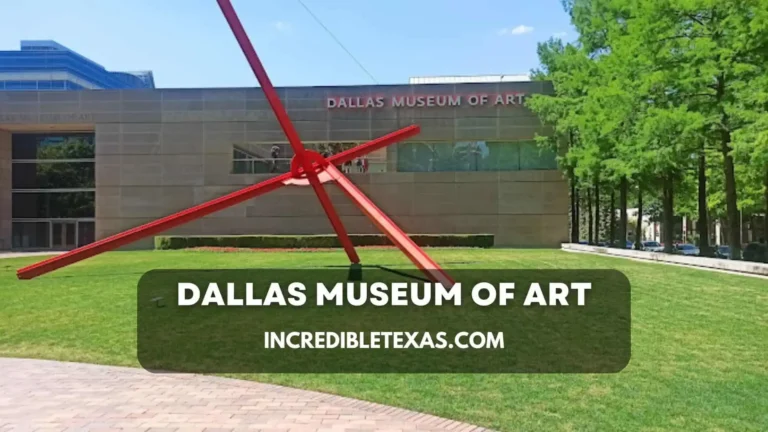
For a second arts stop in the same city, a good pairing is the Dallas Museum of Art, which gives the day a museum counterpoint before the street-art side of Dallas takes over in Deep Ellum.
| Visitor Goal | Best Deep Ellum fit |
|---|---|
| Photos and murals | Street art walk and alley exploration |
| Live music | One club or historic music hall as the main stop |
| Casual food | Barbecue, tacos, pizza, ramen, or a brewery meal |
| Shopping | Independent boutiques, records, books, and creative retail |
| Short visit | One meal, one mural loop, and one venue |
Visitors who arrive with a narrow plan usually leave with a broader sense of the district because the environment invites small detours. The most useful strategy is to pick one food stop, one art stop, and one music stop instead of trying to force a checklist walk.
Deep Ellum History and Public Art
Deep Ellum’s history begins with railroads. The Houston and Texas Central Railroad reached Dallas in 1872, the Texas and Pacific Railroad followed in 1873, and the crossing of the two lines helped create the neighborhood just east of downtown.
The name grew out of “Deep Elm,” a reference to the district’s location along Elm Street and its distance from downtown. According to the history page, the neighborhood drew Black, Jewish, Greek, Italian, Mexican, Czech, and other communities into the same commercial corridor, which gave the area a rare cross-cultural energy for its era.
The district’s history still shows up in its architecture. The district boasts more than 20 historically recognized buildings, and the 2023 National Register designation confirmed the area’s importance as a surviving historic district rather than only a nightlife zone.
Deep Ellum became a Texas Cultural District in 2020, and the historic district boundaries run roughly from the DART Green Line on the north to South Hall Street on the south, I-345 on the west, and I-30 on the east. Those boundaries help explain why the neighborhood feels concentrated and legible on foot.
Public art remains one of the most visible expressions of that history. The Traveling Man sculpture series at Deep Ellum Station turns the rail gateway into a landmark of its own, and the DART station page ties the art directly to the neighborhood’s history, music, and street life.
- Railroads shaped the district’s earliest growth.
- Historic buildings still anchor several blocks of the neighborhood.
- The Texas Cultural District designation came in 2020.
- The National Register listing arrived in 2023.
- The Traveling Man sculpture series marks the transit gateway.
That history matters because it gives the neighborhood more than a nightlife reputation. The music, murals, and food culture grew out of a commercial district that kept changing without losing its local personality, and that continuity still shows up in the surviving buildings and the street art.
A history-forward visit pairs well with a daytime arts stop and a slower walk through the older blocks before the evening crowd arrives. The neighborhood’s artistic layer is easier to notice then, when the murals, facades, and historic corners are not competing with the late-night pace.
Visitors who want another art-focused stop in Dallas can combine the district with a museum visit and then finish the evening in the neighborhood where the city’s street culture is most visible. That contrast is part of what gives Deep Ellum such a distinct role in Dallas.
How to Get There and Where to Park
Deep Ellum Dallas is easier to reach than many nightlife districts because it has direct DART access, a strong rideshare presence, bike routes, and multiple parking choices. The official Deep Ellum getting-around page gives the clearest parking rules and transit notes.
DART’s Deep Ellum Station sits at Good-Latimer Expressway and Gaston Avenue, and the station page identifies it as a Green Line stop served by the rail system. The page also places the station art and the Traveling Man series in the context of the neighborhood’s rail-and-culture history.
A second nearby stop, Baylor University Medical Center Station, also sits on the Green Line and gives riders another useful access point on the east side of the district. For visitors who prefer transit to parking stress, the Green Line is the cleanest way to arrive for dinner or a show.
Street parking is still available across Elm, Main, Commerce, Canton, Indiana, and surrounding cross streets.
| Parking Option | Current neighborhood guidance |
|---|---|
| Street parking | Available on many blocks; free from 12:00 a.m. to 6:00 p.m. |
| Metered spaces | Payment required from 6:00 p.m. to 12:00 a.m. |
| Public lots | Three city lots near and under I-345 along Good Latimer; daytime rates $2 per hour and evening rates $5 per hour |
| Private lots | Rates vary and often rise to $20 or more on weekend nights |
| Garages | The Stack at 2700 Commerce Street and The Epic at 2550 Pacific Avenue |
Private lots use posted machines or apps for payment, and cash requests from attendants do not match the standard process. A quick check of the posted rules avoids unnecessary confusion on the neighborhood’s busiest nights.
Rideshare is often the simplest option late at night. Designated pickup and drop-off zones help keep traffic moving during the busiest weekend hours, when bars and music venues empty at roughly the same time.
Bike riders can enter from downtown through Commerce Street or from the east via the Santa Fe Trail. Shared bike lanes, corrals, and pump locations support short hops inside the district.
App-based scooters are available, although they are not allowed on sidewalks and become inoperable after 9:00 p.m.
- Choose DART for the least parking friction.
- Choose street parking for daytime visits with some flexibility.
- Choose public lots for a predictable short stay.
- Choose rideshare for weekend nights and late exits.
- Choose a garage if the plan includes a long dinner or show.
For a transit-first visit, the DART station details and the neighborhood getting-around page are the clearest reference points for transit and parking. The instructions make the district easier to use than many nightlife areas that rely on guesswork after dark.
Readers who want to build a wider Dallas evening can pair the district with a downtown park stop before or after dinner. A route that includes Klyde Warren Park and Deep Ellum keeps the day varied without adding a complicated drive.
The same logic applies to travelers planning a date night. Arriving by transit or rideshare preserves energy for the district itself, while parking early works better when the evening starts before the busiest bar rush.
Where to Eat, Drink, and Hear Live Music
Food and music are the core reasons most visitors come to Deep Ellum after dark. Bars, restaurants, and live entertainment anchor the district after sunset.
Some visits start with barbecue and end with a show; others begin with a cocktail and end with dessert. Either way, the neighborhood’s venues are close enough together that dinner does not need to be the entire plan, only the center of it.
Deep Ellum’s food range covers barbecue, tacos, ramen, pizza, and casual bar fare, along with breweries and late-night bites. Pecan Lodge remains one of the neighborhood’s most recognizable food names, but the stronger strategy is usually to pick a cuisine that matches the rest of the evening rather than chase one famous counter.
For visitors who want a classic Dallas night out, live music venues such as Trees, Club Dada, The Church, Sons of Hermann Hall, and Adair’s Saloon offer a useful spread of styles and crowd sizes. The neighborhood’s music scene stays varied enough that a first visit can feel different from a repeat visit without changing districts.
- Pick one food anchor before choosing the music venue.
- Leave time for one short walk between dinner and the show.
- Use breweries and bars as connectors rather than the only destination.
- Keep dessert or coffee open as a late-night option.
- Expect the neighborhood to get busier as the evening goes on.
Shopping and arts spaces add another layer to the evening. Deep Vellum, Kettle Art Gallery, Deep Ellum Art Co., and related creative businesses keep the district from feeling like a pure bar strip, which is part of the reason the neighborhood still works in daylight.
Visitors who want a more structured evening can treat the district as a three-part plan: early dinner, one music set, and one final drink or dessert stop. That rhythm helps preserve enough energy for the walk home or rideshare exit after the venues begin to clear.
Couples often use the district for a casual date because the neighborhood naturally provides conversation breaks. The stops do not all have to be expensive or formal, and the evening still feels deliberate when it starts with food and ends with music.
For a broader date-night idea list in the city, Dallas date ideas can provide a useful companion, but Deep Ellum is one of the few places that can deliver both atmosphere and flexibility in the same square mile.
The Visit Dallas guide lays out the area’s restaurants, nightlife, attractions, and shops and helps narrow the evening down to a specific venue or meal.
The neighborhood also benefits from its density of independently owned businesses. That density means the evening can stay local even when the plan changes midway through the night, which is often what happens once the music starts and the walking pace slows.
Best Time to Visit Deep Ellum
The best time to visit Deep Ellum Dallas depends on the goal. Daytime is stronger for murals, shops, and easy parking, while evening is better for music, bars, and the full entertainment-district experience.
Visitors who want photos and a slower pace should arrive earlier in the day, especially on weekdays. The streets are easier to read, the art is easier to notice, and the parking options are less pressured than they become around dinner time on Friday and Saturday.
Visitors who want energy should plan for the evening. Thursday through Saturday usually brings the most movement, and the district feels most alive when several venues are active at once and the sidewalks are full between set times.
Weather and season matter as well. Dallas heat makes shaded or indoor stops more valuable in summer, while spring and fall are more comfortable for mural walks and longer stretches on foot.
- Choose weekday daytime for murals and parking ease.
- Choose early evening for dinner and a single show.
- Choose Friday or Saturday for the busiest nightlife atmosphere.
- Choose spring or fall for the most comfortable walking weather.
- Choose summer afternoons only if indoor stops are part of the plan.
Visitors who want a softer Dallas pairing can add a stop at a downtown park before moving east into Deep Ellum. A route that starts at Klyde Warren Park and ends in Deep Ellum creates a nice contrast between the polished downtown core and the neighborhood’s rougher creative edge.
For a first visit, the simplest rule is to pick the district by mood. Daytime suits art and history, while nighttime suits music and food, and the neighborhood works best when the itinerary matches that split.
Deep Ellum supports both a slow daytime stop and a faster nightlife outing because arts, music, culture, restaurants, bars, murals, transit, and parking all fit into the same compact district.
Deep Ellum Dallas FAQ
What is Deep Ellum known for?
Deep Ellum Dallas is known for live music, street murals, independent restaurants, bars, and its long history as a Dallas commercial and cultural district. The neighborhood also has a strong legacy tied to Black music and cross-cultural exchange, which still shapes its identity today.
Where is Deep Ellum in Dallas?
Deep Ellum Dallas sits just east of downtown Dallas, centered around streets such as Elm, Main, Commerce, Good-Latimer, and Gaston. The historic district boundary runs roughly from the DART Green Line to the north to South Hall Street to the south, I-345 to the west, and I-30 to the east.
Is Deep Ellum walkable?
Yes. Deep Ellum is one of Dallas’s most walkable neighborhoods, and the compact street grid supports short trips between food, art, and music stops.
How do visitors get to Deep Ellum without driving?
DART is the easiest non-driving option. Deep Ellum Station on the Green Line sits at Good-Latimer Expressway and Gaston Avenue, and the neighborhood also works well for rideshare or bike access through the surrounding street and trail network.
What is the best time of day to visit Deep Ellum?
Daytime is best for murals, shops, and lighter parking demand, while evening is best for live music, bars, and dinner. Visitors who want the district at its most energetic should aim for Thursday through Saturday nights.
Is Deep Ellum good for a first Dallas visit?
Deep Ellum works well for a first Dallas visit because it combines history, nightlife, food, and walkability in one compact district.
Deep Ellum Dallas TX stands out because it still feels like a neighborhood with a past, not only a place built for visitors. The railroads, murals, music venues, and local businesses all contribute to a district that gives Dallas a distinct cultural center east of downtown.
For a visit that balances history, food, and nightlife, the neighborhood works best when the plan stays simple: arrive by transit or park once, walk between a few well-chosen stops, and let the district do the rest.
Deep Ellum is one of the city’s most recognizable places for murals, live music, and a compact night out, and it remains one of the clearest neighborhoods to recommend for a first Dallas itinerary.