Bishop’s Palace Galveston TX: Hours, Admission, and Tips
Bishop palace Galveston TX is the 1892 Bishop’s Palace, a historic Galveston mansion at 1402 Broadway St that you can visit on a self-guided tour.
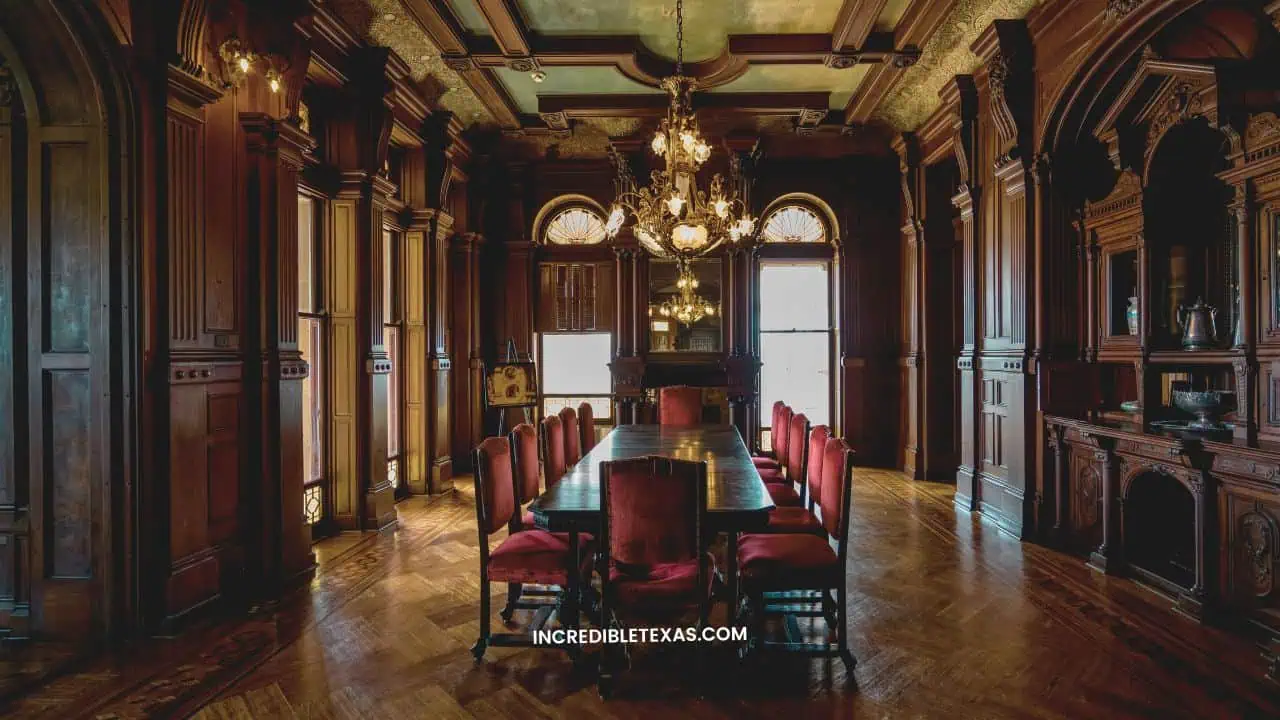
Plan for daily tour hours from 10 a.m. to 5 p.m., with the last ticket sold at 4 p.m.; admission is $15 for adults, $12 for youth ages 6-18, and free for children 5 and under.
The house is also called the Gresham House, and it belongs high on a Galveston itinerary if you want architecture, island history, and a compact indoor stop in one visit.
You get a mansion tied to architect Nicholas J. Clayton, the Gresham family, the Catholic Diocese, and the 1900 Storm without needing to block out a full day.
Use the logistics first: the site is on Broadway Avenue J, the visit is self-guided, and the Galveston Historical Foundation notes that the house is not fully accessible to visitors using wheelchairs or walkers because it does not have a ramp. If stairs or mobility access matter for your group, decide before you buy tickets.
What Bishop’s Palace is and why it stands out
Bishop’s Palace Galveston is a Victorian-era mansion from 1892 that sits along Broadway, one of the island’s most recognizable historic corridors. The Galveston Historical Foundation identifies the house as both the 1892 Bishop’s Palace and the Gresham House, a name that points back to the family that commissioned it.
The mansion stands out because it combines a dramatic exterior, detailed interior craftsmanship, and a layered Galveston story in a single stop. Visit Galveston describes the building as Châteauesque in design, built between 1887 and 1892 for Colonel Walter Gresham and his wife Josephine.
You do not need to be an architecture specialist to enjoy the stop. The draw is easy to understand: stonework, stained glass, woodwork, broad staircases, and the feeling of stepping into a preserved Galveston landmark rather than a recreated attraction.
The house also gives you a grounded way to understand how Galveston looked during one of its wealthiest late-19th-century periods. If you are comparing it with more things to do in Galveston, Bishop’s Palace works best when you want a historic indoor attraction instead of a beach-only plan.
Its official historic status matters, too. The Galveston Historical Foundation lists the 1892 Bishop’s Palace as a National Historic Landmark and on the National Register of Historic Places, placing it in a different category from a typical old house tour.
For many visitors, a practical way to think about the mansion is as a short, focused Galveston historic mansion tour. You can pair it with lunch, the East End Historic District, the Strand area, or a beach stop, rather than treating it as your entire Galveston plan.
The current tour format also helps if your schedule is tight. A self-guided visit lets you move at your own pace, pause longer in rooms that interest you, and leave when your group is ready, while still staying inside the published daily ticket window.
If this is your first visit, start with the exterior and then move slowly through the main rooms. Bishop’s Palace gives you more than a photo stop because the facade, staircase, and room details all reward a slower first pass.
Pick one thing to watch for before you enter, such as the staircase, the stained glass, or the stonework, and let that detail guide your pace. You will leave with a clearer memory if you focus on one thread instead of trying to absorb every room at once.
- Take one slow lap outside before you enter so the exterior details make sense.
- Pause at the staircase and look upward rather than walking through too quickly.
- Save the broader history lesson for after the tour, when the rooms are already in your head.
Bishop’s Palace hours, admission, and location
The most important Bishop’s Palace hours and admission detail is simple: self-guided tours run daily from 10 a.m. to 5 p.m., and the last ticket is sold at 4 p.m.
Check the official Bishop’s Palace page before you drive over, because hours and ticket rules can change around private events or maintenance.
Admission is $15 for adults, $12 for youth ages 6-18, and free for children 5 and under. Those prices are especially useful if you are planning a family visit, because a group with young children may pay less than a group made up mostly of adults and teens.
The address is 1402 Broadway St, also shown as Broadway Avenue J, Galveston, TX 77550. Put the full address into your map app rather than searching only by the mansion name if you want the most direct routing from Seawall Boulevard, the Strand, or the ferry area.
If you are coming from Houston, treat the mansion as an island activity rather than a quick roadside stop. Galveston is a common choice for day trips from Houston, but traffic, parking, meal stops, and bridge backups can affect how much time you have once you reach the island.
Try to arrive before the last-ticket window if the mansion is your main reason for visiting.
A 4 p.m. last-ticket cutoff means you should not count on an end-of-day arrival unless you are already nearby and comfortable with a shorter visit.
The official tour window also gives you an easy way to structure the day. Visit the mansion in the morning if you want lunch afterward, or use an early afternoon slot if your first stop is the beach or a waterfront meal.
Keep the age bands in mind when you budget. Youth pricing begins at age 6 and runs through age 18, while children 5 and under enter free, so the exact ages in your group matter more than a general “family rate” assumption.
Tickets and hours should be checked close to your visit date. Historic attractions can adjust operations when restoration work, special tours, or private programming is scheduled, so treat the official Galveston Historical Foundation listing as your final pre-trip check.
If you are budgeting a family trip, write the ticket prices down before you leave home. A clear adult, youth, and child breakdown makes it easier to decide whether Bishop’s Palace should be your paid stop or just one part of a larger Galveston day.
The posted hours also help you choose the right part of the day. Morning visits work well when you want quieter streets and more room later for lunch or a beach stop, while early afternoon can fit a plan that starts elsewhere.
The Gresham House story and the mansion’s design
The mansion began as the Gresham House, built for Colonel Walter Gresham and Josephine Gresham between 1887 and 1892. Its original name preserves a specific family story before the house’s later association with the Catholic Diocese and the Bishop’s Palace name.
Nicholas J. Clayton designed the house, and that name matters in Galveston.
Clayton was a major architect on the island, and Bishop’s Palace gives you a direct look at the kind of ambitious late-19th-century work that shaped Galveston’s historic identity.
Visit Galveston describes the building’s design as Châteauesque, a style that draws from French Renaissance chateau forms. In visitor terms, that means you should look for a vertical, ornate, heavily detailed exterior rather than the simpler lines of many coastal homes.
The stone facade is part of the first impression. You get a large house that feels anchored and formal, even though it sits on a busy island street rather than on a secluded estate.
The house is also tied to the 1900 Storm, one of the defining disasters in Galveston history. Visit Galveston notes that Bishop’s Palace survived the 1900 Storm without major damage.
The survival places the mansion inside Galveston’s larger storm history and helps explain why the building still carries so much historic weight today.
Its survival gives the building a different emotional texture than a mansion preserved only for its wealth or decoration. When you stand inside, you are also looking at a structure that remained after a storm that changed the island’s future.
The National Historic Landmark and National Register listings add another layer of context. Those designations do not automatically tell you how enjoyable a visit will feel, but they do confirm that the house has recognized historical importance beyond local nostalgia.
As a visitor, you can keep the history manageable by focusing on three names: Gresham, Clayton, and Galveston Historical Foundation. Gresham gives you the family origin, Clayton gives you the architectural lens, and the foundation gives you the current preservation and visitor framework.
The mansion’s design is also useful if you are visiting with kids or a mixed-interest group. Some people will care about the architect, while others may simply respond to the staircase, stained glass, woodwork, and sense of scale.
You do not have to turn the visit into a history lesson for every person in your group. Give each person a few details to watch for, then let the house carry the rest through its rooms, materials, and preserved atmosphere.
The interior details matter because the mansion was built to signal status as well as taste. When you see carved stone, stained glass, and the large staircase together, you are looking at a house that was designed to impress from the street and inside the rooms.
If you care about preservation, remember that the building survived the 1900 Storm and remained a landmark through later chapters of Galveston history. That continuity gives you a better sense of how the island remembers itself through architecture.
Bishop’s Palace still stands as one of Galveston’s clearest architectural markers. The mansion ties a family story, a named architect, and the island’s storm history into one site.
Visitors see that connection immediately when they move from the street into the rooms. The house keeps the history visible in a way that makes the visit feel rooted in Galveston rather than borrowed from another place.
What you see on a self-guided tour
A self-guided tour at Bishop’s Palace gives you control over your pace. You can slow down around architectural details, move faster through spaces that interest your group less, and avoid the pressure of keeping up with a docent-led schedule.
Expect the tour to feel more like a historic-house walk-through than a hands-on museum. The value comes from looking carefully at room details, materials, scale, and how the mansion’s public and private spaces connect.
Pay attention to stained glass, carved woodwork, and the staircase as you move through the house. Those details help explain why the mansion draws visitors even when they have only a casual interest in architecture.
The self-guided format is helpful if you are traveling with people who read at different speeds. Some visitors may want to study every room marker, while others may prefer a steady walk that focuses on the overall impression.
Use the first rooms to orient yourself rather than rushing for the biggest visual moment. Historic houses often make more sense when you notice how entry spaces, formal rooms, stairways, and service patterns relate to one another.
Because the house was built between 1887 and 1892, keep that late-19th-century timeline in your mind as you walk. The rooms reflect a period when Galveston had money, trade, civic ambition, and a strong appetite for architectural display.
If you are visiting with children, set a short observation challenge before you enter. Ask them to spot stained glass, carved details, unusually shaped windows, or anything that feels different from a modern house.
Adults can use the same approach. Pick three details before you start, such as the stone exterior, the staircase, and the 1900 Storm connection, then watch how each detail changes your understanding of the house.
The tour also works well as a rain or heat backup on a Galveston day. You still need to travel between your vehicle and the entrance, but the core visit gives you an indoor historic attraction during a coastal day that may not cooperate with beach plans.
Do not treat the 4 p.m. last-ticket time as your ideal arrival.
If you want space to read, look, and take the visit seriously, give yourself more margin than the final hour of ticket sales allows.
Photography rules can vary at historic sites, so check posted signs and staff instructions when you arrive. The safest planning assumption is to enjoy the interiors first and treat any photo opportunity as a bonus when permitted.
The strongest visit usually comes from a slow first pass and a quick mental review before you leave. Pause outside afterward if conditions allow, because the facade often makes more sense after you have seen the interior craftsmanship.
If this is your first time inside, set one personal goal before you walk in. Pick one detail to follow through the whole house, such as staircases, windows, or stonework, so you leave with a sharper memory instead of a blur of pretty rooms.
You can also treat the exterior as part of the tour instead of a separate afterthought. Walking around the facade after the interior visit helps you connect the details you saw inside with the scale and style you noticed from the street.
Bishop’s Palace Galveston Accessibility, closures, and planning tips
Bishop’s Palace Galveston accessibility details deserve attention before you buy tickets. The Galveston Historical Foundation accessibility note states that the house does not have a ramp for wheelchairs or walkers and is not fully accessible to people with physical disabilities.
That detail is not a minor footnote if anyone in your group uses a wheelchair, walker, or has trouble with stairs. The official page also notes that audio tour materials are available, so visitors who cannot access every physical space may still have a way to engage with the site.
Call or check the official site close to your visit if accessibility will determine whether your group can go. Historic houses can be difficult to adapt, and Bishop’s Palace is not the kind of site where you should assume modern ramp access.
Closures can also affect your plans.
Daily self-guided tour hours run from 10 a.m. to 5 p.m., but the official page remains the place to confirm special closures, event impacts, and ticket availability before you commit to a drive.
Build extra time into your arrival if you are visiting during a busy island weekend. Galveston traffic can feel manageable on paper, then slow down around beaches, events, cruise activity, and popular dining corridors.
Wear comfortable shoes because a mansion tour still involves standing, walking, and moving through an older building. Even a compact visit can feel harder if you arrive after hours in the sun or after a long beach walk.
If your group includes young children, talk through expectations before entering. A self-guided historic mansion is quieter than a beach, aquarium, or amusement-style attraction, so kids do better when they know the visit is about looking, listening, and moving carefully.
Bring water for before or after the visit, especially in warm months. You can keep the actual house visit focused on the tour, then reset outside or at your next stop instead of trying to solve comfort issues halfway through.
Plan meals separately rather than assuming the mansion will cover your whole outing. Bishop’s Palace is a historic attraction, so lunch, snacks, and longer breaks belong elsewhere on your Galveston route.
A good planning rhythm is simple: confirm hours, check accessibility, buy or budget for tickets, then choose one nearby food stop and one outdoor stop. That sequence keeps the mansion from getting squeezed between too many island activities.
The 2026 closure dates are worth putting on a calendar if you are planning around holidays. January 25-26, December 5-8, and December 24-25 are listed closures, so a winter trip needs a quick check before you commit.
If accessibility is uncertain for anyone in your group, call before you go and do not rely on assumptions from other Galveston attractions. A historic mansion can be beautiful and still have real access limits, and Bishop’s Palace is clear about those limits.
How to build a Galveston day trip around Bishop’s Palace
Bishop’s Palace works well as the historic anchor for a Galveston day trip because it does not require a full-day commitment. You can pair the mansion with food, beach time, a scenic drive along Broadway, or another historic stop without creating a rushed schedule.
If you prefer a simple route, start with Bishop’s Palace during the morning tour window. Afterward, use a lunch stop from a local plan for where to eat in Galveston, then choose an outdoor activity based on weather and energy.
A beach pairing is easy when your group wants fresh air after an indoor tour. Use a list of Galveston beaches for an easy post-museum stop if you want to turn the day into a history-and-coast itinerary.
For visitors who care more about the island’s historic fabric, the East End is a natural planning frame. The Galveston East End area places you near a broader historic setting, so the mansion feels connected to its neighborhood rather than isolated from it.
Seasonal events can change the feel of the day. If your visit overlaps with Mardi Gras in Galveston, parking, road access, restaurant waits, and crowd levels may need more planning than an ordinary weekday visit.
You can also make the mansion your quieter stop before a busier afternoon.
The palace works well as a quieter stop before a busier afternoon, especially if the rest of your day includes the Strand, Seawall Boulevard, ferry-area sightseeing, or a beach where the pace feels less structured.
Keep your day trip realistic if you are traveling from Houston. A single historic attraction, one meal, and one waterfront stop may create a better day than trying to cover every famous Galveston landmark in one loop.
Use the 10 a.m. opening time as a planning advantage.
An early start helps you visit before the last-ticket cutoff becomes relevant, and it leaves the rest of the afternoon open for weather-dependent choices.
If you are building a history-focused day, pair Bishop’s Palace with other official historic resources rather than relying only on casual sightseeing. Visit Galveston’s Bishop’s Palace tour event listing is useful when you want to watch for special programming beyond the standard self-guided visit.
A family day needs a slightly different balance. Use the mansion while attention spans are fresh, then schedule a more relaxed stop afterward, because a historic-house visit asks children to slow down and observe details.
A couples or adult itinerary can stretch the historical angle further. Start with the mansion, add a meal, then walk or drive through nearby historic streets to connect the house with the island’s broader architectural character.
If your group includes both history fans and beach-focused travelers, place Bishop’s Palace between the two parts of the day. The mansion gives the itinerary a cultural anchor without forcing everyone to spend the whole trip indoors.
For a low-stress visit, avoid placing Bishop’s Palace at the very end of a packed day. The last-ticket cutoff, older-building access limits, and the value of looking closely all reward a plan with breathing room.
A first-time Galveston visitor can make the mansion the opening stop and still have a relaxed day afterward. Start at Bishop’s Palace, eat nearby, then decide whether the rest of the day should lean toward the beach, the Strand, or another historic site.
If you want the island to feel more complete, pair the palace with a stop that changes the pace. An indoor historic house, a local meal, and one outdoor view give you a simple route that feels thoughtful without becoming overplanned.
Bishop’s Palace Galveston FAQ
What is Bishop’s Palace in Galveston?
Bishop’s Palace in Galveston is the 1892 Bishop’s Palace, also known as the Gresham House, a historic mansion at 1402 Broadway St. The Galveston Historical Foundation lists it as a National Historic Landmark and on the National Register of Historic Places.
You visit it as a self-guided historic house tour. The main appeal is the combination of Galveston history, Châteauesque design, stained glass, woodwork, and its connection to the island’s late-19th-century story.
Who built Bishop’s Palace in Galveston?
Bishop’s Palace was built for Colonel Walter Gresham and his wife Josephine between 1887 and 1892.
Nicholas J. Clayton designed the mansion, and the house later became widely known as Bishop’s Palace.
The Gresham House name is still important because it points back to the original owners. The Bishop’s Palace name reflects the later chapter that made the building familiar to many Galveston visitors.
How much does Bishop’s Palace cost to visit?
Current admission is $15 for adults, $12 for youth ages 6-18, and free for children 5 and under. Those prices come from the official Galveston Historical Foundation listing used for the current planning facts.
Check the official page before you go if price changes would affect your decision. Historic attractions can update admission, tour availability, or special programming without much notice.
How long does it take to tour Bishop’s Palace?
The brief facts confirm a self-guided tour format rather than a fixed tour length.
Plan enough time to move slowly through the rooms, read available materials, and look at the exterior before or after your interior visit.
Do not arrive close to the 4 p.m. last-ticket cutoff if you want a relaxed experience.
Give yourself more margin when the mansion is the main reason for your Galveston stop.
Is Bishop’s Palace accessible?
Bishop’s Palace is not fully accessible to people with physical disabilities. The Galveston Historical Foundation states that the house does not have a ramp for wheelchairs or walkers, and audio tour materials are available.
If anyone in your group uses mobility equipment or has trouble with stairs, check the official accessibility note before buying tickets. The older historic-house setting is a major part of the experience, but it also creates real access limits.