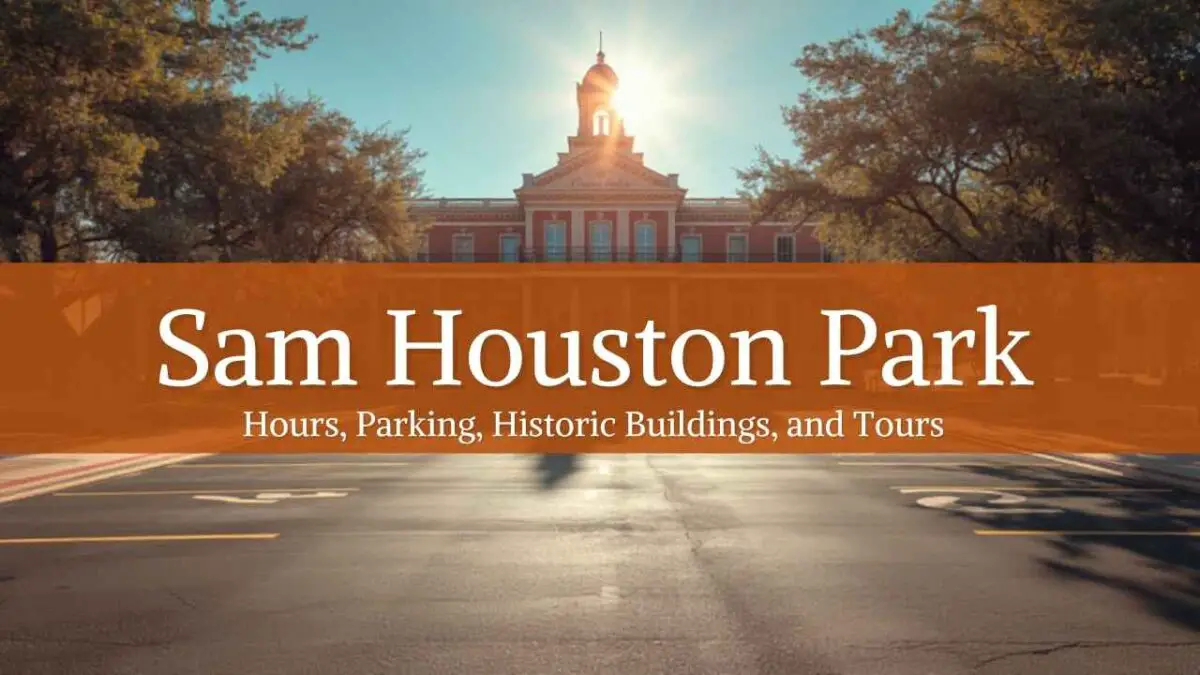
Sam Houston Park: Hours, Parking, Historic Buildings, and Tours
Sam Houston Park Houston is one of downtown’s easiest history stops to plan because the park keeps its visit simple, compact, and close to the center of the city. The Heritage Society says the park is open daily from dawn to dusk, and the 20-acre campus adds 9 historic structures, a museum gallery, historic house tours, and a small parking setup that works well for a short downtown outing.
The park also fills a useful role in a Houston itinerary. It gives visitors a quick way to add history, architecture, and a green pause between other downtown stops, especially when the day already includes free things to do in Houston or a broader city roundup like 13 best things to do in Houston.
The main advantage is clarity. The Heritage Society’s museum gallery sits at 1100 Bagby Street, parking is available at 212 Dallas Street, and the park itself remains open to the public during daylight hours, so the visit can be short without feeling incomplete.
Sam Houston Park Hours, Address, and Parking
This table puts the most useful planning details in one place. It helps readers decide quickly whether the park should be a short history stop, a museum add-on, or a longer downtown visit.
| Planning Detail | What It Means For A Visit |
|---|---|
| Location | 1000 Bagby Street in downtown Houston |
| Park hours | Open daily from dawn to dusk |
| Park size | 20 acres, compact enough for a short stop |
| Historic structures | 9 preserved buildings and historic sites |
| Parking | Limited free parking at 212 Dallas Street, with paid backup parking nearby |
| Museum gallery | Open Tuesday through Saturday from 10 am to 4 pm |
| Museum admission | $5 for ages 6 and up; free for ages 5 and under |
| Best visit style | Short walk, museum add-on, or historic house tour |
The park works best when the visit stays simple. The outdoor grounds can be covered quickly, and the museum gallery adds depth for visitors who want more than a photo stop.
That mix is what makes Sam Houston Park useful in downtown Houston. It gives the city an easy history stop without demanding a full day or a complicated plan.
Museum Gallery, Tours, and Tickets
Sam Houston Park is more than a green space. The Heritage Society uses the campus to interpret Houston history through historic buildings, a museum gallery, and multiple tour formats, which gives the park a stronger sense of place than a normal downtown lawn would have.
Museum gallery details
The museum gallery is the ticketed indoor stop at the Heritage Society campus. It gives Sam Houston Park a compact museum experience with rotating exhibits, which is useful for visitors who want more than a quick outdoor walk.
The gallery page also makes the visit easy to plan. The space sits at 1100 Bagby Street, the ticket price stays modest, and the exhibit count stays small enough to feel focused rather than overwhelming.
Historic house tours
Docent-guided historic house tours are the best fit for readers who want the park explained in context. They turn the campus from a scenic downtown stop into a deeper look at Houston’s early architecture and preservation history.
The Heritage Society also offers a free cell phone tour, which works well for visitors who prefer to move at their own pace. That option keeps the visit flexible without removing the historical detail that makes the campus worth visiting.
The Heritage Society’s Sam Houston Park page describes the site as the city’s first municipal park and says visitors can learn about it through history markers and Houston history house tours. That framing matters because it tells the visitor what kind of stop this is: part park, part open-air museum, part downtown history lesson.
For a short visit, the outdoor markers do much of the work. They help explain why the campus matters before any building tour begins, and they make the stop meaningful even when the schedule only allows for a brief walk.
The park also works well for visitors who prefer flexible pacing. The grounds can be experienced quickly, the history markers can be read at an easy pace, and the museum gallery can be added only if the day has enough room for it.
That flexibility is one reason the park fits well with other Houston planning resources. Readers comparing short city stops can pair the park with best romantic things to do in Houston for a date-night idea, or with day trips from Houston when the goal is to build a larger route around one central stop.
Visitors interested in indoor exhibits get a different experience entirely. The museum gallery is not just a gift shop or a lobby display; it is a small exhibit space that changes over time and gives the Heritage Society a way to interpret Houston and Texas history in a concentrated, easy-to-digest format.
That makes the park unusually adaptable. A hurried downtown visitor can still get a worthwhile stop, while a history-focused traveler can stretch the visit into a richer museum and tour experience without leaving the campus.
What to See at Sam Houston Park Houston
The strongest reason to stop here is the mix of preserved architecture and open space. The Heritage Society campus is built around historic buildings, and those buildings turn the park into a compact walk through Houston’s early civic story rather than a generic scenic break.
According to Visit Houston, the Heritage Society campus includes 9 historic structures dating from 1823 to 1905. That range gives the park a wide historical sweep, and it helps explain why the site remains relevant to both architecture fans and casual visitors.
Historic buildings to look for
The building names are part of the search intent around Sam Houston Park Houston, and they are also the easiest way to understand the campus. Each structure adds a different layer of Houston’s older residential and civic history.
- Kellum-Noble House: the preserved house that anchors the park’s preservation story.
- Old Place: an early structure that helps show how Houston’s oldest surviving buildings were saved.
- Nichols-Rice-Cherry House: a historic residence that adds another architectural style to the campus.
- San Felipe Cottage: a compact building that reflects early settlement-era Houston.
- Pillot House: another preserved home that broadens the campus’s architectural mix.
- St. John Church: a historic church building that strengthens the site’s civic and religious history.
- Yates House: a key structure for readers interested in Houston’s Black history and preservation work.
- Fourth Ward Cottage: a reminder of the city’s older neighborhood history.
- Staiti House: one of the campus buildings that helps round out the park’s preserved streetscape.
That mix is one reason the campus feels larger than it first appears. The park is not only a green space; it is a concentrated set of Houston history landmarks that can be explored in one short loop.
For visitors who want guidance instead of a self-directed loop, the Heritage Society’s Historic Building Tours page explains that docent-guided tours are available. It also notes a free cell phone tour, which gives the campus another layer of flexibility when the timing does not fit a group tour.
The cell phone option is especially useful for a spontaneous downtown stop. It lets the park stay low-friction while still giving the buildings and markers enough context to feel meaningful.
That mix of accessibility and depth is what sets Sam Houston Park apart from many other downtown parks. The campus can be experienced as a light walk, a history stop, or a structured tour, depending on how much time the day allows.
The museum gallery also deserves a spot in the plan. The Heritage Society’s Museum Gallery page says the gallery is located at 1100 Bagby Street, has free parking at 212 Dallas Street, and features 2-3 exhibits at a time, which keeps the stop focused rather than overwhelming.
That scale is part of the appeal. The gallery is large enough to feel curated and small enough to fit neatly into the same visit as the outdoor park, which makes the whole campus feel manageable for families, couples, and solo travelers alike.
The campus layout is easy to read from the street. The paths, markers, and buildings sit close enough together that the visit feels organized even for someone who only has a few minutes downtown.
That compact shape is useful in Houston because weather and timing can change fast. A visitor can stay outdoors, move into the gallery, or end the visit early without losing the sense that the stop was worthwhile.
The same layout also works for visitors who want a slower pace. The outdoor walk can create the historical frame, and the exhibits can add detail without forcing the whole outing into one rigid sequence.
The preservation story also gives the park unusual depth for a downtown stop. It shows how Houston’s older buildings were protected, relocated, and reinterpreted inside an active public space instead of being hidden away in a museum district.
That matters because the campus keeps the city’s older layers visible in everyday traffic. The result is a place that feels both practical and historical, which is a rare combination in a fast-changing downtown.
It also gives first-time visitors a clearer sense of how downtown Houston grew around the park rather than away from it.
The park also gives repeat visitors a quick reset when downtown feels crowded. A short walk, a look at the marker panels, and a stop at the gallery can change the tone of the day without adding much time.
Visitors who like a broader city day can treat the park as the history anchor and then move to other nearby plans. A practical Houston itinerary can still leave room for Houston Zoo tickets, hours, map, and free parking later in the trip when the day needs a second anchor.
Why Sam Houston Park Matters in Houston History
The park’s history is what gives the visit its weight. The Heritage Society says Sam Houston Park began in 1900, when Mayor Sam Brashear bought the Kellum-Noble land and house to create what became the city’s first park, and the site later became home to The Heritage Society.
That origin story helps explain why the park still matters in downtown Houston. It is not simply a place where old buildings were placed for display; it is a preserved part of the city’s early geography and civic memory.
The Houston Parks and Recreation Department adds another layer to that story. The city’s Park Inventory page says HPARD was created by city ordinance on March 15, 1916, with two facilities: Sam Houston Park and Hermann Park.
That detail matters because it places Sam Houston Park inside the larger public park system rather than outside it. The park has long functioned as part of Houston’s civic infrastructure, not just as a tourist attraction or a heritage venue.
The Heritage Society also notes that the park has been designated a Protected Landmark by the City of Houston. That status reinforces the idea that the campus is valuable not just because it is old, but because it helps preserve a visible record of Houston’s development.
History fans usually appreciate that kind of continuity. The site connects early Houston domestic architecture, civic leadership, and modern preservation work in one place.
That kind of continuity is not common in a downtown park.
That is also why the park fits naturally into a larger reading list about the city. Visitors comparing it with things to do in Houston for free can see it as a low-cost cultural stop, while readers browsing Houston’s top attractions can treat it as one of the city’s most compact history options.
For many people, the best part of the history is how direct it feels. The buildings, markers, and campus layout make the story easy to follow on a quick visit.
Best Time to Visit Sam Houston Park
The best time to visit Sam Houston Park is usually morning or late afternoon, especially on weekdays. The daylight is better for reading the markers and seeing the buildings, and the downtown pace tends to feel calmer than it does at midday.
Visitors searching for Sam Houston Park hours usually want the simplest possible visit window, and the park supports that well. Dawn-to-dusk access leaves plenty of flexibility, while the museum gallery and tours can be added only when the schedule allows.
Special events can also change the feel of the campus, so a quick check before arrival is always sensible. That is especially true for readers trying to photograph the park, pair it with lunch, or fit it between other downtown plans.
How to Plan a Smooth Visit
The simplest way to visit Sam Houston Park is to treat it as a short downtown stop with one clear purpose. The park rewards a focused plan because the grounds, the historic markers, and the museum gallery can all be covered without turning the outing into a logistics project.
Morning and late afternoon usually make the most sense. The daylight window helps the park feel calmer, the historic buildings read better in natural light, and the visit fits neatly around lunch or other downtown errands.
The Heritage Society’s dawn-to-dusk park hours create some flexibility, but the museum gallery and tours have their own schedules. That is another reason to separate the outdoor visit from the indoor experience before arrival.
Visitors planning a broader downtown day can use the park as a transition point. It works well before a meal, after a museum visit, or between two other stops when the goal is to add a slower, more reflective break to the itinerary.
It also works as a useful reset inside a busy Houston weekend. The campus offers enough structure to feel intentional, but it is not so large that it demands a major time block.
That is why the park fits so cleanly into broader planning guides. A day built around romantic things to do in Houston can include a quick history stop here, while a larger route built from day trips from Houston can use the park as the downtown chapter before moving elsewhere.
For families, the stop can be paired with other city attractions when the goal is to keep everyone moving without overfilling the schedule. That kind of pacing helps the visit stay pleasant instead of rushed.
Anyone comparing the park with other Houston outings will find that the best approach is to leave the campus as the anchor and keep the rest of the day flexible. The park is strongest when it is not forced to carry the entire itinerary alone.
Nearby Houston Ideas That Fit the Same Day
Sam Houston Park sits in a part of downtown that naturally works with other city plans. That makes it especially helpful for travelers who want one history stop and one or two additional experiences without spending the whole day in the same place.
One easy way to build the day is to pair the park with a downtown lunch, then add a second stop from a broader Houston guide. A round-up like free things to do in Houston can help with budget planning, while Houston’s main attractions can help decide whether the next stop should stay downtown or move farther out.
Another useful angle is pacing: some visitors want a calm, history-heavy route, while others want a faster route with a visual landmark, lunch, and a second stop before heading home.
That flexibility also makes the park a good fit for couples. A shorter visit can leave room for dinner elsewhere in downtown, and a slower visit can become part of a relaxed afternoon that never feels overbooked.
The park can support both styles without feeling out of place.
For travelers who like to compare options before leaving home, the park can sit alongside Houston date-night ideas or a larger Houston day-trip plan. Those pages make it easier to decide whether Sam Houston Park should be the main stop or just one chapter in a fuller city loop.
The park can also work as a starter stop for visitors who want the rest of the day to feel a little less structured. After a history walk and a look through the campus, the rest of downtown often feels easier to navigate.
That is especially true for first-time Houston visitors. A short, understandable stop early in the day often makes the rest of the city’s scale feel more approachable.
FAQ
What is Sam Houston Park in Houston?
Sam Houston Park is a downtown Houston park and historic campus managed through The Heritage Society and the city’s park system. The site combines outdoor green space, historic buildings, history markers, and the Heritage Society museum gallery into one compact visit.
It is especially useful for travelers who want one downtown stop that covers both scenery and local history in a short window.
What are the current hours for Sam Houston Park?
The Heritage Society says Sam Houston Park is open daily from dawn to dusk. That gives the park a wide daylight window, although the museum gallery and guided tours follow separate schedules.
Visitors planning an indoor visit should check the gallery page before arrival, since the exhibits do not use the same schedule as the outdoor grounds.
Is parking available near Sam Houston Park?
Yes. Limited free parking is available at 212 Dallas Street, and paid parking is available nearby at the Heritage Clay Street Garage.
That setup makes the park manageable for a downtown visit even when the surrounding streets are busy.
Parking is one of the main reasons the stop works well as a short outing. The campus is walkable once the car is parked, so the visit can stay simple from arrival to departure.
How much does the museum gallery cost?
The Heritage Society says the museum gallery admission is $5 for ages 6 and up, and free for ages 5 and under. The gallery is a separate ticketed space from the outdoor park, so the cost applies to the indoor exhibits rather than to the grounds themselves.
That price point makes the gallery an easy add-on for visitors who want a little more context after walking the park grounds.
Are historic building tours available year-round?
The Heritage Society’s historic building tours page shows that docent-guided tours and cell phone tours are part of the visitor experience, but tour availability can change with programming and seasonal schedules. The best way to treat the tours is as a strong option rather than a guaranteed drop-in feature every day of the year.
For the most reliable planning, the park and gallery pages should be checked together before the visit. That gives the clearest picture of what is available on a given day.
Is Sam Houston Park a good first stop for a downtown Houston day?
Yes. Sam Houston Park works well as a first stop because the park is easy to understand, easy to reach, and easy to complete in one short visit.
The historic markers and compact campus give the day a clear opening note.
Is Sam Houston Park free to visit?
Yes. The park grounds are open to the public, and the outdoor visit does not require a ticket.
That makes Sam Houston Park one of the easier free downtown Houston history stops to fold into a day.
The only cost comes from optional parts of the campus, such as the museum gallery, special programming, or nearby parking choices.
How long does it take to visit Sam Houston Park?
Most visitors can see the park grounds in a short visit, often in less than an hour. A longer stop makes sense for anyone who wants the museum gallery, a house tour, or a slower walk through the historic buildings.
The campus is compact enough that the visit rarely becomes an all-day project unless the Heritage Society programming is the main reason for going.
What historic buildings are in Sam Houston Park?
The park includes a concentrated set of preserved buildings that represent different layers of Houston history.
- Kellum-Noble House
- Old Place
- Nichols-Rice-Cherry House
- San Felipe Cottage
- Pillot House
- Saint John Church
- Yates House
- Fourth Ward Cottage
- Staiti House
That mix is one of the main reasons searchers look for Sam Houston Park Houston by name. The buildings make the campus feel like a walk-through history lesson rather than a simple green space.
Planning Takeaway
Sam Houston Park Houston is strongest when it is treated as a compact history stop with easy logistics. The park’s dawn-to-dusk hours, the free parking option at 212 Dallas Street, and the Heritage Society’s small but useful museum gallery make it a simple downtown addition rather than a complicated outing.
The park also carries more historical weight than many visitors expect. It is tied to the city’s first municipal park story, the Heritage Society’s preservation mission, and the broader Houston park system, which gives the stop a clear reason to exist beyond scenery alone.
For visitors who want one memorable downtown stop, this campus delivers a rare combination of accessibility, history, and flexibility. It can stand alone as a short visit or sit inside a bigger Houston plan without becoming the most demanding part of the day.