Kimbell Art Museum: Hours, Tickets, Parking & Tips
Kimbell Art Museum is Fort Worth’s architecture-rich museum in the Cultural District, and the permanent collection is free. If you want the short answer, the museum sits at 3333 Camp Bowie Boulevard, keeps Tuesday-through-Sunday hours, and combines Louis Kahn’s original building with a separate Renzo Piano Pavilion for special exhibitions.
For a first visit, separate the free collection, the paid special exhibitions, and the parking choice before you leave home. If you want the live visitor page with current ticket windows, use the official visit page and treat the rest of the trip as a Fort Worth art day, not just a quick stop.
What Kimbell Art Museum Is Known For
Kimbell Art Museum is known for Louis Kahn’s architecture, a compact collection of about 375 works, and a museum culture that favors quality over scale. You do not come here for a massive encyclopedic walk-through; you come for a tightly edited group of paintings, sculptures, and antiquities in a building that became famous on its own.
The museum opened on October 4, 1972, after the Kimbell Art Foundation spent years turning the founders’ collection into a public institution for Fort Worth. Kay and Velma Kimbell established the foundation in 1936, and the original mission centered on art that could strengthen the city and the state around it.
The collection approach is just as specific as the building. The Kimbell aims at definitive excellence rather than completeness, so a single visit can move from Bellini and Caravaggio to Michelangelo, Cézanne, Picasso, and Asian or ancient American works without feeling crowded or repetitive.
Its current story still follows that founding idea, and the museum’s collection grew from a family foundation into a museum with a distinct curatorial identity. You will notice that identity in the way the galleries stay focused on high-value works instead of chasing volume for its own sake.
You also get two architectural experiences in one campus. The Kahn Building gives you the original travertine-and-vaults experience, while the Renzo Piano Pavilion handles special exhibitions and keeps the museum flexible without changing the feel of the first building.
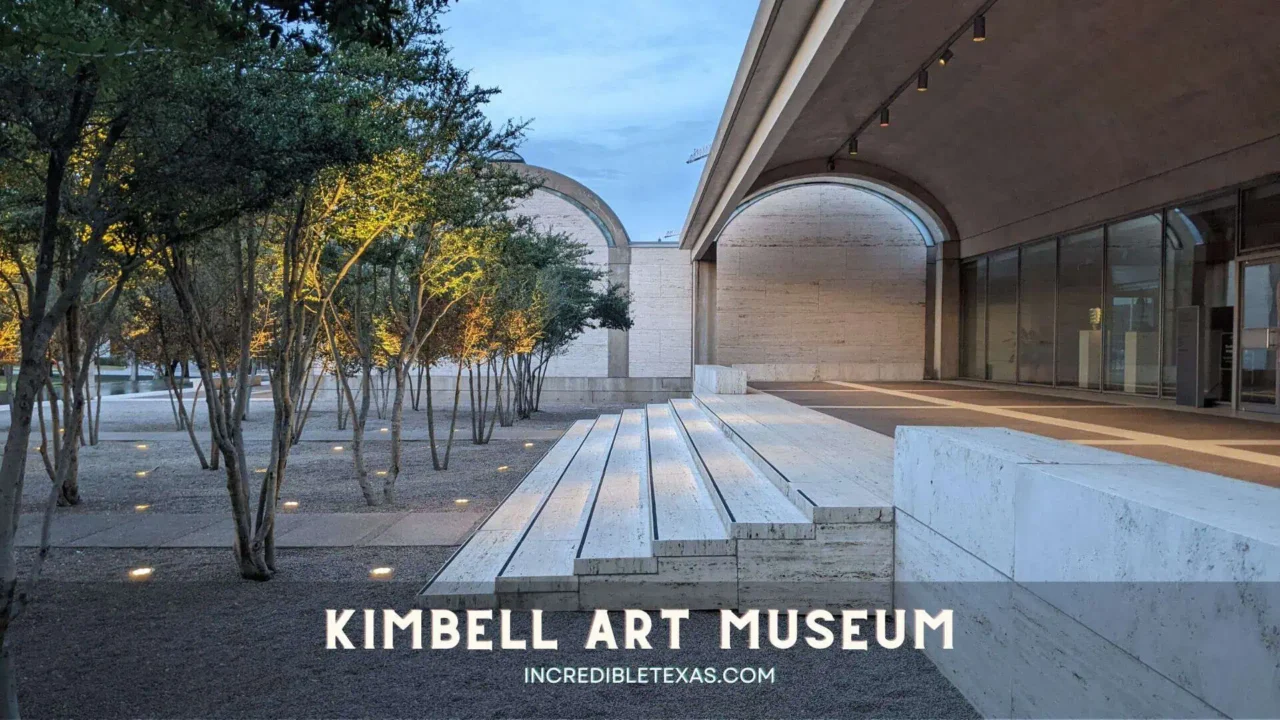
The Kahn Building uses natural light, cycloid vaults, travertine, and white oak to make the galleries feel calm instead of crowded. The building still matters because it turns the architecture into part of the museum’s story rather than a separate object to admire.
The museum’s small size is part of the appeal. You spend more time looking closely instead of using all your attention to get from one wing to the next, so the visit feels deliberate rather than rushed.
If you care about architecture, give yourself a few minutes outside before you enter. The original building and the pavilion read like two separate chapters, and seeing them that way helps the whole campus make sense.
A repeat visit can be rewarding even when the collection seems manageable on paper. The museum changes with special exhibitions, and the permanent galleries reward slower viewing because the rooms are built for concentration instead of crowding.
Best First Visit Plan to Kimbell Art Museum
If you have 60 minutes
Start with the Kahn Building and choose one or two signature works instead of trying to cover every room. The museum’s scale rewards a slow look at a few pieces more than a rushed sweep through the whole campus.
If you want the clearest quick win, focus on the permanent collection first and save special exhibitions for another visit. The permanent galleries hold the museum’s signature works.
If you have 2 hours
With two hours, you can move through the Kahn Building, cross to the Piano Pavilion, and still leave time for the café or a short break outside. A two-hour visit gives you enough room for architecture and art in the same trip.
If your main goal is a balanced overview, use the first half of the visit on the permanent galleries and the second half on the Pavilion or a temporary show. You will leave with a better sense of the collection’s range without feeling overcommitted.
If you are visiting with kids
Keep the visit short and practical, and aim for 30 to 60 minutes instead of trying to see everything. The museum’s free Kimbell Kids materials, picture cards, and Acoustiguide family audio are easier to use when you stay focused on a few galleries.
Studio A in the Piano Pavilion gives kids ages 5 and younger a free drop-in play space, which makes the campus easier to handle for families with small children. That little reset can be the difference between a smooth museum stop and a tired group halfway through the visit.
Kimbell Art Museum Hours, Admission, and Tickets
| Item | Current detail |
|---|---|
| Regular hours | Tuesday through Thursday 10 am-5 pm; Friday noon-8 pm; Saturday 10 am-5 pm; Sunday noon-5 pm. |
| Closed | Monday, plus New Year’s Day, Juneteenth, July 4, Thanksgiving Day, and Christmas Day. |
| Permanent collection | Free. |
| Special exhibitions | Adults $18, seniors 60+ $16, students $16, children 6-11 $14, children under 6 free, members free. |
| Half-price windows | Tuesdays 10 am-5 pm and Fridays 5-8 pm for special exhibitions. |
The free permanent collection is the easiest part of the visit to plan, because you do not need a ticket if you only want the main galleries. Special exhibitions are priced separately, so a strong museum day can still stay inexpensive if you focus on the collection and skip the paid show.
Tuesday half-price tickets are available online, and Friday evening half-price tickets must be purchased onsite at the Piano Pavilion Box Office. That split gives you a simple choice: buy ahead for a Tuesday visit, or keep Friday evening flexible if you want to add dinner in Fort Worth afterward.
If your calendar is open, a weekday morning is the easiest time to keep the visit unhurried. Friday is the museum’s evening slot, and it works well when you want art before dinner instead of a full-day museum outing.
If you are building a larger regional outing, fold Kimbell into a day trip from Dallas and treat the museum as the anchor stop rather than a random detour. The museum’s ticket setup makes that simple, because the permanent collection stays free even when special exhibitions are priced separately.
Holiday closings matter more here than they do at some smaller attractions, so check your trip date if you are traveling around New Year’s Day, Juneteenth, July 4, Thanksgiving, or Christmas. A museum visit that looks open on your calendar can still be closed if the date falls on one of those holidays.
If you are arriving on a holiday weekend, a quick calendar check can save you a wasted drive. The free collection is still a great draw, but it only works on the days the museum is open.
Special exhibitions are the part of the museum that can change most often, so a ticket plan works best when you decide whether you care more about the free collection or the current show. If the exhibition matters, buy it before you arrive; if not, the free galleries give you a full museum stop without extra cost.
Friday is the museum’s evening slot, and it works well when you want art before dinner instead of a full-day museum outing. A Tuesday or Wednesday visit gives you the clearest weekday rhythm if you prefer fewer moving parts.
Holiday closures can matter if you are stitching Kimbell into a larger Texas trip. A museum day around a holiday weekend usually works better when you verify the closure date first and keep a backup plan nearby.
Kimbell Art Museum Parking, Location, and Getting There
The Kimbell Art Museum address is 3333 Camp Bowie Boulevard in Fort Worth’s Cultural District, so the location is easy to spot once you reach the museum corridor. If you want a day built around arts and architecture, this corner of the city gives you an easy base.
| Parking option | What you get |
|---|---|
| Underground garage | Free parking under the Kahn Building. |
| Kimbell East lot | Free open-air parking across the campus. |
| Street parking | Free parking in front of the Kahn Building and along Van Cliburn Way. |
| Accessible parking | Accessible spaces in all garages and lots. |
Parking is free in the underground garage under the Kahn Building and in the open-air Kimbell East lot, and you also have free street parking in front of the Kahn Building and along Van Cliburn Way. You have several easy ways to arrive without paying a separate parking fee, which is unusually helpful for a city museum.
If you need mobility details, the museum’s accessibility page covers accessible parking, service animals, and the physical layout of the campus. You should check it before you go if you need to know where the closest entry points sit.
If you want a broader Fort Worth plan, the museum fits neatly into a culture-heavy afternoon and pairs well with the rest of the city list in best things to do in Fort Worth. The outing stays compact and avoids a lot of extra driving.
For Dallas travelers, the museum is still worth the drive because the free collection and free parking remove two of the most annoying parts of a city trip. You can spend your energy on the galleries instead of circling the block or comparing entry fees before you even step inside.
If you want the shortest walk, try the underground garage first, then use the Kimbell East lot if you want open-air parking close to the campus. Free street parking is a helpful backup when you arrive at a busier hour or want a little more space around your car.
Accessible spaces are available across the parking areas, and that matters if you are visiting with anyone who needs the closest possible approach to the entrance. The accessibility page also covers the other practical details that are easier to check before the drive than after you park.
The Cultural District is compact enough that you can keep the rest of the day within a few minutes of the museum. You can add another gallery, a lunch stop, or a slow walk through the neighborhood without turning the outing into a long transfer between neighborhoods.
Kahn Building vs. Renzo Piano Pavilion
The Kahn Building is the signature draw, and the museum’s own Louis Kahn Building page describes it as a major modern architectural achievement. The structure uses cycloid vaults, travertine, white oak, and natural light to make the galleries feel calm instead of crowded.
Why the Kahn Building matters
Kahn opened the building in 1972, and the design still feels unusually fresh because the light enters through narrow skylights along the vaults. The west facade, the three 100-foot bays, and the three courtyards all work together to make the architecture part of the visit rather than a backdrop.
If you care about modern architecture, take a few minutes to notice the materials before you move deeper into the galleries. The concrete, travertine, and white oak give the building a warm but restrained tone that pairs well with the art.
What the Pavilion adds
Renzo Piano’s Pavilion sits about 65 yards west of the original museum and uses glass, concrete, and wood to create a lighter counterpoint. That separate building gives the museum room to show special exhibitions without crowding the Kahn Building.
The pavilion also helps you understand the campus as two distinct but connected experiences. The Kahn side is the signature icon, and the Piano side keeps the museum adaptable for changing exhibitions and evening events.
What to See Inside the Kimbell Art Museum
The collection is compact but deep, so you should not try to race through it. Start with the permanent galleries, then decide whether you want to linger in the Old Masters rooms, the ancient art cases, or the special exhibition spaces in the Piano Pavilion.
Masterpieces to prioritize
- Michelangelo’s The Torment of Saint Anthony, often singled out as a cornerstone of the collection.
- Caravaggio’s The Cardsharps, which gives you a sharp look at the museum’s Baroque holdings.
- Bellini’s Christ Blessing, a strong example of the museum’s Renaissance depth.
- An eighth-century Maya stone panel depicting the Presentation of Captives, which broadens the collection beyond Europe.
- A pre-Angkor bronze Bodhisattva Maitreya from Thailand, one of the museum’s important Asian works.
The museum also reaches into Asian, African, Pre-Columbian, ancient Egyptian, and classical art, which gives you a fast survey of several major traditions in one visit. You can move from a Renaissance panel to a carved Maya work or a sculpted African piece without leaving the same campus.
What to skip if time is short
If you only have a short visit, skip the urge to count every room and use the time on a few standout pieces instead. The museum works better when you remember the best moments, not when you try to cover every square foot.
That same breadth shows up in the way the galleries are arranged. Rather than trying to overwhelm you with volume, the museum gives each work room to breathe, so your eyes can settle on a few major pieces instead of skimming a wall of similar objects.
If you want a strong route through the galleries, start with one marquee work in the permanent collection and then let the room layout guide you to the neighboring pieces. A slow pass through three or four rooms usually feels more satisfying than trying to cover the whole building in a rush.
The museum’s blend of Old Masters and non-European art lets you build your own theme as you go. You might start with Renaissance painting, move into an ancient American work, and finish with an Asian object that resets your eye before you leave.
You can keep track of the pieces you want to revisit later without turning the visit into a checklist of everything on the wall. A few strong frames and a few quiet notes usually work better than trying to capture every room.
When you reach the special exhibition spaces, the pacing changes a little because the Pavilion often handles temporary shows with a different mood. You will get the strongest sense of the museum if you spend time in both the original Kahn Building and the later addition before you leave.
If you want the shortest possible description of the museum’s appeal, think of it as a place where architecture and curation pull in the same direction. The building matters, the art matters, and the two reinforce each other instead of competing for attention.
Kimbell Art Museum Accessibility, Photos, and Visitor Rules
Bags, parcel check, and strollers
No large bags belong in the galleries, and the museum uses a self-service parcel check for bulky items. Strollers and soft-front baby carriers are permitted, so families do not need to leave the practical gear at home.
If you are carrying a bigger bag than you planned, keep that in mind before you drive over. A compact setup makes the entry process smoother and saves you from rearranging things at the door.
Photos, food, seating, and service animals
Personal non-flash photography is welcome in most collection galleries and most special exhibitions unless a sign says otherwise. Food and drinks stay out of the galleries, cell phones should be silenced, and service animals are welcome.
The museum also keeps benches in many galleries and free foldable stools at information points and parcel check. Those stools and benches help when you want to linger over a work instead of treating the museum like a quick photo stop.
The current visitor guidance lives on the museum’s tips page, and it is worth checking if you are traveling with children or anyone who needs a slower pace. A few minutes of preparation makes the actual visit feel much easier.
Kimbell Art Museum Tours, Café, and Friday Happy Hour
Guided tours and audio tours
Guided tours cover the collection, architecture, and special exhibitions, and tour requests need to be scheduled at least three weeks in advance. Docent-led tours usually last about one hour, with group size limits of 10 to 60 per hour unless the museum notes otherwise.
Audio tours for the permanent collection, including architecture and kids’ tours, are free on the Kimbell app. Special-exhibition audio tours cost $4 for visitors and are free for members, which gives you a cheaper way to add context if you want more than a self-guided walk.
Café lunch and Friday happy hour
The Kimbell Café in the Kahn Building serves lunch and boxed lunch options, and it is an easy place to break up a museum day without leaving the campus. Friday happy hour runs from 5 to 7 pm with live music, beverages, snacks, and no reservations required.
If you want a visit that feels a little more social, Friday is the strongest day to plan around. You can pair the happy hour with the museum’s Friday evening hours and the half-price special-exhibition window from 5 to 8 pm.
Tips for First-Time Visitors
If you want a calmer visit, aim for a weekday morning. Friday evening has a more event-like rhythm because the museum stays open until 8 pm and half-price special exhibition tickets run from 5 to 8 pm.
At the entrance and in the galleries, keep bulky items in the self-service parcel check and keep your phone on silent. You will move through the building more easily if you treat the rules as part of the rhythm instead of something that interrupts the visit.
If you are visiting with kids, the 30 to 60 minute plan works better than trying to squeeze in a half-day on day one. The campus is more enjoyable when younger visitors leave with energy to spare.
The kids page is especially useful if you want picture cards, family audio, or a free drop-in play space to anchor the visit. Those little extras make the museum feel more approachable without turning it into a children-only stop.
If you are turning the trip into a date, mix the museum with nearby ideas from romantic things to do in Dallas-Fort Worth. The museum works especially well for that kind of outing because it gives you a quiet, conversation-friendly anchor before or after dinner.
Group visits go best when you set one meeting point and one must-see piece before anyone splits off. The museum is compact enough that people can wander without getting lost, but a shared plan keeps the visit from turning into a string of half-finished conversations in the galleries.
If the weather is extreme, the Kimbell Art Museum becomes an easy indoor anchor because the parking and galleries sit close together. You can park, walk in, stay for art and lunch, and leave without building the whole day around the heat or a thunderstorm.
For photos, think in terms of a few strong frames instead of constant shooting. A quieter camera rhythm usually leaves you with better images and more time to actually look at the art.
If you are visiting with a first-time Fort Worth traveler, the Kimbell Art Museum can serve as the day’s reset point between lunch and an evening plan. The parking options and free permanent collection make it easy to keep the schedule light without losing the sense that you did something meaningful.
The museum also works well for travelers who prefer one strong stop instead of three weaker ones. A single slow loop through the galleries often feels more memorable than trying to stack too many attractions into one afternoon.
A note-taking habit helps here because the collection is small enough to remember but rich enough to blur together after a fast visit. A few names on your phone can turn a return trip into a more focused experience.
If you care more about architecture than art history, the building alone can justify the stop. The campus gives you a reason to slow down before the first gallery even starts.
How to Pair Kimbell Art Museum With a Fort Worth Day
You can build a simple Cultural District day around Kimbell: art in the morning, lunch nearby, then another museum or a walk through the district. The broader neighborhood gives you enough room to map out the rest of the outing without long drives between stops.
If you like museum-hopping, compare Dallas Museum of Art and Arlington Museum of Art before you lock in a weekend. The comparison shows the difference between Fort Worth’s focused collection experience and a different North Texas museum rhythm.
Kimbell works especially well when you want a visit that feels substantial without becoming overwhelming. You get a landmark building, a serious collection, and a campus that is small enough to navigate without feeling like you need a map in your hand all afternoon.
If you only have a half day, start with the free collection, spend your ticket budget only if a special exhibition interests you, and leave time for the café or a nearby Fort Worth lunch. You leave with flexibility and avoid a rushed checklist stop.
For travelers who want a bigger Texas itinerary, Kimbell works best as the art-focused centerpiece of a Fort Worth weekend rather than as a quick photo stop. A slower pace leaves room for the galleries, the architecture, the parking setup, and one slow meal without squeezing the day too tightly.
Fort Worth works well because the district makes it easy to keep the rest of the day close to the museum. You can add another gallery, a lunch stop, or a slow walk through the neighborhood without turning the outing into a long transfer between neighborhoods.
If you are choosing between museum stops, the difference often comes down to scale and pace. Kimbell feels focused and architectural, while larger or more varied museum days can ask for more energy and more walking.
A second visit is easier to justify here than at many museums because the free collection removes the biggest cost barrier. You can come back for a new special exhibition later and still keep the main collection as a familiar anchor.
A lunch break works especially well in the Cultural District because it gives your eyes a reset between galleries. You can return to the museum feeling more alert instead of trying to push through the whole visit in one long stretch.
Travelers coming from Dallas should plan enough time for the drive, parking, and one unhurried gallery loop rather than treating Kimbell as a quick in-and-out stop. The museum feels richer when you leave room for a slower pace.
If your schedule is loose, a second museum or a neighborhood walk can fill the rest of the afternoon without a long detour. The district is compact enough to support a museum day that still feels relaxed by the time you head home.
The free collection also makes the museum easy to revisit, because a return trip can focus on a new special exhibition while the permanent galleries stay familiar. You can treat the campus like a repeatable Fort Worth anchor instead of a one-time stop.
If your visit is part of a longer Texas road trip, Kimbell is one of the easier museums to slot into the middle of the itinerary. You get a clear location, free parking, and a free permanent collection, which keeps the museum from becoming an expensive detour.
If you build the visit around one special exhibition, check the floor plan first and treat the free collection as the steady backbone of the trip. The paid show becomes a bonus instead of the reason the day works.
That strategy also helps if you visit with a mixed group, because everyone can agree on the free galleries even if only part of the group wants the current exhibition. It keeps the outing flexible and lowers the pressure to rush.
Kimbell Art Museum FAQ
Is Kimbell Art Museum free?
The permanent collection is free. You only pay for special exhibitions and any ticketed add-ons tied to those shows.
What are Kimbell Art Museum hours?
The museum is open Tuesday through Thursday from 10 am to 5 pm, Friday from noon to 8 pm, Saturday from 10 am to 5 pm, and Sunday from noon to 5 pm. It is closed on Monday, so a Monday trip needs a different plan.
How much is Kimbell Art Museum admission?
The permanent collection costs nothing. Special exhibitions are $18 for adults, $16 for seniors 60+, $16 for students, and $14 for children 6-11, while children under 6 are free and members get in free.
A paid exhibition can still be a reasonable add-on if the current show interests you. If not, the free collection already gives you a complete museum stop without changing the rest of your day.
Where do you park at Kimbell Art Museum?
You can use the free underground garage, the free Kimbell East lot, or free street parking in front of the Kahn Building and along Van Cliburn Way. Accessible spaces are available in the garages and lots, so you do not need a separate parking strategy just to get close to the entrance.
Can you take photos inside Kimbell Art Museum?
Personal non-flash photography is welcome in most collection galleries and most special exhibitions unless a sign says otherwise. If a gallery note says no photos, follow that instruction and move on to the next room.
How long should you spend at Kimbell Art Museum?
Give yourself about two hours for a standard first visit, or 30 to 60 minutes if you are coming with young children. That window gives you enough time to see the Kahn Building, glance at the Pavilion, and still avoid a rushed feeling.
What should I see first at Kimbell Art Museum?
Start with the Kahn Building and prioritize one or two major works in the permanent collection before you chase special exhibitions. If your time is limited, that order gives you the museum’s strongest first impression.
Does Kimbell Art Museum have a café?
Yes, the Kimbell Café in the Kahn Building serves lunch and boxed lunch options, and Friday happy hour adds live music, drinks, and snacks from 5 to 7 pm. You can stay on campus for the whole visit without scrambling for another lunch stop.