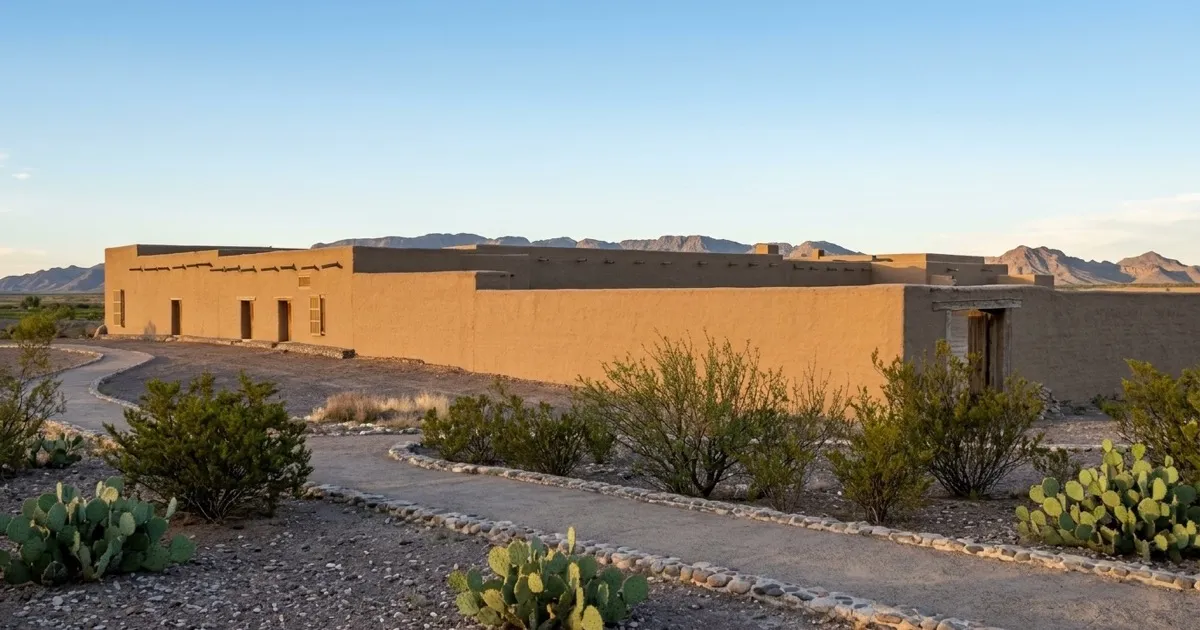
Fort Leaton State Historic Site opens daily from 8:00 AM to 4:30 PM at 16952 FM 170 East near Presidio, Texas, charging $5 for ages 13 and older (kids 12 and under free). Built in 1848 atop a 1773 Spanish fort, the 40-room adobe compound functions as a Chihuahua Trail museum and the western permit gateway to Big Bend Ranch State Park.
Many online travel directories still claim Fort Leaton closes on Mondays and Tuesdays or rents rustic overnight cabins. Both details are false: the site welcomes day visitors seven days a week (except Christmas Day) and offers zero on-site camping or lodging.
Key takeaways
- Verified Hours & Price: Fort Leaton State Historic Site operates daily from 8:00 AM to 4:30 PM (closed December 25) with $5 entry for ages 13+, free entry for ages 12 and under, and free access with a $70 annual Texas State Parks Pass.
- Strict Day-Use Policy: Zero campsites, RV hookups, or cabins sit on the 23.5-acre Fort Leaton property; travelers obtain permits here for primitive camping inside Big Bend Ranch State Park.
- 1848 Adobe Architecture: Ben Leaton and Juana Pedrasa expanded earlier Spanish ruins into an L-shaped 200-by-140-foot fortress with 18-inch-thick adobe walls rising 18 to 22 feet high.
- Trail Reality Check: An easy, flat interpretive nature loop under half a mile explores the Rio Grande floodplain; major desert canyon hikes lie farther east along FM 170.
- Desert Logistics: Zero gas stations or reliable cell signals exist along the 50-mile FM 170 River Road between Presidio and Lajitas, and afternoon sun temperatures reach 130°F in summer.
Plan your visit
Verified
- Location
- 16952 FM 170 East, Presidio, TX 79845
- Hours
- Daily 8:00 AM to 4:30 PM (Closed Dec 25)
- Admission
- $5 ages 13+, 12 and under free, State Parks Pass
- Best time to go
- November through April for mild weather and tours
Fort Leaton Hours, Admission Fees, and Permits
Fort Leaton State Historic Site operates daily from 8:00 AM to 4:30 PM, closing only on Christmas Day, with a $5 daily entrance fee for visitors ages 13 and older and free admission for kids 12 and under. Check operational alerts on the official TPWD Fort Leaton State Historic Site page before leaving Presidio or Marfa.
Daily Operating Hours and Holiday Closures
Staff unlock the historic compound gates, gift shop, and permit counter at 8:00 AM every morning and close promptly at 4:30 PM. Plan to arrive no later than 3:15 PM if you want enough time to tour the interior rooms and walk the outdoor grounds before locking up.
Unlike smaller Texas historical commissions that shut down early in the week, Fort Leaton stays open Monday through Sunday year-round. Christmas Day (December 25) is the sole scheduled holiday closure on the annual calendar.
Entrance Fees, Passes, and Parklands Discounts
Every visitor aged 13 and older pays a flat $5 daily entrance fee, which covers access to the restored adobe fort, museum exhibits, courtyard, and interpretive trail. Children 12 and under enter completely free.
| Pass or Ticket Type | Current Rate | Eligibility and Included Access |
|---|---|---|
| Adult Daily Entry (13+) | $5 per day | Full fort access and same-day FM 170 pullout permit |
| Child Daily Entry (12 and under) | Free | Applies to all family and individual youth visitors |
| Texas State Parks Pass | $70 per year | Free entry for passholder and vehicle passengers at 80+ parks |
| Texas Parklands Passport | Free or 50% off | 50% off for TX residents 65+ or disabled; free for veterans |
| River District Primitive Camp | $12 per night | Separate fee for FM 170 campsites outside the fort grounds |
Review full pass qualifications on the TPWD Fort Leaton entrance fee schedule before driving out. A $70 annual Texas State Parks Pass pays for itself quickly if your West Texas itinerary also includes Davis Mountains State Park or Balmorhea State Park.
Big Bend Ranch Backcountry and River Permits
Fort Leaton operates as the official western entrance and visitor check-in station for neighboring Big Bend Ranch State Park. Paying your $5 day-use fee at the fort desk also covers your vehicle hangtag for roadside overlooks and trailheads heading east along FM 170.
Rangers stationed inside the fort issue backcountry camping permits, multi-day backpacking clearances, and Rio Grande river-use permits. Travelers planning remote trips should review Big Bend Ranch State Park trails and camping options ahead of arrival because walk-up backcountry permits require an in-person ranger check-in rather than online booking.
Tip
Save-the-Day Pass Strategy: Reserve your day pass online through the Texas State Parks portal while you still have cellular data in Marfa or Presidio. Printing or screenshotting your confirmation avoids delays at the permit desk if West Texas Wi-Fi slows down.
Day-Use Only Rules: Why There Is No On-Site Camping or Cabins
Fort Leaton State Historic Site enforces a strict day-use-only policy with zero tent pads, RV hookups, or overnight cabins anywhere on its 23.5-acre grounds. Travelers seeking overnight quarters use the fort desk strictly to secure permits for neighboring Big Bend Ranch State Park or sleep in nearby desert towns.
On-Site Facilities at the Historic Site
Visitors find clean public restrooms, a shaded picnic pavilion area, free public Wi-Fi near the office, and a park store stocking topographic maps and regional history books. Drinking water is available at the visitor center, making this stop your final reliable bottle refill before entering the Chihuahuan Desert east of Presidio.
Because the compound protects fragile 19th-century adobe architecture, overnight parking and sleeping in vehicles inside the fort lot are prohibited. Gates lock when staff depart at 4:30 PM.
Overnight Alternatives Inside Big Bend Ranch
Roughly 311,000 acres of rugged desert wilderness sit just east of Fort Leaton inside the Big Bend Ranch State Park official overview boundary. Drive-in primitive campsites along the River District (FM 170) cost $12 nightly plus the daily entrance fee and include a picnic table and fire ring without running water, electricity, or restrooms.
Hikers and overlanders with high-clearance 4WD vehicles can also reserve remote Interior District campsites accessed via the unpaved road to Sauceda. Keep in mind that the Sauceda Ranger Station office is closed (though its 24-hour bathroom and shower building stays open) and sits 27 miles up a rough dirt road where motor homes and trailers are not recommended.
Warning
Sauceda Bunkhouse Closure Notice: According to live Big Bend Ranch State Park lodging alerts, the 30-bed Sauceda Bunkhouse remains closed due to ongoing wastewater system repairs. Call (432) 229-3613 to verify reopening status before counting on indoor park lodging.
Lodging Bases in Presidio, Marfa, and Terlingua
Most travelers treat Fort Leaton as a morning or afternoon sightseeing stop between hotel or glamping bases in surrounding towns. Presidio sits just 4 miles northwest with basic roadside motels, fuel pumps, and Mexican restaurants.
| Overnight Option | Distance From Fort Leaton | Hookups / Indoor Plumbing | Best For |
|---|---|---|---|
| Fort Leaton Historic Site | 0 miles | Day-use restrooms only (no camping) | 60-to-90-minute history & permit stop |
| River District Sites (FM 170) | 10 to 45 miles east | None (primitive table & fire ring) | Budget car campers ($12/night) |
| Presidio Motels | 4 miles northwest | Full plumbing, AC, city water | Early starts on FM 170 |
| Marfa Hotels & Rentals | 64 miles north | Boutique rooms, dining, groceries | Art travelers & weekend loops |
| Terlingua & Lajitas | 47 to 60 miles east | Casitas, RV parks, resorts | Multi-day Big Bend access |
Drivers heading east across the River Road for evening food and live porch music often overnight around Terlingua Ghost Town ruins and patios about 60 miles away.
Inside the 1848 Adobe Compound: History and Museum Exhibits
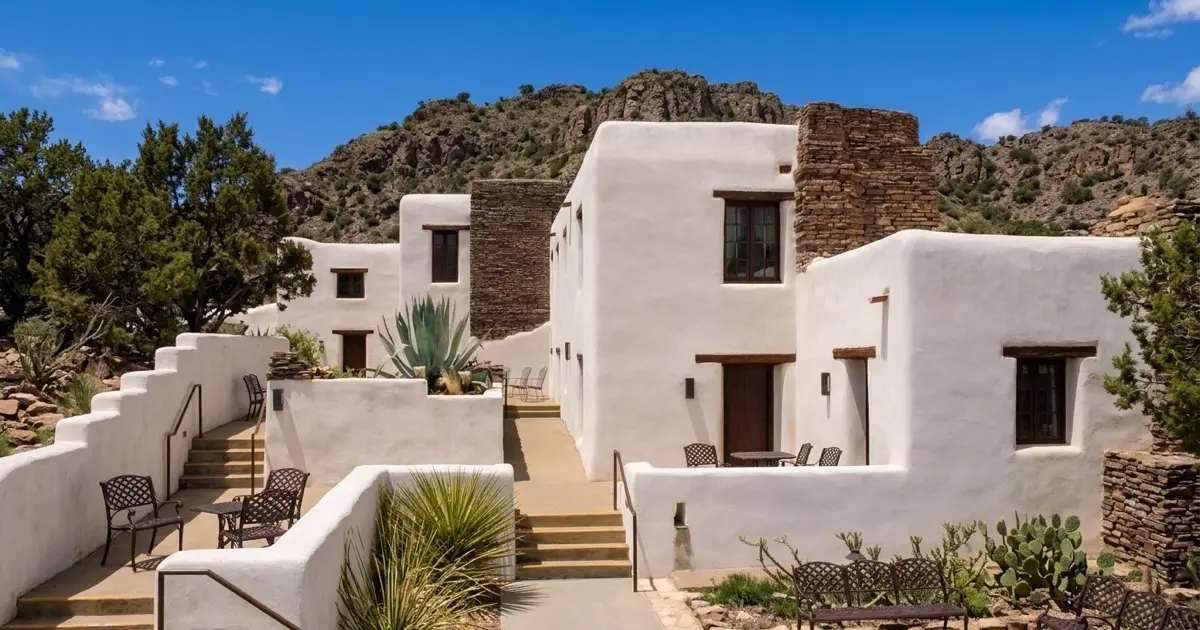
Built atop a 1773 Spanish fort in 1848 by trader Ben Leaton and his wife Juana Pedrasa, Fort Leaton preserves a roughly 40-room L-shaped adobe fortress spanning 200 by 140 feet along the historic Chihuahua Trail. Five of the site’s 23.5 acres encompass the original trading post footprint above the Rio Grande floodplain.
From El Fortin de San Jose to Ben Leaton’s Trading Post
Long before American freighters arrived, Indigenous farming villages thrived near La Junta de los Ríos, the fertile confluence of the Rio Grande and the Rio Conchos. Spanish forces erected a small outpost called El Fortín de San José on this bluff in 1773 before abandoning it in 1810, and local resident Juan Bustillos occupied the adobe walls in 1830.
By August 1848, right as the Mexican-American War ended, Missouri trader Ben Leaton purchased the property from Bustillos and turned it into a private fortified compound. That same month, famed Texas Ranger John C. (Jack) Hays stayed 10 days at Fort Leaton while scouting a wagon route from San Antonio to El Paso.
Fort Leaton became the first county seat when Presidio County organized in 1850, yet Leaton’s frontier legacy carried dark accusations. Mexican military inspector Emilio Langberg accused Leaton of trading firearms to Apache and Comanche raiders in exchange for livestock stolen south of the border, though Leaton died in 1851 before any charges went to court.
| Year | Historical Milestone | Key Figures & Context |
|---|---|---|
| 1773 | El Fortín de San José built | Spanish outpost established near La Junta (abandoned 1810) |
| 1848 | Fort Leaton trading post opens | Ben Leaton & Juana Pedrasa expand adobe compound along Chihuahua Trail |
| 1850 | First Presidio County seat | Listed as county headquarters; Leaton dies the following year in 1851 |
| 1875 | Burgess-Leaton feud ends era | Mortgage holder John Burgess killed by Bill Leaton; fort closes in 1884 |
| 1925 | Compound fully abandoned | Roofs collapse until partial WPA restoration work in 1934 to 1935 |
| 1967 | Deeded to State of Texas | Added to National Register in 1973; opens as state historic site in 1978 |
After Ben Leaton’s widow struggled with debts, creditor John Burgess took over the fort until Leaton’s son Bill shot and killed Burgess in 1875. The site closed for business in 1884, stood abandoned by 1925, and later entered state hands on December 8, 1967, as documented in the Handbook of Texas Fort Leaton entry.
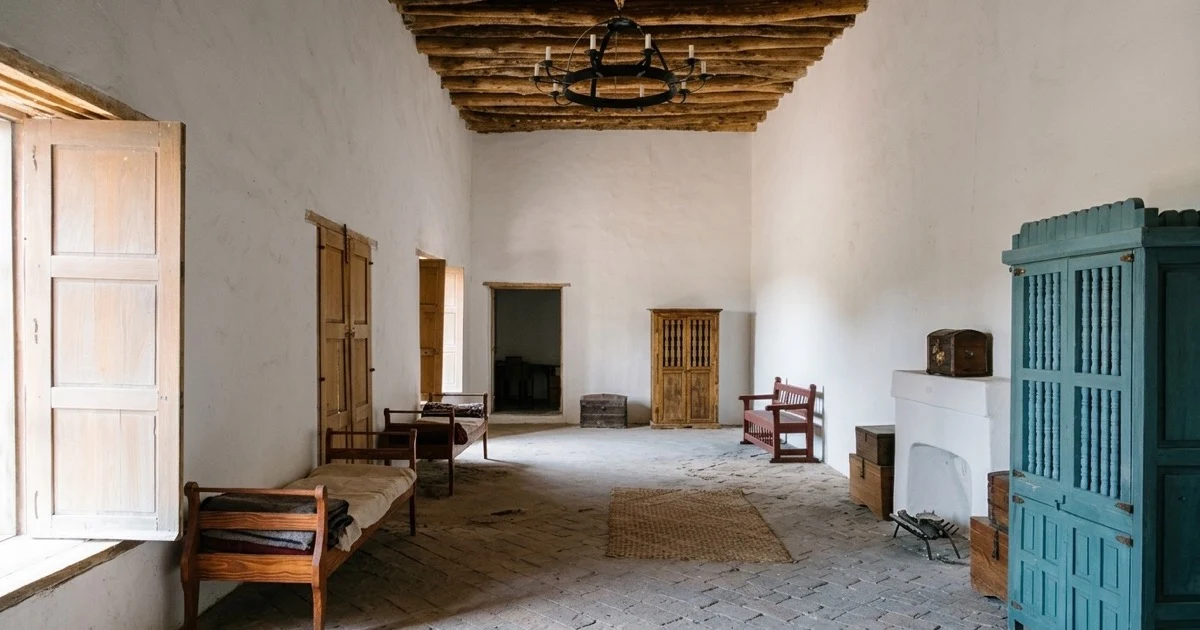
Adobe Construction and Restored Living Quarters
Workers molded sun-dried adobe bricks measuring 18 inches long, 12 inches wide, and 5 inches thick, laying them crosswise to create solid 18-inch-thick defensive walls. Exterior parapets rise 18 to 22 feet high around a central courtyard spacious enough for loaded oxcarts (carretas) and wagon teams to pull safely inside through heavy timber gates.
Inside the compound, restored living quarters, a parlor, trade storerooms, and an interior courtyard illustrate daily domestic and commercial life on the 1850s border. Museum panels trace thousands of years of agricultural trade at La Junta alongside artifacts from Spanish expeditions and Chihuahua Trail freighting, as outlined in the TPWD Fort Leaton history archive.
Note
Preserving Living Mud Walls: Texas Parks and Wildlife crews still maintain Fort Leaton’s historic exterior using traditional mud-and-straw adobe plaster applied by hand. You may spot ongoing plaster repair patches during dry winter months.
Self-Guided Brochures and Seasonal Guided Tours
Pick up a laminated self-guided walking tour booklet at the visitor desk year-round to move through the numbered rooms at your own pace. Most doorways and level courtyard paths accommodate strollers and wheelchairs with minimal grade changes.
From November through April, park interpreters conduct scheduled guided tours that bring out lesser-known stories about Juana Pedrasa, frontier diplomacy, and traditional adobe construction. History travelers driving down US-67 from Marfa frequently pair a morning fort tour with the Shafter silver mining ghost town 22 miles north.
Nature Trail, Desert Wildlife, and Picnic Grounds
Fort Leaton offers a shaded picnic area and a flat, half-mile interpretive nature loop where the Rio Grande floodplain meets Chihuahuan Desert scrub. Despite fabricated trail tables on older travel blogs claiming long “Comanche” or “Chihuahua” hiking routes here, the historic site itself hosts only a short desert walk.
Chihuahuan Desert Nature Loop and Picnic Area
The interpretive trail loops behind the adobe walls for less than half a mile over packed desert gravel and gentle floodplain soil. Plaques identify native plants growing at the boundary between river-bottom woods and upland desert scrub.
Near the floodplain edge, look for western honey mesquite, catclaw acacia, cottonwoods, and lotebush shading the lower terrace. Higher up on the dry gravel benches, creosote bush dominates alongside prickly pear, pitaya, and cholla cacti.
A covered picnic area near the parking lot provides tables and shade for sack lunches. Because no food concessions or restaurants operate on-site, pack sandwiches and cold drinks in Marfa or Presidio before arriving.
Rio Grande Floodplain Birdwatching and Wildlife
Birdwatchers rate Fort Leaton as an underrated Far West Texas stop because river-corridor trees pull migratory songbirds out of the surrounding arid basin. Over 14 bat species also spend summers or reside year-round around the historic site and river valley, while grey foxes, bobcats, coyotes, and javelina roam the scrub after dusk.
| Season | Prime Birding Highlights | Best Habitat Zone |
|---|---|---|
| Spring & Summer | Bell’s Vireo, Painted Bunting, Blue Grosbeak, Swainson’s Hawk | Floodplain mesquite & cottonwoods |
| Year-Round Residents | Gambel’s Quail, Verdin, Pyrrhuloxia, Black-tailed Gnatcatcher | Creosote desert scrub |
| Spring/Fall Migration | Western flycatchers, warblers, tanagers, rare Painted Redstart | Late March to mid-May; late Aug to mid-Oct |
| Winter Months | White-crowned Sparrow, Lincoln’s Sparrow, Green-tailed Towhee | Brushy perimeter & nature loop |
Families traveling with children can request a free Junior Ranger activity booklet at the front counter before walking the loop. Check species checklists on the TPWD Fort Leaton nature and birding guide for seasonal migration timing.
Nearby River Road Slot Canyons
Treat Fort Leaton’s sub-half-mile path as a leg-stretcher rather than your main hike of the day. Serious trail mileage waits 20 to 35 minutes east along the El Camino del Rio drive along FM 170, where roadside pullouts reach Big Bend Ranch’s signature short canyons.
Two standout trails sit right off the highway: the 1.1-mile Hoodoos Trail winding past volcanic rock pillars above the river, and the 1.4-mile Closed Canyon slot trail. Dogs on a 6-foot leash are permitted on both of those FM 170 trails, though Closed Canyon should always be skipped when upstream rain threatens flash floods.
How to Reach Fort Leaton and Ground Realities on FM 170
Fort Leaton State Historic Site sits at 16952 FM 170 East, Presidio, TX 79845, four miles southeast of Presidio along the paved River Road at 2,594 feet elevation. Official coordinates are 29.542511, -104.326348 per the TPWD Fort Leaton map and GPS directions.
Driving Routes from Presidio, Marfa, and Lajitas
From downtown Presidio, follow US-67 east briefly to FM 170 and continue southeast for 4 miles until the tall tan adobe walls appear on the river side of the highway. Every turn is paved and passable for standard sedans, motorcycles, and camper vans.
| Origin Town | Distance | Typical Drive Time | Primary Highway Route |
|---|---|---|---|
| Presidio, TX | 4 miles | 7 minutes | FM 170 East (River Road) |
| Lajitas, TX | 47 miles | 50 minutes | FM 170 West (steep Big Hill grade) |
| Terlingua Ghost Town | 60 miles | 1 hour 10 minutes | FM 170 West through Lajitas |
| Marfa, TX | 64 miles | 1 hour 10 minutes | US-67 South to Presidio, then FM 170 East |
| Alpine, TX | 90 miles | 1 hour 35 minutes | US-90 West to Marfa, US-67 South, FM 170 East |
Overlanders arriving from Marfa via unpaved backcountry passes sometimes descend the Pinto Canyon Road overland route (FM 2810) to Ruidosa, then turn east onto FM 170 through Presidio to reach the fort. Do not attempt Pinto Canyon Road in low-clearance sedans or after desert storms.
Fuel Gaps, Offline Maps, and Border Patrol Checkpoints
Fill your fuel tank in Presidio, Marfa, or Study Butte before turning onto FM 170. Zero gas stations, EV chargers, or convenience stores operate along the 50-mile stretch between Presidio and Lajitas.
Cellular reception drops out completely across long canyon stretches east of Fort Leaton. Download offline Google Maps or GPS topo layers before departing town, and obey open-range signage because free-roaming cattle, horses, and goats frequently stand in blind highway curves.
Drivers heading north out of Presidio on US-67 toward Marfa also pass an active U.S. Border Patrol interior highway checkpoint. Keep driver’s licenses, vehicle registration, and passports or immigration documents readily accessible for routine inspection.
Extreme Heat Safety and 6-Foot Pet Leash Rules
TPWD issues strict desert heat warnings from late spring through early autumn: afternoon air temperatures routinely climb past 100°F by late morning and soar up to 130°F in direct sun, remaining hazardous even after sundown. Carry at least one gallon of drinking water per person per day for desert travel and finish outdoor walking before 10:30 AM in warm months.
Caution
Pet Paw & Building Restrictions: Dogs must stay on a physical leash no longer than 6 feet at all times outdoors and are strictly banned inside every historic adobe room and visitor building. Desert gravel exceeds paw-burn thresholds by mid-morning, so never leave pets inside parked vehicles at the trailhead.
Fort Leaton vs. Barton Warnock Visitor Center: Which Gateway Fits Your Route?
Fort Leaton anchors the western entrance to Big Bend Ranch State Park with 19th-century border history near Presidio, while Barton Warnock Visitor Center guards the eastern entrance near Lajitas with desert botany. Both facilities share identical daily hours (8:00 AM to 4:30 PM) and the same $5 adult entry fee.
Western Frontier History vs. Eastern Desert Ecology
Choosing between the two stations depends mostly on which direction you drive FM 170 and what exhibits interest your group. Westbound travelers coming out of Big Bend National Park encounter the Barton Warnock Visitor Center east gateway first, 1.5 miles east of Lajitas.
| Feature | Fort Leaton State Historic Site | Barton Warnock Visitor Center |
|---|---|---|
| Park Role | West entrance (4 mi SE of Presidio) | East entrance (1.5 mi E of Lajitas) |
| Primary Focus | 1848 adobe trading post & La Junta history | Chihuahuan Desert geology & botany |
| Signature Outdoor Walk | Sub-0.5-mile floodplain nature loop | Two-acre labeled desert botanical garden |
| Seasonal Tours | Staff-led fort tours (November to April) | Indoor Una Tierra exhibit hall year-round |
| Permits Issued | Day-use, backcountry, river & camp check-in | Day-use, backcountry, river & camp check-in |
If you only have time for one visitor center, pick Fort Leaton for frontier architecture and human borderland stories, or pick Barton Warnock for cactus taxonomy and immediate proximity to Lajitas and Terlingua. Driving the entire River Road links both stations in under an hour of non-stop driving, though most travelers budget half a day for pullouts along the way.
Pairing Both Gateways With Presidio and Marfa Loops
Road trippers looping through the Trans-Pecos commonly combine Presidio, FM 170, and Big Bend Ranch with a morning departure out of Marfa 64 miles north on US-67. Leaving Marfa at 8:00 AM puts you at Fort Leaton by 9:15 AM, leaving plenty of daylight to tour the adobe rooms, grab River Road maps, and reach Lajitas or Terlingua before sunset.
Best Time to Visit and Practical Trip Verdict
November through April delivers mild 60s to 70s afternoon highs and seasonal staff-led guided fort tours, making winter and early spring the prime window to visit Fort Leaton. Summer remains open daily for air-conditioned museum browsing, though outdoor walking turns uncomfortable by mid-morning.
Seasonal Weather Windows and Tour Schedule
Late autumn through early spring matches Fort Leaton’s guided tour calendar while keeping daytime desert exploration comfortable. Spring migration (late March through mid-May) and fall migration (late August through mid-October) also bring peak songbird numbers into the Rio Grande cottonwoods behind the compound.
| Season | Typical Afternoon Highs | Guided Fort Tours | Visitor Crowd & Heat Level |
|---|---|---|---|
| Nov to Feb | 60°F to 72°F | Active (seasonal) | Light crowds, crisp morning air |
| Mar to Apr | 75°F to 88°F | Active (seasonal) | Spring break peak; pleasant mornings |
| May to Sep | 95°F to 108°F (130°F sun) | Self-guided only | Quiet; extreme midday heat danger |
| October | 78°F to 88°F | Self-guided only | Shoulder season; warm afternoons |
Winter mornings near the river occasionally drop into the 30s at 2,594 feet elevation before warming rapidly once sun hits the adobe courtyard. Pack light windproof layers for morning starts from December through February.
Who Should Stop at Fort Leaton (and Who Should Pair It)
Stop at Fort Leaton State Historic Site for 60 to 90 minutes if you want to walk inside one of Texas’ largest preserved adobe compounds, explore Chihuahua Trail history, or pick up Big Bend Ranch State Park permits out of Presidio. History enthusiasts who love military posts like Fort Davis will find Fort Leaton’s private-fortress backstory grittier and uniquely focused on cross-border commerce.
Important
Trip Planning Verdict: Do not drive to Fort Leaton expecting on-site tent camping, rental cabins, or half-day wilderness hiking trails. Treat the fort as an essential 90-minute cultural anchor and permit hub at the western end of FM 170, then continue east to Big Bend Ranch canyons or north to Marfa and Presidio County towns.
Skip making Fort Leaton a standalone multi-day destination on its own. Instead, pair its $5 entry and historic courtyard with an afternoon drive across FM 170 toward Terlingua or pair your visit with Marfa desert art trips 64 miles north.
Frequently Asked Questions
What are the hours and admission fees for Fort Leaton State Historic Site?
Fort Leaton State Historic Site is open daily from 8:00 AM to 4:30 PM and closes only on Christmas Day. Admission costs $5 per day for ages 13 and older, while children 12 and under and Texas State Parks Pass holders enter free.
Can you camp or rent cabins at Fort Leaton State Historic Site?
No, Fort Leaton State Historic Site is strictly day-use only with zero campsites or cabins on its 23.5-acre property. Overnight visitors book primitive campsites or river permits for neighboring Big Bend Ranch State Park or stay in Presidio, Marfa, or Terlingua.
Who built Fort Leaton and why is it historically important?
Trader Ben Leaton and his wife Juana Pedrasa acquired an abandoned 1773 Spanish fort in 1848 and expanded it into a 40-room fortified trading post along the Chihuahua Trail. The compound served as the first county seat of Presidio County in 1850 and protected border travelers along the Rio Grande.
Does Fort Leaton issue permits for Big Bend Ranch State Park?
Yes, Fort Leaton functions as the official western entrance and check-in station for Big Bend Ranch State Park. Rangers at the desk issue day-use hangtags, trail maps, river-use permits, and walk-up backcountry camping permits.
When are guided tours offered at Fort Leaton State Historic Site?
Rangers lead seasonal guided tours of the historic adobe compound from November through April when Chihuahuan Desert temperatures are mild. Self-guided walking tour brochures and courtyard exhibits remain open to visitors year-round.
Are dogs allowed at Fort Leaton State Historic Site?
Leashed dogs on a physical leash no longer than 6 feet are allowed on the outdoor grounds, picnic area, and nature loop. Pets are strictly prohibited inside all restored adobe rooms, museum exhibits, and visitor buildings.
How long does it take to tour Fort Leaton State Historic Site?
Plan 60 to 90 minutes to walk the restored adobe courtyard, read the museum exhibits, and stroll the sub-half-mile nature trail. Travelers picking up backcountry permits for Big Bend Ranch State Park should add 20 minutes for ranger orientation.