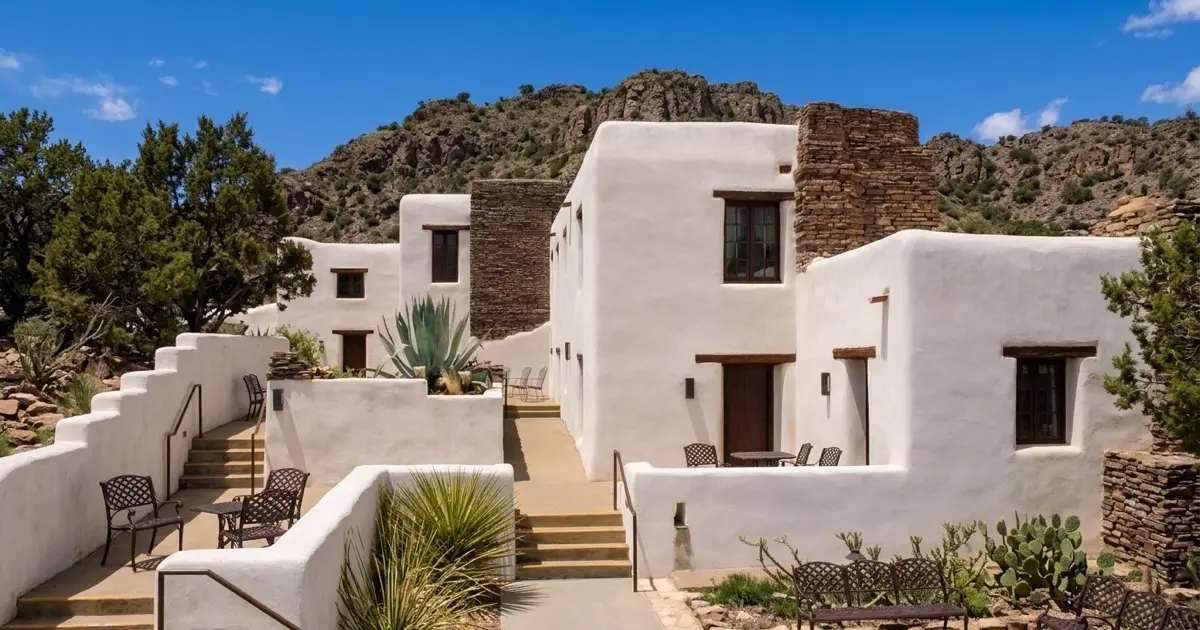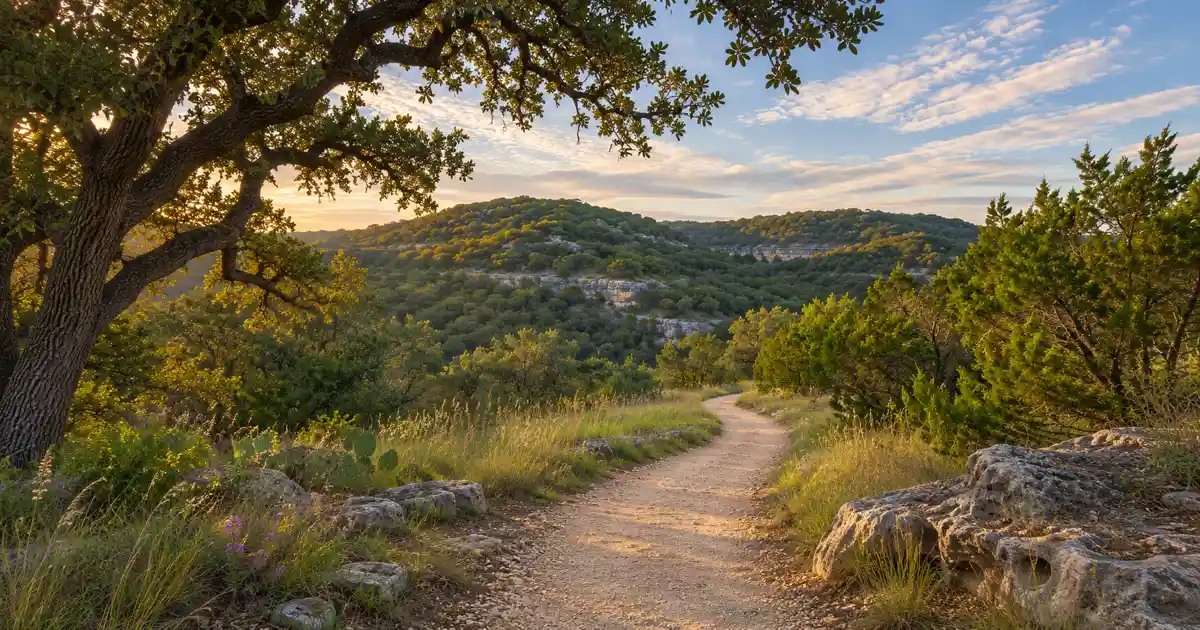
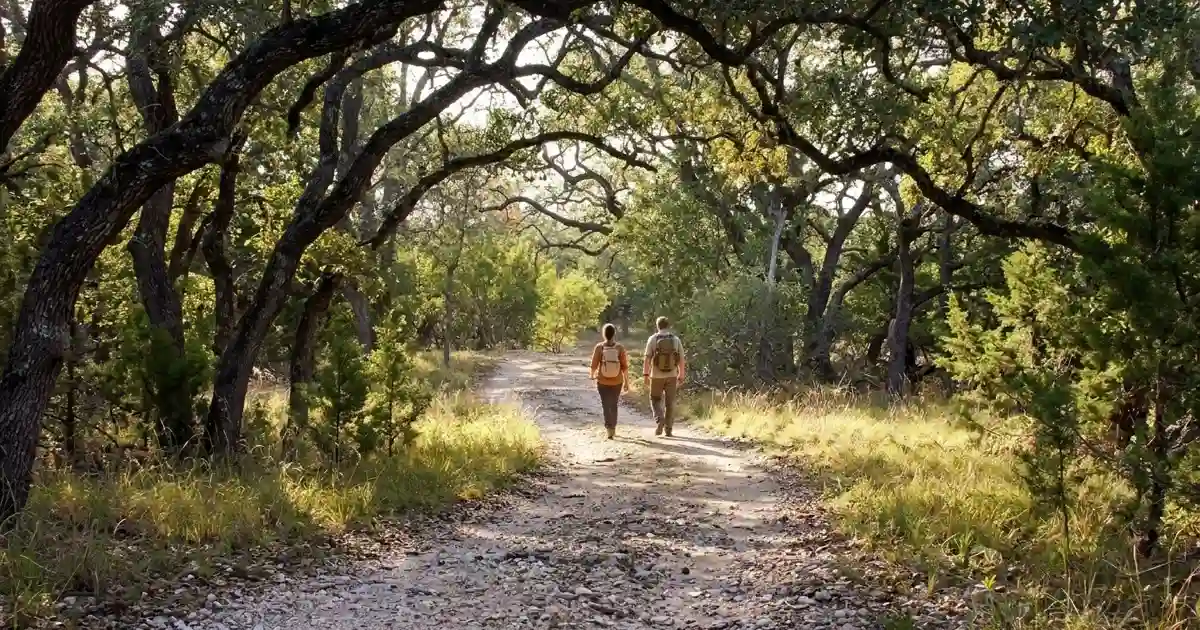
Honey Creek State Natural Area protects 2,809 acres of Texas Hill Country watershed in Spring Branch, pairing daily self-guided upland trails ($2 per adult) with weekend guided canyon tours limited to 18 hikers. There is no camping, swimming, or on-site pass sales.
Visitors frequently show up at the wrong gate because the preserve operates two separate entrances along Park Road 31, roughly 30 miles north of downtown San Antonio. Knowing which gate matches your itinerary saves an unexpected turnaround and protects a rare spring-fed stream flowing into the Guadalupe River.
Key takeaways
- Two distinct entrances on Park Road 31: Honey Creek State Natural Area opens 3.6 miles of self-guided upland trails daily (7:00 AM to 7:00 PM) at 558 Park Road 31 for $2 per adult, while weekend guided creek walks depart from the Rust House inside Guadalupe River State Park at 3350 Park Road 31 ($7 per adult).
- Guided-only creek access with an 18-person cap: Seeing Honey Creek itself requires a weekend interpretive tour (8:30 AM June to September, 9:00 AM October to May) with advance registration through the Texas Parks and Wildlife Department.
- Strict conservation rules: Swimming, wading, overnight camping, cabins, and on-site ticket booths do not exist inside Honey Creek State Natural Area, and dogs on six-foot leashes are limited to the upland savanna trails only.
- Growing Hill Country preserve: Partnerships with The Nature Conservancy and private landowners added 544 acres across two recent expansions (including 29 acres in June 2026), expanding protection over Edwards Aquifer springs and golden-cheeked warbler habitat.
Plan your visit
Verified
- Location
- 558 Park Road 31, Spring Branch, TX 78070
- Hours
- Upland trails daily 7 AM to 7 PM; weekend guided tours 8:30 or 9 AM
- Admission
- $2/adult upland trailhead; $7/adult via Guadalupe River gate
- Best time to go
- March to May or October to November for mild mornings and birds
Hours, Entrance Fees, and Two-Gate Access Rules
Honey Creek State Natural Area runs on two distinct schedules and fee structures: one for hikers visiting the upland oak savannas alone, and another for weekend naturalists walking down to the spring-fed creek. Self-guided upland trails open daily from 7:00 AM to 7:00 PM at $2 per adult, whereas guided creek tours enter through neighboring Guadalupe River State Park at $7 per adult.
| Access Option | Entrance Address | Operating Hours | Adult Fee (13+) | Dog Policy | Reservation Rule |
|---|---|---|---|---|---|
| Self-Guided Upland Trails | 558 Park Road 31, Spring Branch, TX 78070 | Daily, 7:00 AM to 7:00 PM | $2 daily (12 & under free) | Leashed dogs allowed (6 ft max) | Online day pass required before arrival |
| Guided Creek Canyon Tour | 3350 Park Road 31 (Guadalupe River gate) | Sat & Sun: 8:30 AM (Jun-Sep), 9:00 AM (Oct-May) | $7 daily Guadalupe gate fee (12 & under free) | Strictly no pets on tours | Online registration & day pass required (18-person cap) |
Upland Savanna Trailhead Fees vs. Guadalupe River Gate Fees
According to the Texas Parks and Wildlife Honey Creek State Natural Area overview, adults ages 13 and older pay $2 per day for the self-guided upland trailhead, while children 12 and under enter free. That $2 rate applies specifically to the preserve’s upland unit at 558 Park Road 31.
Guided creek tours assemble at the historic Rust House, which sits behind the main entrance of adjacent Guadalupe River State Park at 3350 Park Road 31. Because you pass through the state park headquarters gate, the Guadalupe River State Park entrance fee schedule charges $7 per adult daily (children 12 and under remain free).
A $70 annual Texas State Parks Pass waives daily admission for the cardholder and every guest in the same vehicle at both gates. For families pairing an afternoon river float with a weekend stay, check our guide to Guadalupe River State Park swimming and riverside campsites to plan gate entry and parking together.
Online Reservations and the 18-Person Tour Limit
TPWD sells zero day passes at the Honey Creek trailhead, so arriving without a pre-booked online pass risks being turned away at the gate. Clear Saturdays routinely sell out before mid-morning during spring wildflower season and autumn foliage weeks.
Guided creek walks cap group size at the first 18 people to limit soil compaction and wildlife disturbance along the narrow canyon floor. Recent weekend calendars require advance online registration for each participant, and Saturday slots frequently fill several days before the hike.
Tip
Book your Guadalupe River State Park day pass and register for the Honey Creek guided walk simultaneously on the TPWD reservation portal. Print or screenshot both confirmations at home before turning onto Park Road 31, where mobile data drops out intermittently.
Self-Guided Upland Trails vs. Guided Creek Tours
Hikers can explore 3.6 miles of upland limestone trails at Honey Creek State Natural Area any day of the week, whereas reaching the shaded 1.5-mile spring-fed stream itself requires joining a weekend guided walk. Separating daily upland traffic from guided canyon tours keeps groundwater recharge zones undisturbed while still opening the preserve’s oak savannas to casual hikers.
| Trail / Route | Distance | Estimated Time | Difficulty | Surface & Features | Access Rule |
|---|---|---|---|---|---|
| Box Turtle Trail | 0.7 miles | 30 minutes | Easy | Smooth ADA-accessible loop through native grasslands and oak mottes | Self-guided daily |
| Roadrunner Trail | 1.7 miles | 1 hour | Moderate | Rolling limestone savanna with deer, bobwhite, and wild turkeys | Self-guided daily |
| Karst Loop | 1.0 mile | 45 minutes | Moderate | Hilly juniper woodland passing Moos and Scheel ranch remnants | Self-guided daily |
| Honey Creek Guided Walk | ~2.0 miles | 2.5 hours | Moderate | Uneven limestone steps, canyon overlook, bald cypress creek bank | Weekend guided tour only |
Self-Guided Trails: Box Turtle, Roadrunner, and Karst Loop
The TPWD Honey Creek trails guide breaks the self-guided upland network into three connected loops totaling roughly 3.6 miles across rolling savanna and juniper woodland. None of these upland paths descend to Honey Creek, because the upper drainage flows underground through porous Edwards Limestone before surfacing in the canyon below.
Box Turtle Trail stretches 0.7 miles over wide, gentle grade designed for strollers and wheelchairs through oak mottes and restored native grasses. Roadrunner Trail loops 1.7 miles across open savanna where white-tailed deer, wild turkeys, and bobwhite quail forage near dawn.
Karst Loop climbs 1.0 mile into denser Ashe juniper cover past historic stone ruins from the Moos and Scheel family ranches. Hikers combining all three upland loops log roughly 3.4 to 3.6 miles in two hours on sunny, mostly exposed limestone caliche.
What to Expect on the Guided Creek Walk From the Rust House
Master naturalists and volunteers lead the 2.0-mile canyon walk over roughly 2.5 hours, starting from the Rust House inside Guadalupe River State Park. Schedule dates and sign-up openings post on the Honey Creek State Natural Area events calendar, with Saturday and Sunday walks departing at 8:30 AM from June through September and 9:00 AM from October through May.
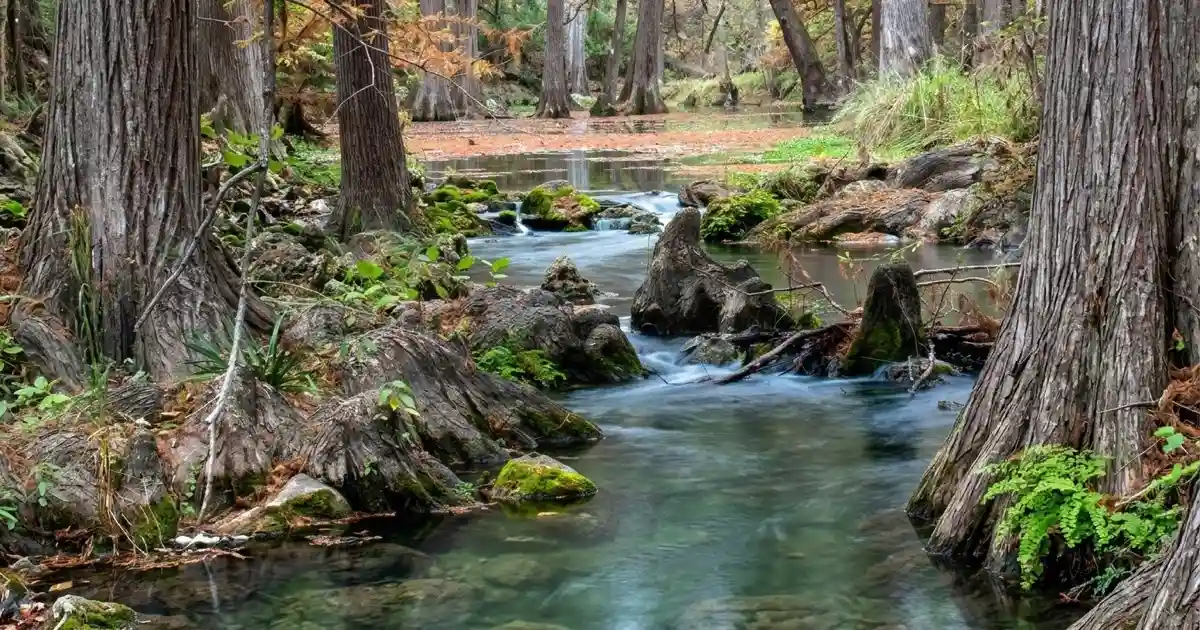
The route crosses a gravel ranch road where prescribed burns on the right side visibly contrast with dense juniper thickets on the left. From a limestone bluff overlook draped in Spanish moss, hikers look straight down into a green corridor of towering bald cypress trees lining Honey Creek.
A rocky, uneven footpath then drops into the humid canyon floor beside clear blue-green pools, sycamores, and maidenhair ferns. There are zero restrooms and zero water spigots anywhere past the Rust House, so bring at least two liters of water per person before stepping onto the trail.
Wheelchair Accessibility and Terrain Realities
Visitors with mobility needs can roll smoothly along the ADA-accessible Box Turtle Trail near the upland trailhead. TPWD also keeps an all-terrain wheelchair available for visitor use by contacting park headquarters at (830) 438-2656 ahead of arrival.
By contrast, the guided Honey Creek canyon hike traverses steep limestone ledges, exposed tree roots, and slick rock steps that are unsuitable for strollers or standard wheelchairs. Closed-toe hiking shoes with grippy soles make a noticeable difference on morning dew and damp canyon stone.
Directions, Parking, and Trailhead Addresses on Park Road 31
Honey Creek State Natural Area sits in western Comal County, approximately 30 miles north of downtown San Antonio along State Highway 46 and Park Road 31. Older automated blogs frequently misplace the preserve near Comanche, Texas, roughly 170 miles northwest of its actual Hill Country canyon.
Driving Routes From San Antonio, Austin, and New Braunfels
From San Antonio, drive north on US-281 to State Highway 46, turn west toward Boerne, and follow Highway 46 roughly 8 miles to Park Road 31. From Austin, take I-35 south or US-290 west to US-281 south, turn west on State Highway 46 near Bulverde, and turn north onto Park Road 31.
New Braunfels visitors reach the entrance in about 40 minutes via Highway 46 west across the Guadalupe River valley. Families combining a morning canyon walk with an afternoon cave tour can add Natural Bridge Caverns underground limestone tours, located roughly 20 miles southeast along FM 1863.
Cell Signal, Parking Bottlenecks, and Seasonal Closures
Mobile reception drops to one bar or zero service along Park Road 31 beneath thick limestone ridges and oak canopy. Download offline maps and save PDF trail maps before leaving US-281 or Boerne.
Parking at the 558 Park Road 31 upland lot is small compared with the main Guadalupe River State Park lot, so mid-morning arrivals on mild weekends often compete for spaces. TPWD also closes parts of Honey Creek State Natural Area during winter public deer hunts, including scheduled January hunt dates listed on the park events page, so call (830) 438-2656 before driving out in January.
Important
Set your GPS carefully before departure. Plug in 558 Park Road 31, Spring Branch, TX 78070 (29.823188, -98.522480) for daily self-guided upland trails, or 3350 Park Road 31, Spring Branch, TX 78070 to enter Guadalupe River State Park for weekend guided Honey Creek walks.
Swimming, Dog Policies, and Leave-No-Trace Ground Rules
Swimming, wading, and fishing are prohibited in Honey Creek because the shallow spring-fed channel protects rare aquatic wildlife and Edwards Aquifer headwaters. Leashed dogs are permitted only on the self-guided upland trails at 558 Park Road 31 and are barred from every weekend guided tour into the creek canyon.
Why Swimming and Fishing Stay Out of Honey Creek
Honey Creek winds 1.5 miles over travertine limestone shelves, supporting delicate spatterdock beds, Cascade Caverns salamanders, Cagle’s map turtles, and native Guadalupe bass. Even light foot traffic inside the creek bed stirs silt onto salamander eggs and erodes mossy limestone ledges.
Visitors wanting cold-water swims, tubing, or shoreline fishing should head straight to Guadalupe River State Park next door, or explore Canyon Lake parks and boat ramps 25 minutes east on FM 306. Inside the Honey Creek boundary, staying strictly on marked trails and boardwalk overlooks is mandatory.
Where Dogs Are Welcome and Where They Are Banned
Dogs on a standard six-foot leash may walk the Box Turtle Trail, Roadrunner Trail, and Karst Loop at the upland unit. Bring plenty of extra water for dogs during warm months because exposed white limestone reflects high afternoon heat across the savanna trails, and zero water bowls exist on the loops.
TPWD strictly prohibits pets on the guided Honey Creek canyon tours departing from the Rust House. Leaving dogs inside parked cars while taking a 2.5-hour hike is unsafe in Texas temperatures, so plan a pet-free trip or arrange boarding if you intend to walk down to the creek.
Warning
Leave-No-Trace rules are strictly enforced across Honey Creek State Natural Area: pack out all food wrappers and pet waste, keep out of the creek water, and never collect limestone fossils, wildflowers, or arrowheads. Public display of alcohol is also prohibited.
Why Honey Creek Has No Camping (And Where to Stay Next Door)
Honey Creek State Natural Area is a day-use conservation preserve with zero overnight campsites, zero RV hookups, and zero rental cabins inside its gates. Travelers wanting to sleep under Hill Country oaks step directly next door into Guadalupe River State Park, which manages all overnight facilities for the combined property.
Camping Next Door at Guadalupe River State Park
Guadalupe River State Park maintains 85 water-and-electric campsites split between the Turkey Sink and Cedar Sage loops alongside 9 primitive walk-in tent sites. Improved sites typically run $15 to $20 per night plus the $7 adult daily entrance fee, and weekend spots often book out months ahead through the TPWD reservation system.
Campers staying in Spring Branch can walk or drive to the Rust House on Saturday morning without fighting Highway 46 weekend traffic. Another riverside overnight option 35 minutes north is Blanco State Park swimming and paddling, offering full-hookup RV sites and CCC-era screened shelters right beside the Blanco River.
Public Use Plan and Future Preserve Expansion
Recent conservation deals added a 515-acre tract alongside 29 more acres in June 2026, raising Honey Creek State Natural Area to 2,809 protected acres. Because suburban growth along US-281 threatens groundwater recharge, TPWD and partner land trusts have prioritized buffering the entire Honey Creek drainage basin.
Through the Honey Creek Public Use Plan, TPWD is evaluating long-term expansions such as additional trails, stabilized historic ranch structures, expanded ADA routes, and potential supervised group camping. Until future phases open, overnight camping remains exclusively across the boundary at Guadalupe River State Park.
Note
Spring weekends at Guadalupe River State Park sell out quickly as soon as the 5-month camping window opens. If campsites are full, Spring Branch and Bulverde offer private cabins and vacation rentals within 15 minutes of Park Road 31.
Wildlife, Prescribed Burns, and 125-Million-Year-Old Geology
Honey Creek State Natural Area spans three distinct ecological elevations, shifting from dry limestone uplands to a humid bald cypress canyon watered by Edwards Aquifer springs. Those compressed elevation zones shelter federally endangered songbirds, endemic Texas amphibians, and marine limestone fossils dating back 125 million years.
| Elevation Zone | Signature Trees & Plants | Notable Wildlife & Geology |
|---|---|---|
| Dry Upland Savanna | Ashe juniper, live oak, agarita, Texas persimmon, Indiangrass | White-tailed deer, wild turkey, bobwhite, 125-million-year-old marine fossils |
| Limestone Canyon Slopes | Cedar elm, Spanish oak, Texas walnut, Mexican buckeye | Endangered golden-cheeked warbler nesting habitat, four-lined skink |
| Honey Creek Floodplain | Bald cypress, sycamore, Texas palmetto, maidenhair fern, spatterdock | Cagle’s map turtle, Guadalupe bass, green kingfisher, Cascade Caverns salamander |
Three Distinct Hill Country Habitats and Rare Species
According to the TPWD Honey Creek nature and wildlife guide, dry upland cracks support curly mesquite and little muhly grasses before dropping steeply into shady canyon woodlands of Spanish oak and Mexican buckeye. At the bottom, Honey Creek emerges from underground karst caves and flows past bald cypress knees, Texas palmettos, and columbine.
Between March and July, mature Ashe juniper bark and oak canopies inside the canyon serve as critical nesting territory for the endangered golden-cheeked warbler. Birders tracking spring warbler migration can also pair a morning hike here with Friedrich Wilderness Park warbler sanctuary in northwest San Antonio.
Clear pools below the overlook harbor Guadalupe bass (the official state fish of Texas), green kingfishers, and Cagle’s map turtles sunning on fallen cypress logs. Beneath the creek banks, cold limestone crevices shelter the tiny Cascade Caverns salamander.
Prescribed Fire Restoration and Homestead History
The TPWD Honey Creek history timeline documents human presence from prehistoric hunter-gatherer stone tools to Bavarian German homesteaders led by the Doeppenschmidt family starting in 1866. Adam Doeppenschmidt consolidated the ranch parcels in 1894 before selling to Otto Weidner and Fred Rust in 1910, giving the Rust House its name.
TPWD purchased the initial core from The Nature Conservancy in 1985 and added a second tract in 1988. Rangers conduct periodic prescribed burns every few years to thin invasive woody brush and restore native Indiangrass, switchgrass, and little bluestem across the uplands.
Best Seasons to Visit and Nearby Hill Country Alternatives
Spring (March through May) and fall (October through November) offer the best conditions at Honey Creek State Natural Area, combining crisp morning trail temperatures with migratory bird activity or golden bald cypress needles. Summer afternoons push trail temperatures into the mid-90s, while winter occasionally brings brief deer-hunt trail closures.
| Season | Average High / Low | Guided Tour Start | Best Reason to Visit | Key Trade-Off |
|---|---|---|---|---|
| Spring (Mar-May) | 74°F to 85°F / 50°F to 63°F | 9:00 AM (8:30 AM from Jun) | Golden-cheeked warblers, canyon wildflowers, flowing springs | Guided tours & passes sell out weeks ahead |
| Summer (Jun-Aug) | 92°F to 96°F / 70°F to 73°F | 8:30 AM | Deep cypress shade inside canyon, green kingfishers | Exposed upland savanna heat after 10:30 AM |
| Fall (Sep-Nov) | 72°F to 89°F / 47°F to 66°F | 8:30 AM (Sep) / 9:00 AM (Oct-Nov) | Rust-orange bald cypress foliage, comfortable afternoon hikes | First freeze typically arrives mid-November |
| Winter (Dec-Feb) | 60°F to 65°F / 37°F to 42°F | 9:00 AM | Quietest trails, clear sightlines along limestone bluffs | Occasional January public hunt closures |
Seasonal Weather, Tour Start Shifts, and Birding Windows
TPWD climate data records an average January temperature around 60°F and an average July temperature of 86°F, with the last spring freeze usually occurring in mid-March. Guided tours move earlier to 8:30 AM from June through September so hikers finish the climb out of the canyon before midday heat peaks.
Volunteer naturalists from the Friends of Guadalupe River State Park and Honey Creek SNA also help lead seasonal bird walks and interpretive programs across the 4,699-acre combined property. Spring morning walks between late March and mid-May deliver the highest chance of hearing warblers singing above the canyon rim.
Comparing Nearby Hill Country State Natural Areas and Parks
Choose Honey Creek State Natural Area when you want a quiet, naturalist-led look at an intact Hill Country spring creek or an easy $2 morning walk on upland trails without river crowds. Skip Honey Creek if your group wants spontaneous river swimming, dog-friendly creek access, or overnight camping on-site.
If you want 40+ miles of rugged backcountry trails, Friday-through-Monday walk-in camping, and 110-million-year-old footprints on public land, book Government Canyon dinosaur tracks and backcountry trails on San Antonio’s northwest side instead. For river tubing and waterfront tent loops right next door, spend the night at Guadalupe River State Park and reserve just one Saturday morning for the Rust House canyon walk.
Frequently Asked Questions
Do you need a reservation for Honey Creek State Natural Area?
Yes, visitors must reserve day passes online ahead of arrival because Honey Creek State Natural Area does not sell passes on-site. Weekend guided creek tours also require advance event registration and cap attendance at 18 participants.
How much does it cost to enter Honey Creek State Natural Area?
Self-guided upland trail access at 558 Park Road 31 costs $2 per adult daily, with children 12 and under admitted free. Entering through Guadalupe River State Park at 3350 Park Road 31 for a guided creek tour carries that park’s $7 daily adult gate fee, unless covered by a Texas State Parks Pass.
Can you hike Honey Creek State Natural Area without a guide?
Hikers can walk 3.6 miles of self-guided upland savanna trails daily between 7:00 AM and 7:00 PM without a guide. However, walking down into the Honey Creek canyon and along the spring-fed stream is restricted exclusively to scheduled weekend guided tours.
Can you swim or wade in Honey Creek?
No, swimming, wading, and fishing are prohibited in Honey Creek to safeguard sensitive Edwards Aquifer springs and endangered species habitat. Visitors seeking river swimming or tubing must use the adjacent Guadalupe River State Park shoreline.
Are dogs allowed at Honey Creek State Natural Area?
Leashed dogs on a maximum six-foot leash are welcome on the self-guided upland trails accessed from 558 Park Road 31. Pets are strictly prohibited on all weekend guided creek tours into the canyon.
Can you camp inside Honey Creek State Natural Area?
No, Honey Creek State Natural Area is a day-use conservation preserve with zero campgrounds, RV hookups, or rental cabins. Overnight campers can book 85 water-and-electric sites or nine walk-in tent sites next door at Guadalupe River State Park.
Where do Honey Creek guided tours start?
Weekend guided creek walks depart from the historic Rust House, accessed through the Guadalupe River State Park entrance at 3350 Park Road 31 in Spring Branch. Tours start at 8:30 AM from June through September and at 9:00 AM from October through May.