Beach camping in Texas is one of the most liberating coastal traditions in North America. Stretching along 367 miles of Gulf of Mexico shoreline, Texas maintains a unique legal commitment to open coastal access.
Unlike states that privatize shorelines or restrict overnight visitors to expensive commercial campgrounds, the Lone Star State preserves over 100 miles of public sand. Here, travelers can drive directly to the waterline, pitch tents, park overland rigs, and sleep under coastal stars.
Key takeaways
- Public Highway Freedom: Drivable Texas beaches are classified as public state roadways under the Texas Open Beaches Act, subject to a 15 mph speed limit.
- Permit Structure: Most beaches charge zero nightly camping fees; vehicle access is managed through modest annual $10 to $12 county parking stickers.
- Zero-Cost Boondocking: 100% free camping with zero permits exists at Magnolia Beach, Bryan Beach, Boca Chica Beach, and designated Bolivar Peninsula free zones.
- Strict Environmental Protections: Driving on, parking in, or disturbing coastal sand dunes is strictly illegal under Texas law, carrying fines up to $500.
From the lively golf cart cruising lanes of Bolivar Peninsula to the extreme 60-mile off-grid wilderness of Padre Island National Seashore, Texas beaches accommodate every camping style. However, successful coastal camping requires understanding local jurisdictional rules, vehicle permit requirements, tide fluctuations, and sand driving techniques. This comprehensive master guide synthesizes every major coastal region, driving law, and safety protocol across the entire Texas Gulf Coast.
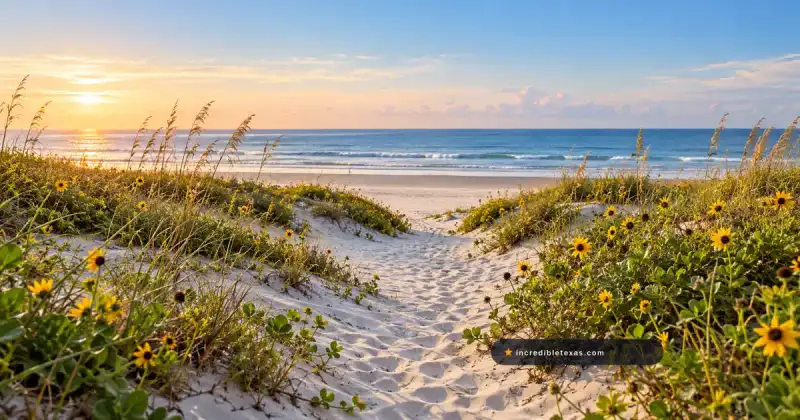
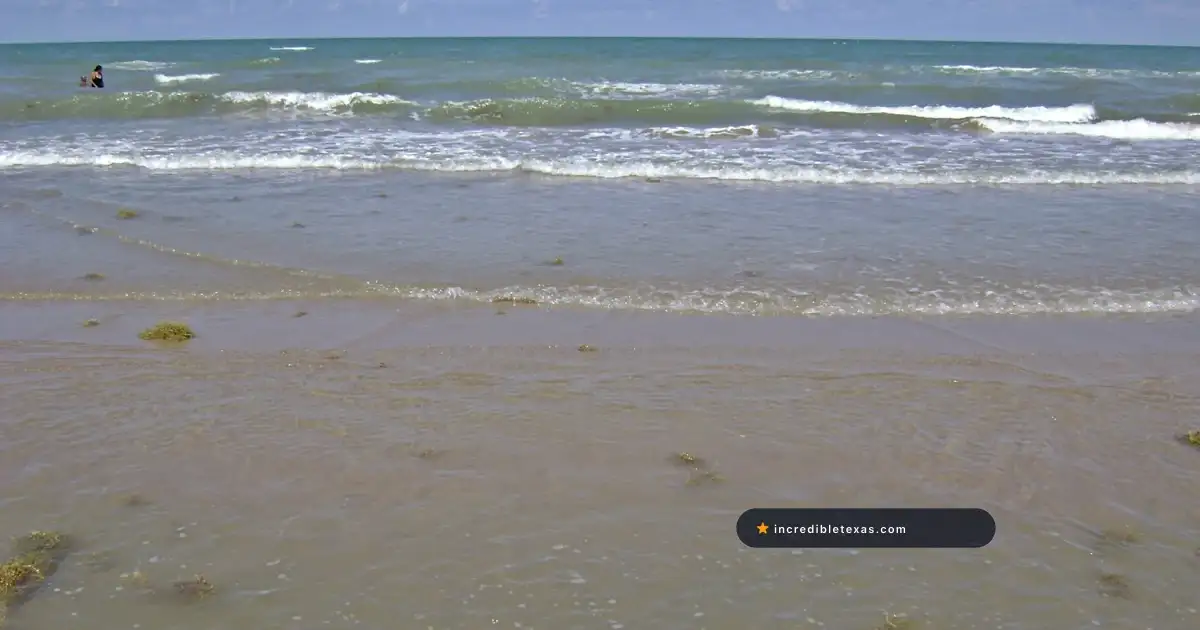
Featured photo: Boca Chica Beach by Justin Hundsnurscher, BocaChicaTX, public domain; cropped, resized, and branded.
The Texas Beach Camping Landscape: Legalities & Access
To camp safely and responsibly on Texas shores, visitors must first understand the legal foundation that governs public coastal recreation.
Under the Texas General Land Office Open Beaches Act Guidance, the public holds an absolute, guaranteed right of access to the state-owned Gulf shoreline.
The Texas Open Beaches Act Explained
Codified in 1959 under Chapter 61 of the Texas Natural Resources Code, the landmark Texas Open Beaches Act establishes that the public has free and unrestricted rights of ingress and egress to the wet-sand corridor stretching from the mean low tide line inland to the natural vegetation line.
The statute establishes three vital principles for coastal campers:
- The Public Easement: No private landowner, resort corporation, or municipal authority can build fences or obstruct public pedestrian access along the open Gulf beach.
- Public Highway Status: Any beach open to vehicular traffic is legally designated as a public state roadway under the Texas Transportation Code. All standard highway traffic laws, including valid driver licensing, vehicle registration, seatbelt rules, and Texas open container bans, apply directly on the sand.
- The Dry Sand Zone: While the wet-sand tidal flat is state-owned public property, the dry sand corridor up to the vegetation line is managed through a balance of state environmental statutes and county municipal ordinances. Local governments are authorized to regulate overnight camping and assess modest vehicle parking fees to fund sanitation services.
Drive-On Beaches vs. Pedestrian-Only Shores
Not every beach in Texas allows motor vehicles or overnight camping. Knowing the boundary lines prevents unexpected citations or costly towing encounters:
- Drivable Camping Corridors: Bolivar Peninsula, Matagorda Beach, Port Aransas City Beach, unincorporated Nueces County beaches, and Padre Island National Seashore South Beach allow motor vehicles to drive and camp directly on the sand.
- Pedestrian-Only Shorelines: Major municipal resort zones, including the core Galveston Island Seawall beaches, Rockport Beach, and downtown South Padre Island, maintain strict vehicle bans to protect swimmers.
- Galveston Island Municipal Ban: The City of Galveston strictly prohibits primitive camping and driving across all city-managed beaches. Campers visiting Galveston Island must book formal campsites through our Galveston Island State Park guide.
Upper Coast Beach Camping: Bolivar Peninsula & Crystal Beach
Stretching northeast from Galveston Bay to the Chambers County line, Bolivar Peninsula features 27 continuous miles of wide, drive-on coastal sand.
- Camping Culture: Bolivar is famous for relaxed family beach culture, customized golf carts, beachfront barbecue pits, and starlit bonfires. Motorists drive directly through numbered beach access cuts to set up camp anywhere along the waterline.
- Permit Requirements: Galveston County requires an annual $10 beach parking permit sticker, valid for the calendar year. Two designated free zones (Rettilon Road and east of Rollover Pass) require zero permits.
- Access Route: Travelers reach the western tip of Bolivar via the free 24-hour TxDOT Galveston-Port Bolivar Ferry or via the Highway 124 bypass through Winnie. For full details on access roads and permits, review our dedicated guide to Crystal Beach and Bolivar Peninsula camping permits.
Middle Coast Beach Camping: Matagorda Beach & the Colorado River
Located at the terminus of FM 2031 where the Colorado River enters the Gulf of Mexico, Matagorda Beach represents an untamed, rugged coastal barrier strip.
- The River Divide: The mouth of the Colorado River divides the peninsula into two distinct zones: 23 drivable miles running northeast toward Mitchell’s Cut, and 35 roadless miles running southwest that are strictly closed to motor vehicles.
- Sand & Solitude: The front 3 miles feature firmer sand and county trash receptacles. Beyond mile 3, the beach transitions into deep sugar sand and high shell berms where four-wheel drive is strongly advised.
- Permit & Limits: A $10 annual Matagorda County vehicle permit is required. Camping directly on the sand is free with a maximum stay limit of 72 consecutive hours.
- Deep-Dive Guide: For recovery tactics and LCRA nature park amenities, consult our Matagorda Beach primitive camping guide.
Bend Region Beach Camping: Port Aransas & Mustang Island
Connecting the barrier islands northeast of Corpus Christi, Mustang Island delivers 18 miles of firm, drive-on beach combining municipal conveniences with coastal camping.
- Urban Convenience: Port Aransas combines drive-on camping with easy access to seafood restaurants, gear outfitters, and grocery markets.
- Permits & Stay Limits: An annual $12 city and county beach parking permit is required. Dispersed primitive camping is limited to a maximum of 3 consecutive nights within any 3-week window.
- Strict Parking Orientation: City ordinances mandate that vehicles must park head-in perpendicular to the water behind the wooden dune bollards.
- Venue Options: Choose between dispersed city sand camping, 75 full-hookup RV sites at county-run I.B. Magee Beach Park, or drive-on primitive sites at Mustang Island State Park. Explore our Port Aransas and Mustang Island beach camping guide for complete details.
Lower Coast Beach Camping: Padre Island National Seashore & Boca Chica
The southern tier of the Texas coastline represents the longest stretch of undeveloped barrier island wilderness on earth.
- Padre Island National Seashore (PINS): Stretching 60 miles down South Beach to the Mansfield Channel, PINS offers off-grid overlanding and surf fishing. Entering the park requires standard NPS admission ($10/day or an annual pass), but primitive camping across all 60 miles of South Beach is 100% free of nightly fees for up to 14 days under the National Park Service Padre Island Camping Guidelines.
- Boca Chica Beach: Situated at the southern tip of Texas near Brownsville, Boca Chica provides free primitive camping up to 14 days directly across from SpaceX Starbase and near the mouth of the Rio Grande.
- Backcountry Expedition Guide: For route staging, tire pressure metrics, and Big Shell hazards, read our comprehensive Padre Island National Seashore primitive camping guide.
Complete Guide to Beach Parking Permits & Fees
While Texas beaches rarely charge traditional nightly camping fees, several coastal counties and municipalities require vehicles to display an annual parking permit decal.
Understanding the fee structures and purchase points across coastal Texas keeps your road trip budget predictable.
County-by-County Permit Breakdown
Each coastal jurisdiction manages its own permit schedule under authority granted by the Texas Open Beaches Act:
- Galveston County (Bolivar Peninsula): $10 annual parking permit sticker ($5 early-bird rate in January and February). Valid through December 31. Free zones at Rettilon Road and Rollover East.
- Brazoria County (Bryan Beach & Follets Island): Bryan Beach is 100% free with no permits required. Nearby Village of Surfside Beach charges $12 annually for municipal beach driving.
- Matagorda County (Matagorda Beach): $10 annual vehicle permit sticker, valid through December 31. Free primitive camping capped at 72 consecutive hours.
- Calhoun County (Magnolia Beach): 100% free. No vehicle permits, entry fees, or camping fees for up to 14 consecutive days.
- Nueces County & Port Aransas: $12 annual beach parking permit sticker, valid through December 31. Covers city beaches and county shoreline down to the state park. Free day-use corridor between Horace Caldwell Pier and the South Jetty.
- Cameron County (Boca Chica Beach): 100% free open public highway. Zero permits or fees.
Where to Buy & Display Vehicle Stickers
Permit stickers are widely distributed across coastal access corridors:
- Convenience Stores & Groceries: Major stops include The Big Store on Bolivar Peninsula, Stanley’s General Store in Matagorda town, and the Family Center IGA in Port Aransas.
- Local Bait Camps: Waterfront outfitters along access roads routinely stock permits for incoming anglers.
- Proper Decal Display: Texas statutes require stickers to be affixed directly to the vehicle glass. On Bolivar, affix the sticker to the lower passenger-side windshield; in Port Aransas and Matagorda, affix it to the lower driver-side corner. Placing decals loosely on dashboards or glove boxes is legally invalid and risks citations.
Free Beach Camping Spots on the Texas Gulf Coast
For campers prioritizing zero-budget travel, the Texas coast features remarkable locations where both camping fees and vehicle permit requirements are entirely waived.
Consult our dedicated guide to free beach camping spots on the Texas Gulf Coast for deep logistical breakdowns of these zero-permit destinations.
Magnolia Beach: Calhoun County’s Free Boondocking Gem
Magnolia Beach is celebrated as one of the best free coastal boondocking venues in the United States.
- Hard-Packed Shell Surface: The beach is composed of natural crushed sea shells and fine gravel, creating a firm parking shelf that supports heavy Class A motorhomes and fifth-wheel trailers without risk of bogging down.
- Free County Amenities: Calhoun County provides free flush restrooms, outdoor cold rinse showers, covered concrete picnic palapas with tables, and barbecue grills directly along Lavaca Bay.
- 14-Day Limit: Boondockers can stay for up to 14 consecutive days completely free of charge. Vehicles must park perpendicular to the shoreline.
Bryan Beach Freeport & Bolivar Free Zones
Campers closer to the Houston metropolitan area have two prime zero-permit options:
- Bryan Beach (Freeport): Situated south of Freeport where the Brazos River cuts into the Gulf of Mexico, this undeveloped beach allows free primitive vehicle camping with zero permits. Campers must be self-contained and pack out all waste.
- Bolivar Peninsula Free Corridor: The two-mile beach stretch between Rettilon Road and the Washout (Mile Markers 5 to 7) near Port Bolivar requires no Galveston County permit decal for day-use or overnight camping.
Essential Driving Rules: Speed Limits & Dune Laws
Operating a motor vehicle on a Texas beach is legally identical to driving on an asphalt highway. Law enforcement officers actively patrol the sand and issue citations for statutory infractions.
For complete mechanical recovery strategies and highway regulations, review our Texas beach driving rules and safety guide.
The 15 MPH State Speed Limit & Traffic Enforcement
Safety on the sand centers around strict adherence to vehicle speed limits:
- Statewide 15 MPH Speed Limit: The baseline speed limit on virtually all Texas drivable beaches is 15 mph. This threshold protects barefoot children, leashed pets, surf fishermen, and sunbathers emerging from tents.
- Off-Season Backcountry Exception: Along South Beach at Padre Island National Seashore, the speed limit rises to 25 mph between Mile 2.5 and Mile 60 from the day after Labor Day through February. During sea turtle nesting season, it returns to 15 mph park-wide.
- Open Containers & DWI: Possessing an open alcoholic beverage inside a moving motor vehicle on the beach is strictly illegal under the Texas Penal Code. Alcohol must remain sealed in coolers until your vehicle is parked with the engine switched off. The legal blood alcohol limit is 0.08%, and police conduct regular sobriety checkpoints along beach ramps.
Dune Protection Laws & Penalties
Coastal sand dunes are the first line of natural defense protecting the Texas barrier islands from hurricane storm surges and shoreline erosion.
Under Chapter 61 of the Texas Statutes Natural Resources Code Chapter 61, the Texas Dune Protection Act establishes severe penalties for damaging coastal dunes:
- Zero Vehicle Driving on Dunes: Operating any truck, ATV, dirt bike, or golf cart on, over, or across sand dunes and native vegetation is strictly illegal.
- Class C Misdemeanors: Dune driving violations carry criminal citations and fines up to $500.
- The 25-Foot Setback Rule: When staging your tent or parked vehicle, remain on the flat driving shelf within 25 feet of the seaward dune base. Never dig tent platforms into dune slopes or cut sea oats.
Tide Safety, Wind Management & Sand Recovery Gear
The coastal marine environment challenges standard camping hardware. Campers who prepare for wind, salt spray, and rising tides enjoy safe and comfortable trips.
To build an expedition-grade packing kit, consult our detailed Texas beach camping gear checklist.
Reading Tides & the Daily High-Water Wrack Line
Tides along the Texas Gulf Coast can rise unexpectedly due to offshore weather systems or sustained southeasterly wind pushes:
- Locate the Highest Wrack Line: Before pitching your tent, locate the continuous line of dried seaweed (sargassum), driftwood chips, and seafoam deposited by the most recent high tide. Pitch your tent and park your vehicle landward of this line, close to the 25-foot dune buffer.
- Nocturnal Tide Shifts: High tides occurring at 2:00 AM can push water 30 to 50 feet further inland than afternoon tides. A campsite that appears dry during the day can become surrounded by rolling waves in the dark.
- Never Camp in Tidal Washouts: Low-lying beach cuts where water flows through the dunes into bayside flats are subject to sudden flash flooding during storm surges.
Essential Gear: Sand Anchors, Tire Deflation & Rust Defense
Preparing your vehicle and shelter requires specialized marine tools:
- Spiral Sand Screws & Deadman Bags: Standard 7-inch wire tent stakes pull free in minutes. Use 10 to 12-inch spiral screw stakes (such as Orange Screw) or buried deadman sandbags buried 12 to 18 inches below the surface to anchor guylines against 25-knot Gulf winds.
- Tire Pressure Deflation (15 to 18 PSI): Airing down tires before driving into soft sand cuts expands your tire footprint by over 200%, allowing vehicles to float across loose sugar sand. Always carry a 12V portable air compressor to reinflate tires before returning to highway speeds.
- Lanolin Rust Defense: Spray your vehicle undercarriage with Fluid Film or Woolwax before hitting the coast. Wash the underbody and wheel wells with high-pressure fresh water immediately upon returning home.
- Fresh Water Logistics: Pack at least 1.5 to 2 gallons of potable water per person per day to manage drinking, cooking, and salt spray rinses.
Texas Beach Camping Master Directory & Comparison
To help you choose the ideal coastal venue for your upcoming trip, review this comprehensive master directory comparing every major beach camping destination in Texas:
| Coastal Destination | Managing Jurisdiction | Permitted Camping Zone | Permit Cost | Stay Duration Limit | Sand Texture & Pack | Restrooms & Facilities |
|---|---|---|---|---|---|---|
| Bolivar Peninsula (Crystal Beach) | Galveston County | 27 miles continuous drive-on | $10 Annual Decal | Up to 14 days | Medium pack; 2WD at low tide | Port-a-potties at ramps; grocery nearby |
| Bolivar Free Zones | Galveston County | Rettilon to Washout (2 mi) | $0 (None) | Unlimited | Medium pack | Trash barrels only |
| Bryan Beach | Brazoria County (Freeport) | Mouth of Brazos River | $0 (None) | 14 Days | Medium to soft sand | None (100% off-grid) |
| Matagorda Beach | Matagorda County | 23 miles east of river | $10 Annual Decal | 72 Hours max | Soft sugar sand past Mile 3 | Dumpsters first 3 miles; nature park nearby |
| Magnolia Beach | Calhoun County (Port Lavaca) | Lavaca Bay shell beach | $0 (None) | 14 Days | Hard crushed shell/gravel | Flush toilets, cold rinse showers, palapas |
| Port Aransas Beach | City of Port Aransas | 6.3 miles south of pier | $12 Annual Decal | 3 Nights / 3 Wks | Firm packed quartz sand | Port-a-potties at access ramps |
| I.B. Magee Beach Park | Nueces County Parks | South Jetty & pier area | $12-$23 prim / $50 RV | 14 Days max | Paved RV pads & jetty sand | 75 full-hookup RV sites, hot showers, dump |
| Mustang Island State Park | Texas Parks & Wildlife | 1.5 mi drive-on beach | $13/night + $7 entry | 14 Days max | Firm sand shelf | Modern bathhouse, 48 electric back-dune sites |
| PINS South Beach | National Park Service | 60 miles to Mansfield Cut | NPS Pass ($10) / Camp $0 | 14 Days max | Loose shell hash & soft sand | Cold showers at Malaquite; 60 mi off-grid |
| Boca Chica Beach | Cameron County (Brownsville) | Gulf beach near Starbase | $0 (None) | 14 Days max | Soft sand near road end | None (100% off-grid) |
Frequently Asked Questions About Texas Beach Camping
Can you camp anywhere on the beach in Texas?
No. While the Texas Open Beaches Act preserves public access across all 367 miles of coastline, overnight camping is restricted to designated county and municipal beaches where local ordinances permit it. Cities like Galveston strictly ban camping on municipal beaches, while Bolivar Peninsula, Matagorda, Mustang Island, and Padre Island welcome overnight camping.
Where is the best place to camp on the beach in Texas?
The best destination depends on your preferred camping style. For complete wilderness and 4WD overlanding, Padre Island National Seashore South Beach is unmatched. For drive-on social fun and campfires, Crystal Beach on Bolivar Peninsula is ideal. For free RV boondocking with restrooms and rinse showers, Magnolia Beach in Calhoun County is the top choice.
Do you need a permit to camp on Texas beaches?
Many public beaches require a modest annual vehicle parking permit sticker ($10 to $12) rather than a per-night camping fee. Bolivar Peninsula requires a $10 Galveston County sticker, Matagorda charges $10, and Port Aransas charges $12. Several locations, including Magnolia Beach, Bryan Beach, and Boca Chica, require no permits at all.
Is it legal to drive on the beach in Texas?
Yes. Texas is one of the few states in the country that legally classifies drivable public beaches as state highways. Motorists can drive on over 100 miles of coastal sand, provided vehicles are street-legal, registered, insured, and obey the statewide 15 mph speed limit.
How much does it cost to camp on the beach in Texas?
Camping directly on the open sand is often completely free or costs between $10 and $12 for an annual vehicle permit that lasts the entire calendar year. Developed state park beachfront sites with water and electricity generally cost $20 to $25 per night plus daily park entrance fees.
Are campfires allowed on Texas beaches?
Yes. Most Texas beaches permit small recreational campfires on the open sand below the high tide mark. Fires must be kept under 3x3x3 feet, placed away from dune vegetation, and extinguished completely with seawater. Burning pallets with nails is strictly illegal statewide.
How do you keep your vehicle from getting stuck on Texas beaches?
The most effective technique is lowering your tire pressure to between 15 and 18 PSI before entering loose sand cuts. Maintain steady momentum without sudden acceleration, avoid wet tidal mudflats, and always carry recovery boards, a shovel, and a 12V tire inflator.
What are the best free beach camping spots in Texas?
The finest 100% free beach camping locations requiring zero permits or fees are Magnolia Beach in Calhoun County, Bryan Beach near Freeport, Boca Chica Beach near Brownsville, and designated free zones on Bolivar Peninsula between Rettilon Road and the Washout.