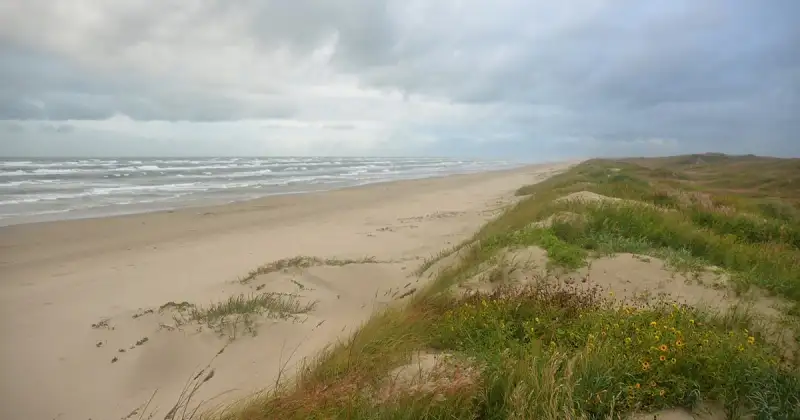
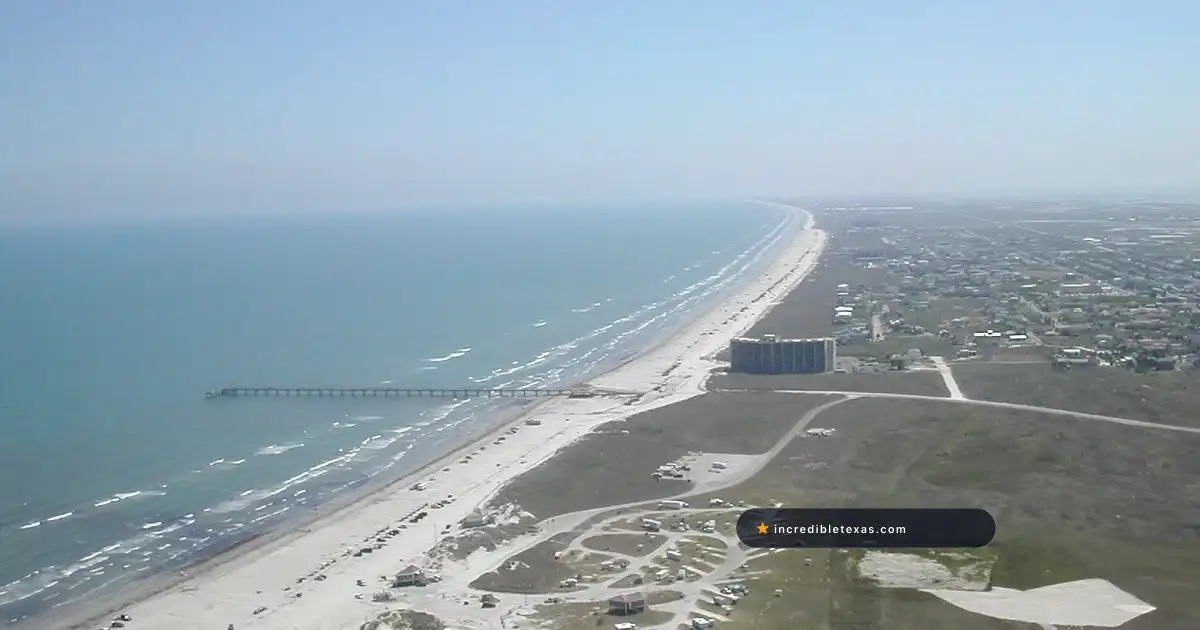
Driving directly onto the Gulf of Mexico shoreline is one of the most liberating traditions in the Lone Star State. Understanding driving on the beach in texas rules keeps you safe from deep sand entrapment, coastal fines, and incoming tide hazards. Across 367 miles of coastline, public vehicle access offers unmatched convenience for day trippers, anglers, and primitive campers.
Key takeaways
- Under the Texas Open Beaches Act, drivable Gulf beaches are legally classified as public highways, meaning state traffic laws, registration requirements, and licensing apply.
- The standard speed limit on Texas beaches is 15 mph, and driving on, parking in, or disturbing coastal sand dunes is strictly prohibited under Texas law.
- Open containers of alcohol are illegal inside moving motor vehicles on Texas beaches, and drivers face regular Texas DWI roadside enforcement.
- Airing down truck and SUV tires to 15 to 18 PSI before entering soft sugar sand expands your contact patch and prevents frame-grounding sinkholes.
- Specialized off-road sand recovery on Texas barrier islands costs between $250 for a basic winch pull to over $1,500 for complex or tide-threatened rescues.
What to Know About Driving on the Beach in Texas
Texas allows motor vehicles on over 100 miles of Gulf Coast coastline under the Texas Open Beaches Act. Because the sand is legally classified as a public highway, standard motor vehicle regulations, valid driver’s licenses, and state liability insurance are strictly required.
The open coast provides a rare freedom compared to other coastal states where vehicular beach access is heavily restricted or banned entirely. However, treating the shoreline as an unregulated sandbox frequently leads to costly citations or vehicle damage. Municipal police departments, county sheriffs, Texas Game Wardens, and federal park rangers patrol these beaches regularly.
Before heading past the dunes, motorists must know the exact boundary lines, tidal stages, and regional regulations that govern coastal corridors from Galveston down to Boca Chica.
The Texas Open Beaches Act and Public Highway Status
The foundational legislation governing coastal access is the landmark Texas General Land Office Open Beaches Act Guidance. Codified in Chapter 61 of the Texas Natural Resources Code, this statute guarantees the public free and unrestricted access to the state-owned Gulf shoreline between the mean low tide line and the natural line of vegetation.
Under Texas law, any beach dedicated to public vehicular travel functions as a public road under the Texas Transportation Code. This legal classification means that every rule governing Interstate 10 or State Highway 35 applies directly to the sand.
Drivers must hold a valid driver’s license and maintain current state vehicle registration and inspection decals. State minimum liability insurance is mandatory for any motor vehicle operating on the sand, including street-legal golf carts and utility terrain vehicles.
Where You Can Legally Drive Along the Texas Coast
Not every beach in Texas allows motor vehicles. Several major recreational zones, including the core Galveston seawall beaches, Rockport Beach, and sections of South Padre Island, maintain strict pedestrian-only designations to protect swimmers and sunbathers.
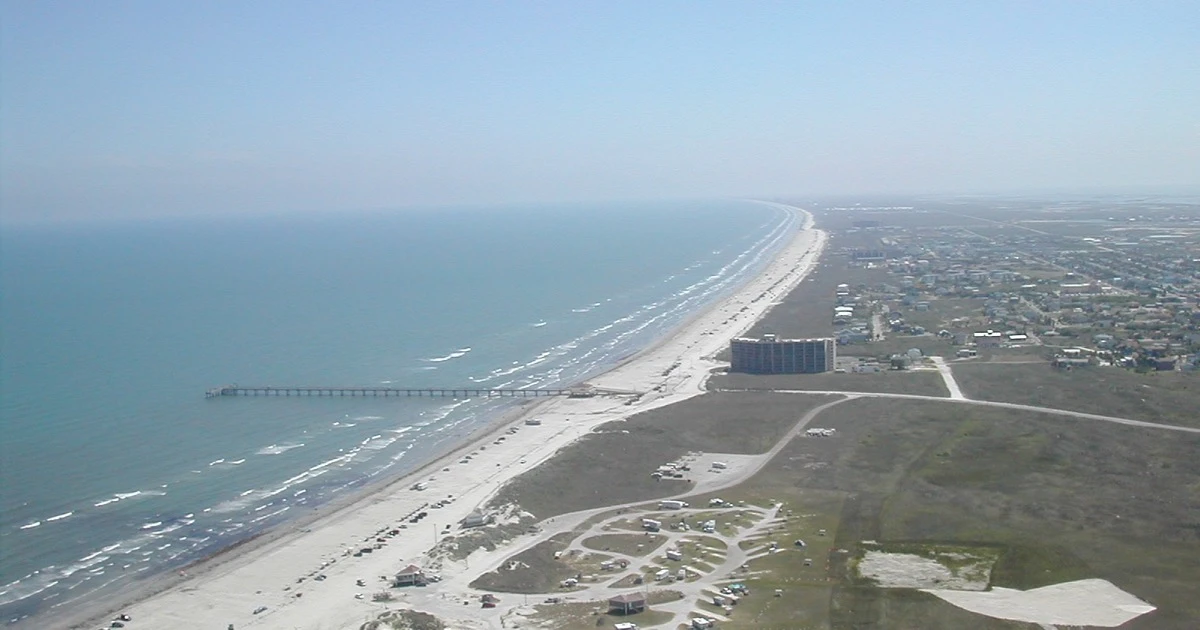
Drivable zones stretch across several prime coastal regions. Bolivar Peninsula features 27 continuous miles of drivable sand along Crystal Beach. Matagorda County provides vehicle access both east and west of the Colorado River mouth.
Further south, Matagorda County offers 23 continuous miles of remote drive-on sand detailed in our Matagorda Beach camping and vehicle passes guide. Mustang Island and Port Aransas permit beach driving across designated access roads, while the vast wilderness of the lower barrier island welcomes four-wheel-drive vehicles down 60 miles of undeveloped shoreline.
| Coastal Beach Corridor | Primary County | Total Drivable Miles | Sand Texture | Recommended Drivetrain |
|---|---|---|---|---|
| Crystal Beach (Bolivar) | Galveston County | 27 miles | Medium to soft pack | 2WD manageable at low tide; 4WD recommended |
| Matagorda Beach | Matagorda County | 22 miles | Soft, shifting sugar sand | 4WD strongly advised east of river |
| Port Aransas Beach | Nueces County | 6.3 miles | Firm, hard-packed tidal flats | 2WD friendly near waterline; 4WD for camping |
| Mustang Island Beach | Nueces County | 14 miles | Medium-firm pack | 2WD suitable on driving lanes; 4WD near dunes |
| Padre Island Down-Island | Kleberg / Kenedy | 60 miles | Deep shell hash & soft sand | High-clearance 4WD mandatory south of Mile 5 |
| Boca Chica Beach | Cameron County | 8 miles | Variable pack to soft wash | 4WD recommended; avoid tidal flats |
Reviewing these regional corridors helps you select the right coastal destination for your vehicle type and driving comfort.
Mandatory Traffic Laws and Beach Highway Regulations
Every vehicle on a Texas beach must obey the statewide 15 mph speed limit unless posted otherwise. Law enforcement officers actively enforce mandatory seatbelts, prohibit reckless donuts, and issue citations for open alcohol containers in moving vehicles.
Because the sand is a designated roadway, local police and county deputies utilize radar guns, unmarked patrols, and stationary checkpoints. Reckless driving, spinning donuts in crowded areas, or kicking up sand plumes near family encampments will earn an immediate misdemeanor citation.
Familiarizing yourself with state regulations ensures a peaceful coastal trip free from unexpected court appearances or fines.
Speed Limits: The 15 MPH Rule and Posted Variations
The standard statutory speed limit across virtually all Texas public beaches is 15 mph. This low threshold protects small children, pets, sunbathers emerging from tents, and anglers casting lines near the water.
Signs designating the 15 mph speed limit stand at every official access ramp. During major holiday weekends like Memorial Day and Independence Day, officers strictly enforce this limit, issuing tickets for speeds as low as 22 mph.
The primary exception occurs within the backcountry of federal parklands. Along the lower stretches of Padre Island National Seashore, the park superintendent raises the speed limit to 25 mph between Mile 2.5 and Mile 60 from the day after Labor Day through February. During the spring and summer sea turtle nesting season, the speed limit returns to 15 mph park-wide.
Seatbelts, Open Containers, and Law Enforcement on the Sand
Under the Texas Transportation Code, all occupants in a moving vehicle must wear safety belts. Passengers riding unrestrained in the open bed of a pickup truck are subject to strict citations, particularly minors under 18 years of age.
Open containers of alcoholic beverages present one of the most common legal misunderstandings on Texas beaches. While consuming alcohol on the sand while relaxing in your beach chair is generally legal outside specific municipal bans, possessing an open container of alcohol inside a moving motor vehicle is illegal statewide.
Important
Keep all alcoholic beverages sealed in coolers until your vehicle is completely parked and your engine is turned off. An open beer can resting in your truck console while cruising the waterline will result in an immediate open container citation or a roadside field sobriety evaluation.
Law enforcement agencies conduct sobriety checkpoints along beach exit roads. The statutory Blood Alcohol Concentration limit of 0.08% applies on the sand just as it does on asphalt highways.
Pedestrian Right-of-Way and Driving Etiquette
Pedestrians always maintain absolute right-of-way on Texas beaches. Beachgoers carrying surfboards, coolers, and umbrellas often cannot hear approaching vehicles over the roar of the surf and coastal wind gusts.
Standard coastal driving etiquette dictates that motorists travel along the established two-lane hard-packed track situated between the high tide waterline and parked campsites. Never weave between parked vehicles and the dunes where children and pets frequently play.
When two vehicles meet along a narrow beach cut, northbound or outgoing traffic typically yields to incoming traffic, or drivers share the firmest track with a courteous wave. For drivers planning trips across budget coastal stretches, consulting our guide to free beach camping spots on the Texas Gulf Coast details regional permit-free corridors and safety rules.
4WD vs. 2WD: Sand Mechanics, Clearance, and Tire Pressure
While two-wheel-drive sedans can manage hard-packed damp sand at low tide, four-wheel drive is required for soft sugar sand, deep entrance ruts, and barrier island passes. Lowering tire pressure to 15-18 PSI significantly improves traction.
The physical behavior of Texas coastal sand varies dramatically based on humidity, shell concentration, and tidal history. Understanding these mechanics prevents motorists from sinking down to their frame rails within seconds of leaving the access pavement.
Preparing your vehicle with appropriate tire deflation and recovery gear transforms a stressful sand crossing into a smooth beach drive.
Why Sugar Sand Traps Two-Wheel-Drive Vehicles
The dry sand found above the high-tide line consists of fine, rounded grains often called sugar sand. Under vehicle weight, these smooth grains roll against one another without interlocking, providing zero shear resistance for tires.
When a standard two-wheel-drive sedan or crossover enters loose sugar sand at street tire pressure (32 to 38 PSI), the narrow tire footprint acts like a blade. The spinning drive wheels dig trenches, transferring weight backward until the vehicle chassis rests flat on the sand. Once high-centered, wheels spin freely in the air, rendering two-wheel-drive momentum useless.
In contrast, true four-wheel-drive systems equipped with low range distribute engine torque across all four contact patches simultaneously, reducing wheel spin and propelling the vehicle steadily forward.
The 15 to 18 PSI Rule: How and When to Air Down
The single most effective technique for mastering beach driving is airing down your tires. Dropping your tire pressure increases the length of your tire’s contact patch, effectively doubling the surface area supporting the vehicle weight.
Lower pressure transforms your tire into a flexible conveyor belt that floats on top of the sand grains rather than digging into them. For most standard half-ton trucks and sport utility vehicles, lowering pressure to between 15 and 18 PSI provides optimal floatation without risking the tire bead popping off the wheel rim.
| Sand Surface Condition | Typical Beach Location | Recommended Tire Pressure | Driving Technique |
|---|---|---|---|
| Hard-Packed Damp Sand | Low tide driving lanes on Port Aransas & Crystal Beach | 20 to 25 PSI | Maintain steady speed; stay on established wet tracks |
| Soft Dry Sugar Sand | Entrance ramps, high tide marks, and camping zones | 15 to 18 PSI | Continuous gentle momentum; avoid sudden acceleration |
| Deep Shell Hash | Down-island Padre Island wilderness (Miles 10–30) | 13 to 15 PSI | High clearance 4WD required; maintain forward inertia |
| Wet Mud Flats / Tidal Wash | Bayshore marsh passes and tidal wash zones | Avoid driving | Severe sinking hazard; high risk of catastrophic frame suction |
Air down your tires before passing through the access ramp ruts, not after you feel the vehicle slowing down. Never drop below 13 PSI on standard wheels without specialized beadlock rims, and avoid sharp high-speed steering inputs while aired down. Travelers preparing for extended wilderness overlanding should explore our detailed guide to Padre Island National Seashore primitive camping for route preparation and Big Shell conditions.
Essential Recovery Gear: Compressors, Shovels, and Traction Boards
Never venture onto remote Texas beaches without self-recovery tools. A 12-volt portable air compressor that clamps directly to your vehicle battery terminals is indispensable, allowing you to reinflate all four tires back to street pressure as soon as you exit the sand.
Carry a sturdy, long-handled steel transfer shovel to excavate sand from around buried tires, axles, and differentials. A pair of heavy-duty nylon traction boards provides instant bite for tires spinning in loose sand troughs.
Additional essential items include a kinetic recovery tow rope rated for at least three times your vehicle curb weight, heavy-duty soft shackles, a mechanical tire deflator tool, and a solid wooden jacking base board to prevent hydraulic jacks from sinking into the sand during emergency tire repairs.
Beach Vehicle Permits, Fees, and Parking Stickers by County
Driving or parking on many developed Texas beaches requires an annual vehicle permit sticker ranging from $10 to $25. These stickers are issued by local municipalities and counties including Bolivar Peninsula, Port Aransas, Surfside Beach, and Matagorda.
While the Texas Open Beaches Act preserves public access, state statutes grant coastal counties and cities the legal authority to collect modest parking and vehicle maintenance fees. Revenue generated from these permit stickers funds beach sanitation, trash removal, portable restroom maintenance, and lifeguard patrols.
Failing to display a valid parking sticker on your windshield can result in municipal parking tickets ranging from $50 to $150.
Bolivar Peninsula and Galveston County Permits
Galveston County requires a $10 annual beach parking permit sticker for any motor vehicle parking on Bolivar Peninsula beaches, including Crystal Beach, Caplen, and Gilchrist. The permit remains valid for the entire calendar year and expires on December 31.
Visitors can purchase Bolivar parking stickers at local convenience stores along Highway 87, real estate offices, and the Galveston County Annex in Crystal Beach. Driving across the sand without stopping does not strictly require a permit, but the moment your tires stop and you step out of your vehicle, the sticker must be adhered to your front windshield.
For complete advice on campsite staging, campfire limits, and free parking areas, explore our dedicated guide to Crystal Beach and Bolivar Peninsula camping.
Port Aransas and Mustang Island Parking Permits
The City of Port Aransas and Nueces County mandate an annual beach parking permit for vehicles parked on public beaches from Access Road 1 south to the boundary of Mustang Island State Park. The permit sticker costs $12 and is valid from January 1 through December 31.
Permit stickers are sold at the Port Aransas City Hall, local IGA grocery stores, gas stations, and by municipal beach enforcement officers patrolling the sand in marked utility vehicles.
Parking free of charge is permitted between Horace Caldwell Pier and the South Jetty along a short designated free parking zone, though overnight camping is prohibited in that specific corridor.
Matagorda Beach, Surfside, and Corpus Christi Stickers
Matagorda County requires a $10 annual vehicle permit to drive or park on the 22 miles of Matagorda Beach. The sticker is available at local bait shops, convenience stores on FM 60, and the Matagorda County Nature Park visitor center.
In Brazoria County, the Village of Surfside Beach charges a $12 annual permit fee for driving or parking on pedestrian and drive-on beach zones between Beach Drive and the city limits. Free beach access begins further east along County Road 257 (Bluewater Highway) in unincorporated county areas.
| Municipal or County Beach | Governing Authority | Permit Fee | Where to Purchase | Validity Period |
|---|---|---|---|---|
| Bolivar Peninsula (Crystal Beach) | Galveston County | $10 | Highway 87 gas stations & county annex | Calendar Year (Jan 1 to Dec 31) |
| Port Aransas Beach | City of Port Aransas | $12 | Local IGA stores, convenience shops & patrols | Calendar Year (Jan 1 to Dec 31) |
| Surfside Beach | Village of Surfside Beach | $12 | City hall & local island bait shops | Calendar Year (Jan 1 to Dec 31) |
| Matagorda Beach | Matagorda County | $10 | FM 60 convenience stores & nature center | Calendar Year (Jan 1 to Dec 31) |
| Padre Island National Seashore | National Park Service | $10/day or $25/annual | Entrance station on Park Road 22 | 7 Days or 12 Months |
| Boca Chica Beach | Cameron County / TPWD | Free | No permit required | Open year-round |
Protecting the Dunes, Wildlife, and Rising Tides
Under the Texas Dune Protection Act, driving or parking in coastal sand dunes carries Class C misdemeanor fines up to $500. Furthermore, incoming Gulf tides can trap vehicles against the dunes, turning stranded cars into waterlogged total losses.
The coastal ecosystem is as fragile as it is dynamic. Sand dunes form the primary natural barrier against hurricane storm surges and coastal erosion, while the shoreline provides critical nesting territory for threatened marine species.
Adhering to environmental regulations preserves beach access rights for future generations while preventing devastating vehicle losses.
The Texas Dune Protection Act: Zero Driving in the Dunes
Coastal dunes are legally protected under Chapter 63 of the Texas Statutes Natural Resources Code Chapter 61. State statutes strictly prohibit operating any motor vehicle on, over, or across sand dunes and native vegetation bordering the Gulf of Mexico.
Driving into the dunes destroys sea oats, bitter panicum, and morning glory vines whose root networks anchor the sand against high winds and waves. Creating cuts through the dunes establishes channels for seawater breach during tropical storms.
Law enforcement officers maintain zero tolerance for dune violations. Citations carry fines up to $500 per occurrence, and county judges routinely require violators to pay substantial civil restitution fees to fund dune revegetation projects.
Watching the Tide: The Hazard of Rising Waters
The Gulf of Mexico experiences diurnal and semidiurnal tides that dramatically alter beach driving conditions within a few short hours. A wide, smooth hard-packed driving highway at low tide can transform into a narrow strip of soft churned sand bordered by crashing surf during high tide.
Vehicles parked too close to the waterline during an incoming tide face severe risk. As saltwater saturates the sand underneath stationary tires, vehicle weight causes the chassis to sink into the slurry.
Warning
Never park your vehicle below the high tide debris line or leave it unattended during a rising tide cycle. Saltwater reaching your wheel hubs causes catastrophic electrical failure and frame corrosion, and insurance policies frequently exclude vehicle flood damage incurred on tidal beaches.
Always download an offline tide table for your exact coastal coordinate before leaving cell service range, and stage your vehicle well above the previous high-water mark.
Sea Turtles, Shorebirds, and Dog Leash Rules
Texas beaches serve as essential nesting habitat for the critically endangered Kemp’s ridley sea turtle from April through mid-July. Female turtles crawl onto the sand during daylight hours to dig nests and lay eggs.
If you spot a nesting sea turtle or tracks resembling tractor tires emerging from the surf, stop your vehicle immediately, remain at least 30 feet away, and call the dedicated sea turtle hotline at 1-866-TURTLE-5. Park rangers and biologists patrol the beaches in utility vehicles to relocate eggs to protected corrals.
Keep pets on handheld leashes at all times to prevent disturbance of nesting shorebirds. For essential equipment including sand anchors, corrosion sprays, and camp setup tactics, check our Texas beach camping gear checklist.
What to Do If You Get Stuck in Sand (And Recovery Costs)
If your wheels begin to spin and dig in, stop accelerating immediately to avoid high-centering your axle. If self-recovery with shovels and traction boards fails, professional off-road winch services typically cost $250 to $600 near towns, or upwards of $1,500 in remote areas.
Getting stuck is an inevitable rite of passage for beach motorists. How you react in the first sixty seconds determines whether you recover your vehicle in ten minutes or face a massive towing bill.
Remaining calm and following a methodical recovery sequence prevents unnecessary vehicle damage and strain on your drivetrain.
Immediate Steps: Stop Spinning Your Wheels
The instant you feel your vehicle losing forward momentum and digging in, take your foot off the accelerator pedal. Spinning your tires does not produce traction; it operates like an auger, excavating sand until your transfer case, axles, and frame rest firmly on the ground.
Shift into park, set your emergency brake, and step out of the vehicle to assess the situation. Inspect how deeply all four tires have sunken and check whether sand is mounded against your differentials or exhaust pipes.
If you have not already aired down your tires, use a tire gauge or deflator to immediately lower your tire pressure to 15 PSI. Often, simply reducing pressure while stationary gives the tires enough surface area to roll backward along your original entry tracks.
Self-Recovery Techniques Using Traction Boards and Shovels
Begin recovery by clearing a ramp-shaped escape path in front of or behind all four tires using your steel shovel. Remove all accumulated sand mounded against the lower control arms, steering linkages, and chassis rails to eliminate high-center drag.
Wedge your traction boards firmly under the leading edge of your drive tires at an angle so the tire treads can grip the plastic cleats. Ensure your four-wheel-drive system is locked in 4-Low to provide maximum low-end torque without excessive wheel spin.
Apply gentle, progressive throttle to climb out onto the traction boards. Once the vehicle begins rolling, maintain steady forward momentum until your tires reach firm sand. Never stop on the soft patch where you originally bogged down.
Specialized Beach Towing Costs and Dispatch Contacts
Standard roadside assistance plans like AAA will not dispatch standard flatbed tow trucks onto soft beach sand because their two-wheel-drive commercial rigs will become stranded immediately. Motorists require specialized off-road recovery services operating four-wheel-drive wreckers equipped with high-capacity hydraulic winches and oversized floatation tires.
Near developed resort communities like Port Aransas or Crystal Beach, a standard winch-out within 100 yards of an access road typically costs between $250 and $600.
| Recovery Scenario | Location / Corridor | Estimated Towing Cost | Primary Hazards |
|---|---|---|---|
| Basic Winch-Out (Near Ramp) | Port Aransas or Crystal Beach | $250 to $450 | Mild inconvenience; quick roadside access |
| Deep Sand High-Center Pull | Matagorda or Surfside Beach | $450 to $800 | Buried suspension components; frame suction |
| Remote Barrier Island Recovery | Padre Island National Seashore (Miles 15–60) | $1,200 to $3,500+ | Zero cell service; incoming tide; multi-hour travel |
| Submerged Tidal Extraction | Coastal surf zones statewide | $2,000 to $5,000+ | Catastrophic saltwater immersion; total vehicle loss |
If you travel into remote areas like the lower reaches of Padre Island National Seashore, carry satellite messaging capability and consult official guidance from the National Park Service Down-Island Driving Guide. Program local off-road recovery dispatch numbers into your phone before venturing past the pavement.
Frequently Asked Questions About Driving on Texas Beaches
Is it legal to drive on the beach in Texas?
Yes, driving is legal on designated public beaches across Texas under the Texas Open Beaches Act. Motorists must operate street-legal, registered, and insured vehicles while adhering to all Texas Transportation Code laws.
What is the speed limit on Texas beaches?
The baseline speed limit on almost all Texas drivable beaches is 15 mph. In certain designated backcountry zones like Padre Island National Seashore, the limit rises to 25 mph during the off-season.
Do you need a 4WD vehicle to drive on Texas beaches?
A two-wheel-drive vehicle can manage hard-packed wet sand near low tide on popular beaches like Port Aransas or Crystal Beach. However, four-wheel drive is strongly advised for navigating entrance ramps, loose sugar sand, and remote areas.
What tire pressure is best for driving on Texas sand?
Lowering tire pressure to between 15 and 18 PSI provides the ideal elongated footprint for floating across soft Texas sugar sand. Drivers should carry a 12V portable compressor to reinflate tires immediately upon returning to highway pavement.
Can you have an open alcoholic drink while driving on the beach in Texas?
No, open containers of alcohol are strictly illegal inside any moving motor vehicle on Texas beaches because beaches are classified as public highways. Open containers are only permitted once a vehicle is parked and the motor is turned off.
Is it legal to drive on the sand dunes in Texas?
No, driving, parking, or walking on coastal sand dunes and native vegetation is strictly illegal under the Texas Dune Protection Act. Violating dune protection regulations carries Class C misdemeanor citations and fines up to $500.
How much does a tow truck cost if you get stuck on a Texas beach?
A standard winch recovery close to a beach town access road typically costs between $250 and $600. Remote off-road rescues requiring heavy four-wheel-drive wreckers on isolated barrier islands can exceed $1,500 to $3,000.
Do you need a special permit to drive on Texas beaches?
Many coastal municipalities and counties require an annual beach parking permit sticker that costs between $10 and $25, including Bolivar Peninsula, Port Aransas, and Matagorda. These permits are sold at local convenience stores, civic offices, and grocery stores.