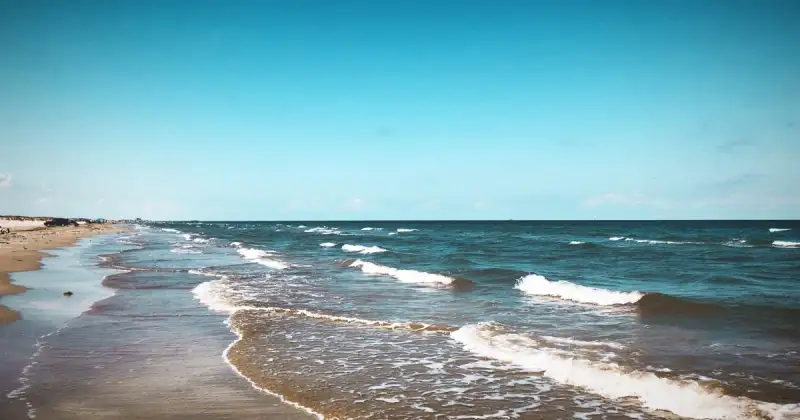
Matagorda Beach is one of the quietest and most rugged drive-on coastal destinations in Texas. Positioned along the middle Gulf Coast at the terminus of Farm to Market Road 2031, this barrier shoreline offers a stark alternative to packed seawalls. Here, the Colorado River flows directly into the Gulf of Mexico, cutting through a coastal peninsula that spans more than 58 total miles.
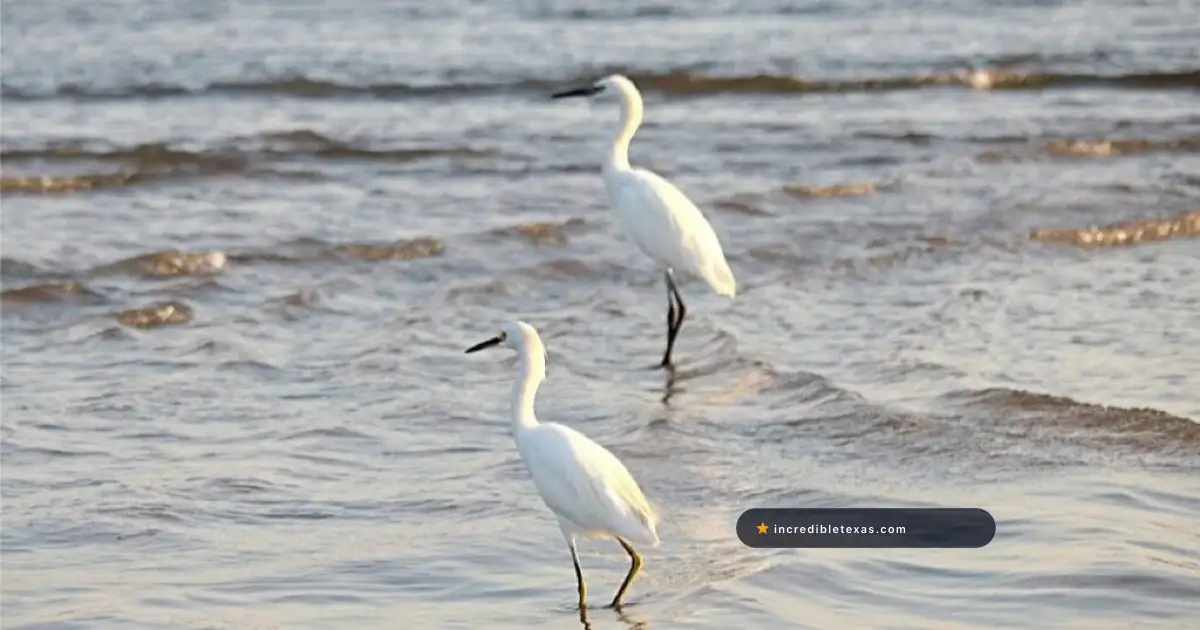
Featured photo: Egrets wading at Matagorda Bay Nature Park, a nearby coastal site covered in this guide. Photo by 2C2K Photography, Matagorda Bay Nature Park, Matagorda, CC BY 2.0; cropped, resized, and branded.
Key takeaways
- Vehicle Permit: An annual $10 Matagorda County vehicle sticker is required on all motor vehicles driven on the beach.
- Free Primitive Camping: Pitching tents or parking campers directly on the sand east of the Colorado River is free with a 72-hour stay limit.
- Drivable Expanse: 23 continuous drivable miles extend northeast to Mitchell’s Cut, while the 35 miles west of the river remain roadless wilderness.
- 4WD Recommendation: Lower tire pressure to 18-20 PSI; four-wheel drive is strongly advised beyond mile 3 due to deep sugar sand and shell berms.
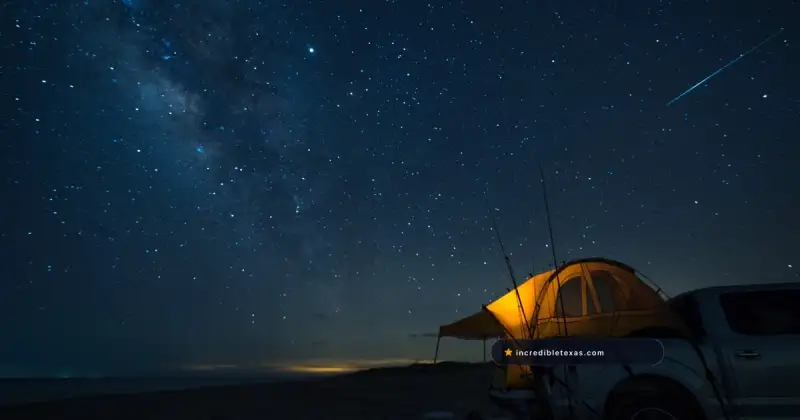
For campers equipped with rooftop tents, overland trucks, or self-contained camper vans, Matagorda represents a rare pocket of true coastal open space. Camping directly on the sand is free with a modest county vehicle permit, allowing travelers to fall asleep to breaking surf and wake up to sweeping sunrises.
Because this coastline remains raw and largely unserviced, successful beach camping requires clear knowledge of county vehicle permits, driving conditions, and tidal fluctuations.
What to Expect Camping on Matagorda Beach
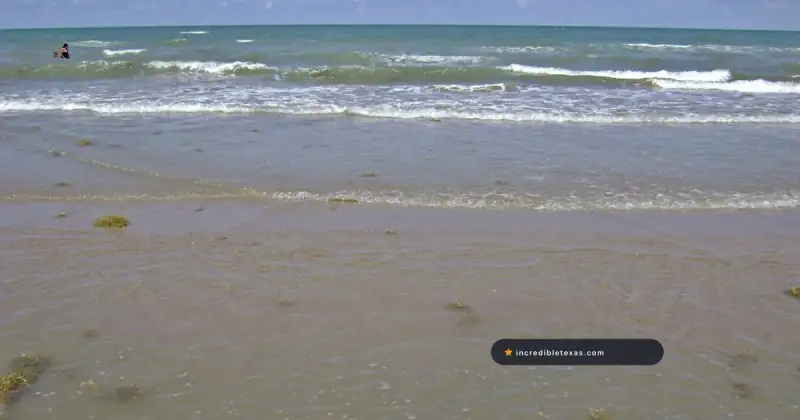
Matagorda Beach delivers an authentic primitive camping environment where travelers must rely entirely on their own self-contained gear. Unlike municipal beaches that groom the shoreline daily, Matagorda preserves an untouched coastal barrier habitat defined by shifting sandbanks, massive driftwood logs, and thriving wildlife populations.
Before packing your truck, it is crucial to understand the distinct geography of this barrier strip, as the Colorado River splits the coastline into two entirely separate management zones.
The Colorado River Divide: East vs. West Peninsula
The mouth of the Colorado River serves as the definitive geographic and legal boundary on Matagorda Peninsula. When driving south on FM 2031, you arrive at the river jetties and the public beach access point.
From this junction, the peninsula divides into two starkly different zones:
- East of the Colorado River (Drivable Shoreline): Approximately 23 continuous miles of open Gulf beach extend eastward from the river mouth to Mitchell’s Cut near Sargent Beach. Motor vehicles, beach driving, and primitive camping are fully permitted along this entire 23-mile section under Matagorda County coastal management rules.
- West of the Colorado River (Roadless Wilderness): The remaining 35 miles of Matagorda Peninsula stretch southwest toward Matagorda Island. This entire western corridor is completely closed to motorized vehicles. It serves as an unroaded coastal wildlife preserve accessible only by shallow-draft bay boats, kayaks, or long-distance hikers.
Because vehicle access is concentrated east of the river cut, all beach driving, camping setups, and vehicle pass rules apply specifically to this 23-mile eastern stretch. Campers seeking similar vast, untamed coastlines will also appreciate the southern expanse explored in our guide to primitive camping on Padre Island National Seashore.
Solitude and Stargazing on the Middle Gulf Coast
One of the greatest rewards of camping on Matagorda Beach is the total absence of artificial light. Because there are no high-rise hotels, shoreline condominiums, or commercial boardwalks lining the sand, nighttime skies achieve exceptional darkness. On clear moonless nights, the Milky Way stretches across the Gulf horizon in brilliant detail.
During the day, campers share the sand with brown pelicans, royal terns, ghost crabs, and feeding schools of red drum cruising the surf troughs. Because traffic drops dramatically past the first few miles, setting up camp 5 to 10 miles down-beach offers uninterrupted coastal silence broken only by rolling waves and coastal breezes.
| Geographic Feature | East Peninsula (Vehicle Zone) | West Peninsula (Wilderness Zone) |
|---|---|---|
| Shoreline Mileage | 23 continuous drivable miles | 35 roadless coastal miles |
| Motor Vehicle Access | Permitted with $10 annual county pass | Strictly prohibited (foot/boat only) |
| Primary Terminal Boundary | Mitchell’s Cut / Sargent Beach | Cavallo Pass / Matagorda Island |
| Camping Availability | Free primitive sand camping (72h limit) | Dispersed wilderness backpack camping |
| Facilities | Trash bins first 3 miles only; no water | Completely undeveloped |
Matagorda County Beach Vehicle Permit: Costs & Purchase Spots
While camping on the sand does not carry nightly campground fees, Matagorda County requires every motor vehicle driven onto the beach to display an official county parking permit. This requirement helps the county fund coastal access maintenance, seasonal trash collection, and sheriff patrols.
Under the Texas General Land Office Open Beaches Act Guidance, the public maintains protected access to the wet-sand state shoreline. However, county governments are authorized to assess reasonable user fees for vehicle parking and management within the dry-sand corridor.
Where to Buy Your Annual $10 Vehicle Pass
The Matagorda County Beach Vehicle Permit is an adhesive window decal that costs $10. The permit remains valid from the date of purchase through December 31 of the calendar year issued, making it an exceptional bargain for seasonal anglers and overland campers.
You can purchase your vehicle permit at several convenient locations on your way down FM 2031:
- Stanley’s General Store: Located in the center of Matagorda town along TX-60, this historic market is the primary stop for camping provisions, ice, bait, and permits.
- LCRA Matagorda Bay Nature Park Store: Situated at the southern end of FM 2031 right before the beach cut, the retail shop carries permits alongside regional trail guides.
- Local Bait Camps: Waterfront outfitters along the Colorado River channel, including Rawlings Bait Camp and Wayne’s Bait Camp, routinely stock permit stickers for incoming surf fishermen.
- Seasonal Beach Entrance Vendors: During peak summer weekends and major holidays, county staff often station a permit kiosk directly at the entry cut to sell stickers on-site.
If you choose to leave your vehicle parked in the paved county lot at Jetty Park and carry your camping equipment onto the beach on foot, no vehicle permit is required. Similar low-cost vehicle fee models operate further north, as detailed in our guide to Crystal Beach and Bolivar Peninsula camping permits.
Display Rules and Fine Enforcement
Once purchased, the decal must be affixed directly to the lower driver-side corner of your vehicle’s front windshield. Placing the sticker on your dashboard, inside your glove compartment, or taped loosely to a side window does not satisfy legal display standards.
Matagorda County Sheriff deputies and county constables regularly patrol the beach on four-wheel-drive trucks and utility task vehicles. Operating an unpermitted motor vehicle on the beach carries a fine between $50 and $200. Because local stores are situated along the direct access corridor, there is no justification for entering the sand without securing your pass first.
Primitive Beach Camping Rules: Stay Limits & Campfires
Camping on Matagorda Beach is a privilege governed by county ordinances designed to preserve natural coastal resources while ensuring safe public access. Because the beach functions as an off-grid environment without lifeguards or developed utilities, campers must observe strict behavioral guidelines.
Observing stay limits and local fire codes protects this delicate barrier environment for future coastal travelers. For a complete list of specialized gear including sand stakes, tide safety tools, and rust defense sprays, review our Texas beach camping gear checklist.
The 72-Hour Consecutive Stay Limit
Matagorda County enforces a mandatory 72-hour limit on primitive beach camping. Under county ordinance, visitors may not pitch tents, park RVs, or maintain a primitive campsite in the same location for more than three consecutive days and nights.
This rule prevents long-term squatting and ensures equal coastal access for all visitors. If you intend to spend an entire week exploring Matagorda, you must break down your camp at the 72-hour mark and relocate your setup to another area, or spend alternate nights at a formal campground facility such as the LCRA Nature Park.
Leave No Trace and Pack-It-Out Ethics
The environmental integrity of Matagorda Beach depends entirely on visitor personal responsibility. For the first 3 miles east of the Colorado River cut, Matagorda County maintains large commercial trash dumpsters situated near major vehicle dune gaps. Beyond mile 3, there are zero sanitation facilities.
Every camper traveling past mile 3 must observe strict Leave No Trace protocols:
- Pack Out All Refuse: Bring heavy-duty construction contractor bags to pack out food packaging, beverage cans, fishing tackle, and personal waste. Never leave trash bags sitting on the open sand, as coyotes and gulls will shred them within minutes.
- Strict Glass Prohibition: Texas state law and county ordinances strictly prohibit glass beverage containers on all public beaches. Broken glass hidden in soft sand poses severe hazards to children, pets, and vehicle tires. Pack canned drinks and plastic containers exclusively.
- Human Waste Management: Because there are no port-a-potties down-beach, campers must pack portable chemical camp toilets, wag bags, or dedicated self-contained RV holding tanks. Never deposit untreated human waste directly into the sand dunes.
Under the Texas Statutes Natural Resources Code Chapter 61, damaging coastal sand dunes or leaving unauthorized solid waste on public beach lands carries criminal misdemeanor penalties.
Beach Campfires and County Burn Bans
Campfires are one of the most enjoyable aspects of beach camping, and Matagorda allows small recreational fires on the open sand. You may gather untreated natural driftwood washed up on the shoreline to build small cooking fires.
To ensure campfire safety:
- Placement: Keep all fires on the hard-packed wet sand below the high-water line. Never light fires near dry dune grasses or sea oats, where embers can spark runaway grass fires.
- No Construction Pallets: Burning wooden shipping pallets is strictly prohibited. Pallets leave behind hundreds of rusted framing nails hidden beneath the sand, which cause punctured truck tires and dangerous foot injuries for barefoot beachgoers.
- Extinguishing Protocol: Douse your campfire thoroughly with buckets of seawater until the ashes are completely cold to the touch. Never simply bury hot coals under sand; dry sand acts as an insulating oven that can retain skin-scalding temperatures for over 12 hours.
- Check County Burn Bans: During severe droughts, Matagorda County Commissioners may enact countywide outdoor burn bans that temporarily prohibit beach fires. Check with local bait camps or the county website before lighting a fire.
Driving Matagorda Beach: Sand Conditions & 4WD Tips
Driving on Matagorda Beach offers a true off-road adventure, but the sand here is noticeably softer and more unpredictable than the packed driving lanes of Galveston or Port Aransas. Knowing how to read tidal flow and manage tire traction is essential for avoiding a costly tow bill.
For broader vehicle regulations and statewide sand driving strategies, review our dedicated Texas beach driving rules and safety guide.
Mile 0 to 3 vs. the Wilderness Run to Mitchell’s Cut
The 23 drivable miles of Matagorda Beach change dramatically as you move further away from the main access cut at FM 2031.
- Miles 0 to 3 (The Front Beach): This entrance zone features the widest beach expanse and the firmest driving shelf. During normal low tides, two-wheel-drive pickup trucks and crossovers can frequently navigate this stretch if drivers stay on the wet, hard-packed tidal line. Trash receptacles are stationed along this corridor, making it the most popular zone for day visitors and casual fishermen.
- Miles 3 to 10 (The Transition Zone): The beach narrows, and the sand transitions from firm pack to loose shell wash. Vehicles encounter deeper ruts formed by lifted trucks. All-wheel-drive vehicles begin to struggle in the soft powder, and high ground clearance becomes mandatory.
- Miles 10 to 23 (The Mitchell’s Cut Run): This is true coastal wilderness. Soft sugar sand, high shell berms, and tidal washouts dominate the terrain. During spring high tides or southeast storm surges, Gulf waves break directly against the base of the dunes, eliminating the driving lane entirely. Traveling this stretch requires a true 4WD vehicle with low range, an experienced sand driver, and full self-recovery equipment.
Tire Pressure Deflation and Recovery Gear
The single most critical preparation for driving Matagorda Beach is airing down your vehicle tires. Standard highway tire pressures (35 to 45 PSI) cause vehicle tires to act like narrow pizza cutters, digging deep trenches into loose sand until the axle rests on the ground.
Dropping tire pressure increases the tire footprint, allowing your truck to float across soft sugar sand:
- Target Air Pressure: Lower tire pressures to 18 to 20 PSI before driving past mile 2. If your vehicle begins to bog down in deep shell powder, you can safely drop down to 15 PSI for emergency traction.
- Air Compressor Requirement: Because the beach is 23 miles long and the nearest highway air station is in Matagorda town, always carry a reliable 12-volt portable air compressor to reinflate your tires before returning to highway speeds.
- Essential Sand Recovery Tools: Pack a pair of high-traction recovery boards (such as MAXTRAX), a heavy-duty D-handle shovel, a kinetic tow strap, and soft shackles. If your vehicle loses forward momentum, immediately lift your foot off the accelerator. Continuing to spin your tires will bury the vehicle to its frame in seconds.
Dune Protection and the 15 MPH Speed Limit
Under Texas law, the public beach is legally classified as a public state roadway. All standard Texas Transportation Code statutes apply directly on the sand.
- 15 MPH Speed Limit: The maximum allowable speed on Matagorda Beach is 15 mph. This low limit protects walking families, surf fishermen, and shorebirds crossing the sand.
- Strict Dune Protection: Operating any vehicle, dirt bike, ATV, or golf cart on top of the coastal sand dunes is a severe violation of state natural resources law. Dunes are the sole natural barrier protecting the Texas coast from hurricane storm surge. Never cross dunes except at marked, designated vehicle access cuts.
- Seatbelts and Open Containers: Texas open container statutes and seatbelt laws apply equally to vehicles driving on the beach. Driving under the influence carries the same criminal penalties on the sand as it does on Interstate 10.
| Sand Zone | Distance from Entrance | Recommended Vehicle | Sand Texture | High Tide Risk |
|---|---|---|---|---|
| Main Entrance Shelf | Mile 0 to 2 | 2WD Pickup / AWD Crossover | Firm packed wet sand | Low |
| Middle Dispersed Zone | Mile 2 to 8 | High-clearance AWD / 4WD | Mixed sand and broken shell | Moderate |
| Deep Wilderness Run | Mile 8 to 23 | True 4WD with Low Range | Deep sugar sand and shell berms | Extreme (surf hits dune base) |
Matagorda Beach vs. LCRA Matagorda Bay Nature Park
Campers visiting the mouth of the Colorado River have two distinct options for their stay: camping on the open sand of Matagorda Beach, or booking a developed site at the Lower Colorado River Authority (LCRA) Matagorda Bay Nature Park.
Understanding the differences between these two options helps you match your camping style to the appropriate venue, especially when comparing them with top coastal beaches in Texas.
Primitive Sand Camping vs. Full-Hookup Amenities
The choice between open beach camping and the LCRA park comes down to rugged independence versus modern comfort.
- Matagorda Beach (County Sand): Ideal for overland travelers, surf anglers, and stargazers who want total autonomy. There are no reservations, check-in gates, or neighbor curfews. The cost is simply the $10 annual vehicle permit. The trade-off is complete exposure to wind, shifting salt spray, and the total lack of running water, electrical hookups, or toilet facilities.
- LCRA Matagorda Bay Nature Park: Spanning 1,600 acres at the southern end of FM 2031, this highly rated park provides 51 full-hookup RV campsites (30/50 amp, water, sewer), two-bedroom waterfront cabins, and screened camping shelters. Campers enjoy air-conditioned bathhouses, private hot showers, laundry facilities, and a modern community center. Nightly RV site rates range from $35 to $55, requiring advance online reservations during peak months.
Many coastal travelers adopt a hybrid approach: spending Friday night at the LCRA park to organize gear and shower, then spending Saturday night off-grid on the deep wilderness sand toward Mitchell’s Cut.
Accessing the Colorado River Jetties and Nature Trails
The LCRA Nature Park serves as the central recreational hub for the entire Matagorda coastal area. Even if you choose to camp primitives on the open sand, visiting the park grounds offers several key recreational benefits:
- Colorado River Jetty Access: A paved pedestrian path leads to the granite boulder jetties at the mouth of the Colorado River. Anglers target bull redfish, black drum, flounder, and speckled trout feeding in the tidal currents. Remember that surf and jetty fishing requires a valid Texas fishing license with a saltwater endorsement under Texas Parks and Wildlife Saltwater Fishing Regulations.
- Paddling Trails and Kayak Rentals: The park maintains designated paddling trails through the calm estuarine waters of Matagorda Bay and protected coastal marshes. Visitors can rent sit-on-top kayaks directly from the park headquarters.
- Wetland Boardwalks and Birding: The park features elevated observation decks and boardwalks through native brackish marshes where birders spot roseate spoonbills, reddish egrets, and migrating peregrine falcons.
| Feature | Open County Matagorda Beach | LCRA Matagorda Bay Nature Park |
|---|---|---|
| Nightly Site Cost | Free ($10 annual vehicle sticker) | $35 to $55 per night |
| Reservation Policy | First-come, first-served (no booking) | Advance reservation recommended |
| Electric & Water Hookups | None (100% off-grid) | Full hookups (30/50 amp + water) |
| Restroom Facilities | None down-beach (pack it out) | Modern air-conditioned flush toilets & hot showers |
| Maximum Stay Duration | 72 consecutive hours | Up to 14 consecutive nights |
| Pet Regulations | Permitted on beach (leashed) | Permitted in RV sites (leashed) |
Frequently Asked Questions About Matagorda Beach Camping
Do you need a permit to drive on Matagorda Beach?
Yes. Any motorized vehicle driving onto the sand at Matagorda Beach or Sargent Beach must display a valid Matagorda County Beach Vehicle Permit sticker. The permit costs $10 annually and remains valid through December 31 of the year issued. You can purchase passes at Stanley’s Market in Matagorda, local bait shops, and the LCRA Nature Park store.
Is camping free on Matagorda Beach?
Yes. Primitive camping directly on the open sand east of the Colorado River is completely free after you purchase your $10 annual vehicle permit. There are no additional per-night camping fees for pitching tents or setting up truck campers on the public beach.
Can you drive past the Colorado River on Matagorda Beach?
No. The mouth of the Colorado River cuts completely through the peninsula. All 23 drivable miles of Matagorda Beach extend northeast from the river mouth toward Mitchell’s Cut and Sargent Beach. The 35 miles of Matagorda Peninsula west of the river are strictly closed to motorized vehicles and accessible only by boat or foot.
Do you need 4WD to drive on Matagorda Beach?
Four-wheel drive is strongly recommended. While standard two-wheel-drive passenger vehicles can often manage the firm sand near the river entrance and the first 2 miles during low tide, the sand quickly degrades into loose sugar sand, shell ridges, and tidal washouts beyond mile 3.
How long can you camp on Matagorda Beach?
Matagorda County regulations limit primitive beach camping to a maximum of 72 consecutive hours. Campers planning longer coastal stays must relocate their setup or book an extended campsite at the nearby LCRA Matagorda Bay Nature Park.
Are campfires allowed on Matagorda Beach?
Yes. Small campfires are permitted on the open beach, provided they are placed well below the high tide mark and kept far away from the vegetation line and coastal dunes. Campers must verify that Matagorda County does not have an active emergency burn ban before lighting any wood fire.
Where do you buy a Matagorda Beach vehicle pass?
You can purchase the $10 sticker in the town of Matagorda at Stanley’s General Store, local bait shops along FM 2031 (such as Rawlings Bait Camp and Wayne’s Bait Camp), and at the LCRA Matagorda Bay Nature Park retail shop located near the beach entrance.
What facilities are available at LCRA Matagorda Bay Nature Park?
The 1,600-acre LCRA park provides modern amenities including full-hookup RV campsites (30/50-amp power, water, sewer), air-conditioned restrooms with hot showers, screened camping shelters, kayak rentals, a gift shop, and pedestrian access to the Colorado River jetty.