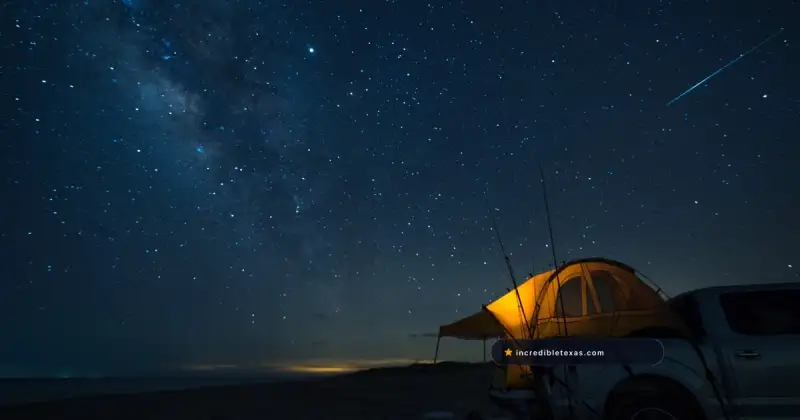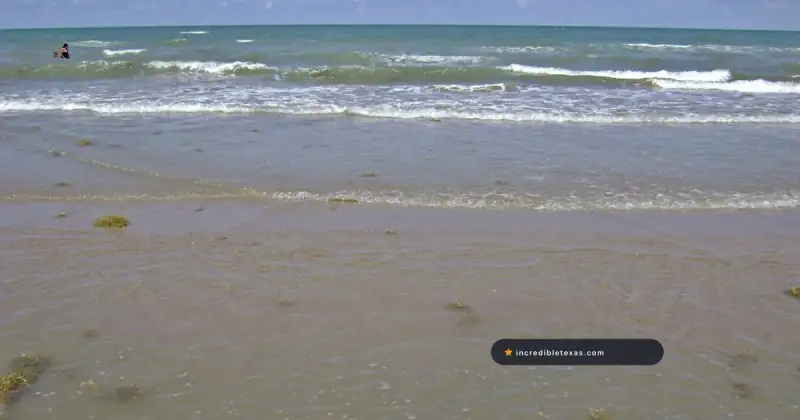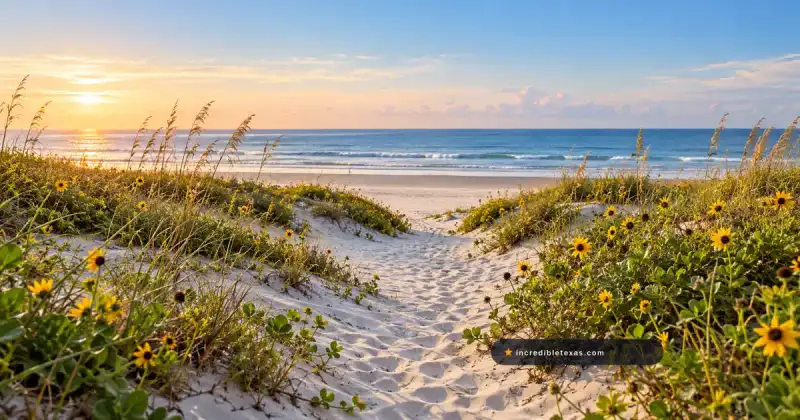
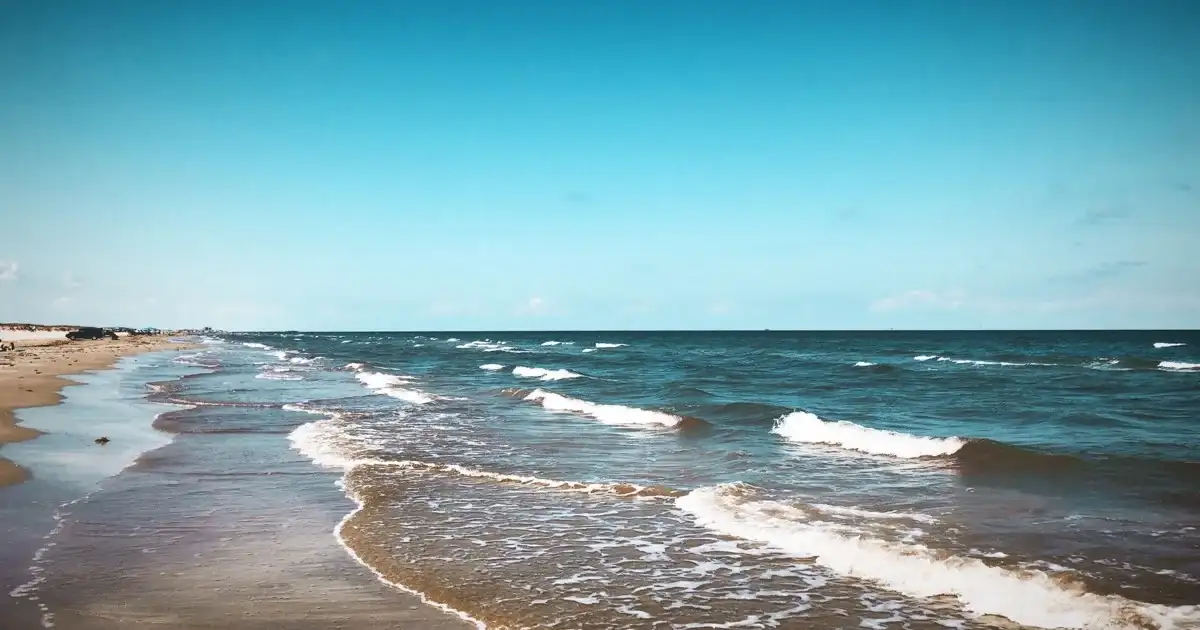
Port Aransas and Mustang Island offer one of the most accessible and versatile beach camping destinations in Texas. Stretching along the barrier coastline northeast of Corpus Christi, Mustang Island combines continuous drivable sand with coastal town conveniences. Here, travelers can spend the morning watching dolphins from their camper door, grab fresh seafood in town by noon, and gather around a beach campfire as waves break against the shore.
Key takeaways
- Parking Permit: A $12 annual beach parking sticker is required for any vehicle parked or camping on city and county beaches.
- Camping Stay Limit: Dispersed primitive camping on the open sand is permitted for up to 3 consecutive nights in any 3-week period.
- Campfire Dimensions: Small wood campfires are legal on the sand but must not exceed 3 feet wide by 3 feet high; burning pallets is illegal.
- Multiple Camping Venues: Choose between dispersed sand camping, full RV hookups at county-run I.B. Magee Beach Park, or drive-on sites at Mustang Island State Park.
Unlike more isolated barrier shores that require rugged four-wheel-drive survival preparation, Port Aransas provides firm sand driving lanes, municipal trash service, and bathhouse facilities. However, camping here is closely managed by municipal and county ordinances. Understanding parking decal requirements, camping duration limits, and campfire regulations ensures your coastal stay remains smooth and citation-free.
What to Expect Camping on Port Aransas & Mustang Island
Mustang Island spans roughly 18 miles from the Aransas Pass tidal inlet at the north down to the Packery Channel boundary of Padre Island to the south. The northern third of the island encompasses the incorporated City of Port Aransas, while the southern stretches transition into unincorporated Nueces County parklands and Mustang Island State Park.
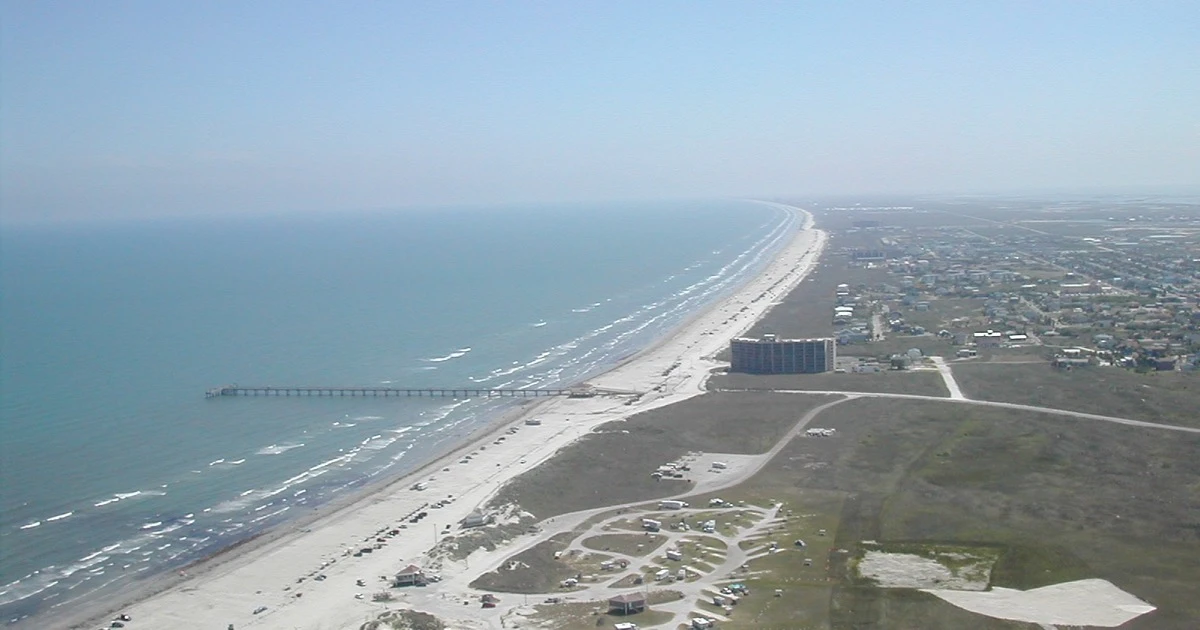
Featured photo: Mustang Island State Park beach by Jonathan Cutrer, CC BY 2.0; cropped and resized.
Before setting out, campers should familiarize themselves with the island layout and driving lanes, as vehicle flow is strictly organized along the tidal shelf.
The 18-Mile Barrier Island Corridor
Mustang Island is accessible from two primary corridors: the free 24-hour TxDOT vehicle ferry linking Aransas Pass to Port Aransas across the Corpus Christi Ship Channel, or State Highway 361 running north from Corpus Christi across the JFK Causeway.
The island coastline is divided into distinct zones:
- Port Aransas City Beach (Northern 6.3 Miles): Extends from the South Jetty south to Access Road 1. This stretch features the highest concentration of vacation amenities, rental golf carts, and walk-up services. Driving and primitive camping are permitted along the sand, with vehicle access provided via numbered ramps (Access Roads 1, 1A, and Beach Street).
- Nueces County Beaches (Middle 6 Miles): Extends south from Access Road 1 toward the state park boundary. This corridor is generally quieter than city beaches, offering broader sand shelves and reduced foot traffic.
- Mustang Island State Park (Southern 5 Miles): Managed by Texas Parks and Wildlife, this state-protected corridor preserves undisturbed coastal dunes, tidal wetlands, and designated drive-on primitive campsites.
Beach Driving Lanes and Tidal Sand Pack
The sand on Mustang Island is noticeably firmer and easier to navigate than the soft sugar sand found on Matagorda or Bolivar. Near the water, daily tidal action packs fine quartz sand into a solid driving surface that accommodates two-wheel-drive sedans, camper vans, and travel trailers during normal low tide.
To maintain traffic safety, the beach features clearly defined zones:
- Two-Way Driving Lane: Marked by standard traffic flow parallel to the Gulf. The speed limit is strictly enforced at 15 mph.
- Pedestrian Safety Corridor: A 50-foot buffer between the waterline and the driving lane reserved exclusively for swimmers, sunbathers, and surf anglers. Vehicles may not park or drive through this wet-sand zone.
- Parking and Camping Shelf: Situated between the two-way driving lane and the wooden protective bollards that border the coastal sand dunes.
For comprehensive safety advice and vehicle preparation, consult our guide to statewide beach driving rules in Texas.
| Island Section | Managing Authority | Drivable Miles | Campfire Permitted | Nightly Camping Cost |
|---|---|---|---|---|
| Port Aransas City Beach | City of Port Aransas | 6.3 miles | Yes (max 3x3x3 ft) | Free with $12 annual vehicle pass |
| I.B. Magee Beach Park | Nueces County Parks | Jetty area | Yes (on open beach) | $12-$23 primitive; $50 full RV hookup |
| Nueces County Beach | Nueces County | ~6 miles | Yes (below high tide) | Free with $12 annual vehicle pass |
| Mustang Island State Park | Texas Parks & Wildlife | 1.5 drivable miles | Yes (beach only) | $13/night + $7/adult day entry |
Port Aransas Beach Parking Permits: Costs & Where to Buy
Under the Texas General Land Office Open Beaches Act Guidance, the public enjoys free pedestrian access to the wet-sand state shoreline. However, Texas law permits coastal municipalities to charge modest vehicle parking fees to fund sanitation, lifeguard services, and beach patrol operations.
Understanding where parking permits are required prevents unexpected municipal parking citations.
The Annual $12 City & County Beach Sticker
Any motor vehicle parked on Port Aransas city beaches or unincorporated Nueces County beach corridors must display an official Beach Parking Permit.
Key permit details:
- Cost: The permit costs $12 per vehicle.
- Validity: Decals are valid for the entire calendar year, expiring on December 31.
- Placement: The adhesive decal must be permanently attached to the lower driver-side corner of the front windshield. Stickers left unattached on dashboards or taped to side windows are invalid.
- Where to Buy: You can purchase permits at the Family Center IGA grocery store on Avenue G, local Stripes convenience stores along Highway 361, beach concession trailers, the Port Aransas Welcome Center, and directly from city beach enforcement officers patrolling the sand.
Purchasing a single $12 pass covers both Port Aransas and Nueces County beaches. If you plan to explore multiple coastal regions, compare these local policies with our Matagorda Beach vehicle pass guide.
Free Parking Zones vs. Permitted Zones
Port Aransas maintains one designated free parking zone where a permit decal is not required:
- Pier to Jetty Free Corridor: The short stretch between the Horace Caldwell Pier and the South Jetty (Mile Markers 0 through 4) is free for day-use parking.
- Camping Restrictions in Free Zone: Overnight camping, pitching tents, and parking RVs overnight is strictly prohibited in this free parking corridor. Vehicles remaining after midnight will be ticketed or towed.
To camp overnight on the beach, you must set up south of Horace Caldwell Pier and display a valid $12 permit decal.
Primitive Beach Camping Rules: Stay Limits & Parking Etiquette
Camping on Port Aransas beaches is heavily regulated to prevent overcrowded vehicle clusters and maintain environmental health. The City of Port Aransas Code of Ordinances outlines specific camping stay limits, vehicle parking orientations, and sanitation mandates.
Complying with these standards guarantees a hassle-free beach camping experience for everyone.
The 3-Night Camping Limit Rule
Port Aransas city ordinance caps primitive beach camping to a maximum duration of 3 consecutive nights within any 3-week period.
This regulation ensures fair public access and prevents long-term encampments on the municipal shoreline:
- The 3-night clock begins the moment your tent is pitched or your camper is parked overnight.
- At the conclusion of your third consecutive night, you must break down camp and vacate the beach.
- You may not return to camp on the beach for another three weeks. Campers seeking longer coastal stays should book sites at I.B. Magee Beach Park or Mustang Island State Park.
This municipal rule is more restrictive than the open guidelines found further north, as detailed in our guide to Crystal Beach Bolivar Peninsula camping permits.
Head-In Perpendicular Parking and Bollard Rules
Parking your vehicle correctly on the sand is both a legal requirement and an essential courtesy to fellow travelers.
City ordinances mandate strict parking orientation:
- Perpendicular Parking Only: All motor vehicles, RVs, and camper trailers must park head-in perpendicular to the water, facing the Gulf or the dunes. Parallel parking along the driving lane is strictly illegal because it obstructs coastal views and takes up excessive beach frontage.
- Behind the Wooden Bollards: The city maintains a row of wooden posts (bollards) along the base of the dunes to protect vegetation. Campers must set up tents and park vehicles between the driving lane and the bollards. Driving behind the bollards or parking inside the dune boundary is illegal under Chapter 61 of the Texas Statutes Natural Resources Code Chapter 61.
- Safe Distance Buffers: Maintain at least 50 feet of clear space between your campsite and the water edge at high tide, and stay at least 300 feet away from public access road ramps.
Glass Bans and Pack-It-Out Cleanliness
Port Aransas enforces a zero-tolerance ban on glass containers on all public beaches. Broken glass concealed in sand causes serious injuries to barefoot children, beach walkers, and pets.
- Strict Glass Ban: All beverages must be in aluminum cans, plastic bottles, or insulated metal growlers. Officers regularly inspect coolers, and glass violations carry fines up to $500.
- Trash Receptacles: The city places large blue trash barrels along the beach every few hundred feet. Dispose of all personal refuse in these barrels, or bag your trash and carry it to commercial dumpsters located at each access road cut.
- Pet Leash Requirements: Pets are welcome on the beach but must remain on a handheld leash at all times. Always clean up after your pet to protect shoreline hygiene.
Campfire Regulations on Port Aransas & Mustang Island
Nothing defines coastal camping like gathering around an open fire as dusk settles over the Gulf. Port Aransas allows recreational campfires on the open beach, but campers must follow specific safety dimensions and fuel restrictions. For broader statewide fire rules, permit directories, and site comparisons across every coastal county, consult our comprehensive Texas beach camping guide.
The 3x3x3-Foot Campfire Rule
To prevent dangerous bonfires during brisk coastal winds, the City of Port Aransas limits fire size:
- Maximum Size: Campfires must not exceed 3 feet wide, 3 feet long, and 3 feet high.
- Pit Containment: Fires should be built inside a shallow sand pit dug into the hardpack shelf, keeping burning logs shielded from shoreline gusts.
- Distance from Dunes: Never build a fire within 50 feet of dry dune grasses or sea oats. Strong southeasterly winds can carry glowing embers into the dunes, igniting rapid coastal brushfires.
Prohibited Materials and Proper Extinguishing
What you burn is just as important as where you burn it:
- No Pallets or Treated Lumber: Burning shipping pallets, fence boards, or construction debris containing framing nails, screws, or staples is strictly illegal. Nails left behind in the sand puncture truck tires and create severe puncture wound hazards. Burn untreated natural firewood or gathered coastal driftwood only.
- Never Just Bury Coals in Sand: Extinguishing a campfire simply by shoveling dry sand over it is dangerous. Insulating dry sand traps intense heat, keeping coals red-hot for up to 24 hours. Unsuspecting children running across the sand the next morning can suffer third-degree burns.
- Proper Dousing Method: Always flood the fire pit thoroughly with multiple buckets of seawater until the coals are completely soaked, sizzling stops, and the ashes are cold to the touch.
Comparing Campgrounds: Dispersed Beach, I.B. Magee & State Park
Travelers visiting Port Aransas have three distinct camping setups to consider, ranging from off-grid dispersed sand camping to fully developed RV parks.
Dispersed City Beach Camping
Dispersed beach camping along Port Aransas City Beach and Nueces County sand is the classic Texas coastal experience.
- Cost: Free overnight camping after purchasing the $12 annual vehicle parking permit.
- Experience: Unmatched freedom. You step directly from your tent onto the open sand and fall asleep to the surf.
- Drawbacks: Zero electrical hookups, freshwater connections, or sewer drains. Portable chemical toilets or self-contained RV tanks are required. High tides can force you to reposition your setup in the middle of the night.
I.B. Magee Beach Park: Full Hookups & Showers
Operated by the Nueces County Coastal Parks Department, I.B. Magee Beach Park sits at the northern tip of Mustang Island right beside the South Jetty and Horace Caldwell Pier.
- RV Campsites: Features 75 paved full-hookup campsites equipped with 50-amp electricity, city water, sewer hookups, and Wi-Fi inside a gated area behind the beach ($50/night or $275/week).
- Primitive Camping: Also provides designated primitive beach camping zones along the jetty flats ($12 to $23/night).
- Modern Amenities: Campers enjoy access to a climate-controlled bathhouse with coin-operated hot showers, freshwater rinse stations, and a modern coin laundry room.
- RV Dump Station: Non-registered campers traveling in self-contained rigs can use the park dump station and freshwater fill tank for a modest $10 service fee.
Mustang Island State Park: Beach vs. Dune Sites
Located roughly 14 miles south of downtown Port Aransas along Highway 361, Texas Parks and Wildlife Mustang Island State Park Overview offers protected coastal recreation.
- Drive-On Primitive Beach Sites: The park features a 1.5-mile designated drive-on beach strip where campers can park directly on the sand ($13/night plus $7/adult daily entrance fee). Sites are non-reservable and available on a first-come, first-served basis. Campfires are permitted below the high tide line.
- Developed Water & Electric Sites: Situated behind the dunes about 400 yards from the Gulf, the park maintains 48 shaded campsites with 50-amp electric hookups, water, picnic tables, and outdoor grills ($25/night plus entry fees). Advance online reservations through TPWD are required. Note that wood ground campfires are prohibited in these back-dune sites.
Campers looking for deeper off-grid wilderness can compare these barrier island parks with the remote coastline covered in our guide to Padre Island National Seashore primitive camping.
| Facility Feature | Dispersed City Beach | I.B. Magee Beach Park | Mustang Island State Park |
|---|---|---|---|
| Nightly Rate | Free with $12 annual sticker | $12-$23 (primitive) / $50 (RV) | $13 (beach) / $25 (electric) + $7 entry |
| Reservations | Not accepted (first-come) | Recommended for RV sites | Required for electric; beach first-come |
| Electric Hookups | None | 50-amp at all 75 RV sites | 50-amp at 48 back-dune sites |
| Restroom / Showers | Port-a-potties at ramps | Hot showers & flush toilets | Modern bathhouse with hot showers |
| Maximum Stay | 3 consecutive nights / 3 wks | Up to 14 consecutive nights | Up to 14 consecutive nights |
| Campfires | Yes (max 3x3x3 ft) | Yes (on beach sand) | Yes (on primitive beach only) |
Frequently Asked Questions About Port Aransas Beach Camping
Do you need a permit to camp on Port Aransas beach?
Yes. While primitive camping on the open sand is free of nightly campsite fees, every motor vehicle parked or camping on the beach must display a valid $12 annual beach parking permit sticker. Stickers are sold at local grocery stores, gas stations, and Port Aransas City Hall.
Can you camp directly on the beach in Port Aransas?
Yes. Tent campers, camper vans, and RVs can camp directly on the sand south of Horace Caldwell Pier down to the city limits, as well as along unincorporated Nueces County beach stretches. Camping is permitted behind the wooden bollards facing the Gulf.
How much is the Port Aransas beach parking permit?
The annual beach parking permit costs $12. It remains valid from the date of purchase through December 31 of that calendar year, providing vehicle access to both Port Aransas city beaches and Nueces County coastal shoreline.
How long are you allowed to camp on Port Aransas beach?
Port Aransas city ordinances limit primitive beach camping to a maximum of 3 consecutive nights within any 3-week period. Campers planning longer stays must relocate to developed RV parks such as I.B. Magee Beach Park or Mustang Island State Park.
Are campfires allowed on Port Aransas beach?
Yes. Recreational beach campfires are permitted on the open sand, provided they do not exceed 3 feet wide, 3 feet long, and 3 feet high. Fires must be placed in a pit or clearing away from dune vegetation, and burning construction pallets with nails is strictly illegal.
What facilities are available at I.B. Magee Beach Park?
Located next to the South Jetty, I.B. Magee Beach Park offers 75 full-hookup RV campsites (50-amp power, water, sewer, Wi-Fi), a climate-controlled bathhouse with coin-operated hot showers, freshwater rinse stations, and a public RV dump station.
Can you camp on the beach at Mustang Island State Park?
Yes. Mustang Island State Park provides a 1.5-mile drive-on primitive beach camping corridor where visitors can camp directly on the sand for $13 per night plus daily park entry ($7 per adult). The park also offers 48 electric/water campsites behind the dunes.
Where can you buy a Port Aransas beach parking permit?
Permits are available across Port Aransas at the Family Center IGA grocery store, local Stripes convenience stores, souvenir shops along Avenue G, the Port Aransas Welcome Center, and from beach enforcement officers patrolling the sand.