Exploring the best places for scuba diving in Texas reveals an unexpected diversity of aquatic terrain across the state. Certified divers can descend into constant-temperature desert springs, train in custom-built freshwater quarries, drift down crystal rivers, and explore world-class Gulf shipwrecks.
For freshwater diving texas operators provide accessible training grounds equipped with submerged planes, sunken boats, and navigation courses. Meanwhile, offshore expeditions take adventurous divers to healthy coral reefs and artificial wrecks teeming with pelagic marine species.
Key takeaways
- Balmorhea State Park in West Texas holds the world’s largest spring-fed swimming pool, circulating 22 to 28 million gallons of 72°F artesian water daily with depths up to 25 feet.
- The Scuba Ranch in Terrell provides the primary freshwater dive facility in North Texas, featuring a 22-acre spring lake, submerged aircraft, and a 50-foot fiberglass shark.
- Flower Garden Banks National Marine Sanctuary sits 70 to 115 miles off the Texas coast, protecting 160 square miles of healthy coral reefs accessible via liveaboard dive charters from Freeport and Galveston.
- Spring Lake at The Meadows Center in San Marcos requires 25 logged dives and completion of the Diving Authorization Course before granting underwater access to protect endangered desert species.
- Mansfield Dam Park on Lake Travis serves as Austin’s primary freshwater training site, offering dedicated gear stairs, multi-tier platforms, and sunken boat hulls.
Freshwater Springs and Inland Scuba Parks in Texas
Inland diving across the Lone Star State relies heavily on constant-temperature springs and private quarry facilities. These sites give divers predictable water conditions without the strong oceanic swells or unpredictable coastal weather found in the open ocean.
Natural texas spring fed dive sites like Balmorhea and the San Marcos River maintain water temperatures between 70°F and 76°F year-round. These thermal conditions prevent the intense cold-water thermoclines that divers encounter in deeper municipal reservoirs.
For specialized quarry diving texas facilities offer purpose-built environments designed for open-water student training. Parks like The Scuba Ranch and Blue Lagoon maintain submerged platforms where instructors evaluate basic mask-clearing, regulator recovery, and buoyancy control.
Travelers exploring Central Texas waterways can compare these spring dive basins with our San Marcos River tubing guide to understand seasonal water flow and visitor logistics.
Best Places for Scuba Diving in Texas at a Glance
Reviewing the best dive sites in texas highlights options for every experience level, from novice open-water students to technical trimix wreck explorers. Divers researching texas scuba sites can compare locations, operating costs, and underwater depth profiles in the table below.
| Dive Site | Location | Water Type & Depth | Entry Fee / Cost | Key Underwater Features | Best For |
|---|---|---|---|---|---|
| The Scuba Ranch | Terrell, TX | Spring Lake (65 ft) | $25–$30 day entry | 50-ft shark “Sisco”, sunken airplanes, boats | Open-water checkouts, DFW day trips |
| San Solomon Springs | Toyahvale, TX | Artesian Spring (25 ft) | $7 park + $5 dive fee | 72°F water, Comanche Springs pupfish | High-visibility desert diving |
| Blue Lagoon | Huntsville, TX | Quarry Lake (30 ft) | $25 diver entry | Sunken wooden boats, turquoise water | Houston-area training checkouts |
| Athens Scuba Park | Athens, TX | Spring Quarry (35 ft) | $25–$30 day entry | 35 sunken wrecks, school bus, planes | Navigation practice, night diving |
| Mansfield Dam Park | Austin, TX | Public Reservoir (80+ ft) | $10–$15 per vehicle | Concrete stairs, platforms, compass course | Central Texas training, deep diving |
| The Meadows Center | San Marcos, TX | Spring Lake (25 ft) | $250 course (DAC) | 200+ artesian springs, rare salamanders | Scientific diver volunteer programs |
| Comal River | New Braunfels, TX | Spring River (8–15 ft) | Free entry (paid parking) | 72°F clear current, treasure hunting | Shallow freshwater drift diving |
| Inks Lake State Park | Burnet, TX | Constant-Level Lake (60 ft) | $7 park day use | Pink gneiss boulders, largemouth bass | Hill Country camping and diving |
| Reveille Peak Ranch | Burnet, TX | Granite Quarry (100 ft) | $15–$20 day pass | 80-foot vertical granite wall | Deep buoyancy drills, technical dives |
| USTS Texas Clipper | South Padre Island, TX | Gulf of Mexico (136 ft) | Charter fee ($180–$250) | 473-foot historic troopship reef | Advanced open-water wreck diving |
| Flower Garden Banks | Gulf of Mexico (Offshore) | Ocean Coral Reef (55–130 ft) | Liveaboard ($650–$950) | 160 sq miles of coral caps, manta rays | Multi-day offshore liveaboard trips |
The 11 Best Texas Scuba Diving Sites
The following 11 destinations represent the top texas scuba diving sites across inland waters and coastal waters. Each site features distinct underwater topography, operational logistics, and safety protocols.
The Scuba Ranch (Terrell, TX)
The Scuba Ranch in Terrell operates as the primary freshwater scuba destination in the Dallas-Fort Worth region. Situated 45 minutes east of downtown Dallas, this private 22-acre spring lake reaches a maximum depth of 65 feet with visibility generally ranging from 10 to 20 feet.
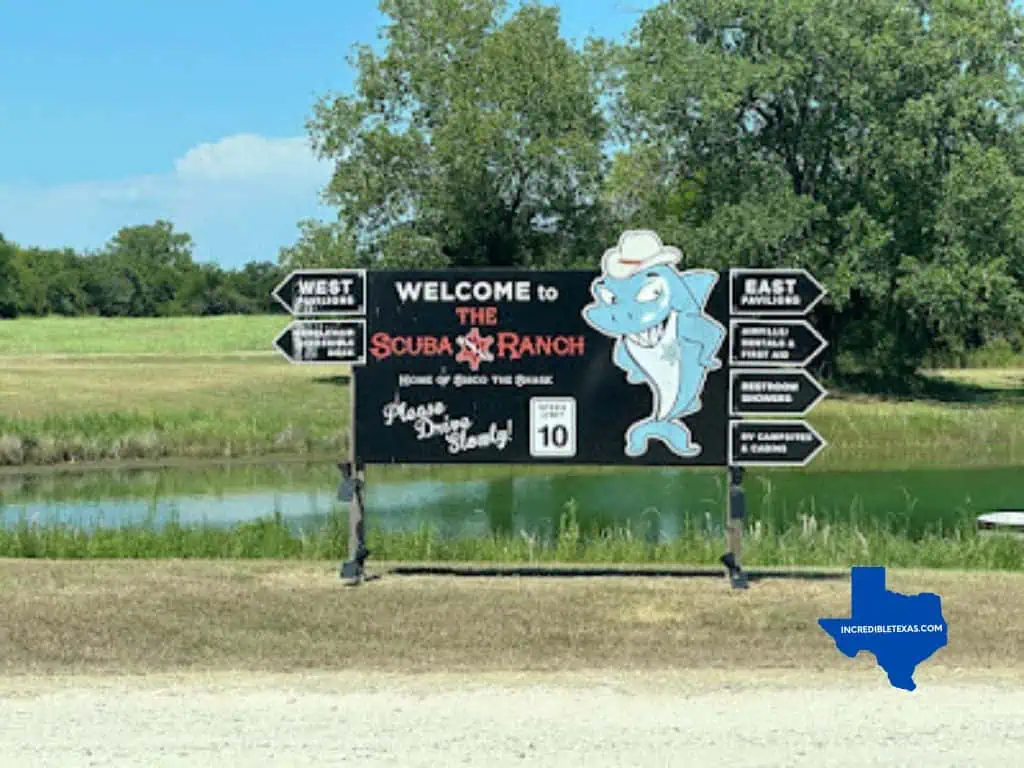
The venue's signature underwater attraction is a 50-foot fiberglass shark named "Sisco," resting along the lake bottom alongside sunken cabin cruisers, a sailboat, and an airplane fuselage. Concrete training platforms suspended at 20-foot depths give instructors stable surfaces for student open-water checkout drills.
Onshore facilities include covered gear pavilions, outdoor showers, fill stations providing $10 air fills, and overnight tent camping. Divers must complete online liability waivers through The Scuba Ranch Terrell Visitor Information Portal prior to arrival.
- Physical Address: 8131 County Road 346, Terrell, TX 75161
- Operating Schedule: Friday 10:00 AM to 8:00 PM; Saturday and Sunday 8:00 AM to 8:00 PM (May to October; reservation only in winter)
- Admission & Fees: $25 to $30 diver daily admission; non-diver spectators $15
- Depth & Visibility: Maximum depth 65 feet; visibility 10 to 25 feet depending on rainfall
- Primary Attractions: 50-foot shark statue, Cessna airplane wreck, training docks
San Solomon Springs at Balmorhea State Park (Toyahvale, TX)
San Solomon Springs at Balmorhea State Park offers one of the most distinctive freshwater scuba experiences in the United States. Located in the desert foothills of West Texas, this historic Civilian Conservation Corps pool covers 1.3 acres and reaches a maximum depth of 25 feet.
The spring system discharges between 22 and 28 million gallons of crystal-clear artesian water each day, maintaining a steady year-round temperature of 72°F to 76°F. Underwater visibility consistently exceeds 50 to 80 feet, providing clear sightlines across the gravel basin and limestone bottom.
Divers share the spring pool with two federally endangered desert fish species, the Comanche Springs pupfish and the Pecos gambusia. Detailed visitor rules and day-pass requirements are outlined in our Balmorhea State Park visitor guide.
Tip
Balmorhea State Park does not operate an on-site compressor or gear shop. Divers must arrive with pre-filled cylinders or arrange equipment rentals across Highway 17 at the Toyahvale Desert Oasis before entering the gates.
- Physical Address: 9207 TX-17, Toyahvale, TX 79786
- Operating Schedule: 8:00 AM to 7:30 PM or sunset daily
- Admission & Fees: $7 adult park day pass plus $5 per-diver scuba permit
- Regulations: Mandatory two-diver buddy system; proof of C-card and signed waiver required through Texas Parks and Wildlife Department Balmorhea State Park Scuba Rules
- Depth & Visibility: Maximum depth 25 feet; visibility 50 to 100 feet
Blue Lagoon (Huntsville, TX)
Blue Lagoon in Huntsville consists of two spring-fed former limestone quarries surrounded by tall East Texas pine forest. Famed for its clear turquoise water and sandy bottom shelves, the private park serves as Southeast Texas's main checkout facility for Houston-area dive shops.
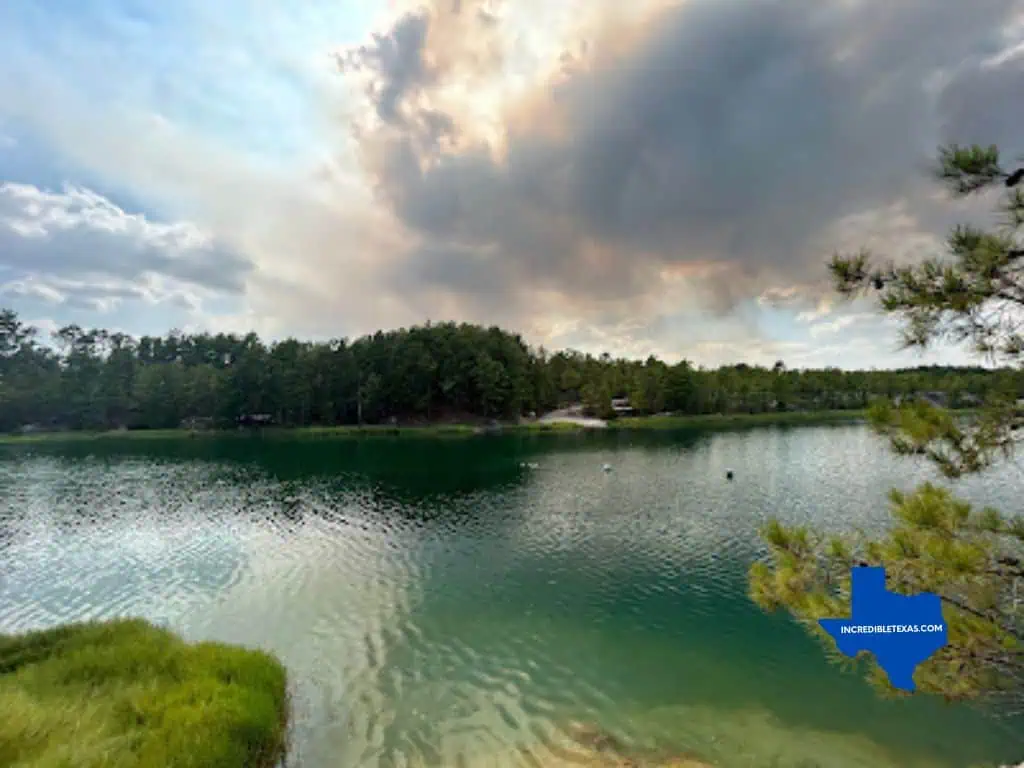
Underwater features include several submerged rowboats, sailboats, and training docks positioned in 15 to 30 feet of water. The high calcium carbonate content of the limestone quarry helps maintain clear water visibility, though heavy weekend training groups can churn bottom sediment by Sunday afternoon.
The facility enforces strict capacity caps and gives certified scuba divers priority access over public swimmers. Non-diver admission is walk-in only, and gates close immediately once parking reaches maximum safe occupancy.
- Physical Address: 649 Pinedale Road, Huntsville, TX 77340
- Operating Schedule: Friday through Monday 8:00 AM to 6:00 PM (closed Tuesday through Thursday; no entry after 4:00 PM)
- Admission & Fees: $25 for certified divers; $30 for non-divers/swimmers (cash recommended)
- Depth & Visibility: Maximum depth 30 feet; visibility 15 to 30 feet
- Critical Policies: No cliff jumping, no pets, and no glass containers anywhere on property
Athens Scuba Park (Athens, TX)
Athens Scuba Park in East Texas offers a dedicated seven-acre spring-fed quarry packed with submerged artificial structures. Established specifically for scuba diver recreation and training, the lake reaches depths of 35 feet and maintains clean spring-water clarity throughout the spring and autumn seasons.
The quarry houses an extensive collection of 35 sunken attractions, including a 30-foot passenger airplane, an inverted school bus, a Hawker jet, ski boats, and motorcycle frames. Marked underwater navigation lines connect each attraction, allowing divers to practice compass heading skills and low-visibility navigation.
Onsite facilities include a fully stocked equipment rental center, continuous air fills, covered staging shelters, and instructional classrooms. Certified instructors frequently conduct night dive workshops here, using submerged light beacons to guide divers around the wrecks.
- Physical Address: 500 N Murchison Street, Athens, TX 75751
- Operating Schedule: Wednesday through Friday 10:00 AM to 5:00 PM; Saturday and Sunday 9:00 AM to 5:00 PM
- Admission & Fees: $25 to $30 daily diver admission fee via Athens Scuba Park Official Portal
- Depth & Visibility: Maximum depth 35 feet; visibility 15 to 35 feet
- Primary Attractions: 35 submerged wrecks, passenger plane, school bus, underwater navigation lines
Mansfield Dam Park and Lake Travis (Austin, TX)
Mansfield Dam Park on the southeastern shore of Lake Travis provides Austin's most dependable public scuba dive park. When exploring lake scuba diving texas enthusiasts often choose this location because of its infrastructure, public boat ramps, and multi-tier training platforms.
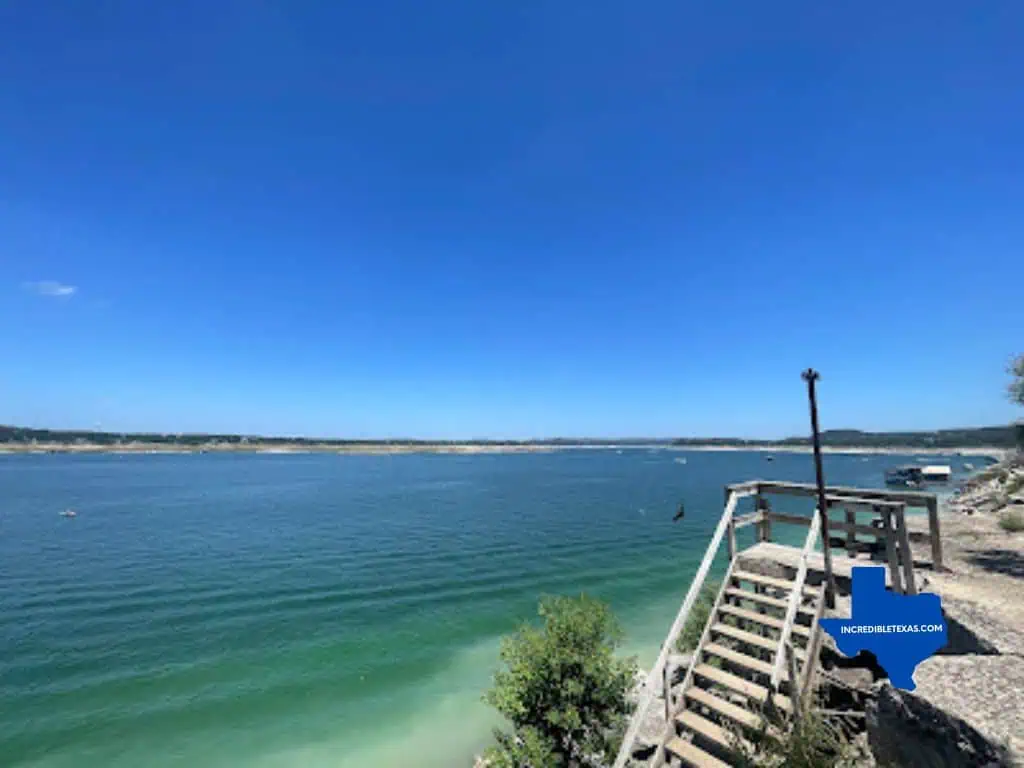
The dedicated scuba park features concrete staircases with handrails leading directly into the lake, eliminating the rocky scramble common to undeveloped shoreline spots. Submerged training platforms rest at depths of 15, 25, 35, and 50 feet, connected by underwater guide ropes to sunken boat hulls and an underwater compass course.
Private facilities at neighboring Windy Point have experienced frequent closures due to fluctuating lake levels. Travis County's public park provides consistent year-round access, though divers must fly an active diver-down flag to warn boaters leaving the adjacent marina channel.
- Physical Address: 4370 Mansfield Dam Park Road, Austin, TX 78732
- Operating Schedule: Sunrise to sunset daily (county gates lock at dusk)
- Admission & Fees: $10 to $15 county vehicle day-use fee via Travis County Parks Mansfield Dam Scuba Dive Park Portal
- Depth & Visibility: Depths from 20 to 80+ feet; visibility 8 to 25 feet depending on lake levels
- Amenities: Concrete diver stairs, gear benches, restrooms, multi-level platforms
The Meadows Center at Spring Lake (San Marcos, TX)
Spring Lake at The Meadows Center for Water and the Environment in San Marcos represents one of the most ecologically sensitive bodies of water in North America. Fed by more than 200 artesian spring openings along the San Marcos Springs fault line, the lake maintains an unvarying temperature of 72°F.
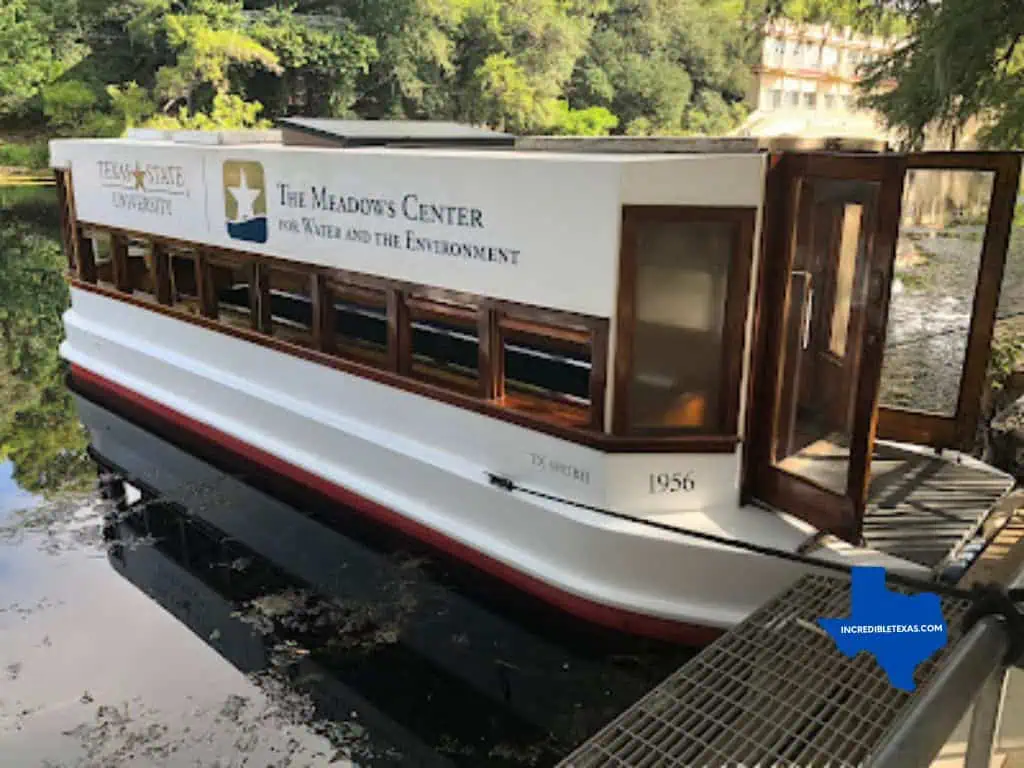
Because the spring basin provides critical habitat for eight federally listed threatened and endangered species, casual open-water recreational diving is strictly prohibited. Divers must complete the specialized Spring Lake Dive Authorization Course (DAC) and hold an Open Water certification with at least 25 logged dives before entering the water.
Graduates of the course join the Meadows Center's AquaCorps volunteer program, assisting researchers with invasive plant removal, underwater archaeological maintenance, and spring flow monitoring. The lake's historical importance as an indigenous gathering place is documented by the Texas State Historical Association San Marcos Springs Record.
- Physical Address: 201 San Marcos Springs Drive, San Marcos, TX 78666
- Access Model: Authorization course required; no recreational walk-in diving permitted
- Certification Requirements: Open Water Diver certification plus 25 logged open-water dives
- Depth & Visibility: Maximum depth 25 feet; visibility regularly exceeds 100 feet
- Key Wildlife: Texas blind salamander, fountain darter, San Marcos salamander
Comal River (New Braunfels, TX)
The Comal River in New Braunfels provides a fun, shallow freshwater drift dive suitable for divers seeking a casual outing. Fed by Comal Springs in Landa Park, this short waterway flows through the city center with an average depth between 8 and 15 feet and a constant temperature of 70°F to 72°F.
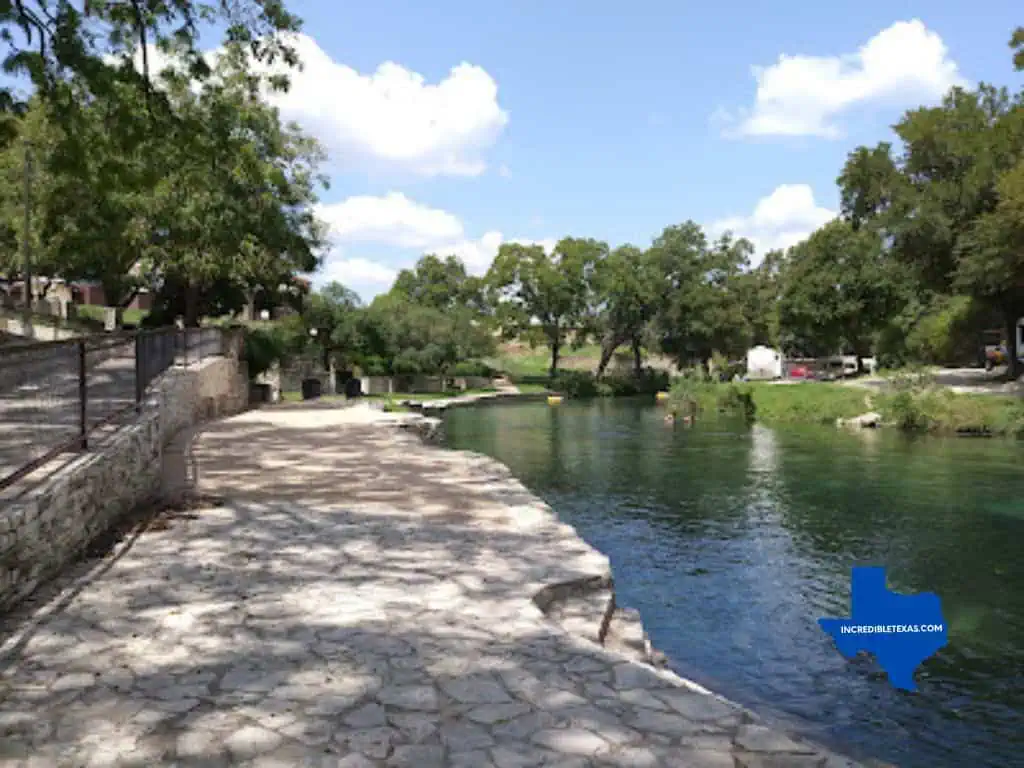
Divers typically enter the river at Hinman Island Park or Prince Solms Park and ride the gentle current downstream toward the tube chute. Because thousands of recreational tubers float this stretch every summer, riverbed divers frequently find lost jewelry, sunglasses, water shoes, and action cameras.
Safety requires staying vigilant for swimmers and tubers overhead, especially near the tube chute exit. Divers must review local municipal rules on the City of New Braunfels River Recreation Portal, including the strict ban on disposable containers.
- Physical Address: Hinman Island Drive, New Braunfels, TX 78130
- Operating Schedule: 6:00 AM to midnight daily
- Admission & Fees: Free river access; municipal parking fees apply during peak summer months ($20 per vehicle)
- Depth & Visibility: Depths from 8 to 15 feet; visibility 15 to 40 feet in spring-fed sections
- Critical Ordinance: Disposable container ban ("can ban") enforced with municipal fines
Inks Lake State Park (Burnet, TX)
Inks Lake State Park in Burnet County offers scenic freshwater diving along a stable-level Highland Lakes reservoir. Managed by the Lower Colorado River Authority and Texas Parks and Wildlife, the lake avoids the drastic water-level drops that frequently impact nearby Lake Travis.
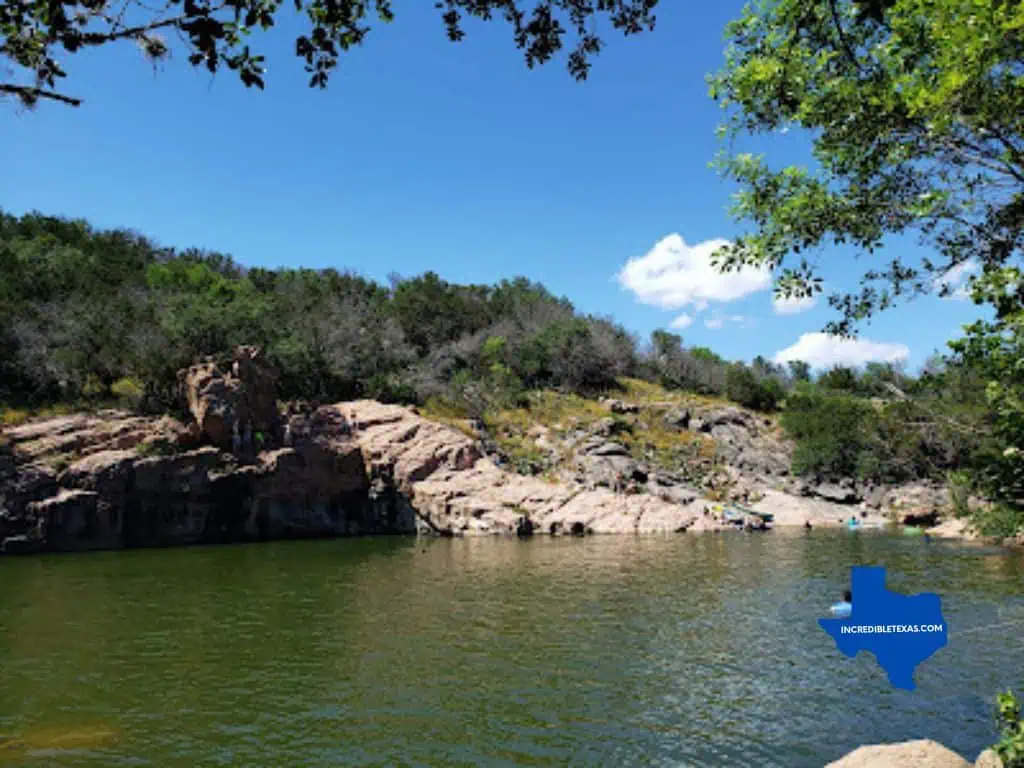
The primary dive zone centers around Devil's Waterhole, where pink Valley Spring gneiss rock ledges plunge 20 to 30 feet into clear, sheltered water. Further out toward Inks Dam, reservoir depths reach 60 feet over sunken riverbeds and submerged granite boulder fields.
Divers regularly spot largemouth bass, channel catfish, and sunfish sheltering under the submerged rock shelves. Reservations for day passes and waterfront campsites should be secured in advance through the Texas Parks and Wildlife Inks Lake Reservation Portal.
- Physical Address: 3630 Park Road 4 West, Burnet, TX 78611
- Operating Schedule: 8:00 AM to 10:00 PM daily
- Admission & Fees: $7 adult daily park pass (children 12 and under enter free)
- Depth & Visibility: Depths from 20 to 60 feet; visibility 10 to 20 feet
- Safety Notice: A diver-down flag is required when diving outside designated shoreline swim buoys
Reveille Peak Ranch (Burnet, TX)
Reveille Peak Ranch, located just northwest of Burnet, contains an open-pit granite quarry lake utilized for deep buoyancy training and technical certification courses. The lake's defining geological feature is a sheer 80-foot vertical granite wall that drops straight down into deep water.
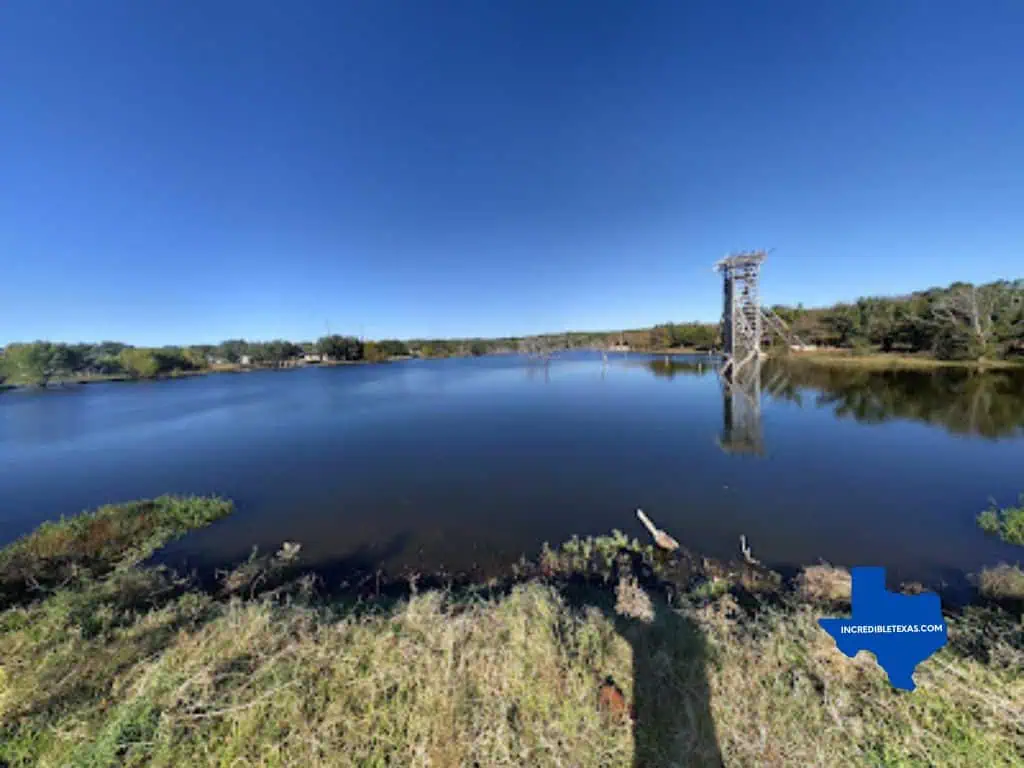
Because the quarry is fed by natural runoff and groundwater seepage through solid granite, water clarity remains stable and sediment kick-up is minimal compared to mud-bottom lakes. The sudden depth and sheer granite walls create a challenging environment where divers can practice trimix descent and safety stops.
Due to the vertical drop and cold thermoclines below 40 feet, novice divers should only explore this site under the direct supervision of an instructor. Visitors can verify current diver access and open-water event dates via the Reveille Peak Ranch Water Sports Portal.
- Physical Address: 105 County Road 114, Burnet, TX 78611
- Operating Schedule: Friday through Sunday 8:00 AM to 5:00 PM (or by scheduled dive shop appointment)
- Admission & Fees: $15 to $20 ranch day pass; group dive training rates apply
- Depth & Visibility: Maximum depth 80 to 100 feet; visibility 15 to 30 feet
- Best For: Deep diver certification, buoyancy practice, technical search and recovery
USTS Texas Clipper Artificial Reef (South Padre Island, TX)
The USTS Texas Clipper represents the crown jewel of offshore wreck diving along the South Texas coast. Intentionally sunk in November 2007, the 473-foot former merchant transport and Texas A&M maritime training ship rests approximately 17 nautical miles off South Padre Island.
Through the TPWD program, texas artificial reef diving converts retired commercial vessels into thriving marine habitats. The ship lies on its port side in 136 feet of water, with its prominent superstructure rising up to 70 feet beneath the surface.
Large pelagic species congregate around the massive hull, including kingfish, cobia, snapper, and loggerhead sea turtles. Detailed coordinate charts and environmental monitoring records are published on the Texas Parks and Wildlife Department Artificial Reef Program.
- GPS Coordinates: 26° 14.39' N, 96° 59.81' W (17 nautical miles offshore)
- Access Method: Charter dive boats departing from South Padre Island marinas
- Depth Profile: Top of wreck at 70 feet; sea floor rests at 136 feet
- Experience Level: Advanced Open Water Diver certification strictly required
- Charter Costs: Full-day two-tank charters typically range between $180 and $250 per diver
Flower Garden Banks National Marine Sanctuary (Gulf of Mexico)
Flower Garden Banks National Marine Sanctuary protects North America's northernmost coral reefs, located 70 to 115 miles off the coast of Galveston and Freeport. Formed atop ancient underwater salt domes, the sanctuary encompasses 160 square miles across 17 distinct banks.
The sanctuary's reef crests, including East Flower Garden Bank and West Flower Garden Bank, rise from depths of 400 feet to within 55 to 65 feet of the ocean surface. Massive brain corals, star corals, and mountainous star corals cover up to 50% of the reef surface, far exceeding average coral cover found in Florida or the Caribbean.
Divers regularly witness manta rays gliding through open water, along with schooling hammerhead sharks during early spring migrations and whale sharks in late summer. Liveaboard schedules and marine conservation regulations are detailed in the NOAA Flower Garden Banks National Marine Sanctuary Visitor Guide.
- Offshore Location: 70 to 115 miles southeast of Galveston and Freeport
- Access Method: Multi-day liveaboard dive vessels (two- to three-day itineraries)
- Depth Profile: Reef caps sit at 55 to 80 feet; outer drop-offs exceed 130 feet
- Visibility: Open-ocean tropical clarity consistently ranging from 75 to 100+ feet
- Recommended Certification: Advanced Open Water Diver with Nitrox certification
Gulf of Mexico Offshore Wreck and Coral Reef Diving
What makes offshore diving in the Gulf of Mexico unique is the convergence of warm tropical currents, deep underwater structure, and high-density marine life. For deep wreck diving texas gulf coast charters journey to sunken ships, decommissioned oil platforms, and protected coral banks located well past the continental shelf boundary.
Unlike sheltered inland quarries, offshore Gulf diving demands conservative dive planning and strong situational awareness. Surface currents can shift rapidly, and open-ocean visibility frequently transitions from murky green near the coastal passes to deep cobalt blue 30 miles offshore.
Travelers planning a coastal dive trip can explore our guide to things to do in South Padre Island to coordinate offshore charter dates with family beach outings.
Scuba Diving Trips in DFW and North Texas Logistics
North Texas divers do not need to drive eight hours to the coast to log quality underwater bottom time. When planning scuba diving trips in dfw residents can easily reach two major inland dive parks in Terrell and Athens within a 45- to 90-minute drive.
For divers planning scuba diving trips dfw operators regularly schedule weekend open-water student checkouts at The Scuba Ranch throughout spring and summer. Both facilities offer rental tanks, air fills, and gear staging shelters so divers can focus on skill practice.
Divers traveling from out of town can pair their lake checkouts with nearby outdoor stays featured in our guide to the best camping locations in Dallas.
Texas Scuba Regulations, Certification Rules, and Equipment Gear Guides
Scuba diving in Texas state waters and private facilities is governed by clear safety standards and environmental regulations. All certified divers must present physical or digital certification cards from accredited agencies like PADI, NAUI, or SSI upon check-in.
Texas state law requires that all vessels maintain a minimum 150-foot clearance from an active diver-down flag. Divers must display an internationally recognized red-and-white dive flag or alpha flag on all navigable reservoirs and rivers whenever operating outside designated swim zones.
Thermal protection choices depend directly on the venue and season. A 3mm wetsuit provides adequate warmth for summer spring dives at Balmorhea and the Comal River, while 5mm or 7mm suits are recommended for deeper reservoir dives with cold thermoclines.
Visitors planning camping and water recreation trips across Central Texas can reference our Inks Lake State Park camping and hiking guide for park entry passes, boat launch rules, and cabin reservations.
Frequently Asked Questions About Scuba Diving in Texas
Does Texas have good scuba diving?
Yes, Texas offers remarkable scuba diving across spring-fed desert pools, inland quarry training parks, deep Highland Lakes reservoirs, and offshore Gulf coral reefs. Highlights range from swimming alongside endangered desert pupfish in Balmorhea to descending onto the 473-foot Texas Clipper artificial reef.
Diving opportunities span both freshwater and saltwater environments across all four seasons. Inland springs maintain steady temperatures year-round, while offshore Gulf waters provide expansive coral reefs and marine life.
Where is the clearest water for scuba diving in Texas?
The clearest inland water is found at San Solomon Springs in Balmorhea State Park and Spring Lake in San Marcos, both offering visibility exceeding 50 to 100 feet in constant 72°F artesian water. For ocean diving, the Flower Garden Banks National Marine Sanctuary offshore from Freeport delivers tropical visibility regularly reaching 75 to 100 feet.
Inland limestone quarries like Blue Lagoon also offer striking turquoise water and solid visibility during calm weekdays. Heavy rainfall and boat traffic can reduce clarity temporarily in larger public reservoirs.
Can you scuba dive in Texas lakes?
Yes, certified divers regularly explore Texas freshwater reservoirs and quarry lakes including Lake Travis, Lake Amistad, Inks Lake, and Athens Scuba Park. Inland lakes commonly feature submerged boats, purpose-sunk aircraft, training platforms, and freshwater game fish like largemouth bass and catfish.
Many lake parks maintain dedicated scuba facilities with underwater compass courses and diver entry stairs. Always fly a diver-down flag on navigable lakes to maintain safe distance from boat traffic.
How much does it cost to scuba dive in Texas?
Day-use diver entry fees at inland scuba parks such as The Scuba Ranch and Blue Lagoon range between $25 and $30 per person, while state parks like Balmorhea charge a $7 park entry plus a $5 diver permit fee. Multi-day offshore liveaboard charters to the Flower Garden Banks typically cost between $650 and $950 per diver including meals and multiple offshore dives.
Equipment rentals like tanks, regulators, and wetsuits cost an additional $40 to $75 per day depending on the outfitter. Tank air fills at local dive facilities usually cost around $10 per cylinder.
What certification do you need to dive in Texas?
An Open Water Diver certification card from an accredited agency such as PADI, NAUI, or SSI is required at all established Texas scuba parks and state park springs. Advanced Open Water certification and deep-diver training are strongly advised for offshore wrecks like the Texas Clipper and the open Gulf waters of Stetson Bank.
Specialized sites like Spring Lake in San Marcos also require a dedicated authorization course before allowing underwater access. Always carry proof of certification and a current dive log when visiting Texas facilities.