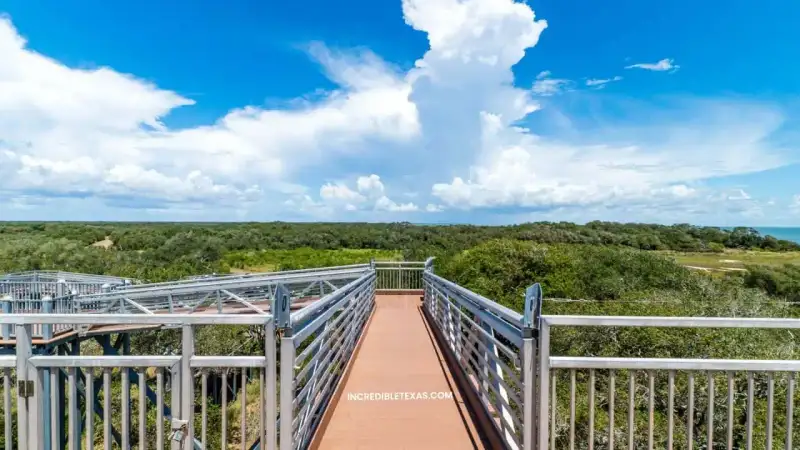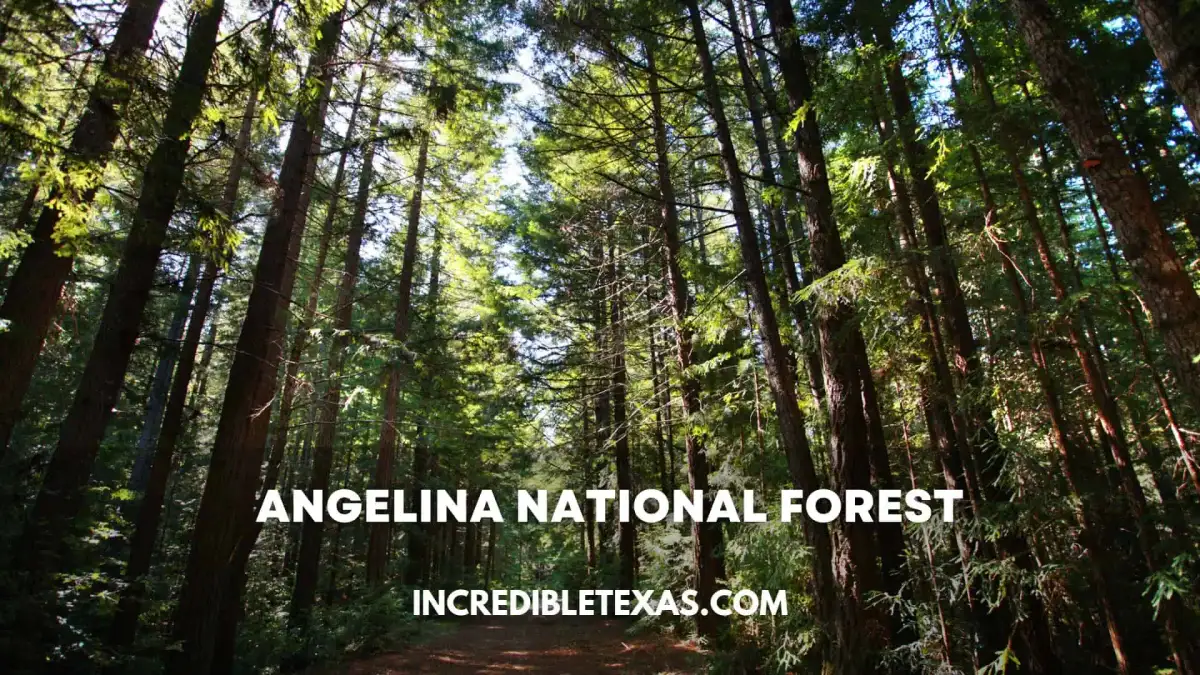
Navigating with an accurate Angelina National Forest map ensures visitors locate designated campgrounds, clear river launches, and historic trailheads without taking wrong turns on remote logging roads. Spanning 153,179 acres across four counties, this public woodland stands as one of the best places to visit in Texas for wilderness solitude and waterfront recreation.
Located in the heart of the East Texas piney woods, the forest encompasses dense longleaf pine savannas, hardwood bottomlands along the Angelina River, and extensive shoreline bordering Sam Rayburn Reservoir. Whether planning a day hike to historic sawmill ruins or settling into a quiet tent site beneath towering trees, having verified logistical facts makes all the difference.
Key takeaways
- Angelina National Forest protects 153,179 acres of longleaf pine savannas and bottomland hardwood forests across Angelina, Nacogdoches, San Augustine, and Jasper counties.
- Boykin Springs Recreation Area charges a $5 per vehicle day-use fee and $10 per night for 17 first-come, first-served campsites equipped with flush toilets and warm showers.
- Official Motor Vehicle Use Maps and recreation trail guides are available for free download from federal forestry resources and at the district office in Zavalla.
- The 5.5-mile Sawmill Hiking Trail connects Boykin Springs to Bouton Lake, leading hikers directly past the historic concrete Aldridge Sawmill ruins.
- Sam Rayburn Reservoir borders the forest with 114,500 surface acres of world-class largemouth bass fishing and multiple public boat ramps.
Angelina National Forest: Quick Facts & Essential Info
An official Angelina National Forest map provides essential boundaries, recreation corridors, and open road networks across federal timberlands. The U.S. Forest Service manages this public tract alongside state wildlife partners to maintain multi-use public access.
Reviewing a digital map of Angelina National Forest before departure prevents navigation mistakes on unpaved timber corridors. For updated lake levels and surface conditions, travelers can check the Texas Water Development Board Sam Rayburn Reservoir Monitoring database before towing watercraft.
The comparison table below details operating schedules, admission fees, and core highlights for the primary recreation and camping areas in the forest.
| Recreation Site / Area | Setting & Water Access | Campsites & Hookups | Day-Use / Camping Fee | Key Amenities & Highlights |
|---|---|---|---|---|
| Boykin Springs Recreation Area | 9-acre spring lake & creek | 17 tent/camper sites (no hookups) | $5 day use / $10 camping | Flush toilets, hot showers, CCC pavilion, Sawmill Trail |
| Caney Creek Recreation Area | Sam Rayburn Reservoir shoreline | Primitive sites | Free day use / basic camp fee | Concrete boat ramp, vault toilets, fishing access |
| Harvey Creek Recreation Area | Angelina River arm of reservoir | Boat ramp access | Free public access | Two-lane concrete boat launch, bank fishing |
| Townsend Recreation Area | Attoyac River arm of reservoir | Primitive tent camping | Free public access | Four-lane boat launch, shoreline fishing access |
| Bouton Lake Campground | 9-acre natural oxbow lake | 7 primitive sites with tables | Free primitive camping | Hand boat launch, vault toilet, Sawmill Trail terminus |
| Bannister Wildlife Management Area | Rolling pine timberlands | Dispersed primitive camping | Free entry / hunting license required | 50 miles of multi-use OHV, horse, and hiking trails |
| Upland Island Wilderness | Protected roadless wilderness | Dispersed primitive camping | Free entry | Pitcher plant bogs, rugged foot travel, no motorized access |
| Turkey Hill Wilderness | 5,473 acres of dense forest | Dispersed primitive camping | Free entry | 9.6-mile primitive trail, complete backcountry isolation |
The Historical Legacy of the East Texas Piney Woods
The history of Angelina National Forest is deeply intertwined with early conservation efforts and other cultural things to do in Angelina County. Before federal protection, intensive commercial timber operations logged the region heavily, leaving vast tracts barren by the late 1920s.
According to historical records from the Texas State Historical Association Angelina National Forest Entry, the federal government officially designated the forest in 1936 to rehabilitate depleted soil and establish renewable timber resources.
During the Great Depression, the Civilian Conservation Corps (CCC) mobilized hundreds of young workers to plant millions of pine seedlings and build essential recreation structures. Craftsmen constructed the hand-cut stone dams and historic pavilions at Boykin Springs that campers still admire.
The forest takes its name from Angelina, a Hasinai Caddo Native American woman who assisted Spanish expeditions in the 1690s as a translator and guide. Her diplomatic role bridged distinct cultural worlds across early Texas frontiers.
Exploring Sam Rayburn Reservoir: The Heart of the Forest
The massive reservoir serves as the aquatic centerpiece of the forest, extending across 114,500 surface acres with roughly 560 miles of shoreline. Impounded on the Angelina River, it stands as the largest man-made body of water situated completely within Texas boundaries.
Federal civil works projects began construction on the dam in 1956 to provide dependable flood control and hydroelectric generation. Full conservation pool elevation of 164.4 feet above mean sea level was achieved in 1965, creating vast open water flats.
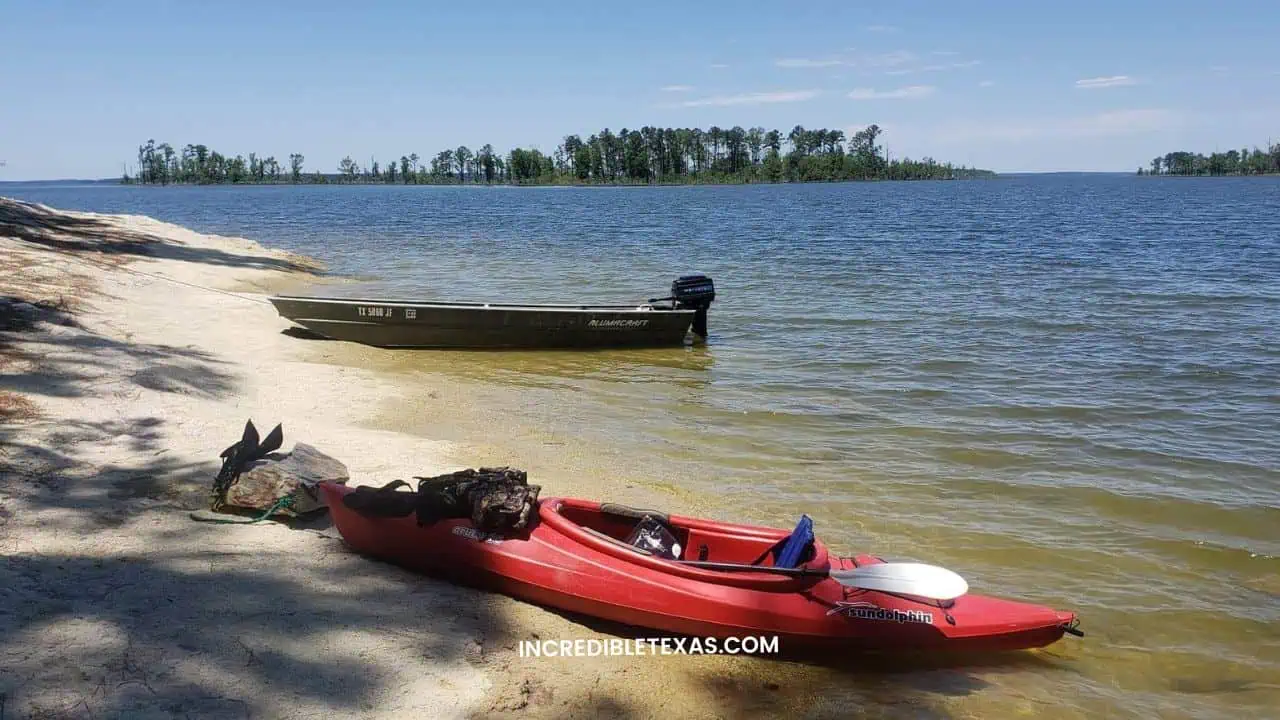
Boaters navigating the lake enjoy expansive open water alongside timber-filled bays that shelter game fish and waterfowl. Anglers planning an excursion can consult our dedicated Sam Rayburn Reservoir fishing and boating guide for seasonal techniques and launch locations.
The Ecological Heart of East Texas: The Piney Woods
Angelina National Forest anchors the botanical diversity of the East Texas Piney Woods region. The forest canopy features a rich mixture of loblolly, shortleaf, and slash pine, alongside ecologically significant tracts of native longleaf pine.
Longleaf pine savannas historically dominated the southeastern coastal plain, depending on periodic ground fires to suppress competing woody brush. The Texas A&M Forest Service Prescribed Burning and Forest Management Directory highlights that controlled burning on two to three-year cycles stimulates native wildflowers and grasses.
These regular, low-intensity burns mimic natural lightning cycles, clearing the forest understory so sun-loving herbaceous plants can flourish. Visitors walking through recently burned compartments will notice park-like ground visibility and blackened bark that shields living trees from intense wildfires.
Watching for the Endangered Red-Cockaded Woodpecker (RCW)
Angelina National Forest serves as an essential regional stronghold for the rare red-cockaded woodpecker. Unlike other woodpeckers that nest in dead timber, this species excavates its cavities exclusively inside living, mature pine trees infected with red heart fungus.
As recorded in late 2024, the U.S. Fish and Wildlife Service Red-Cockaded Woodpecker Species Profile documented the downlisting of the bird from endangered to threatened status following decades of successful nesting box installations and habitat recovery.
For travelers interested in red-cockaded woodpecker viewing Texas provides few locations more reliable than the managed longleaf pine stands of Longleaf Ridge. Birdwatchers easily spot active cavity trees, known as candle trees, by the distinctive white resin flowing down the trunks to deter tree-climbing snakes.
Forest service biologists install artificial cavity inserts and trim encroaching mid-story hardwood brush to protect nesting clusters. Visitors observing these protected birds should keep their distance with binoculars to prevent unnecessary disruption during springtime nesting periods.
Wildlife Diversity Across East Texas Forest Habitats
Beyond specialized woodpeckers, the forest provides rich habitat for diverse terrestrial and avian wildlife. Winter visitors frequently spot bald eagles roosting in towering shoreline pines, scanning lake bays for surface-feeding fish.
White-tailed deer, gray foxes, and bobcats frequent the dense upland brush, while wild turkeys forage in recently burned savannas. Organizations like the National Wild Turkey Federation collaborate with state managers to release supplemental flocks into healthy East Texas timber tracts.
Hardwood bottomlands bordering the Angelina River shelter various amphibians, aquatic turtles, and American alligators. Spring rainstorms transform the forest floor into a colorful carpet of coreopsis, black-eyed Susans, and native milkweeds that sustain migrating monarchs.
Camping in Angelina National Forest: A 2026 Guide
When evaluating options for Angelina National Forest camping, visitors can choose between developed lakeside campgrounds and rugged backcountry sites. Most developed camping areas sit along the banks of Sam Rayburn Reservoir or natural spring runs.
Campers traveling with families appreciate developed bathhouses, while backpackers seeking solitude prefer primitive dispersed camping. Standard developed campsites operate on a first-come, first-served basis, meaning early Friday arrival is advisable for weekend getaways.
Those planning a trip for family camping in East Texas will find well-spaced sites surrounded by tall pines. Clean picnic tables, sturdy lantern posts, and cast-iron campfire rings furnish every designated site in the forest.
Boykin Springs Recreation Area: The Forest’s Crown Jewel
Boykin Springs Recreation Area stands out as the most popular campground and day-use retreat in the entire national forest. The facility centers around a nine-acre, spring-fed lake ringed by rolling timbered hills and historical CCC stone masonry.
Campers planning for Boykin Springs camping find 17 shaded tent and camper sites with central comfort stations offering flush toilets and warm showers. The official Boykin Springs day-use fee is $5 per passenger vehicle, while overnight camping costs $10 per night paid at on-site self-service pay stations.
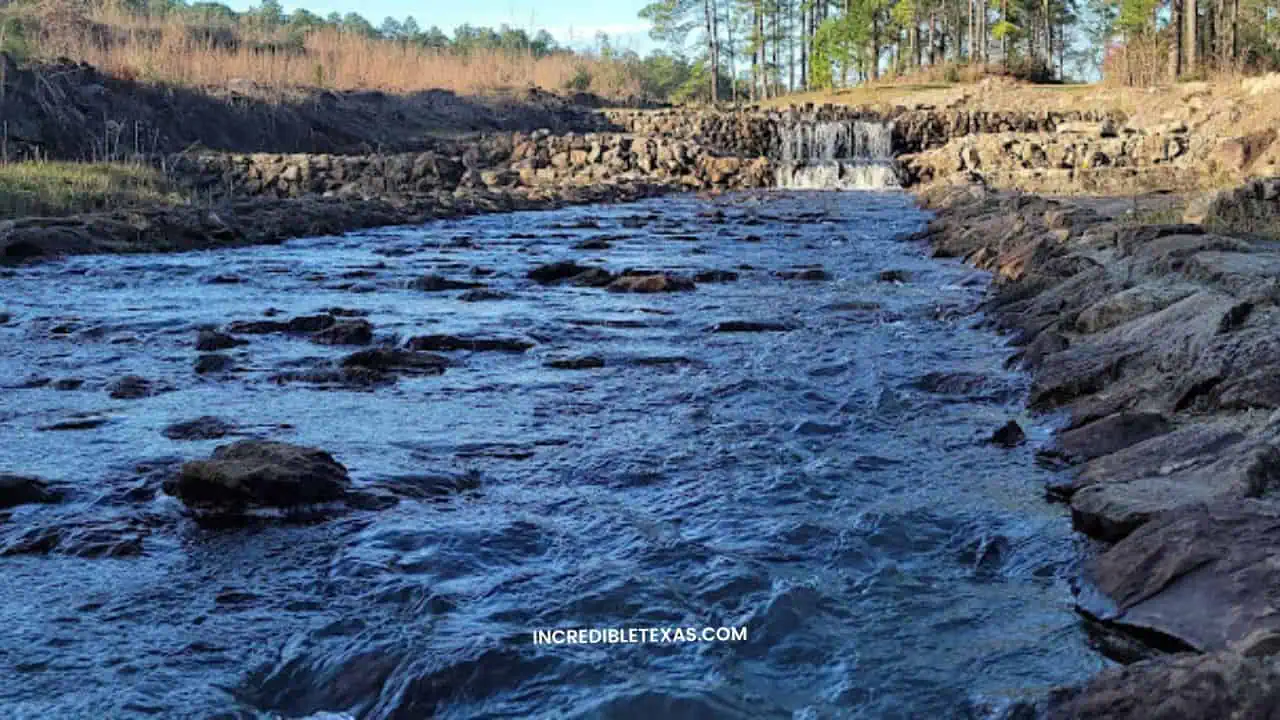
While individual campsites remain unreserved, the historic stone pavilion can be booked ahead through Recreation.gov for group gatherings. Arriving early on Friday afternoons ensures campers secure choice spots before the weekend rush.
Tip
Arrive before 1:00 PM on Friday during spring and fall weekends to claim a shaded campsite at Boykin Springs; the 17 available sites routinely reach capacity before sunset.
Sam Rayburn Waterfront Camping
Waterfront campsites at Caney Creek and Townsend Recreation Area cater directly to boaters and lake anglers. Caney Creek provides primitive campsites overlooking the open water of the reservoir, alongside a wide concrete boat ramp and vault restrooms.
Harvey Creek offers a quiet, shaded setting on the eastern shore of the reservoir’s Angelina River arm. While amenities here are limited to basic vault toilets and boat launches, the lack of heavy highway traffic ensures peaceful waterfront nights.
Townsend Recreation Area features multiple launch lanes on the Attoyac River arm, offering convenient shoreline fishing and informal camper parking. Visitors should confirm current water levels before launching large boats, as seasonal lake variations can alter ramp conditions.
Cabin Rentals and Primitive Alternatives
While traditional tent camping dominates the area, Angelina National Forest cabins provide rustic indoor options alongside lakeside rental cabins located near the park boundaries. Private resorts along the reservoir shoreline provide modern cabins featuring full kitchens and air conditioning.
Dispersed camping is permitted throughout the general forest, offering backpackers total freedom away from designated campgrounds. Under USFS dispersed camping rules, campers must pitch tents at least 300 feet away from developed recreation facilities, paved roads, and boat ramps.
Backpackers utilizing primitive camping sites must pack out all trash, extinguish campfires completely with water, and bury human waste in six-inch cat-holes. These Leave No Trace practices ensure natural woodland conditions endure for future outdoor travelers.
Hiking and Multi-Use Trails in Angelina National Forest
The Angelina National Forest hiking trails network winds through fragrant pine savannas, mossy cypress creek bottoms, and rolling hardwood ridges. Trails range from short interpretive loops suitable for children to long-distance wilderness treks.
Hikers should prepare for humid subtropical weather, sturdy footwear, and occasional standing water near creek crossings. Spring and autumn bring comfortable hiking temperatures and flourishing understory blooms across the trail network.
Feature: The Sawmill Hiking Trail and Aldridge Sawmill Ruins
The Sawmill Hiking Trail is the signature foot trail in the forest, covering 5.5 miles one way between Boykin Springs and Bouton Lake. The path traces the winding banks of Boykin Creek, leading hikers across wooden footbridges beneath tall loblolly pines.
The visual centerpiece of this hike is the historic Aldridge Sawmill ruins, located roughly 2.5 miles south of Boykin Springs. Built in the early 1900s by timber industrialist Hal Aldridge, the massive concrete foundations, power plant walls, and dry kilns stand surrounded by encroaching forest.
Hikers should wear waterproof boots because creek tributaries can overflow following heavy rains. Exploring the concrete ruins offers an evocative glimpse into early twentieth-century East Texas industrial history.
The Stephen F. Austin State University Experimental Forest
Located southwest of Nacogdoches, the SFA Experimental Forest offers an educational trail system focused on regional woodland ecology. Stephen F. Austin State University operates the experimental plots in partnership with federal researchers to study sustainable forest management.
Families and novice hikers enjoy the 0.8-mile Management Loop and the scenic 2.0-mile Jack Creek Trail. Informative trailside signage explains tree identification, wildlife habitat creation, and controlled burning techniques.
Travelers who appreciate guided educational paths can also discover our guide to Stephen F. Austin State Park near the Gulf Coast. Both forested locations highlight the connection between conservation science and public recreation.
Bannister Wildlife Management Area: OHV and Equestrian Trails
Riders seeking rugged backcountry access head to the Bannister Wildlife Management Area on the northern shore of Sam Rayburn Reservoir. The tract features roughly 50 miles of marked multi-use paths open to hikers, horseback riders, and off-highway vehicle (OHV) operators.
Off-highway vehicle riders must obtain an annual Texas OHV decal and wear approved safety helmets while on forest trails. Terrain varies from firm sandy upland ridges to muddy creek bottoms that test riding skills.
During autumn deer and wild turkey hunting seasons, non-hunting trail users should wear high-visibility blaze orange vests and hats. Trail users should also check district bulletin boards for temporary weather closures following intense rainfall.
Water Activities: Sam Rayburn Reservoir and the Angelina River
Water recreation defines summer across the national forest, fueled by expansive lake surface and flowing river corridors. Boaters, kayakers, and waterskiers launch from numerous concrete boat ramps scattered across federal and county access points.
Public launch facilities at Caney Creek, Sandy Creek, and Twin Dikes offer easy access to open water channels. Summer water temperatures hover in the mid-eighties, providing pleasant conditions for swimming, tubing, and leisure boating.
Fishing for Trophy Bass: The Sam Rayburn Experience
Sam Rayburn Reservoir consistently ranks among the top-tier bass fisheries in the entire United States, regularly hosting national tournaments. Anglers target five to ten-pound largemouth bass around submerged hydrilla beds, timber-lined creek channels, and lake points.
The Texas Parks and Wildlife Sam Rayburn Reservoir Fishery and Boat Ramp Directory outlines current fishing regulations, stocking records, and artificial brush pile GPS coordinates. In addition to largemouth bass, the reservoir supports thriving populations of black crappie, white bass, and blue catfish.
Spring spawning season brings crappie into shallow shoreline brush, where bank anglers catch limits using live minnows and small jigs. Catfish anglers anchor along deep river channels, baiting lines with shad and prepared stinkbaits.
Kayaking and Canoeing: Navigating the Angelina River
Paddlers seeking quiet currents can navigate the upper stretches of the Angelina River above Sam Rayburn Reservoir. The river flows through shaded hardwood bottomlands, where bald cypress trees and Spanish moss line the riverbanks.
The public boat ramp at Bevilport serves as a dependable launch point for canoes and touring kayaks. Paddlers frequently spot kingfishers, river otters, and great blue herons along muddy bends.
Planning a downriver float trip requires arranging shuttle vehicles and reviewing river gauge flows before launching. During periods of drought, sandbars emerge along the river, providing convenient rest stops for a streamside lunch.
Swimming and Shoreline Recreation
When summer heat sets in, forest visitors flock to designated swimming beaches to cool down. Boykin Lake at Boykin Springs provides a spring-fed freshwater swimming area that remains several degrees cooler than surrounding lake waters.
Along Sam Rayburn Reservoir, sandy shoreline beaches at Sandy Creek and Twin Dikes park units welcome picnickers and swimmers. Swimmers should remember that no lifeguards patrol forest swim beaches, so life jackets are strongly encouraged for children.
Glass bottles and pets are strictly prohibited inside designated swimming zones to protect beach safety. Shaded picnic tables and barbecue grills sit adjacent to primary swimming beaches for comfortable day-long outings.
Exploring the Wilderness: Upland Island and Turkey Hill
Hikers seeking primitive wilderness can explore Upland Island Wilderness and Turkey Hill Wilderness, both preserved under the Texas Wilderness Act of 1984. These tracts prohibit motorized equipment, bicycles, and permanent infrastructure to protect natural ecosystems.
The 13,331-acre Upland Island Wilderness features unique hillside pitcher plant bogs where carnivorous trumpet pitcher plants feed on insects in nutrient-poor soils. Hiking through these boggy savannas requires compass navigation and rugged footwear.
The 5,473-acre Turkey Hill Wilderness provides a challenging 9.6-mile primitive hiking route through dense pine and hardwood stands. Solitude is nearly guaranteed, making it a favorite retreat for experienced wilderness backpackers.
Nearby Attractions: Beyond the Forest Boundaries
The small communities surrounding Angelina National Forest offer delightful cultural excursions after days spent in the woods. Visiting Lufkin, Nacogdoches, and San Augustine allows travelers to discover regional dining, historic squares, and educational museums.
The Texas Forestry Museum (Lufkin, TX)
Located 30 miles southwest of the forest in Lufkin, the Texas Forestry Museum displays the technological evolution of the East Texas timber industry. Exhibits feature massive antique logging machinery, restored steam locomotives, and an authentic saw filer shop.
The museum explains how sustainable forest management transformed early timber harvests into modern conservation practices. Admission is free, making it an engaging and educational destination for visiting families.
Ellen Trout Zoo (Lufkin, TX)
Also located in Lufkin, the Ellen Trout Zoo provides a family-friendly excursion featuring more than 800 wild animals. Visitors can view Malaysian tapirs, white rhinoceroses, and a comprehensive reptile collection housed in lush botanical gardens.
Our comprehensive Ellen Trout Zoo visitor guide details ticketing, feeding demonstrations, and the scenic miniature train that circles the lake. A morning zoo trip pairs seamlessly with an afternoon picnic under the pines.
Historic Nacogdoches: The Oldest Town in Texas
A short 40-minute drive north brings travelers to historic Nacogdoches, recognized as the oldest town in Texas. Red-brick streets downtown are lined with antique shops, local coffee houses, and historic sites dating back to the eighteenth century.
Visitors can explore the Old Stone Fort Museum on the campus of Stephen F. Austin State University or walk among azaleas at the Ruby M. Mize Azalea Garden. The town provides welcoming dining options featuring classic Texas barbecue and Southern comfort food.
Visitor Information: Logistics, Safety, and Seasonal Guide
Proper preparation ensures a rewarding excursion into the piney woods of East Texas. Carrying reliable navigation tools, adequate drinking water, and insect protection is essential throughout all four seasons.
How to Reach Angelina National Forest: Driving Directions
Angelina National Forest sits roughly 140 miles northeast of Houston, 180 miles southeast of Dallas, and 220 miles east of Austin. U.S. Highway 69 and U.S. Highway 96 provide primary north-south access into the forest.
- From Houston: Drive north on Interstate 69 (US 59) to Lufkin, then take State Highway 103 East or US 69 South toward Zavalla.
- From Dallas-Fort Worth: Travel south on Interstate 45 to Corsicana or Buffalo, follow State Highway 7 East through Crockett to Lufkin, and proceed east on Highway 103.
- From Austin: Head east on US Highway 290 to Brenham, connect to State Highway 105 through Conroe, and follow I-69 North to Lufkin.
Best Time to Visit: A Seasonal Guide
Determining the best time to visit Angelina National Forest depends on preferred outdoor activities and temperature preferences. Autumn and spring deliver the most comfortable weather for hiking and camping.
- Spring (March to May): Mild temperatures in the seventies, dogwood blooms, and peak birdwatching make spring ideal for hikers.
- Summer (June to August): Temperatures frequently exceed ninety degrees with high humidity, making water sports and swimming the primary activities.
- Fall (October to November): Crisp morning temperatures and colorful hardwood foliage create peak conditions for backpacking along the Sawmill Hiking Trail.
- Winter (December to February): Mild daytime weather in the fifties and sixties provides comfortable hiking and excellent uncrowded bass fishing on Sam Rayburn.
Essential Safety Tips for the Piney Woods
High heat and intense humidity present the primary safety hazards during warm months. Hikers should drink at least one gallon of fresh water daily and apply insect repellent to guard against ticks and chiggers.
Feral hogs and venomous snakes, including copperheads and cottonmouths, inhabit the understory. Stay on cleared trails, watch your step near fallen logs, and store all food securely inside vehicles or hard-sided coolers.
Contacting the U.S. Forest Service (USFS)
The Angelina Ranger District Office provides printed maps, trail condition updates, and recreation permits in person and by phone. The office sits at 111 Enon Loop in Zavalla, Texas 75980, open Monday through Friday from 8:00 AM to 4:30 PM.
Travelers can call the Angelina Ranger District phone number at (936) 897-1068 for current wildfire alerts and boat ramp access conditions. Checking alerts before departing guarantees a smooth and memorable East Texas forest adventure.
Bordering the national forest in Grapeland, [Mission Tejas State Park](/mission-tejas-state-park-texas-guide/) preserves historic El Camino Real trail ruts and a commemorative log mission chapel.
Frequently Asked Questions
What is Angelina National Forest known for?
The preserve is known for its 153,179 acres of pine woodlands, trophy bass fishing, and protected red-cockaded woodpecker colonies. Visitors also frequent the area for spring-fed swimming at Boykin Springs and nearby historic timber ruins.
Where can I find an official forest trail map?
Motor Vehicle Use Maps and recreation guides are available online through federal forestry resources. Physical paper maps can also be picked up at the district ranger office on Enon Loop in Zavalla.
How much does camping cost across the forest?
Developed camping at Boykin Springs costs $10 per night for standard tent and camper sites on a first-come, first-served basis. Dispersed primitive camping throughout the general forest and wilderness areas is completely free.
Can you swim in Sam Rayburn Reservoir?
Swimming is permitted in the reservoir, with designated shoreline swim areas located at Sandy Creek and Twin Dikes parks. Swimmers must exercise caution because no lifeguards are on duty and submerged timber lines the lake bottom.
Are there alligators in the piney woods water bodies?
American alligators live naturally throughout the wetlands, sloughs, and shallow river coves of the Angelina River and lake bays. Visitors should observe wildlife from a distance, avoid swimming at dusk or dawn, and keep pets closely leashed near the water.
Is the national forest free to visit?
General entry into Angelina National Forest and its primitive wilderness tracts is free of charge for all visitors. Designated recreation areas like Boykin Springs require a $5 day-use vehicle fee or an official federal annual pass.
Are dogs allowed on forest campgrounds and trails?
Dogs are welcome across the public lands but must remain on a leash no longer than 6 feet in all developed campgrounds, day-use areas, and designated trailheads. Owners must supervise pets at all times and keep them clear of designated swim beaches.
Do I need a reservation for developed campsites?
Individual campsites at Boykin Springs and Caney Creek operate strictly on a first-come, first-served basis without advance reservations. The group picnic shelter at Boykin Springs is the primary facility requiring an advance booking through Recreation.gov.