
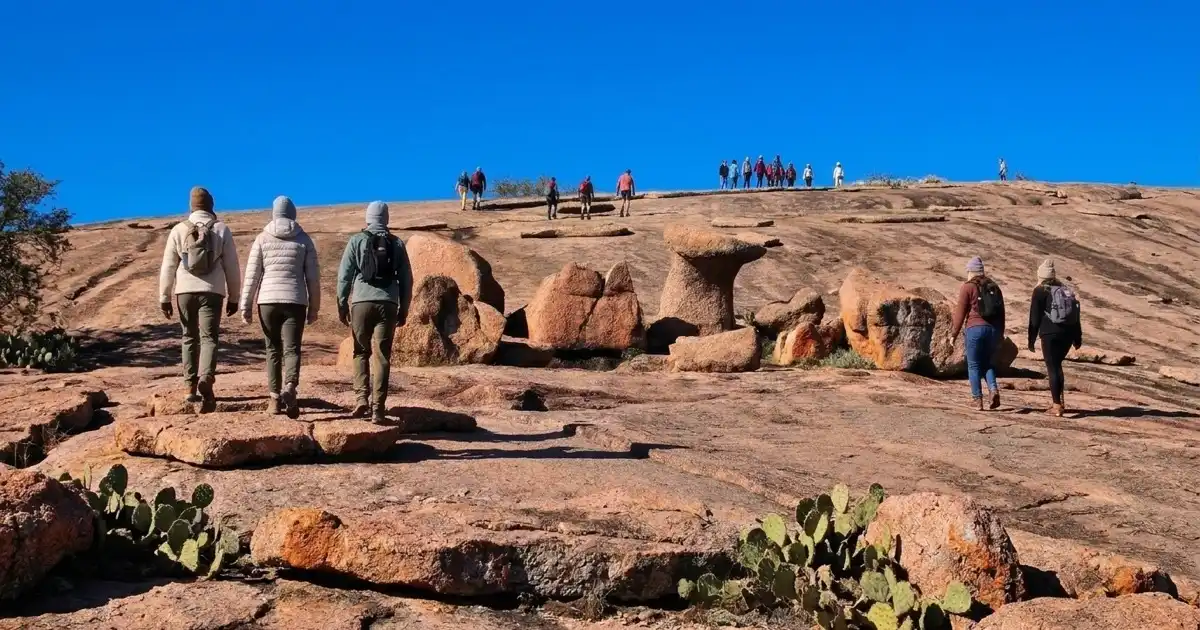
Texas First Day Hikes draw thousands of hikers onto state park trails every January 1, with 12,835 participants logging 28,154 miles across 181 events at 86 Texas State Park sites in 2026. Programs are free with standard daily entry ($3 to $8 per adult, free for ages 12 and under), and advance day passes open online 30 days ahead.
Key takeaways
- Texas First Day Hikes take place annually on January 1 across more than 80 Texas State Parks, leading all 50 states in sites, events, and participants for four consecutive years.
- Event participation is free with regular park admission ($3 to $8 per adult, free for children 12 and under) or covered by the $70 annual Texas State Parks Pass.
- Online day passes open 30 days ahead on December 2 and sell out early at metro-adjacent parks like Enchanted Rock, Dinosaur Valley, and Government Canyon.
- Guided hikes often cap attendance at 15 to 30 hikers and may exclude pets or strollers, whereas self-guided routes let families start anytime and still claim commemorative stickers at headquarters.
- January conditions range from freezing Panhandle winds to damp Gulf breezes, so dress in moisture-wicking layers and download offline maps before arriving.
What Are Texas First Day Hikes and How the Tradition Works
Texas First Day Hikes are annual January 1 guided and self-guided outdoor events hosted by the Texas Parks and Wildlife Department across more than 80 state parks. Part of America’s State Parks nationwide initiative, the program drew a record 12,835 Texas participants who logged 28,154 miles in 2026.
Every December, park rangers and Master Naturalists publish a statewide schedule on the Texas Parks and Wildlife First Day Hikes Calendar. Events range from 0.3-mile stroller-friendly boardwalk loops to multi-mile canyon climbs, letting first-time visitors and seasoned trail runners share the same New Year’s Day tradition.
| Visitor Metric | Verified Texas First Day Hikes Details | Planning Note |
|---|---|---|
| Event Date | Annually on January 1 (plus select New Year’s Eve midnight hikes) | Event listings publish on TPWD’s calendar in November and December |
| Participating Parks | 86 Texas State Park sites hosting 181 events (2026 record) | Nearly every open state park offers either guided or self-guided options |
| Program Cost | Free with regular park entrance fee ($3 to $8 per adult) | Children 12 and under enter free; covered by the $70 annual pass |
| Day-Pass Booking Window | Opens 30 days in advance (December 2 for January 1) | Mandatory for guaranteed entry at high-demand parks |
| Typical Hike Length | 0.5 miles to 6+ miles | Options include flat ADA loops, river crossings, and summit climbs |
| Official Souvenir | Free commemorative First Day Hike sticker or pin | Available at headquarters or trailhead tables while supplies last |
From a 1992 Massachusetts Walk to a Texas Record
The national First Day Hikes movement began on January 1, 1992, when Patrick Flynn, supervisor of the Blue Hills Reservation in Milton, Massachusetts, organized a winter walk that attracted 380 people. After two decades of regional growth across New England, state park directors partnered through the America’s State Parks First Day Hikes Program to expand the event to all 50 states on January 1, 2012.
Texas quickly became the program’s largest participant thanks to mild winter temperatures across much of the state. Participation surged from 9,484 hikers and 18,932 miles in 2025 to 12,835 participants and 28,154 miles in 2026, setting a new record for the fourth consecutive year.
Top-attending sites in 2026 included the Dinosaur Valley river trails in Glen Rose with 931 participants and Palo Duro Canyon State Park near Amarillo with 861 participants.
Commemorative Stickers, Mileage Logs, and Beyond-the-Trail Events
Most participating parks distribute free commemorative First Day Hike stickers, buttons, or small tokens to hikers who complete a route and report their mileage. Ranger-led groups usually receive stickers at the trailhead wrap-up, while self-guided hikers check in at park headquarters before offices close around 4:00 PM to 4:30 PM.
First Day programming in Texas also extends beyond standard walking tours. Select parks host mountain bike rides, guided kayak or canoe paddles, birding walks, equestrian trail rides, and even New Year’s Eve countdown hikes that finish just after midnight on January 1.
Entry Fees, Day Passes, and 30-Day Reservation Rules
Texas First Day Hike programs are free to join, but standard state park day-use fees of $3 to $8 per adult apply while children 12 and under enter free. Visitors should book day passes online up to 30 days ahead through the TPWD portal because popular parks close to walk-up vehicles once parking fills.
Holiday demand turns New Year’s Day into one of the busiest winter mornings on the Texas State Parks calendar. According to Texas Parks and Wildlife Park Reservations, day passes guarantee vehicle entry even when a park triggers a capacity closure for drive-up visitors.
| Pass or Admission Type | Verified Cost | Who It Covers | January 1 Booking Rule |
|---|---|---|---|
| Standard Adult Day Pass (Ages 13+) | $3 to $8 per person (varies by park) | Single adult for day-use entry until 10:00 PM | Reserve online up to 30 days ahead (opens Dec 2) |
| Child Admission (Ages 0 to 12) | Free | Any child 12 and under | Still list children on your online day-pass reservation |
| Texas State Parks Pass (Annual) | $70 per year | Cardholder plus all guests in the same vehicle | Reserve a free $0 day pass online to lock in entry |
| Secondary Household Annual Pass | $25 per year | Second adult at the same residential address | Same $0 online day-pass reservation rule applies |
Daily Entrance Fees vs. the $70 Texas State Parks Pass
If you plan to visit Texas State Parks more than three or four times a year with family or friends, the annual pass pays for itself rapidly. Per Texas State Parks Pass Information, the $70 card waives daily entrance fees for the pass holder and everyone riding in the same vehicle across more than 80 parks.
For example, a single car carrying four adults to an $8-per-person park pays $32 in one day. Two visits like that nearly cover the full $70 annual pass, which also includes 10% park store discounts and half-price camping coupons on select nights.
How to Book Day Passes and Guided Hike Spots
Reserving a park entry pass and signing up for a specific guided hike are two separate steps at many locations. First, log into the Texas State Parks ReserveAmerica Booking Portal on December 2 to secure your January 1 day pass, which opens exactly 30 days in advance.
Second, open your chosen park’s event listing on the TPWD First Day Hikes calendar to check whether the guided hike requires email RSVP, phone registration, or first-come trailhead check-in. High-demand Hill Country parks sell out weeks ahead, so review Enchanted Rock day pass booking tips early if a granite summit climb is on your wishlist.
Important
Holding an annual Texas State Parks Pass does not let you bypass a full parking lot on January 1. Pass holders must still log in and claim a free $0 day-use reservation online to guarantee gate entry.
Best Texas State Parks for First Day Hikes by Region
The best Texas State Parks for First Day Hikes span five distinct regions, from Dinosaur Valley (931 participants in 2026) and Palo Duro Canyon (861 participants) to Enchanted Rock, Palmetto, Cleburne, Tyler, and Galveston Island. Choosing by region lets you match terrain, drive time, and family skill level.
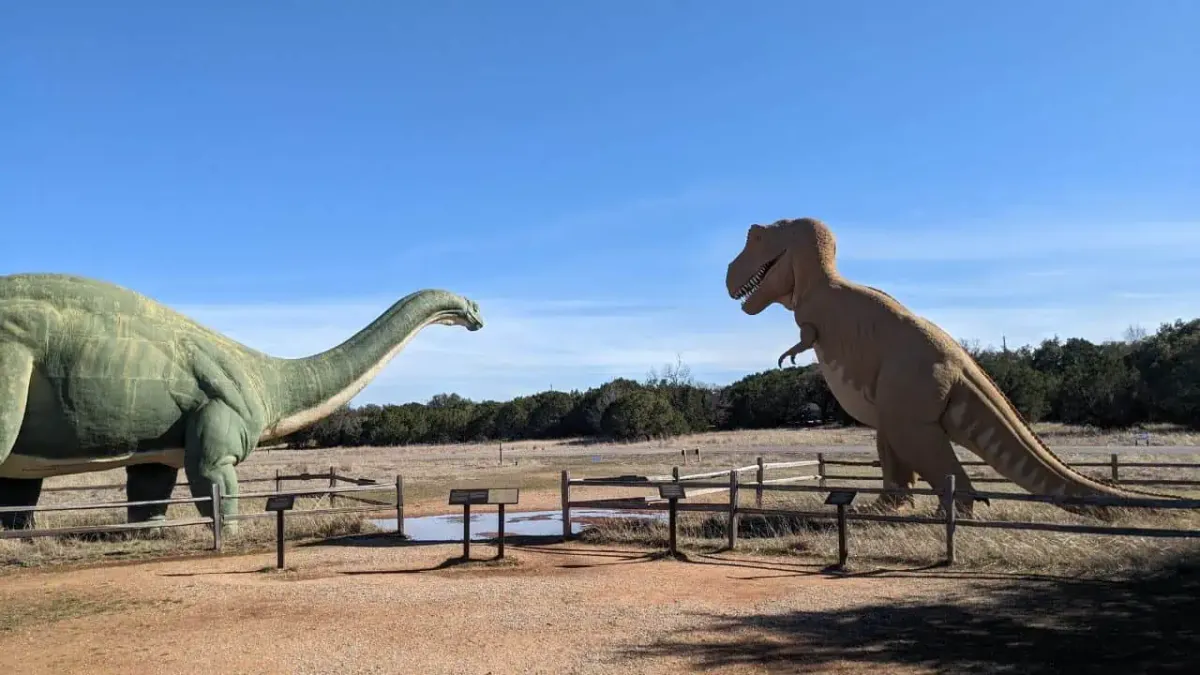
Rather than driving four hours to a sold-out headline park, compare regional options by trail surface, January weather exposure, and program style. The matrix below highlights eight proven First Day Hike parks across Texas.
| State Park | Region | Signature First Day Format | Typical Trail Surface | Best For | Key Trade-Off |
|---|---|---|---|---|---|
| Enchanted Rock | Hill Country | Midnight summit or sunrise hike | Exposed pink granite dome | Iconic 360-degree views | Sells out weeks early; no dogs on Summit Trail |
| Palmetto | Central Texas | Sunrise bird walk and short loops | Flat dirt and boardwalks | Families and young kids | Damp, humid lowlands after winter rain |
| Government Canyon | San Antonio | Guided canyon hike and dog walk | Rocky limestone singletrack | Backcountry hikers and dogs | Closed Tue to Thu normally; 5+ mi dino track trek |
| Dinosaur Valley | North Texas | River crossing and ridge hikes | Limestone ledges and riverbed | Families and fossil fans | Cold Paluxy River wade required for main trails |
| Cleburne | North Texas | Self-guided Story Walk loop | Shaded dirt and limestone | Toddlers and casual walkers | Shared multi-use trails with mountain bikers |
| Palo Duro Canyon | Panhandle | Guided floor or Lighthouse trek | Red dirt, rock, and loose scree | Dramatic canyon scenery | Freezing mornings and strong rim wind chills |
| Tyler | East Texas | Multi-sport T.R.Y.athlon and pine walks | Pine-needle soft dirt | Active families and paddlers | Hilly loops share corridors with cyclists |
| Galveston Island | Gulf Coast | First Light sunrise beach walk | Packed sand and marsh trails | Flat walking and winter birding | Cold coastal wind and muddy swales after rain |
Hill Country and Central Texas: Enchanted Rock, Palmetto, and Government Canyon
Enchanted Rock State Natural Area (Fredericksburg)
- Best for: Hikers chasing dramatic 425-foot granite dome views and crisp winter skies.
- Fees and Key Specs: Standard adult entry is $8 (kids 12 and under free); the Summit Trail climbs steeply over solid granite with zero shade.
- Trade-off and Who Should Skip: Day passes routinely sell out weeks before January 1, and dogs are strictly banned from the Summit Trail. Skip this park if you want a spontaneous morning drive or a stroller-friendly walk.
Palmetto State Park (Gonzales)
- Best for: Families with young children and birders looking for flat, sheltered Central Texas loops.
- Fees and Key Specs: Located about an hour from Austin and San Antonio, Palmetto State Park features dwarf palmettos, the 0.3-mile Palmetto Interpretive Trail, and the 0.7-mile Oxbow Lake Trail.
- Trade-off and Who Should Skip: Trails can stay muddy after December rain, and there are no high overlooks. Skip it if you want steep elevation gain or mountain scenery.
Government Canyon State Natural Area (San Antonio)
- Best for: Hikers wanting rugged wilderness on San Antonio’s northwest edge, plus dedicated pet-friendly programs like its “Tails to the Trails” walk.
- Fees and Key Specs: Adult entry is $6; over 40 miles of rocky limestone trails include the 5-mile round-trip Joe Johnston Route to 110-million-year-old dinosaur tracks. Winter is prime access season before March 1 habitat closures begin.
- Trade-off and Who Should Skip: Standard strollers cannot handle the uneven limestone rock. Verify January 1 holiday operating hours because the park normally closes Tuesdays through Thursdays.
North Texas and Panhandle: Dinosaur Valley, Cleburne, and Palo Duro Canyon
Dinosaur Valley State Park (Glen Rose)
- Best for: North Texas families who want fossil trackways, valley overlooks, and Texas’s highest-attended First Day Hike energy (931 participants in 2026).
- Fees and Key Specs: Located 90 minutes southwest of Dallas-Fort Worth, adult entry is $8. Key winter routes include the 1.6-mile Limestone Ledge Trail and the steep 0.5-mile Overlook Trail.
- Trade-off and Who Should Skip: Reaching most trailheads requires wading across the Paluxy River, which runs icy cold in January. Skip it if you do not want to pack water shoes and a towel, or if recent rain has flooded the river.
Cleburne State Park (Cleburne)
- Best for: Parents with elementary-age kids who want an interactive, low-stress alternative southwest of Fort Worth.
- Fees and Key Specs: Adult entry is $6, centering around spring-fed Cedar Lake, a 1930s Civilian Conservation Corps three-tiered limestone spillway, and 13 miles of rolling loops. Cleburne frequently hosts a self-guided Story Walk along the Camp Creek Loop.
- Trade-off and Who Should Skip: Several trails are multi-use with mountain bikes, requiring kids to listen for riders. Skip it if you want dramatic cliffs or long backcountry solitude.
Palo Duro Canyon State Park (Canyon)
- Best for: Hikers who want big red-rock geology without lethal summer canyon heat, drawing 861 First Day participants in 2026.
- Fees and Key Specs: Adult entry is $8; the flagship 5.8-mile round-trip Lighthouse Trail leads to the 310-foot rock hoodoo, while the 1.4-mile CCC Trail drops 500 feet from rim to floor.
- Trade-off and Who Should Skip: Panhandle mornings regularly dip below freezing with biting wind on the canyon rim. Skip it if you lack insulated layers or prefer mild coastal temperatures.
East Texas Piney Woods and Gulf Coast: Tyler and Galveston Island
Tyler State Park (Tyler)
- Best for: Multi-sport families who want towering 100-foot pines and more than a standard walk.
- Fees and Key Specs: Adult entry is $6; trails circle a 64-acre spring-fed lake, including the flat 2.1-mile Lakeshore Trail and the 1.0-mile CCC-built Whispering Pines Trail. Tyler has historically hosted multi-activity First Day events combining hiking, biking, and paddling.
- Trade-off and Who Should Skip: Popular loops attract heavy holiday foot and bike traffic by late morning. Skip it if you want wide-open desert vistas.
Galveston Island State Park (Galveston)
- Best for: Flat coastal walking, Gulf sunrise views, and peak winter migratory birding.
- Fees and Key Specs: Adult entry is $5; the park pairs First Light sunrise beach walks with flat prairie and marsh boardwalk trails like the Clapper Rail loop.
- Trade-off and Who Should Skip: Unblocked Gulf wind makes 50-degree mornings feel much colder, and TPWD conducts prescribed coastal prairie burns between October and April that can temporarily close select interior trails.
Guided Ranger Hikes vs. Self-Guided First Day Trails
Guided First Day Hikes pair visitors with park rangers or Master Naturalists for wildlife interpretation, history stops, and group camaraderie, though they often cap attendance at 15 to 30 hikers. Self-guided First Day Hikes offer flexible start times, stroller or dog freedom, and full eligibility for commemorative stickers at headquarters.
The clear verdict: Choose a guided hike if you are a beginner hiker who wants structured pacing, historical context, or access to specialty events like a midnight summit climb. Choose a self-guided hike if you are hiking with toddlers, bringing a leashed dog, arriving late after New Year’s Eve, or chasing a faster mileage pace.
| Comparison Factor | Guided Ranger-Led First Day Hike | Self-Guided First Day Trail |
|---|---|---|
| Start Time | Fixed departure (strict check-in required) | Anytime during day-use hours (typically 6:30 AM or 8:00 AM to 10:00 PM) |
| Registration | Often requires advance sign-up or caps at 15 to 30 people | No event registration needed (day pass still strongly advised) |
| Pacing and Stops | Moderate group pace with frequent nature and history talks | Complete control over pace, snack breaks, and turnaround points |
| Pets and Strollers | Frequently restricted on narrow or wildlife-focused hikes | Permitted on any standard dog-friendly or paved park trail |
| Souvenir Eligibility | Distributed by ranger at the end of the hike | Picked up at park headquarters when you log your completed miles |
When a Ranger-Led Hike Is Worth the Strict Start Time
Ranger-led hikes shine when a park’s story is invisible without a guide. On a guided walk at a Civilian Conservation Corps park or a coastal marsh, rangers point out winter migratory birds, native medicinal plants, 1930s masonry details, and nocturnal wildlife tracks that most casual walkers pass without noticing.
Specialty programs also require official supervision. Midnight countdown hikes on New Year’s Eve, guided kayak paddles, and dawn birding surveys cannot be replicated on your own schedule, making an early alarm well worth the effort.
How Self-Guided Hikes Work on January 1
Self-guided First Day Hikes are the easiest way for families to join the tradition without racing a 9:00 AM whistle. When you arrive, stop by the headquarters or trailhead kiosk to grab a printed map or follow posted First Day signage, such as the interactive Story Walk posted along Cleburne State Park loops.
After finishing your walk, return to headquarters before the office closes (typically 4:00 PM to 4:30 PM) to record your mileage in the park’s official First Day logbook and collect your commemorative sticker. Your miles still count toward Texas’s statewide total.
New Year’s Day Parking Capacity, Arrival Times, and Gate Logistics
Metro-adjacent Texas State Parks frequently reach 100% parking capacity between 9:00 AM and 10:30 AM on January 1, prompting temporary gate closures to unreserved cars. Plan to arrive 25 to 30 minutes before any guided hike start time to clear entrance lines, check in at headquarters, and reach the trailhead.
Clear, sunny New Year’s Day forecasts trigger the fastest sellouts across the I-35 corridor and North Texas. Parks with compact trailhead lots, including Enchanted Rock, Dinosaur Valley, and Government Canyon, regularly post capacity alerts on social media before mid-morning.
Tip
Set a calendar alert for December 2 to reserve your January 1 day pass the morning the 30-day TPWD window opens. On New Year’s Day, arrive at the park entrance at least 30 minutes before your guided hike start time so gate lines do not cause you to miss the ranger’s departure.
Gate Queues, Self-Pay Stations, and Headquarters Check-In
Even with a pre-paid digital day pass, holiday vehicle queues back up at single-lane entrance stations between 8:30 AM and 10:00 AM. Download or screenshot your ReserveAmerica confirmation email before leaving home because rural park gates frequently have weak cellular signal.
If you arrive for a sunrise hike before headquarters opens at 8:00 AM, check your park’s instructions for self-pay kiosks or early-entry scan codes. Remember that day-use permits remain valid until 10:00 PM, so you do not have to rush off the trails if you plan an afternoon picnic.
Backup Strategies When Your First-Choice Park Sells Out
If your first-choice park shows zero day passes left on ReserveAmerica, check less-publicized neighboring state parks within an extra 30 to 45 minutes of driving. For instance, when Enchanted Rock fills up, Hill Country hikers often pivot to Blanco, Pedernales Falls, or Guadalupe River State Park.
You can also book an overnight campsite or screened shelter for December 31 or January 1, which automatically includes park entry for your vehicle. In the Panhandle, reviewing Palo Duro Canyon winter hiking logistics ahead of time helps you plan around both holiday gate queues and winter weather alerts.
Dog Policies, Stroller Limits, and ADA Accessibility
Texas State Parks allow leashed dogs on physical leads 6 feet or shorter in most outdoor areas, but individual guided First Day Hikes and sensitive trails like Enchanted Rock’s Summit Trail prohibit pets. Backcountry routes also restrict standard strollers, while visitors needing ADA accommodations should notify the park at least two weeks ahead.
Checking park-specific rules before leaving home prevents frustrating turnarounds at the trailhead. Because First Day Hikes bring larger crowds than an average January weekday, rangers enforce leash, group-size, and trail-surface policies strictly.
Pet Rules and Trail Exceptions on January 1
When pets are allowed on a First Day Hike, Texas State Parks enforce four baseline regulations across every property:
- 6-Foot Physical Leash: Dogs must stay on a handheld leash 6 feet or shorter at all times; retractable leashes are discouraged on crowded trails.
- No Indoor Access: Pets are strictly prohibited inside visitor centers, restrooms, headquarters buildings, and park stores.
- Waste and Vaccination: Owners must pack out all pet waste and carry proof of a current rabies vaccination.
- Event and Trail Exclusions: Always read the exact TPWD event description. Wildlife walks often specify “no pets,” and parks like Enchanted Rock ban dogs from the Summit Trail year-round.
If bringing your dog is a priority, look for explicitly pet-welcoming programs or check Government Canyon backcountry trails and rules, where the park has historically hosted dog-friendly First Day events.
Strollers, Kid Carriers, and ADA Accessible Trails
Many First Day Hikes follow uneven limestone ledges, exposed roots, or narrow creek crossings where standard strollers cannot roll safely. For rocky trails with infants or toddlers, rangers strongly recommend bringing a structured child-carrier backpack instead of a wheeled stroller.
For visitors using wheelchairs, walkers, or all-terrain strollers, several Texas State Parks host dedicated ADA-accessible First Day Hikes on paved loops, concrete paths, or wetland boardwalks. Review Texas State Parks Accessibility Guidelines and contact the park or email accessibility@tpwd.texas.gov at least two weeks before January 1 if you need specific accommodations or an all-terrain wheelchair reservation.
What to Pack for January Hiking in Texas
January hiking in Texas requires adaptable winter layers because morning temperatures can sit below freezing in the Panhandle while afternoons climb into the 60s across Central and South Texas. Pack a moisture-wicking base layer, a wind-blocking shell, sturdy traction footwear, extra water, and downloaded offline trail maps.
Dry winter air and steep climbs dehydrate hikers faster than expected, even when you are not sweating heavily in summer heat. Carry at least one liter of water per person for short loops and two liters for rugged climbs like Palo Duro’s Lighthouse Trail or Government Canyon’s backcountry.
Warning
Winter cold fronts (“Blue Northers”) drop Texas temperatures rapidly, and exposed granite at Enchanted Rock can develop slick black ice on freezing mornings. Central Texas visitors should also prepare for peak mountain cedar pollen (“cedar fever”) in January, which triggers severe allergy symptoms on Hill Country trails.
Regional Winter Weather and Layering by Park
Build a three-layer clothing system so you can peel off warmth once you start climbing and zip back up at windy overlooks:
- Base Layer: Synthetic or merino wool long-sleeve shirt (avoid cotton, which traps cold sweat).
- Mid Layer: Lightweight fleece or packable insulated jacket for 8:00 AM trailhead starts.
- Outer Shell: Windbreaker or rain shell, which is essential along exposed canyon rims and Galveston Island coastal trails where Gulf breezes cut through fleece.
- Cold-Weather Extras: Warm beanie and light gloves for sunrise hikes, plus sunglasses and sunscreen for bright low-angle winter sun.
Footwear, Hydration, and Offline Navigation
Match your footwear to your park’s exact terrain. Stiff-soled hiking boots with aggressive tread protect ankles on rocky Hill Country limestone and Palo Duro’s loose red dirt, while waterproof boots handle damp Gulf Coast marshes after winter rain.
If you plan to hike across the Paluxy River at Dinosaur Valley, pack closed-toe water shoes, a quick-dry towel, and spare wool socks so you can switch into dry boots on the far bank. Finally, download offline trail maps and check the TPWD park alerts page before departing, as prescribed winter burns, heavy rain river rises, or scheduled public hunts can close individual trails without warning.
Frequently Asked Questions About Texas First Day Hikes
How much do First Day Hikes cost in Texas?
The First Day Hike programs themselves are free, though standard Texas State Park daily entrance fees of $3 to $8 per adult still apply. Children 12 and under enter free, and holders of the $70 annual Texas State Parks Pass receive free day-use admission for themselves and same-vehicle guests.
Do you need a reservation for New Year’s Day park hikes?
Texas Parks and Wildlife strongly recommends reserving a day pass online up to 30 days in advance because popular parks routinely reach full parking capacity on January 1. While self-guided hikes rarely require separate sign-ups, select ranger-led hikes cap group size and require advance event registration through the park’s TPWD calendar listing.
What time should you arrive on January 1?
Arrive at least 25 to 30 minutes before a scheduled guided hike so you have time to clear holiday gate lines, park, and walk to the meeting trailhead. For self-guided hikes at high-demand parks near Austin, San Antonio, or Dallas-Fort Worth, reaching the gate before 9:00 AM helps avoid mid-morning parking lot closures.
Are dogs allowed on January 1 state park hikes?
Most Texas State Parks welcome dogs on a physical leash 6 feet or shorter, but individual guided hikes may prohibit pets to manage large groups or protect wildlife. Always verify the specific event listing beforehand and note year-round trail bans such as Enchanted Rock’s Summit Trail.
What is the difference between guided and self-guided hikes?
Guided First Day Hikes follow a set departure time with a park ranger or volunteer who shares local geology, wildlife, and history along the route. Self-guided hikes let you start whenever you want, bring dogs or strollers on suitable paths, and log your miles at park headquarters for a commemorative sticker.
Do you get a commemorative sticker or souvenir?
Most participating Texas State Parks hand out free commemorative First Day Hike stickers, buttons, or small tokens while supplies last. Self-guided hikers typically pick up their souvenir by reporting completed mileage at the park headquarters or a staffed trailhead table before offices close around 4:00 PM to 4:30 PM.
Are New Year’s Day state park hikes wheelchair and stroller accessible?
Several Texas State Parks host dedicated ADA-accessible First Day Hikes on paved loops, boardwalks, or crushed-granite trails, while rugged backcountry routes advise against standard strollers. Visitors who need specific ADA accommodations for a guided program should contact the park or email accessibility@tpwd.texas.gov at least two weeks before January 1.