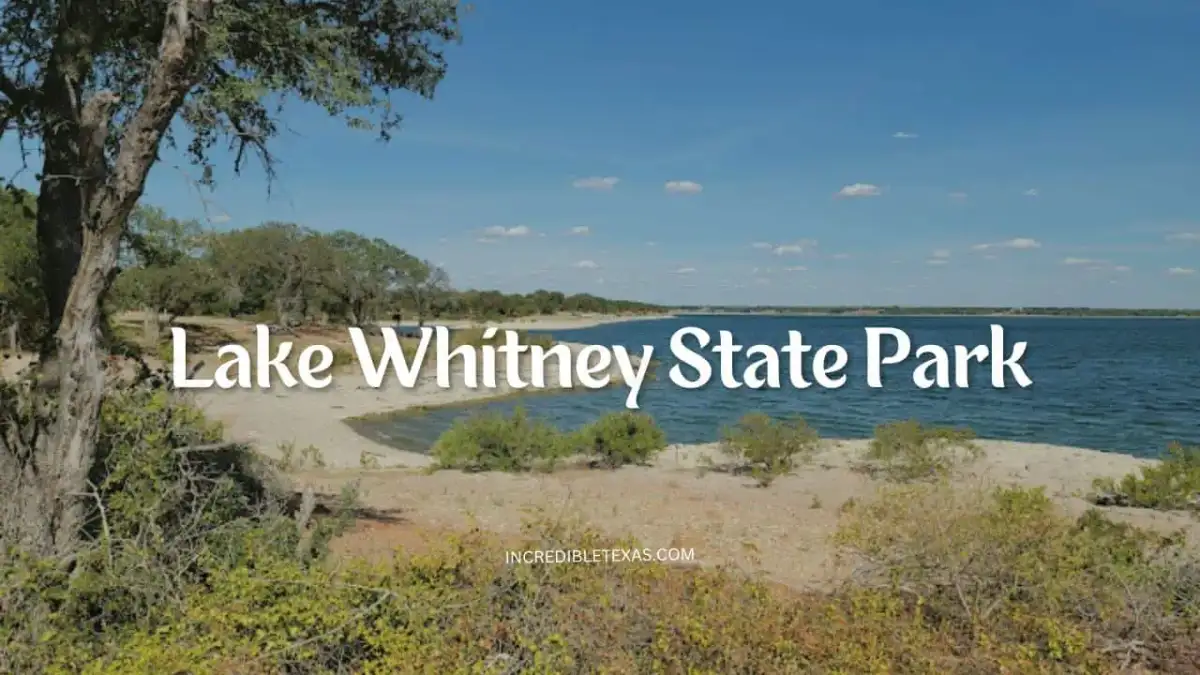
Lake Whitney State Park encompasses 775 protected acres along the eastern bluffs of Whitney Reservoir, one of Central Texas’s largest flood-control and water-conservation impoundments. Located on the Brazos River three miles west of the town of Whitney in Hill County, the park sits 60 miles south of Fort Worth and 35 miles north of Waco. Towering white limestone bluffs, dense post oak woodlands, and wide sailing waters define the landscape.
Overnight campers, striper anglers, and weekend travelers choose this destination for its balanced outdoor amenities and quiet shoreline. This complete guide provides exact campsite specifications, screened shelter policies, trail mileages, boat launch details, and primary authority links to plan a smooth trip.
Key takeaways
- Central Texas Access: Located at 433 FM 1244 in Whitney, Texas, roughly 75 minutes south of Dallas-Fort Worth via Interstate 35W and State Highway 22.
- Campsites and Shelters: 137 developed campsites provide options ranging from 50-amp full sewer connections to water-view screened shelters starting at $14 to $30 nightly.
- Trophy Striped Bass: Deep river channels and submerged limestone structure sustain one of the state’s top fisheries, with free shoreline angling inside park bounds.
- Family Hiking: The 0.9-mile Two Bridges Trail and 1.2-mile Towash Forest Trail feature wooden footbridges, post oak savannas, and panoramic water overlooks.
- Park Ground Realities: Gates lock promptly at 10:00 PM, thick water shoes are essential for rocky limestone ledges, and pets are barred from the designated swim beach.
Plan your visit
Verified
- Location
- 433 FM 1244, Whitney, TX 76692
- Hours
- Daily 6am to 10pm
- Admission
- $5 adults (13+), free for children 12 and under
- Best time to go
- Spring and autumn for camping and striped bass fishing
Park Overview: Entrance Fees, Daily Hours, and Official Maps
Lake Whitney State Park operates daily from 6:00 AM to 10:00 PM for day-use visitors. The physical entrance sits at 433 FM 1244, accessed from State Highway 22 just west of Whitney. Day passes frequently reach capacity during spring wildflower blooms and holiday weekends from Memorial Day through Labor Day.
Visitors should secure advance day-use permits through the Texas Parks and Wildlife Department Lake Whitney State Park Portal up to 30 days ahead of travel. Advance online reservations guarantee admission even when park gates close to drive-up traffic due to capacity limits.
Daily Entry Fees and Texas State Park Passes
Standard entry costs $5 per day for adults aged 13 and older. Children aged 12 and under enter free of charge every day of the year. Daily entry fees apply in addition to overnight campsite fees unless a camper holds a valid Texas State Park Pass.
The annual Texas State Park Pass costs $70 and covers unlimited day-use entry for the pass holder and all passengers in a single non-commercial vehicle. Pass holders also receive four coupons for 50 percent off a second night of camping at any state park.
| Fee Category | Cost | Age / Eligibility | Details & Booking Terms |
|---|---|---|---|
| Adult Day-Use | $5 per person | Ages 13 and older | Valid 6:00 AM to 10:00 PM; reserve online |
| Youth Day-Use | Free | Ages 12 and under | Always free; requires zero entry fee |
| Texas State Park Pass | $70 annually | Pass holder + vehicle guests | Unlimited day-use entry to all 89 state parks |
| Excess Vehicle Overnight | $5 per night | Secondary vehicles at site | Must park in designated overflow asphalt lots |
| Group Recreation Hall | Variable day rate | Up to 100 people | Includes full kitchen, prep tables, and restrooms |
Gate Hours, Office Schedule, and Late Arrival Protocol
The park entrance gate opens at 6:00 AM and locks automatically at 10:00 PM. The customer service headquarters office operates from 8:30 AM to 4:30 PM daily. A convenient drive-through check-in window processes incoming campers between 8:30 AM and 5:00 PM on busy Friday afternoons.
Campers arriving after the headquarters doors close must use the self-service information kiosk located in the roadway median directly across from headquarters. Rangers post late-arrival envelopes containing assigned campsite numbers, vehicle dashboard tags, and entry gate lock combination codes. Late arrivals must return to the visitor center by 9:00 AM the following morning to complete official registration.
Important
Late Arrival Notice: Park gates lock mechanically at 10:00 PM. If your driving arrival will occur after 9:00 PM, call park customer service at (254) 694-3793 before 4:30 PM to verify your gate access combination and campsite packet placement.
Park Map Navigation and Trailhead Orientation
The park road network forms a simple two-mile spine terminating at the southern limestone bluffs. Keep a downloaded copy of the Lake Whitney State Park Map and Lake Whitney State Park Trail Map saved to your mobile phone before leaving Highway 22, as mobile data reception fluctuates along the lake bluffs.
Hydrological monitoring by the Texas Water Development Board Water Data for Texas Whitney Reservoir Monitor tracks the lake’s conservation pool elevation benchmark of 533.0 feet above mean sea level. Comparing this impoundment against major freshwater lakes across Texas demonstrates how Whitney’s clear limestone river basin creates superior visibility compared to eastern muddy reservoirs.
Campground Guide: RV Loops, Screened Shelters, and Primitive Tent Sites
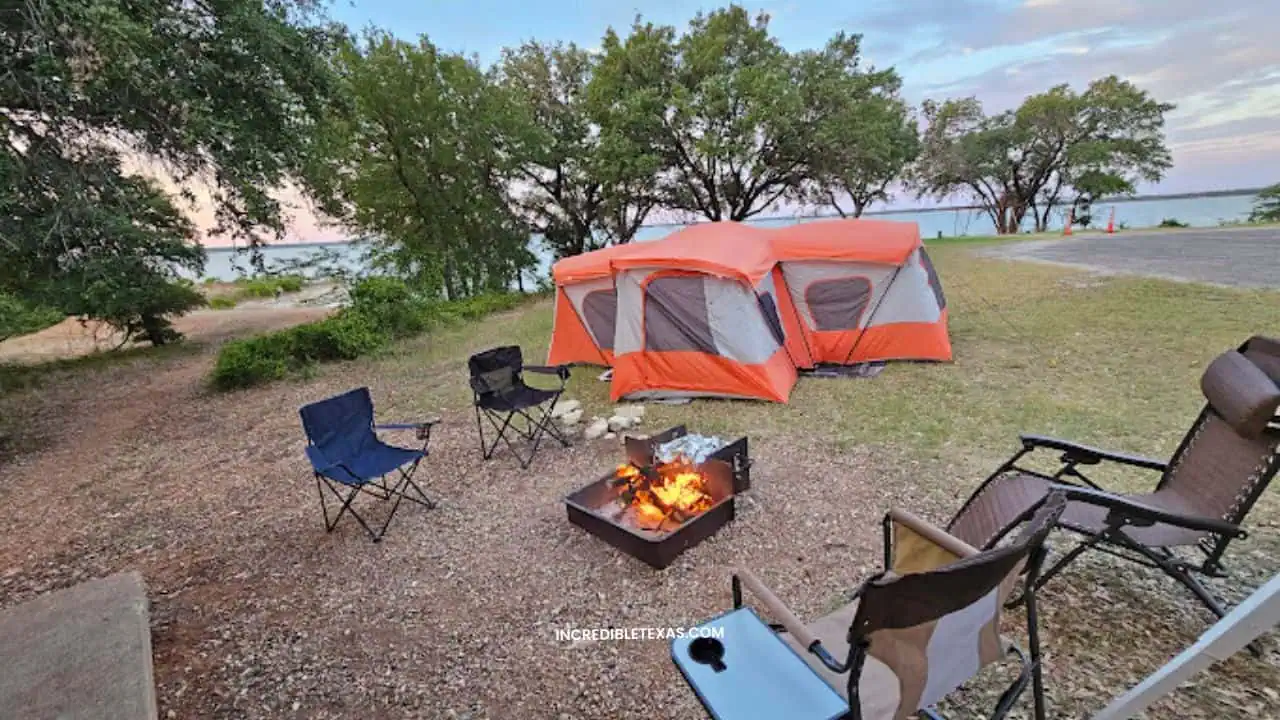
Lake Whitney State Park provides 137 developed campsites distributed across seven wooded camping loops. The camping areas accommodate everything from 45-foot motorhomes with three slide-outs to lightweight backpacking tents and roof-top vehicle sleepers. Every campsite includes an outdoor picnic table, an elevated barbecue grill, and a ground fire ring.
Campsite checkout time is 12:00 PM, and check-in begins at 2:00 PM. Quiet hours run strictly from 10:00 PM to 6:00 AM. Generators must remain switched off during quiet hours across all camping loops without exception.
Full-Hookup RV Sites and 50-Amp Electric Loops
RV travelers requiring sewer drainage should book the Full Hookup loop. These sites provide 20, 30, and 50-amp electrical pedestals, pressurized potable water connections, and direct in-ground sewer hookups. Nightly rates are $24, with a discounted non-peak weekly rate of $144 available from November through February.
Campers who do not require on-site sewer can reserve electric-and-water sites across three distinct zones: Blue Bird (sites 87 to 98), Road Runner (sites 99 to 110), and Sunset Ridge (sites 124 to 130). These sites cost $20 per night ($120 weekly off-peak) and supply 50-amp electrical power with paved parking spurs measuring up to 65 feet in length.
| Campground Loop | Site Numbers | Hookup Types | Max RV Length | Nightly Rate | Peak Amenities |
|---|---|---|---|---|---|
| Full Hookup Loop | Sites 1–38 | Water, 50A, Sewer | 65 feet | $24 / night | Direct sewer hookup, level asphalt pad |
| Blue Bird Loop | Sites 87–98 | Water, 50A Electric | 55 feet | $20 / night | Deep post oak shade, close to trails |
| Road Runner Loop | Sites 99–110 | Water, 50A Electric | 60 feet | $20 / night | Easy pull-through angles for long rigs |
| Sunset Ridge Loop | Sites 124–130 | Water, 50A Electric | 50 feet | $20 / night | Elevated bluff views of evening sunsets |
| Screened Shelters | Shelters 1–18 | Electric, Water Spigot | Tent / Walk-in | $30 / night | Screened walls, ceiling fan, lake view |
| Horseshoe & White-Tail | Sites 39–68 | Water Only | 30 feet | $14 / night | Secluded tent pads, dense cedar cover |
| Star View & Lake View | Sites 69–86, 111–123 | Water Only | 35 feet | $14 / night | Open skies, shoreline bank proximity |
Lakeside Screened Shelters and Rustic Cabin Amenities
Travelers seeking solid weather protection without towing a travel trailer can book one of the park’s screened shelters. These wood-frame shelters feature solid roofs, heavy wire mesh screens, interior electrical lights, ceiling fans, and an indoor wooden picnic table. An exterior water spigot, outdoor fire ring, and lantern hanger stand outside each doorway.
Nightly shelter rates are $30, with a winter weekly rate of $180. A two-night minimum stay applies to Friday and Saturday bookings. While often searched as cabins, these shelters have no climate control, heating units, or private indoor bathrooms.
Campers must bring their own sleeping cots, mattresses, bedding, and camp stoves. For fully enclosed park cabins with private kitchens and air conditioning, consult our directory of Texas state parks with cabins and screened shelters.
Warning
Pet Rules for Screened Shelters: Pets are strictly prohibited inside all screened shelters and state park buildings. Tents may be pitched outside the shelter on the gravel pad for additional family members, but pets cannot stay inside the structure under any circumstances.
Water-Only Tent Loops, Restrooms, and Dump Station Logistics
Tent campers who prefer quiet surroundings away from RV generator rumbles and air-conditioner compressors should choose the water-only loops. The Horseshoe (sites 39 to 48), White-Tail (sites 52 to 68), Star View (sites 69 to 86), and Lake View (sites 111 to 123 and 131 to 137) loops offer secluded, level campsites for $14 per night ($84 weekly off-peak).
Every camping loop connects to clean, climate-controlled comfort stations equipped with flush toilets, hot showers, and outdoor dishwashing sinks. An RV dump station with dual rinse connections sits near the park exit road, allowing departing rigs to empty holding tanks without backing up incoming weekend traffic.
Striped Bass Fishery and Open-Water Boating Logistics
Whitney Reservoir covers approximately 23,500 surface acres along 225 miles of shoreline, making it one of the leading open-water fisheries in the Brazos River basin. The reservoir’s deep main-river channel, clean gravel bars, and submerged limestone points support an exceptional striped bass fishery alongside healthy populations of white bass, largemouth bass, channel catfish, and crappie.
Stripers were introduced to the lake in the 1970s and flourish in the oxygen-rich, open pelagic waters. According to the Texas Parks and Wildlife Lake Whitney Fisheries Management division, adult striped bass in Lake Whitney routinely measure between 18 and 28 inches, providing high-energy sport fishing year-round.
Trophy Striped Bass and White Bass Angling Tactics
Angling tactics shift dramatically as reservoir water temperatures change between seasons. During spring (March through May), striped bass migrate up the Brazos and Nolan river arms to spawn. Anglers work shallow sandbars and gravel shoals using live gizzard shad, inland silversides, or heavy bucktail jigs tipped with white curly-tail grubs.
By July and August, the reservoir experiences severe thermal stratification. Water depths below 25 feet lose dissolved oxygen, forcing stripers into a narrow temperature band between 18 and 25 feet. Trolling deep-diving crankbaits or downrigging live bait across submerged channel edges produces the best catches.
In autumn (October through December), baitfish school near the surface. These massive early-morning feeding boils allow anglers to target schooling fish with topwater spooks and chrome spoons.
| Target Species | Peak Season | Prime Lake Locations | Productive Baits & Lures | Depth Range |
|---|---|---|---|---|
| Striped Bass | Oct–Dec, Mar–May | River channels, open humps, dam | Live gizzard shad, white bucktail jigs | 15–35 feet |
| White Bass | Feb–Apr (run), Summer | Nolan River arm, open lake points | Inline spinners, chrome spoons, minnows | 8–20 feet |
| Largemouth Bass | Mar–May, Sep–Nov | Coves, rocky shoreline ledges | Texas-rigged plastic worms, squarebill cranks | 3–12 feet |
| Blue & Channel Catfish | Year-round (peak June) | Mud flats, river channels, creek mouths | Cut carp, punch bait, fresh chicken liver | 10–30 feet |
| White Crappie | Mar–Apr, Oct–Nov | Submerged brush piles, timber coves | Live minnows, 1/16-oz chartreuse tube jigs | 8–18 feet |
Free Shoreline Fishing and Tackle Loaner Guidelines
Under the Texas Parks and Wildlife Free Fishing in State Parks policy, anyone can fish without a Texas fishing license or freshwater endorsement when casting from the shoreline, bank, or docks inside Lake Whitney State Park. This exemption saves visitors $30 to $40 in license costs and makes the park an ideal location to introduce children to freshwater fishing.
The visitor center participates in the TPWD Junior Angler Tackle Loaner Program. Visitors can borrow rods, reels, and basic tackle boxes equipped with hooks, bobbers, and sinkers at no charge for up to seven days.
Anglers must provide their own live bait, which can be purchased at convenience stores along FM 933 in Whitney. Statewide fish length limits and daily bag limits remain strictly enforced by Texas Game Wardens within park boundaries.
Boat Ramp Facilities, Courtesy Docks, and Low-Water Launch Cautions
The park maintains a concrete, multi-lane boat launch located on a sheltered cove protected by an engineered rock breakwater jetty. The ramp handles fiberglass bass boats, pontoon barges, and personal watercraft with ease. A floating courtesy boarding dock allows solo skippers to tie off while retrieving tow vehicles.
A lighted fish-cleaning station with running water, stainless-steel prep tables, and disposal receptacles sits adjacent to the main boat ramp parking lot. Boaters comparing launching facilities across Central Texas reservoirs should consult our Lake Waco fishing and boating guide to compare ramp steepness, breakwaters, and courtesy docks.
Tip
Check Reservoir Elevation Before Launching: During severe Central Texas summer droughts, Whitney lake levels can drop 8 to 15 feet below the 533.0-foot normal pool. When elevation drops below 525 feet, shallow submerged limestone rocks appear near the breakwater mouth. Trim your outboard motor up and idle into open water.
Scenic Hiking Loops and Lakeside Nature Trails
While Lake Whitney is famous for boating and angling, its trail network offers more than two miles of peaceful walking through post oak woodlands, pocket tallgrass prairies, and rocky lakeshore bluffs. The trails are rated easy, featuring level terrain with minimal elevation gain that accommodates children, leashed dogs, and casual mountain bikers.
Trail surfaces consist of packed native soil, crushed limestone gravel, and natural rock ledges. Because Central Texas summer afternoons reach temperatures above 95°F, hikers should complete trail excursions before 10:30 AM and carry at least one liter of water per person.
Two Bridges Trail: Shaded Ravines and Creek Crossings
The Two Bridges Trail spans a 0.9-mile loop originating near the park recreation hall. The path meanders under a dense canopy of post oak, cedar elm, and Ashe juniper trees that provide refreshing shade throughout hot mornings.
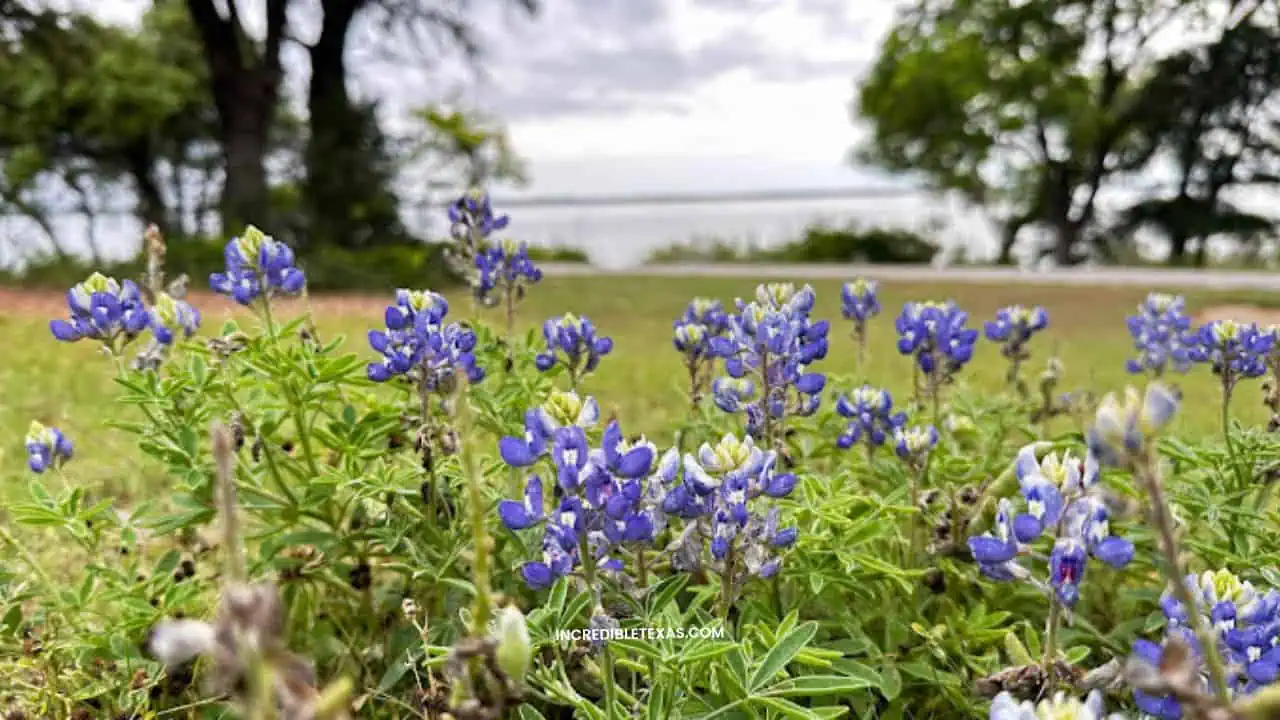
As the name implies, the trail crosses two wooden footbridges built over seasonal drainage ravines. These creeks channel rainwater down from upland meadows into the lake, creating lush micro-climates filled with mosses, ferns, and seasonal spring wildflowers like bluebonnets and Indian paintbrushes. Benches along the path offer shaded resting points with views into the wooded hollows.
| Trail Name | Distance | Difficulty | Trail Surface | Estimated Time | Top Sights & Features |
|---|---|---|---|---|---|
| Two Bridges Trail | 0.9 miles | Easy | Packed dirt, footbridges | 30–45 mins | 2 wooden creek bridges, post oak shade |
| Towash Forest Trail | 1.2 miles | Easy | Caliche soil, rock ledges | 45–60 mins | Tallgrass prairie, elevated lake bluffs |
| Shoreline Nature Walk | 0.5 miles | Easy | Limestone shelf, gravel | 20–30 mins | Waterfowl views, fossilized marine shells |
Towash Forest Trail: Post Oak Woods and Prairie Savannas
The Towash Forest Trail provides a slightly longer 1.2-mile loop through the eastern section of the park. The route transitions from upland post oak savannas into remnants of open tallgrass prairie before tracing the perimeter of the lake bluffs.
The trail takes its name from the historic pioneer settlement of Towash. This 19th-century river town was submerged when Whitney Dam was impounded in 1951.
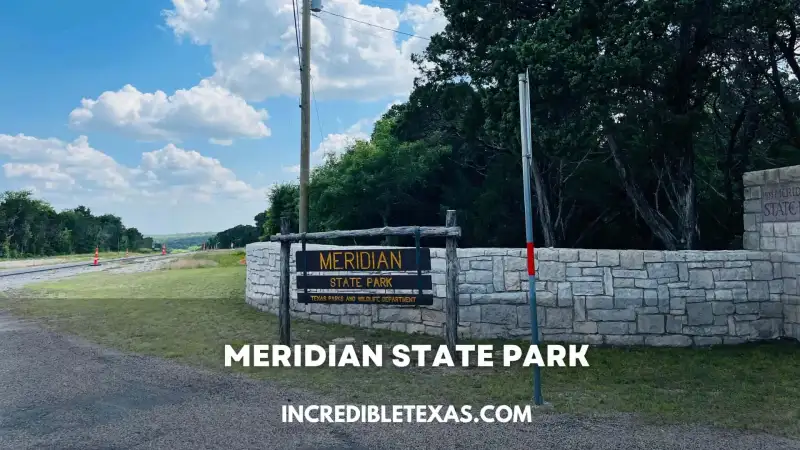
Interpretive trail markers describe native vegetation, prairie restoration efforts, and early Hill County ranching. For a woodland trek in nearby limestone canyons, explore the shaded Meridian State Park hiking trails located 20 miles west.
Wildlife Overlooks, Birdwatching, and Lakefront Vistas
Lake Whitney sits squarely within the Central Flyway, attracting thousands of migratory birds each spring and autumn. Birders regularly spot bald eagles perching in dead snags along the shoreline from November through March. Ospreys, great blue herons, double-crested cormorants, and white pelicans frequent the coves year-round.
In the forest understory, hikers frequently encounter white-tailed deer browsing near the campsite loops in the early morning. Armadillos, red foxes, raccoons, and eastern cottontail rabbits inhabit the brushy margins. Keep an eye on open grassland meadows for wild turkeys and scissor-tailed flycatchers during early summer.
Day-Use Waterfront, Limestone Bluffs, and Recreation Facilities
Day visitors at Lake Whitney State Park have access to extensive shoreline recreation, picnic facilities, and open-water access. The park shoreline features layered white limestone shelves that slope into clear Brazos River water, offering scenic panoramic views across the three-mile-wide main reservoir basin.
Picnic tables with charcoal barbecue grills dot the wooded bluff overlooking the water. These sites operate on a first-come, first-served basis and provide quick access to parking areas, modern restrooms, and the park playground.
Sheltered Swimming Coves and Limestone Shelf Safety
The park maintains a designated shoreline swimming cove protected from open-reservoir boat wakes. The swimming area features gently sloping limestone ledges and calm water, creating a refreshing swimming hole during summer heatwaves.
The park does not employ lifeguards; all swimming is strictly at your own risk. Children and weak swimmers must wear Coast Guard-approved life jackets at all times. Swimmers must wear sturdy, thick-soled water shoes or strapped river sandals. The underwater limestone shelves contain sharp natural edges, loose gravel, and invasive freshwater zebra mussels that can cause severe foot cuts if trodden on barefoot.
Caution
Water Safety and Footwear Requirements: Never dive or jump headfirst from limestone ledges or shoreline bluffs into the lake. Submerged rocks and shifting silt bars create hidden hazards. Pack water shoes for every swimmer to prevent injuries from sharp limestone ledges and zebra mussel shells.
Picnic Pavilions, Group Recreation Hall, and Playground Spaces
For family reunions, civic gatherings, and club meetings, the park rents a fully enclosed Group Recreation Hall that accommodates up to 100 people. The climate-controlled building features interior dining tables and folding chairs, ceiling fans, private restrooms, and a full commercial kitchen equipped with a range, oven, refrigerator, and double prep sinks.
Outside the recreation hall, a shaded playground provides climbing structures, swing sets, and slides for young children. Open grassy lawns nearby offer space for outdoor games like horseshoes, cornhole, and volleyball. For travelers comparing day-use lakeshore parks across the northern transition zone, Cleburne State Park shoreline and camping offers a smaller, quieter spring-fed impoundment 40 miles north.
The Historic 2,000-Foot Airstrip: From Fly-In Camping to Model Aviation
One of Lake Whitney State Park’s most unusual features is a 2,000-foot paved runway located in the northern sector of the grounds. Built before the park opened in 1964, the airstrip (formerly charted under FAA LID F50) accommodated fly-in campers.
Pilots from Dallas, Waco, and Fort Worth touched down on the asphalt strip, tied down light aircraft, paid standard entry fees, and pitched tents along the lake.
While changing airspace regulations, maintenance costs, and neighboring security corridors eventually phased out commercial and routine general aviation use, the paved runway remains intact. Today, the paved corridor serves local radio-controlled model airplane enthusiasts and acts as an emergency staging area for state park maintenance and wildfire response.
Official volumetric records from the Texas Water Development Board Whitney Lake Volumetric Survey Records show that Whitney Dam impounds 23,220 surveyed surface acres, creating extensive recreational open water that has attracted outdoor enthusiasts and aviators for more than six decades.
Regional Comparison: Lake Whitney vs Central Texas Parks and Lakes
Selecting the ideal Central Texas lake park depends on whether your priority is open-water striper fishing, quiet kayak paddling, historical Civilian Conservation Corps architecture, or close proximity to city dining. Lake Whitney provides big-water recreation, wide boat launches, and expansive acreage, while neighboring parks offer distinctly different atmospheres.
The comparison table below contrasts Lake Whitney against three leading regional public parks across North and Central Texas.
| Park Destination | Water Acreage | Wake & Motor Rules | Camping Style | Driving Distance | Best Suited For |
|---|---|---|---|---|---|
| Lake Whitney State Park | 23,500 acres | Unlimited speed & ski | Full hookups, RV, screened shelters | 60 mi S of Fort Worth | Trophy striped bass, sailing, big RVs |
| Meridian State Park | 72 acres | No-wake idle speed | RV water/electric, tent, screen shelters | 20 mi W of Whitney | Secluded paddling, quiet fishing, CCC stone |
| Cleburne State Park | 116 acres | No-wake idle speed | Full hookups, tent, screen shelters | 40 mi N of Whitney | Spring-fed water, mountain biking, dense shade |
| Lake Waco (USACE Parks) | 8,400 acres | Unlimited speed & ski | USACE campgrounds (Airport Park) | 35 mi S of Whitney | City proximity to Waco dining, boat ramps |
Lake Whitney vs Meridian State Park: Open Reservoir vs No-Wake Seclusion
Located just 20 miles west across the Bosque River divide, Meridian State Park presents a stark contrast to Lake Whitney’s wide-open horizon. Meridian surrounds a quiet 72-acre lake set inside a steep limestone box canyon. Motorboats are restricted to idle, no-wake speeds, making it an idyllic sanctuary for paddleboarders, canoeists, and bank anglers seeking absolute silence.
Choose Lake Whitney if you own a ski boat, want to run a 250-horsepower bass rig, or plan to target trophy striped bass in open channels. Choose Meridian if you want a quiet kayak outing, prefer secluded wooded campsites, or want to photograph historic stone refectory pavilions constructed by the Civilian Conservation Corps in the 1930s.
Lake Whitney vs Cleburne State Park: Boating Expanse vs Wooded Hollows
Cleburne State Park lies 40 miles north in Johnson County and centers on 116-acre spring-fed Cedar Lake. Surrounded by steep limestone hills thick with Ashe juniper and hardwood forest, Cleburne offers six miles of technical, rocky mountain biking trails that challenge advanced riders.
Lake Whitney offers vastly superior boating, sailing, and open-water fishing acreage. Cleburne provides significantly better off-road cycling trails, tighter forest shade, and an intimate canyon atmosphere that shields tent campers from high lakeside prairie winds.
Lake Whitney vs Lake Waco: State Park Solitude vs Urban Proximity
Lake Waco sits 35 miles south in McLennan County. As an 8,400-acre reservoir managed by the U.S. Army Corps of Engineers directly adjacent to Waco city limits, it provides quick access to urban restaurants, grocery stores, and the Magnolia Market at the Silos.
However, Lake Waco lacks the secluded rural atmosphere, protected nature trails, and structured state park naturalist programs found at Lake Whitney. Campers seeking dark night skies and undisturbed post oak savannas will find Lake Whitney State Park a much more peaceful retreat.
Pair your visit with a driving tour of scenic highlights in Bosque County across Whitney Dam. The route takes travelers past historic limestone homesteads, Norwegian heritage sites, and small-town bakeries.
Frequently Asked Questions About Lake Whitney State Park
How much does entrance cost at Lake Whitney State Park?
Day-use admission costs $5 per adult ages 13 and older, while children 12 and under enter free. Texas State Park Pass holders receive unlimited entry for everyone in their passenger vehicle.
Does Lake Whitney State Park have cabins or screened shelters?
Lake Whitney State Park offers screened shelters equipped with electricity, ceiling fans, outdoor fire rings, and picnic tables for $30 per night. Traditional enclosed cabins with private bathrooms are not available inside the park, and pets are strictly prohibited inside the shelter buildings.
Can you swim in the lake at Lake Whitney State Park?
Yes, visitors may swim in designated shoreline coves along the limestone banks at their own risk. The park does not staff lifeguards, pets are prohibited in the swim beach area, and thick-soled water shoes are strongly advised for sharp limestone rocks.
Do you need a fishing license to fish at Lake Whitney State Park?
Anglers do not need a Texas fishing license or freshwater stamp when casting from the shoreline or park banks inside state park boundaries. A valid state fishing license with freshwater endorsement is required if you fish from a boat on open reservoir waters.
What are the best hiking trails inside Lake Whitney State Park?
The Two Bridges Trail provides an easy 0.9-mile loop crossing two wooden footbridges through shaded post oak forest. The Towash Forest Trail spans 1.2 miles across open prairie savannas and elevated shoreline bluffs overlooking the lake. Travelers interested in regional CCC architecture can also explore Fort Parker State Park lakeside trails located 50 miles southeast near Mexia.
Are dogs allowed at Lake Whitney State Park?
Pets are welcome on park trails and at developed campsites as long as they stay secured on a leash no longer than six feet. Dogs are strictly prohibited inside screened shelters and within the designated shoreline swimming beach area.
Why is there a paved airstrip at Lake Whitney State Park?
The 2,000-foot paved runway was built by the state before the park opened in 1964 to host fly-in campers and aviation groups. The decommissioned strip now accommodates radio-controlled model aircraft and emergency park management operations.
What are the gate hours and late arrival rules for Lake Whitney State Park?
Park gates remain open daily from 6:00 AM to 10:00 PM before locking automatically overnight. Campers arriving after hours must inspect the entry kiosk median across from headquarters for reservation paperwork and register at the office by 9:00 AM the next morning.