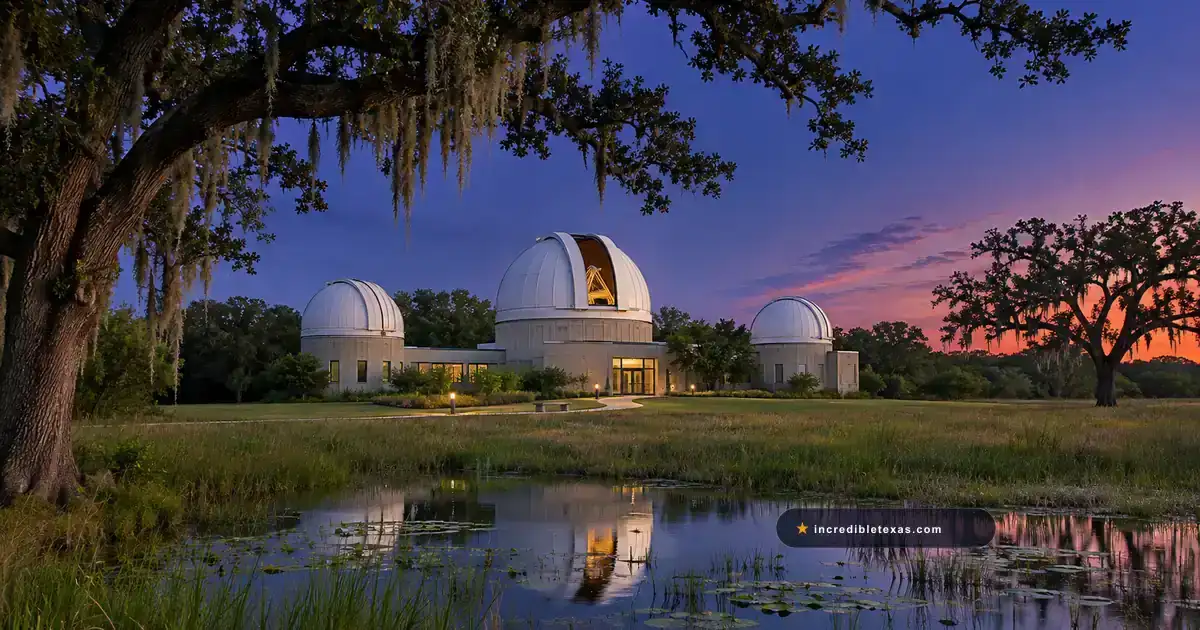
Perched alongside the coastal prairie marshes and Spanish moss-draped live oaks of Brazos Bend State Park, the George Observatory provides Houstonians with a window into deep space. Operated by the Houston Museum of Natural Science, this satellite astronomy facility houses three giant domed research telescopes, including the monumental 36-inch Gueymard Research Telescope, one of the largest public-access optical instruments in the United States.
Key takeaways
- The Mandatory Two-Ticket Rule: Visitors must purchase two separate digital passes in advance: a Texas Parks and Wildlife Department (TPWD) park day pass plus an HMNS George Observatory admission ticket.
- 36-Inch Gueymard Giant: Observe planetary detail including Saturn’s rings, Jupiter’s Great Red Spot, and distant spiral galaxies through professional-grade optics.
- Strict Red-Light Protocol: White flashlights, headlamps, and glowing smartphone screens are strictly banned on the observation deck to protect dark-sky night vision.
- Saturday-Only Stargazing: Public stargazing takes place exclusively on Saturday nights from 5:00 PM to 10:00 PM year-round.
Explore related regional dark-sky destinations in our guide to the best stargazing spots near Houston and review daytime museum exhibits in our Houston Museum of Natural Science guide.
Plan your visit
Verified
- Location
- 21901 FM 762 Rd, Needville, TX 77461 (Inside Brazos Bend State Park)
- Hours
- Saturday Stargazing: 5:00 PM - 10:00 PM year-round (gates open 5:00 PM)
- Admission
- $10 HMNS Observatory ticket + $7 TPWD Park Day Pass per adult
- Best time to go
- New Moon Saturday nights in autumn and winter for darkest, crisp skies
Overview of the George Observatory at Brazos Bend
Located roughly 45 miles southwest of downtown in Fort Bend County, the George Observatory benefits from the natural dark-sky buffer of Brazos Bend State Park’s 5,000 acres of protected bottomland forest and wetlands. Away from the blinding glow of Houston’s urban light pollution, the park provides an unusually dark coastal sky where celestial objects stand out in clear contrast.
According to astronomical records curated by the Houston Museum of Natural Science and wildlife guidelines enforced by the Texas Parks and Wildlife Department Brazos Bend Portal, the facility was restored in 2021 through a comprehensive multi-million-dollar modernization. The renovation upgraded all dome drive mechanics, installed real-time digital imaging feeds, and expanded ADA-accessible viewing ramps across the boardwalks.
Every Saturday evening, professional astronomers and passionate volunteer amateur astronomers align high-powered instruments toward planets, nebulae, globular star clusters, and lunar mountain ranges. Visitors can spend an entire evening wandering between research domes and lawn telescope setups.
The Two-Ticket Rule: TPWD Day Passes and HMNS Observatory Passes
The most common mistake first-time visitors make is purchasing only one ticket. Because the observatory sits entirely within a Texas State Park, entry requires compliance with both state conservation rules and museum ticketing:
| Ticket Type | Provider | Cost | Where to Purchase | Purpose |
|---|---|---|---|---|
| 1. State Park Day Pass | Texas Parks & Wildlife (TPWD) | $7 per adult (Ages 13+); Free for ages 12 & under | TPWD Online Reservation Portal | Allows vehicular entry past the Brazos Bend gatehouse |
| 2. Observatory Ticket | Houston Museum of Natural Science | $10 per person (Ages 3+); Free for ages 2 & under | HMNS.org Official Website | Grants entry to the observatory deck, domes, and telescopes |
Important
Both tickets routinely sell out one to two weeks in advance during pleasant spring and autumn weekends. Do not drive to Needville without confirmation emails for both reservations in hand. Gatehouse rangers will turn away vehicles lacking an active TPWD reservation.
The Telescopes: The 36-Inch Gueymard and Deck Stargazing
The observatory complex features three permanent domed structures situated atop elevated boardwalks over Creekfield Lake:
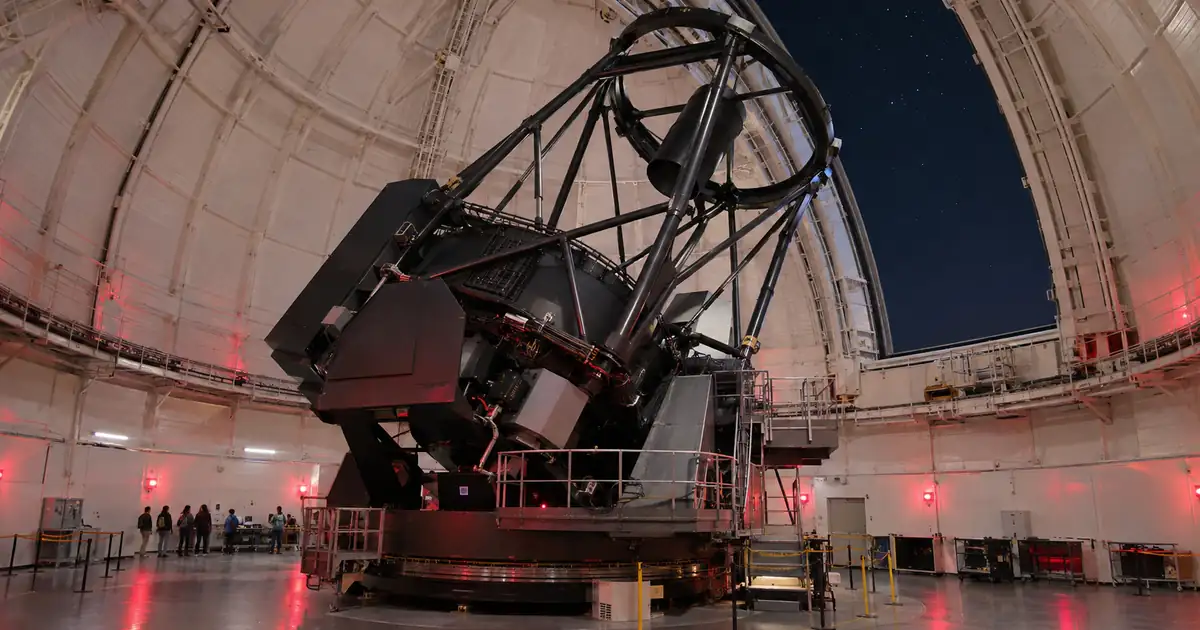
- The Gueymard Research Telescope (East Dome): A 36-inch Cassegrain reflector telescope weighing over 14 tons. Visitors ascend a motorized hydraulic scissor-lift platform to peer through the primary eyepiece or view real-time CCD camera deep-sky feeds projected onto ultra-high-definition monitors.
- The 18-Inch Reflector (West Dome): Optimized for high-contrast lunar detail, binary star systems, and planetary rings.
- The 14-Inch Telescope (South Dome): Dedicated to solar observing in late afternoon and bright nebulae after twilight.
- The Amateur Stargazing Deck: Surrounding the domes, members of the Houston Astronomical Society, Fort Bend Astronomy Club, and Johnson Space Center Astronomical Society set up 15 to 25 personal Dobsonian and Schmidt-Cassegrain telescopes, eagerly answering visitor questions.
Red-Light Night-Vision Rules and Essential Gear
It takes human eyes roughly 20 to 30 minutes in darkness to build rhodopsin, the biological pigment necessary for low-light night vision. A single blast of white flashlight beam or phone screen resets that biological clock instantly.
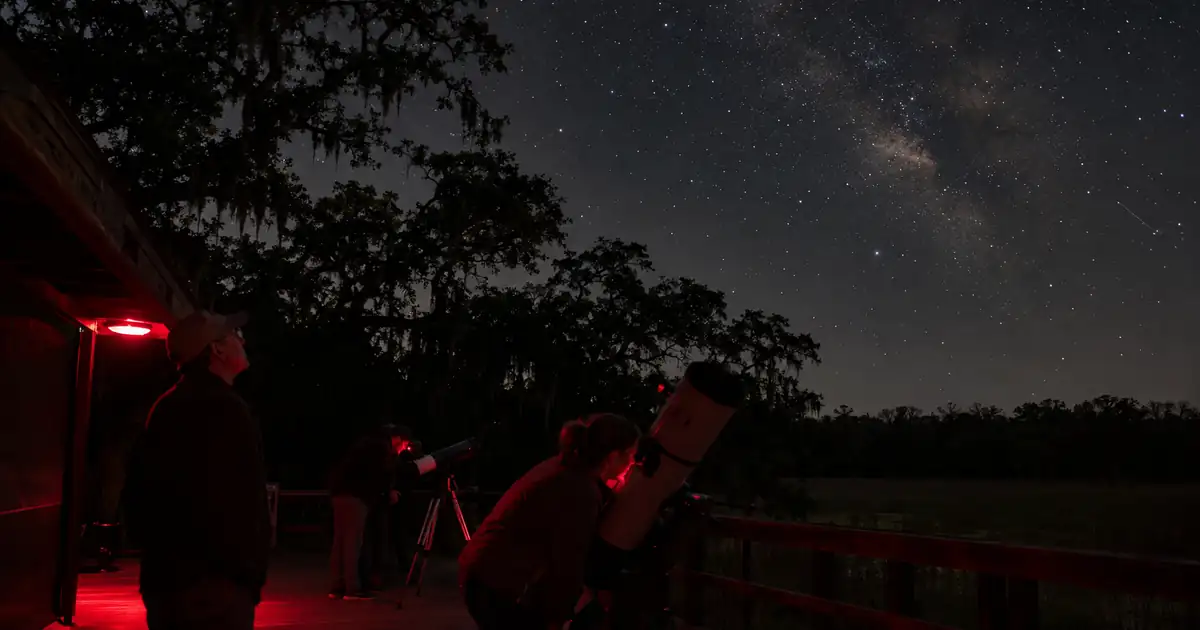
To preserve the viewing experience:
- Red-Light Flashlights Only: Purchase a dedicated red-beam LED flashlight or cover a standard white flashlight with multiple layers of red cellophane or red automotive tail-light tape.
- Phone Screens: Dim smartphone screens to minimum brightness and activate iOS or Android red-color accessibility filters.
- Insect Repellent: Brazos Bend’s wetlands support dense Gulf Coast mosquito populations from March through November. Apply bug spray at your vehicle in the parking lot; do not spray aerosol repellents on the observation deck, as chemical mist degrades delicate optical telescope coatings.
- Footwear: Wear closed-toe athletic sneakers or hiking boots. The 0.4-mile pathway from the parking lot to the observatory is paved but passes through natural wooded terrain.
Driving Directions, Parking, and Park Arrival Timelines
The observatory is located at 21901 FM 762 Road, Needville, TX 77461 inside Brazos Bend State Park.
- Driving Route: From Downtown Houston, travel south on I-69 / US-59 South past Sugar Land to Rosenberg. Exit FM 762 Road and travel southeast for 18 miles to the Brazos Bend State Park entrance gatehouse.
- Arrival Window: Arrive at the state park gatehouse between 5:00 PM and 6:30 PM. This provides plenty of daylight to show digital passes, navigate park roads, park in the observatory lot, and walk the Creekfield Lake Nature Trail before sunset.
- Parking Logistics: Follow park road signs to the dedicated George Observatory parking area. Parking is completely free and included in your TPWD park entry permit.
- Trail Walk: The walk from the parking lot to the observatory domes takes roughly 8 to 10 minutes along a flat, paved nature trail. Bring a red flashlight for the walk back to your car after dark.
Weather Monitoring: Cloud Cover and Cancellation Policies
Telescopes cannot see through thick coastal clouds or rain. However, the George Observatory operates rain or shine:
- Clear Skies: Full outdoor deck observing with all three research domes open to space.
- Overcast or Rain: Staff pivot to indoor interactive astronomy programming, including simulated planetarium fly-throughs, meteorite handling exhibits, and telescope mirror technology lectures.
- Weather Tracking: Check regional cloud forecasts 24 hours in advance on the National Weather Service Houston/Galveston Portal. Look specifically for clear skies and low relative humidity over Fort Bend County. High humidity and fog off the coastal marshes can occasionally reduce contrast through telescope optics during late summer. Autumn cold fronts frequently bring the crispest, most stable viewing skies of the year.
- Refund Policy: HMNS tickets are non-refundable for weather; the indoor programming proceeds regardless of sky conditions.
Astrophotography Tips for Amateurs on the Deck
Visitors frequently bring smartphones and cameras hoping to capture astronomical photographs through the telescope eyepieces:
Smartphone Digiscoping
Many volunteer astronomers on the deck carry universal smartphone telescope adapters. These mounts secure your phone camera directly over the eyepiece lens, allowing you to capture crisp lunar craters, Jupiter’s moons, and Saturn’s rings in seconds. Turn off your camera flash before attaching the phone to avoid blinding other stargazers.
Long-Exposure DSLR Considerations
Tripods are permitted on designated sections of the amateur deck, provided they do not block main pedestrian boardwalk walkways. Wrap tripod legs in red reflective tape so walkers do not trip over them in the dark. Long-exposure milky way photography is best attempted during new moon phases in late summer and autumn.
Pairing Brazos Bend Alligators with Night Astronomy
Maximize your 50-minute drive from Houston by arriving three hours before sunset:
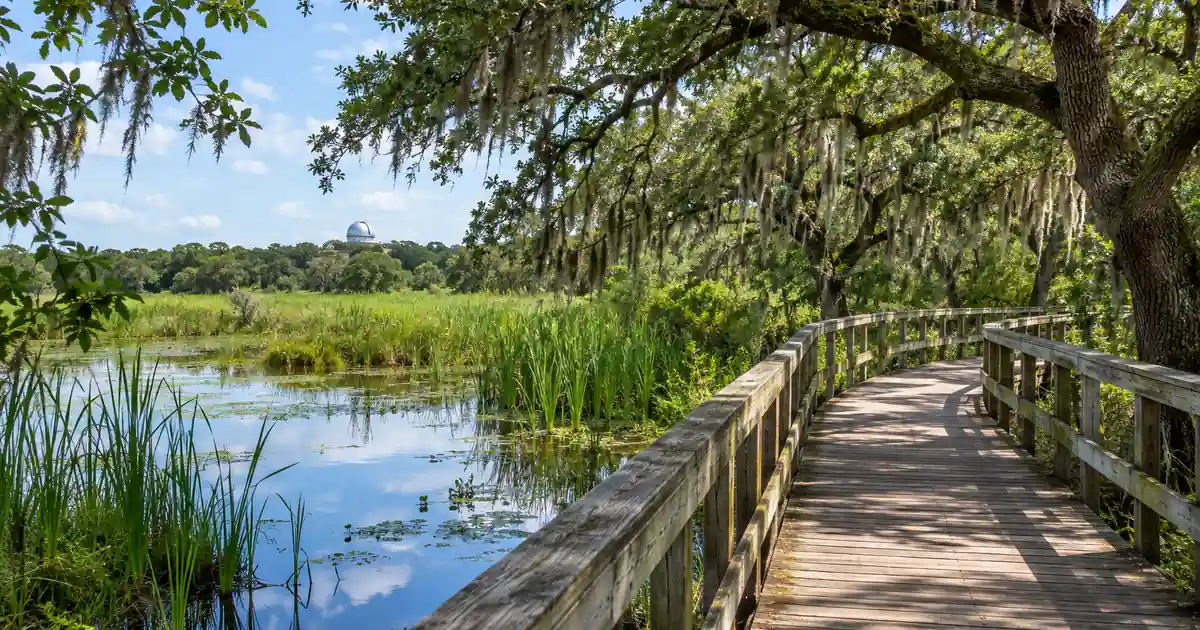
- Alligator Viewing on 40-Acre Lake: Walk the 1.2-mile loop trail around 40-Acre Lake before dusk to spot dozens of wild American alligators sunning themselves along marsh banks.
- Brazos Bend Nature Center: Explore hands-on reptile exhibits and taxidermy displays operated by park naturalists.
- Picnic Dinner: Bring sandwiches, coolers, and camp chairs to enjoy a sunset picnic at the park’s shaded tables before heading up to the telescope deck.
- Houston Museum District Synergy: Pair this Saturday night field expedition with a daytime visit to the Houston Museum District to tour the Burke Baker Planetarium and Paleontology Hall at the main HMNS campus in Hermann Park.
Frequently Asked Questions About George Observatory
Do you need two separate tickets to visit the George Observatory?
Yes, visitors must secure both a TPWD Brazos Bend State Park Day Pass ($7 for adults) and an HMNS George Observatory Stargazing Ticket ($10 per person) prior to arrival.
What nights is the George Observatory open?
The observatory operates public Saturday Stargazing sessions every Saturday evening year-round from 5:00 PM to 10:00 PM, rain or shine.
Can you bring white flashlights to the observatory?
No, white-light flashlights, phone screens, and camera flashes are prohibited on the observation deck. Visitors must use red-filtered LED flashlights to protect human night vision.
What happens if it is cloudy on Saturday night?
If cloud cover prevents telescope viewing, staff present indoor planetarium software tours, live telescope camera demonstrations, and expert astronomy presentations.
Are there alligators on the trail to the observatory?
Brazos Bend State Park is home to hundreds of wild American alligators. Stay on designated paved trails, keep children close, and maintain at least 30 feet of distance from wildlife.
How far is the George Observatory from Houston?
The observatory is located approximately 45 miles southwest of Downtown Houston in Needville, requiring roughly 50 to 60 minutes of highway driving via US-59/I-69 South.