Across the ranchlands of the border country, the south texas barbacoa tradition represents the oldest barbecue lineage in Texas. Rooted in 18th-century Spanish and Mexican vaquero cattle drives, authentic barbacoa cooks whole beef cuts low and slow until the meat yields to the touch.
Note
Part of our upcoming Texas Barbecue Trail Guide series. Explore our curated Texas Food Guide for additional culinary itineraries, regional smokehouse reviews, and pitmaster profiles.
Key takeaways
- South Texas barbacoa traces to ancestral vaquero ranching traditions that slow-cook beef heads over mesquite embers or enclosed steam pits.
- Vera’s Backyard Bar-B-Que in Brownsville operates the only commercially licensed underground brick earth-pit in Texas, honored by the James Beard Foundation.
- Cachete (pure beef cheek meat) represents the gold standard of barbacoa, celebrated for melted gelatinous collagen and rich marbling.
- Pairing fatty barbacoa tacos with cold Big Red soda serves as an intentional culinary counterpoint, using carbonation and sweetness to cleanse the palate.
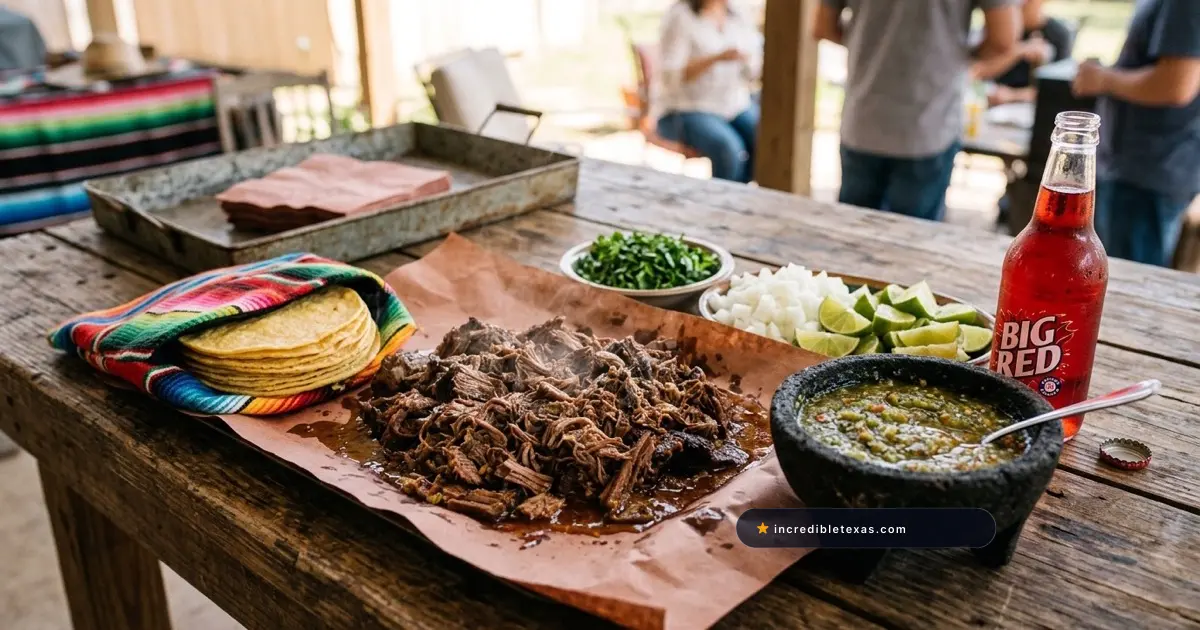
- The traditional Sunday morning ritual centers on purchasing barbacoa by the pound wrapped in butcher paper, assembled with fresh corn tortillas, cilantro, and salsa.
South Texas Barbacoa Trail Route & Destination Matrix
Tracing authentic south texas barbacoa leads food travelers south from San Antonio across the Brush Country to the subtropical tip of Brownsville. Smokehouses along this trail operate predominantly on Saturday and Sunday mornings, opening at dawn to serve families picking up meat by the pound.
Unlike urban craft joints in Central Texas where lines stretch for hours on city sidewalks, South Texas tortillerias and meat markets move briskly. Travelers looking for urban brisket comparisons can review our Austin Craft BBQ Line Guide to plan schedules between regions.
| Destination | Location | Primary Cooking Method | Signature Cut | Big Red Availability | Operating Hours |
|---|---|---|---|---|---|
| Vera’s Backyard Bar-B-Que | Brownsville (Southmost Rd) | Underground mesquite pit | Puro Cachete (Cheek) | Glass bottles & fountain | Sat & Sun: 5:30 AM – 2:00 PM |
| Garcia’s Mexican Food | San Antonio (Fredericksburg) | Hickory smoker & steam | Smoked brisket & barbacoa | Chilled 12-oz cans | Wed – Sat: 7:00 AM – 2:00 PM |
| Rios Barbacoa | San Antonio (Multiple locations) | Stainless steel steam vessel | Cachete & Mixta | Cold 20-oz bottles | Sat & Sun: 6:00 AM – 1:00 PM |
| Taqueria Datapoint | San Antonio (Medical Center) | Enclosed steam chamber | All-meat barbacoa | Cans & Mexican glass bottles | Tuesday – Sunday: 6:30 AM – 10:00 PM |
| El Milagrito Cafe | San Antonio (St. Mary’s St) | Traditional steam vessel | Cachete taco plates | Fountain & bottles | Daily: 6:00 AM – 3:00 PM |
Vera’s Backyard Bar-B-Que: The Last Underground Mesquite Earth Pit in Texas
At 2404 Southmost Road in Brownsville, Vera’s Backyard Bar-B-Que preserves an irreplaceable chapter of American food history. Established by Alberto Vera in 1955, the unassuming cinder-block restaurant is now operated by his son, master pitmaster Armando Vera.
Food enthusiasts make pilgrimages here because veras backyard barbacoa brownsville stands as the sole commercial establishment in the entire state of Texas legally permitted to cook barbacoa in a subterranean earth-pit. In recognition of this dedication, the James Beard Foundation honored Vera’s with its America’s Classics Award.
Grandfathered Brick Pits and Mesquite Hardwood Coals
Modern commercial health codes require restaurants to prepare beef heads in enclosed stainless steel steamers. Vera’s was built decades before these sanitary codes took effect, and municipal health officials legally grandfathered the underground pit room.
Beneath the corrugated tin shed behind the dining counter lies a deep rectangular pit lined with dense firebrick. On Friday evenings, Armando Vera burns logs of wild South Texas mesquite down into a thick bed of glowing embers.
He wraps whole cow heads tightly in layers of heavy foil, lowers them onto iron grates positioned directly above the coals, and seals the pit with sheet metal and heavy thermal blankets. The heads cook undisturbed for 10 to 12 hours in their own rendered juices and aromatic mesquite smoke.
Ordering Cachete, Lengua, and Mixta by the Pound in Brownsville
Doors unlock at 5:30 AM on Saturday and Sunday mornings. Patrons form an eager line inside the modest dining room to place orders by the pound or half-pound.
The most sought-after selection is authentic beef cheek barbacoa, known locally as puro cachete. Diners assemble warm cachete cheek meat tacos using soft corn tortillas topped with fresh cilantro, diced onions, and roasted salsa verde. This cut contains high amounts of natural collagen that melt into rich gelatin during the overnight cook, resulting in shredded beef of tender softness.
Adventurous diners can also order lengua (cured beef tongue), ojos, or mixta, a traditional blend combining cheek, tongue, and tender head trimmings. Orders cost approximately $16 to $22 per pound and come wrapped in white butcher paper alongside warm corn tortillas and roasted jalapeño salsa.
Travelers comparing Caldwell County sausage counter traditions against border pitcraft can review our Lockhart BBQ Day Trip Guide to explore historic German meat market roots.
Review awards and national culinary citations on the official James Beard Foundation Portal.
The Science and Soul Behind Barbacoa and Big Red Soda
In San Antonio and South Texas, ordering barbacoa without Big Red is considered an unthinkable culinary omission. Convenience stores, taquerias, and drive-through tortillerias position cold red soda displays directly beside checkout registers every weekend.
The cultural connection runs so deep that the barbacoa and big red pairing has inspired songs, regional artwork, and dedicated community festivals throughout Bexar County.
Why Sweet Citrus Cream Soda Cuts Heavy Beef Collagen
While some visitors initially view pairing rich shredded beef with red soda as unusual, food scientists recognize it as a balanced flavor pairing. Slow-cooked beef cheek contains high concentrations of rendered intramuscular fat and liquefied collagen.
Big Red was invented in Waco, Texas, in 1937. Unlike ordinary cherry sodas, Big Red is a red cream soda flavored with lemon and orange oils blended with vanilla.
The sharp effervescence of the carbonation scrubs rendered beef tallow from the palate. Meanwhile, the bright citrus oils and sweetness slice cleanly through the savory richness of seasoned beef, preparing the taste buds for the next bite of taco.
The Sunday Morning Ritual: Family Orders, Butcher Paper, and Tortillerias
Across South Texas neighborhoods, the sunday morning barbacoa ritual shapes weekend family life. Grandparents and parents rise before church to pick up fresh food from neighborhood carnicerias and tortillerias.
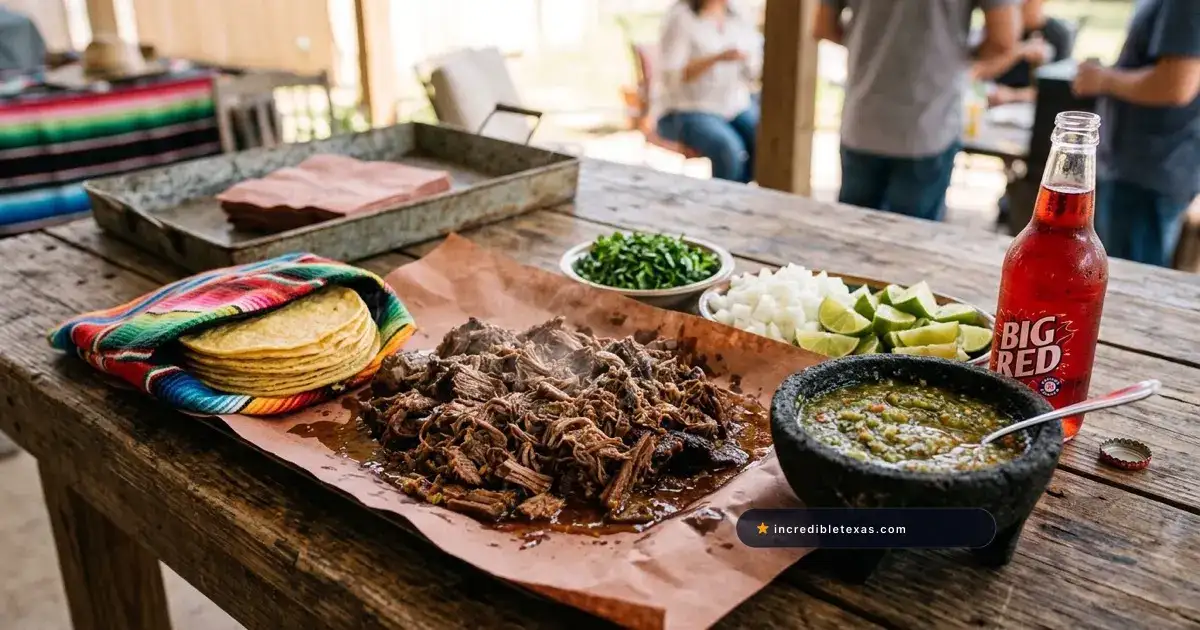
A typical family order includes one or two pounds of warm meat wrapped in foil, two packages of steaming yellow corn tortillas, chopped cilantro, diced white onions, lime wedges, and a two-liter bottle of Big Red.
Step-by-Step Counter Ordering Etiquette
Approaching a busy weekend counter moves quickly when you know the local terminology. Follow these standard guidelines for smooth ordering:
- Specify Your Weight: Order by the pound or half-pound (for example, “dos libras” or “two pounds”). A single pound yields four to five generous tacos.
- Choose Your Cut: Request “puro cachete” if you prefer lean, tender cheek meat, or “mixta” if you want the traditional marbled blend of head meats.
- Confirm Your Tortillas: Most shops provide warm corn tortillas wrapped in paper, but you can request fresh flour tortillas if preferred.
- Grab Extra Salsa and Produce: Check that your bag includes fresh limes, raw onions, chopped cilantro, and spicy green salsa.
- Add Cold Big Red: Select chilled cans, glass bottles, or two-liter jugs from the walk-in cooler before completing payment.
Back home, families spread butcher paper across kitchen tables, squeeze fresh lime juice over warm tacos, and enjoy a relaxed morning meal together.
San Antonio Barbacoa Landmarks: Garcia’s Mexican Food and Local Festivals
San Antonio serves as the cultural crossroads of Tejano foodways. On Fredericksburg Road in the Midtown historic district, garcias mexican food san antonio has delighted diners since 1962.
Run by the Garcia family, the cozy diner is renowned for serving smoked brisket tacos alongside tender weekend barbacoa. Their barbacoa taco features rich cheek meat tucked into thick, griddled flour tortillas with a side of fiery roasted jalapeño salsa.
Each spring, the city gathers for the san antonio barbacoa big red festival, attracting more than 20,000 visitors to celebrate the iconic culinary duo with live conjunto music, local taqueria competitions, and cold drinks.
Travelers interested in comparing Tejano pit traditions against Piney Woods sweet-sauce ribs can explore our East Texas BBQ Trail Guide for historic roadside smokehouses.
Traditional Earth Pits vs Modern Vaporera Steaming Methods
Understanding South Texas culinary heritage requires distinguishing between ancestral earth pits and contemporary commercial steaming vessels.
Ancestral barbacoa de cabeza pit cooking involved digging a hole in the earth roughly three feet deep, lining the base with field stones, and burning mesquite logs until thick embers formed. Ranch cooks lined the pit with maguey leaves, lowered whole wrapped beef heads into the ground, covered the hole with damp burlap and soil, and left it overnight.
Because open underground pits are challenging to regulate for commercial food safety, modern Texas health codes require restaurants to use commercial stainless steel steam chambers called vaporeras.
In a vaporera, seasoned beef heads or trimmed cheeks steam above boiling water inside a sealed chamber for 8 to 10 hours. While modern steaming produces extraordinarily moist meat, only underground mesquite pit barbacoa imparts that subtle earth-and-wood smokiness preserved at Vera’s.
This contrast between rural direct-heat traditions and urban commercial methods mirrors the pit evolution documented in our Snow’s BBQ Lexington Guide.
Rio Grande Valley Driving Route, Nature Preserves, and Logistics
Driving the South Texas Barbacoa Trail takes travelers approximately 275 miles along Interstate 37 and US Highway 77 from San Antonio to Brownsville. The highway winds past historic cattle ranches, mesquite pastures, and wind farms before entering the Rio Grande Valley.
Plan to arrive in Brownsville on a Saturday or Sunday morning by 8:00 AM to ensure full cut availability at Vera’s Backyard Bar-B-Que before specialty meats sell out.
Beyond dining, the Lower Rio Grande Valley offers remarkable subtropical outdoor recreation. Explore ancient ebony forests along 3.2 miles of wildlife trails at Resaca de la Palma State Park where adult day entry is $4 per person, or walk preserved battlefield grounds at Palo Alto Battlefield National Historical Park.
Travelers curious about Caldwell County mustard sauce traditions can read our Luling City Market Guide for another regional condiment phenomenon.
Discover regional Spanish missions and ranching landmarks cataloged across South Texas on the Texas Historical Commission Portal.
Continue Exploring the Texas Barbecue Trail
South Texas barbacoa provides an essential foundation for understanding the diversity of Texas smoked meats. Once you have tasted authentic cheek meat tacos with cold Big Red, explore adjacent regional traditions across the Lone Star State:
- Central Texas German Smokehouses: Experience post-oak brisket served on butcher paper without sauce in Lockhart and Luling.
- The Lee County Dawn Pilgrimage: Taste tender direct-coal pork steaks basted with vinegar mop at Snow’s BBQ in Lexington.
- Piney Woods Hickory Smokehouses: Sample sweet-glazed ribs and homemade beef hot links in Tyler and Pittsburg.
- Upcoming Pit Guides: Stay tuned for future guides covering our Central Texas vs East Texas BBQ guide, Cooper’s BBQ in Llano, and Best No-Wait Texas BBQ Joints.
Frequently Asked Questions About South Texas Barbacoa
Why do Texans eat barbacoa with Big Red?
Big Red is a red cream soda flavored with lemon and orange oils, whose effervescent carbonation and bright sweetness cut through the rich, collagen-heavy beef fat of slow-steamed cheek meat. The pairing originated in San Antonio and South Texas during the mid-20th century as a beloved weekend tradition.
What part of the cow is authentic Texas barbacoa?
Authentic South Texas barbacoa is made from the whole cow head (cabeza), with cachete (cheek meat) considered the premium cut due to its tender marbling. Other traditional cuts include lengua (tongue), sesos (brains), and mixta (a blend of head meats).
Where is the only underground pit barbacoa in Texas?
Vera’s Backyard Bar-B-Que at 2404 Southmost Road in Brownsville is the only commercial establishment in Texas legally grandfathered to cook barbacoa in an underground earth-pit over mesquite coals. Modern health regulations require all other commercial vendors to use enclosed steam chambers.
How do you order barbacoa in South Texas?
Patrons order barbacoa by the pound or half-pound (por libra) wrapped in heavy foil and butcher paper, specifying either all-cheek (puro cachete) or mixed meat (mixta). Orders come with a pack of warm corn tortillas, fresh cilantro, diced raw white onions, lime wedges, and house salsa.
What is the difference between barbacoa and carnitas?
Barbacoa is slow-steamed or pit-cooked beef head meat cooked until meltingly tender and rich in gelatin. In contrast, carnitas are made from pork shoulder or pork ribs braised in lard (confit) until crispy on the outside and tender inside.