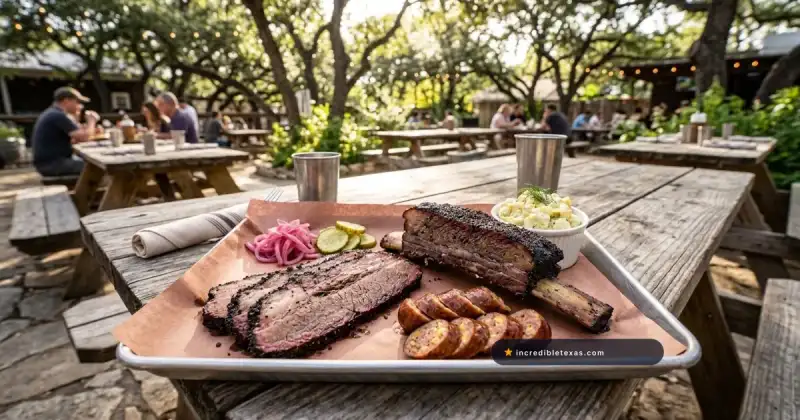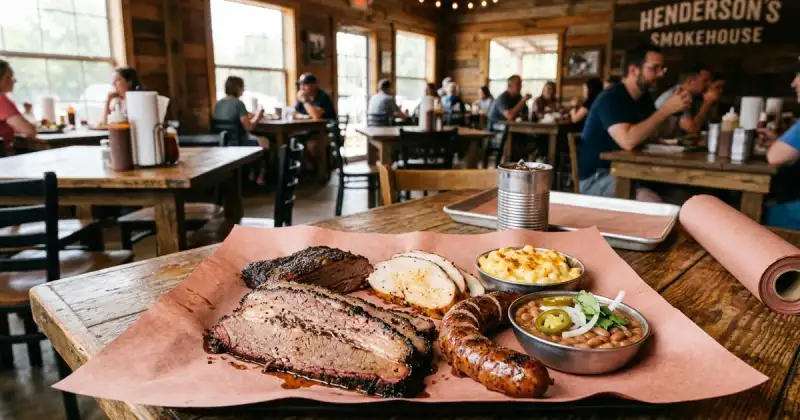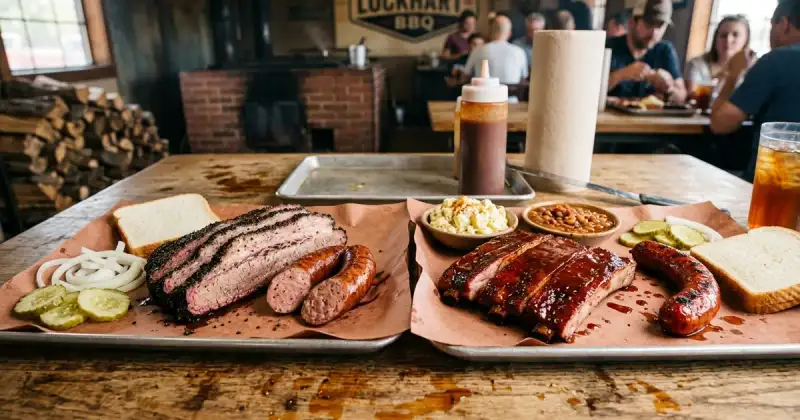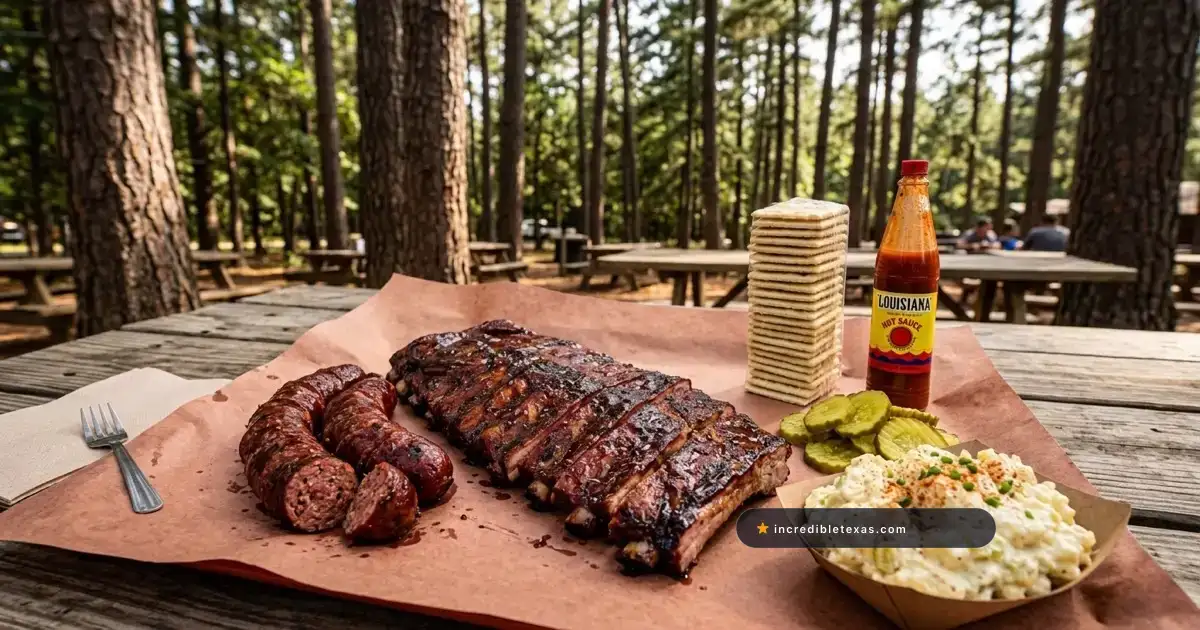
Deep in the Piney Woods, exploring authentic east texas bbq hot links reveals a culinary tradition distinct from the rest of the Lone Star State. While Central Texas champions simple salt-and-pepper post oak brisket (explore our regional breakdown in the Central Texas vs East Texas BBQ guide), regional pitmasters here celebrate sweet tomato-glazed ribs, chopped beef sandwiches, and garlic-spiced sausage.
Note
Part of our comprehensive Texas BBQ trail guide series. Explore our curated Texas Food Guide for additional culinary itineraries, regional smokehouse reviews, and pitmaster profiles.
Key takeaways
- East Texas barbecue relies on aromatic hickory, pecan, and red oak hardwoods paired with sweet, tomato-based barbecue sauce.
- Pittsburg Hot Links in Camp County has served pure beef spiced links on butcher paper with saltine crackers continuously since 1897.
- Tyler’s Stanley’s Famous Pit BBQ represents the region’s oldest continuous smokehouse, celebrated for hickory-smoked ribs and live music.
- Country Tavern near Kilgore delivers famous sticky pork ribs smothered in sweet mop sauce inside a historic 1939 oil boom roadhouse.
- Unlike Central Texas brisket-centric traditions, East Texas menus highlight tender pork ribs, chopped beef sandwiches, and hot links.
East Texas Barbecue Trail Route & Smokehouse Matrix
Exploring stops along the east texas barbecue trail requires traveling scenic highway corridors connecting Tyler, Kilgore, Longview, Pittsburg, and historic Jefferson. Driving through towering pine canopies reveals multi-generational roadside joints where sweet wood smoke curls above gravel parking lots.
Understanding how each pitmaster approaches smoke wood, meat selection, and sauce glazes helps travelers map an efficient tasting route across the region.
| Smokehouse | Town | Signature Specialty | Hardwood Smoke | Sauce Character | Service Days |
|---|---|---|---|---|---|
| Pittsburg Hot Links | Pittsburg | Hand-tied pure beef hot links | Oak coals & steam | Tangy pepper hot sauce | Monday – Saturday |
| Stanley’s Famous Pit BBQ | Tyler | Baby back ribs & Mother Clucker | Pecan & hickory | Sweet brown sugar glaze | Monday – Saturday |
| Country Tavern | Kilgore | Sticky tender pork ribs | Hickory hardwood | Sweet warm vinegar-tomato | Tuesday – Saturday |
| Bodacious Bar-B-Q | Longview (Mobberly) | Craft brisket & brisket boudin | Post oak & hickory | Rich balanced tomato sauce | Tuesday – Saturday |
| Joseph’s Riverport BBQ | Jefferson | Swamp Thing potato & pork ribs | Hickory wood | Thick sweet East Texas sauce | Tuesday – Sunday |
Pittsburg Hot Links: The Century-Old Capital of Texas Hot Links
Camp County claims a singular title in Texas food lore. In 2019, state lawmakers formally designated Pittsburg as the official Hot Link Capital of Texas, honoring a sausage-making craft that defined classic east texas hot links for over a century.
Operating out of 136 West Marshall Street, the Pittsburg Hot Link Restaurant welcomes travelers seeking authentic pittsburg hot links texas food lovers have celebrated for generations. The restaurant serves patrons from 9:00 AM to 6:00 PM Monday through Saturday.
The 1897 German Meat Market Origins in Camp County
The tradition began in 1897 when German immigrant butcher Charlie Hasselback arrived in Camp County with a family recipe for seasoned beef sausage. Working from a storefront on Main Street, Hasselback hand-tied ground beef trimmings mixed with red pepper and garlic into natural pork casings.
He initially sold the raw links over a refrigerated meat counter. By 1918, demand for ready-to-eat hot links prompted Hasselback to set up tables in the rear of his market, creating an informal dining room where local farmers and timber workers gathered for lunch.
The Warrick family expanded the operation during the mid-20th century, helping turn the restaurant into a regional landmark. Each April, thousands of visitors flock to downtown for the annual pittsburg hot link festival, featuring link-eating contests, arts and crafts vendors, and live entertainment cataloged across regional heritage destinations by the Texas Historical Commission.
Butcher Paper, Saltine Crackers, and Hot Sauce Protocol
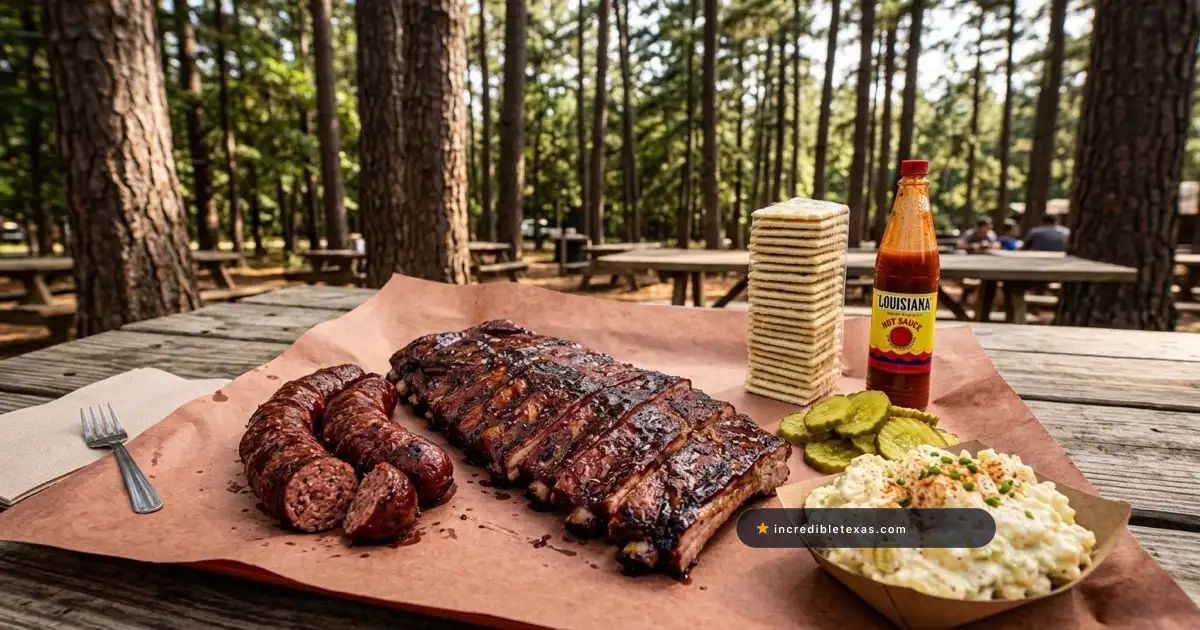
Eating at Pittsburg Hot Links follows an established etiquette unchanged since the early 1900s. Links arrive steaming hot in red plastic baskets lined with plain wax paper, accompanied by tall sleeves of saltine crackers and yellow mustard.
Unlike coarse German-style sausage rings found at Luling City Market, authentic Pittsburg hot links feature a tender, finely textured beef filling encased in a thin natural skin. Slicing into a link releases seasoned reddish grease fragrant with cumin and chili powder.
Local custom dictates using saltine crackers as edible spoons to absorb the flavorful juices. Splash a few drops of the house vinegar hot sauce over the cracker, press a bite of beef link on top, and eat it by hand without utensils.
Review current raw package shipping rates and lunch menus on the Pittsburg Hot Links Official Portal.
Stanley’s Famous Pit BBQ: Tyler’s Oldest Smoked Meat Institution
Situated along South Beckham Avenue in Tyler, Stanley’s Famous Pit BBQ has operated continuously for more than sixty-five years. Founded as a humble drive-through stand, the smokehouse stands as Tyler’s oldest operational family-owned barbecue joint. Doors open promptly at 11:00 AM for lunch service.
Under pitmasters Nick and Jen Pencis, stanleys famous pit bbq tyler earned acclaim on Texas Monthly’s Top 50 list. The restaurant combines deep pit traditions with a relaxed music venue featuring a shaded outdoor patio and a craft whiskey selection.
Hickory Smoked Ribs and the Mother Clucker Sandwich
Stanley’s burns seasoned East Texas pecan and hickory logs in large steel pits. The kitchen specializes in fall-off-the-bone baby back pork ribs coated in a peppery brown sugar rub and finished with a light sweet glaze.
Their most celebrated creation is the Mother Clucker sandwich. This hearty assembly stacks smoked chicken thigh meat, spicy candied bacon, melted sharp cheddar cheese, and sliced pickled jalapeños on toasted jalapeño sourdough bread.
The lively patio regularly hosts touring musicians, creating a welcoming road trip stop for travelers driving between Dallas and Shreveport. Morning visitors can also sample pit-smoked brisket breakfast tacos that rival early-morning country cooks at Snow’s BBQ in Lexington.
Check weekly music lineups and pit operating schedules directly on the Stanley’s Famous Pit BBQ Website.
Country Tavern: Kilgore’s Legendary Sweet-Sauced Pork Ribs
Tucked along FM 2767 just west of Kilgore, Country Tavern is a legendary roadside destination. Established in 1939 during the frantic height of the East Texas Oil Boom, the wood-paneled tavern originally served roughnecks working surrounding oil derricks.
Generations of travelers have pulled into the gravel lot specifically for country tavern kilgore ribs, which represent the pinnacle of sweet-sauced East Texas pork smoking.
Oil Boom Dive Bar Atmosphere on FM 2767
Stepping inside Country Tavern reveals a preserved roadhouse aesthetic featuring neon signs, weathered wooden booths, and vintage beer memorabilia. The atmosphere feels untamed and unpretentious, maintaining the spirit of 1930s oil camp gathering spots.
The kitchen serves racks of tender pork spare ribs basted continuously in a dark, sweet, and tangy tomato-based barbecue sauce. The meat smokes until it cleanly releases from the bone, creating a sticky caramelized coating that requires plenty of moist towelettes.
Racks arrive on aluminum trays alongside sliced white bread, potato salad, and cold bottled beer. The combination of sweet glaze and heavy hickory smoke offers a striking contrast to Central Texas dry-rub purism.
Bodacious Bar-B-Q on Mobberly: Longview’s Modern Craft Revival
Bodacious Bar-B-Q is an East Texas staple with multiple franchise outlets, but the location at 2228 South Mobberly Avenue in Longview stands apart. Pitmaster Jordan Jackson took control of this location and transformed it into an internationally recognized craft smokehouse.
Smoking on custom 1,000-gallon offset barrels over post oak and hickory, bodacious bbq longview mobberly earned a spot on Texas Monthly’s Top 50 Texas BBQ list.
Jackson honors East Texas roots while incorporating precise modern pit techniques. Signature items include tender prime brisket, thick pork ribs, and hand-stuffed brisket boudin packed with seasoned rice, pork, and smoked beef trimmings.
Their loaded baked potatoes and Sloppy Surfer sandwiches draw long lunch crowds from across Gregg County, proving that traditional Piney Woods recipes can thrive alongside contemporary craft barbecue standards. Travelers seeking ancestral underground pit cooking can explore our South Texas Barbacoa Trail Guide comparing weekend Rio Grande Valley traditions.
Joseph’s Riverport Bar-B-Q: Historic Steamboat Smoked Flavors in Jefferson
Located in the historic 19th-century river port of Jefferson, Joseph’s Riverport Bar-B-Q at 201 North Polk Street offers a flavorful pause near Caddo Lake. Pitmaster Stephen Joseph slow-cooks meats over seasoned hickory hardwood inside heavy iron pits.
The smokehouse is famous for tender hickory smoked pork ribs and its signature menu item, the Swamp Thing. This monstrous baked potato comes split open and loaded with butter, sour cream, shredded cheese, chopped brisket, pork rib meat, and sausage, all drowned in sweet sauce.
Diners eat in a rustic brick dining room decorated with historic photographs and railroad artifacts from Jefferson’s steamboat era. Sampling ribs at josephs riverport bbq jefferson pairs naturally with a scenic afternoon walk among nearby antebellum homes and antique shops.
Central Texas vs East Texas Barbecue: Wood, Meat, and Sauce Differences
Travelers exploring the state often wonder how East Texas traditions contrast with better-known Central Texas smokehouses. The two regions developed their culinary identities based on different geography, immigrant roots, and available timber.
Central Texas evolved from 19th-century German and Czech butchers who held meat markets in towns like Lockhart. Pitmasters relied on indigenous post oak trees, simple coarse black pepper rubs, and butcher paper service with zero sauce, as detailed in our Lockhart BBQ Day Trip Guide.
East Texas traditions trace back to Southern plantation and African American pitmasters who cooked whole hogs, pork shoulders, and beef trimmings over pits fueled by dense hickory and pecan groves.
Because hickory wood produces an assertive smoke profile, cooks balanced the meat’s intensity with east texas sweet barbecue sauce made with tomatoes, brown sugar, molasses, and vinegar. Meats were smoked low and slow until fall-apart tender, making chopped beef sandwiches and succulent pork ribs regional centerpieces.
Piney Woods Driving Logistics, Park Trails, and Itineraries
A weekend road trip along the East Texas barbecue trail covers approximately 160 miles between Tyler and Jefferson along US Highway 271 and Highway 80. Traffic is generally light, providing a peaceful escape through rolling pine forests.
Begin your excursion in Tyler on Friday evening with ribs and live music at Stanley’s Famous Pit BBQ. On Saturday morning, drive 45 miles north on US-271 to Pittsburg for an early lunch of hot links and crackers at Pittsburg Hot Links Restaurant.
After lunch, drive 35 miles southeast toward Longview and Kilgore to sample ribs at Country Tavern or craft boudin at Bodacious on Mobberly. Conclude your tour in historic Jefferson with a Swamp Thing potato at Joseph’s Riverport BBQ.
Between smokehouse stops, take time to enjoy outdoor recreation across the Piney Woods. Hike 2.5 miles of shaded pine trails at Tyler State Park where daily adult entry is $6 per person, or paddle through ancient bald cypress bayous at Caddo Lake State Park.
Travelers comparing city lines against small-town smokehouse pace can review our Austin Craft BBQ Line Guide for urban scheduling insights.
Continue Exploring the Texas Barbecue Trail
East Texas barbecue represents one of four distinct regional culinary pillars across the state. Once you have tasted hickory-smoked ribs and hand-tied hot links, continue your culinary journey across adjacent smokehouse trails:
- German-Czech Meat Markets: Explore Caldwell County’s historic open brick pits in Lockhart and Luling.
- The Saturday Dawn Pilgrimage: Visit Lee County to experience Norma Lynn Tomanetz smoking pork steaks over direct oak coals.
- Urban Craft Smoke: Plan morning arrivals across Travis County to taste Michelin-starred briskets in Austin.
- Upcoming Pit Guides: Stay tuned for future guides covering South Texas Barbacoa Traditions, Cooper’s BBQ in Llano, and Best No-Wait Texas BBQ Joints.
Frequently Asked Questions About East Texas Barbecue
What makes East Texas barbecue different from Central Texas barbecue?
East Texas barbecue cooks meats low and slow over fragrant hickory and pecan wood until tender enough to fall apart, served with sweet tomato-based sauce. In contrast, Central Texas relies primarily on post oak smoke, coarse salt and pepper rubs, and sauce-free slicing.
What are Pittsburg hot links made of?
Authentic Pittsburg hot links consist of finely ground beef seasoned with chili powder, cumin, paprika, and garlic stuffed into natural casings. When sliced, the links release flavorful seasoned grease traditionally captured on sleeves of saltine crackers.
Where is the best barbecue in East Texas?
Top destinations include Stanley’s Famous Pit BBQ in Tyler for ribs, Pittsburg Hot Links for historic hand-tied sausage, and Country Tavern in Kilgore for sweet sticky ribs. Bodacious Bar-B-Q on Mobberly in Longview also ranks among the state’s elite craft pits.
Are hot links spicy in Texas?
Texas hot links offer a robust peppery warmth rather than scorching heat, derived from chili powder and cayenne. Diners control their heat level using vinegar-based pepper hot sauce served alongside each butcher paper basket.
What wood is used for East Texas barbecue?
East Texas pitmasters burn indigenous southern hardwoods, predominantly shagbark hickory, native pecan, and red oak. These woods produce a sweeter, more pungent smoke ring compared to the subtle earthy flavor of Central Texas post oak.