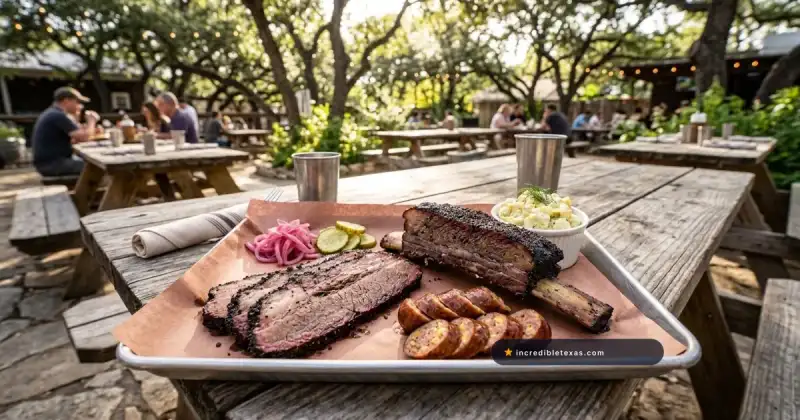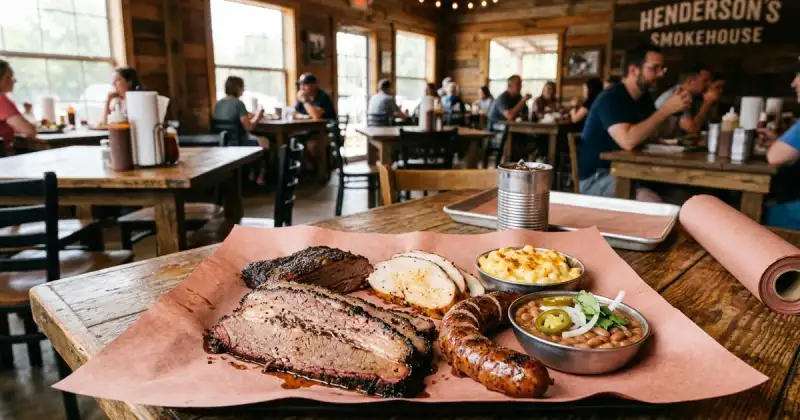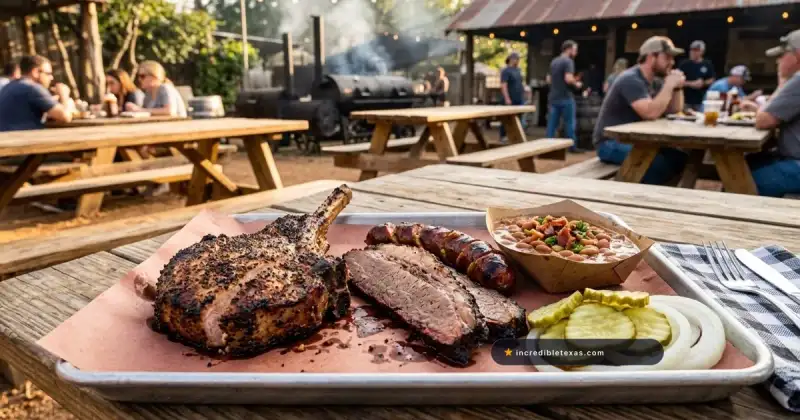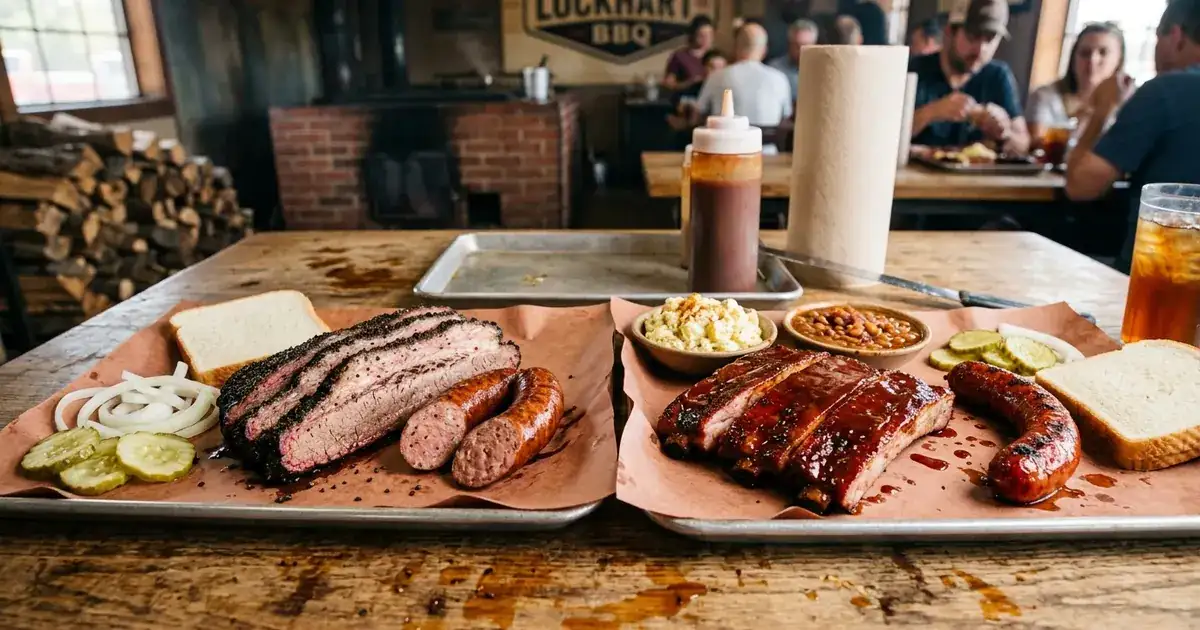
Evaluating the culinary divide of central texas vs east texas bbq reveals two distinct cultural philosophies, smoking techniques, and flavor profiles within the borders of a single state. While worldwide attention often concentrates on Central Texas brisket, the deep pine forests of East Texas nurture an equally historic barbecue heritage rooted in Southern pit cooking, rich tomato glazes, and succulent pork.
Key takeaways
- Central Texas barbecue evolved from German and Czech immigrant butcher shops, whereas East Texas barbecue originates from African American Southern pit traditions.
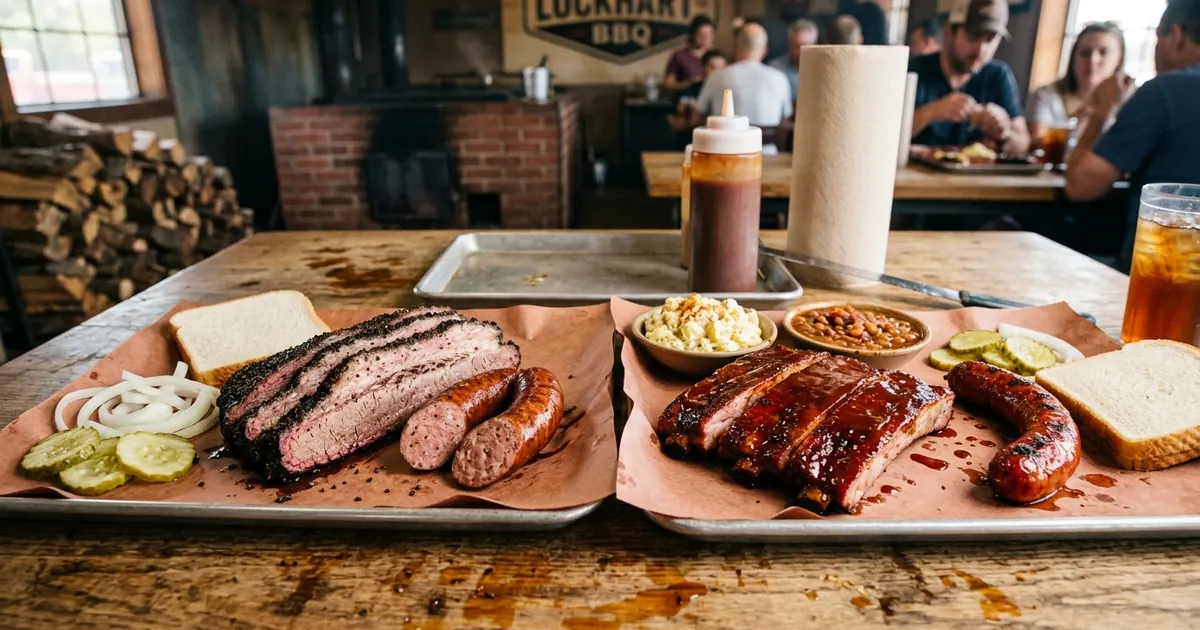
- Central Texas prioritizes whole packer beef brisket seasoned only with coarse black pepper and kosher salt, cooked over native post oak.
- East Texas emphasizes pork ribs, chopped beef sandwiches, and hand-tied beef hot links basted in sweet, tangy tomato or molasses sauces.
- Cooking woods differ sharply: Central Texas uses mild post oak (Quercus stellata), while East Texas pitmasters burn pungent shagbark hickory (Carya ovata) and pecan.
- Central Texas joints serve sliced meat on bare butcher paper without sauce, while East Texas joints serve sauced meats on platters with classic Southern soul sides.
Central Texas vs East Texas BBQ Comparison Overview
Understanding the fundamental distinctions between central texas bbq vs east texas bbq helps road trippers appreciate how geography, forestry, and immigration patterns shaped Texas smokehouse culture.
When planning a pilgrimage like a Lockhart barbecue trail day trip, travelers encounter bare brick pits and unglazed brisket. Driving two hundred miles northeast into the pine country shifts the sensory landscape toward sweet wood smoke and rich barbecue sauce.
To evaluate these regional differences side by side, review the operational characteristics in the matrix below:
| Feature | Central Texas Barbecue | East Texas Barbecue | Culinary Significance |
|---|---|---|---|
| Primary Wood | Seasoned Post Oak (Quercus stellata) | Shagbark Hickory (Carya ovata) & Pecan | Oak imparts mild vanillin smoke; hickory delivers deep pungent warmth |
| Flagship Meat | Whole packer beef brisket (sliced) | Pork ribs, chopped beef & beef hot links | Central Texas honors beef grain; East Texas excels at tender pork and shredded cuts |
| Rub Profile | Dalmatian rub (coarse pepper & kosher salt) | Multi-spice rubs with paprika, garlic & brown sugar | Central highlights pure beef fat; East layers savory-sweet depth |
| Sauce Policy | Strictly optional or absent (“no sauce”) | Integral sweet and tangy tomato-molasses glaze | Central relies on meat bark; East cooks meat with or bathes cuts in sauce |
| Serving Style | By the pound on peach butcher paper | Plated lunches, baskets, or sandwich buns | Central encourages eating with hands; East embraces traditional dining forks |
| Traditional Sides | Dill pickles, white onions, crackers, pinto beans | Potato salad, baked beans, coleslaw, greens | Central offers butcher market snacks; East delivers Southern comfort dishes |
| Cultural Heritage | 19th-century German & Czech butcher shops | Southern & African American community pitmasters | Distinct immigration histories produced diverging preservation methods |
Historical Origins: German-Czech Butcher Shops vs Southern Pitmasters
The fundamental differences between central and east texas bbq do not stem from modern culinary trends, but from 19th-century agricultural realities. Food historians tracing southern foodways note that two separate immigrant groups solved meat preservation through distinct ancestral techniques. Exploring the regional roots of the East Texas BBQ trail reveals how geography guided smokehouse architecture.
Central Texas Butcher Shop Preservation
During the mid-19th century, waves of German and Czech immigrants settled in the blackland prairies and rolling hills of Caldwell, Bastrop, and Fayette counties. According to culinary heritage records cataloged by the Texas Historical Commission, immigrant proprietors established commercial butcher shops in towns like Lockhart, Luling, and Elgin. In Lockhart alone, over 250,000 visitors travel annually to experience four historic smokehouses preparing more than 5,000 pounds of meat each week.
Before the widespread availability of mechanical refrigeration, butchers faced an urgent problem: raw beef spoiled quickly in the Texas heat. To protect their investment, butchers rubbed unsold cuts of beef with coarse black pepper and salt, placed them inside enclosed brick smoke rooms, and burned native post oak logs to cure the meat.
Because these establishments operated as butcher shops rather than full-service restaurants, customers purchased freshly smoked meat wrapped in brown butcher paper. They ate their lunch on wooden counters with pocketknives, accompanied only by dry pantry staples like saltine crackers, whole dill pickles, and raw onions. This meat market tradition created the modern Central Texas dining ritual where plates and utensils remain unnecessary.
East Texas African American Pitmaster Lineage
Across the piney woods of East Texas, barbecue developed along a completely different cultural trajectory rooted in the Deep South. Enslaved African Americans and post-Civil War freedmen brought generational mastery of wood coals, earth trenches, and open-pit hog roasting from Mississippi, Alabama, and Georgia into counties like Smith, Harrison, and Gregg.
As documented by the Southern Foodways Alliance, African American pitmasters in East Texas created community gatherings around dug pits and corrugated tin smoke shacks. Barbecue in this region was celebrated as a communal feast rather than an individual butcher counter transaction.
Pitmasters slow-cooked tougher cuts of pork and beef over smoldering coals for extended periods, frequently basting the meat with spiced vinegar, tomato pastes, and sorghum molasses to retain moisture. The resulting meats were cooked past the point of slicing until they fell apart into juicy, shredded strands that could be heaped onto bread or folded into hearty sandwiches.
Wood Smoke Science: Native Post Oak vs Piney Woods Hickory
Hardwood selection establishes the baseline flavor of Texas barbecue regional styles. The natural distribution of timber species across Texas created an organic geographic boundary between Central Texas oak smoke and East Texas hickory smoke.
Field research conducted by the Texas A&M Forest Service illustrates how the Post Oak Savannah transition zone gives way to dense pine and deciduous hardwood forests east of the Trinity River.
Post Oak: Mild Heat and Vanillin Clean Smoke
In Central Texas, post oak (Quercus stellata) serves as the undisputed gold standard for pitmasters. This dense hardwood grows abundantly along the Edwards Plateau and blackland prairies. When seasoned properly for nine to twelve months, post oak produces an exceptionally clean, steady ember bed with predictable thermal output.
According to wood combustion research from the Texas A&M University Meat Science, post oak smoke releases low concentrations of harsh aromatic phenols. Instead, its thermal decomposition yields subtle vanillin compounds and gentle lactones that coat beef without turning bitter during a sixteen-hour smoking cycle.
Pitmasters prize post oak because it allows the unadorned flavor of prime beef fat and coarse black pepper to take center stage. The smoke acts as a seasoning amplifier rather than an overpowering blanket, leaving a deep mahogany crust and a clean aftertaste on the palate.
Hickory and Pecan: Assertive Phenols and Sweet Notes
Travelers crossing into East Texas notice an immediate change in the aroma drifting from roadside pits. In the piney woods, pitmasters rely on shagbark hickory (Carya ovata) and native pecan trees that line river bottoms and creek beds.
Hickory contains substantially higher levels of syringol and guaiacol, the chemical compounds responsible for deep, spicy, and bacon-like smoke flavors. When hickory wood burns, it generates a heavy, sweet aroma that penetrates deeply into pork tissues.
Pecan, a member of the hickory family, delivers a similar sweet warmth with a slightly gentler smoke profile. These aromatic woods pair naturally with pork ribs and hot links, balancing the natural sweetness of pork fat and caramelized sugar glazes.
Meat Cuts and Culinary Philosophy: Sliced Brisket vs Pork Ribs and Hot Links
The philosophical divide between post oak vs hickory bbq texas also determines which cuts of meat take pride of place on cutting boards. While both regions prepare multiple meats, their signature benchmarks could not be more different.
Food lovers examining the state’s meat culture through the lens of Snow’s BBQ in Lexington understand that pitmasters master cuts best suited to their heat sources.
Central Texas: Salt, Coarse Pepper, and Sliced Packer Brisket
In Central Texas, the ultimate test of pitmaster skill is the whole packer beef brisket. Comprising two distinct muscles, the lean pectoralis profundus (flat) and the rich pectoralis superficialis (point or deckle), brisket is an inherently tough cut loaded with dense collagen.
Central Texas pitmasters trim briskets with surgical precision, leaving a uniform quarter-inch fat cap. The meat is seasoned strictly with equal parts coarse kosher salt and coarse 16-mesh black pepper. Pitmasters monitor offset smokers between 225°F and 275°F for 12 to 16 hours, relying on scientific time-and-temperature control to convert tough connective tissue into luscious gelatin.
The finished brisket is hand-sliced to pencil thickness right before the customer, displaying a jet-black peppery bark and an unmistakable pink smoke ring. Brisket by the pound typically commands $32 to $38 per pound across top smokehouses.
East Texas: Tender Ribs, Chopped Pork, and Juicy Hot Links
While beef brisket appears on East Texas menus, it is traditionally cooked until ultra-tender, chopped fine, and folded with rich sauce. The real stars of East Texas smokehouses are pork spare ribs, pork shoulder, and handmade beef hot links.
Pork spare ribs in East Texas are smoked until the meat yields easily from the bone with minimal resistance. St. Louis-cut pork ribs average 2.5 to 3.0 pounds per rack and cost approximately $30 to $36. Pitmasters apply dry rubs containing paprika, garlic powder, onion powder, and brown sugar, basting the ribs during the final hours of smoking to create a glossy finish.
Equally iconic are East Texas beef hot links, frequently called juicy links or Pittsburg links. In Pittsburg, links sell for approximately $14 to $16 per dozen or $1.75 per individual link.
These hand-tied sausages combine finely ground beef trimmings, chili powder, cayenne, and garlic in natural casings. When smoked and simmered, the casing traps spiced beef tallow, resulting in an explosive burst of flavorful juice when pierced with a fork or saltine cracker.
The Sauce Debate: Minimalist Butcher Paper vs Sweet Tangy Mop
No topic sparks fiercer debate among Texas barbecue enthusiasts than the presence or absence of barbecue sauce. The clash between east texas sweet sauce vs central texas no sauce defines how diners experience each region’s food.
Visitors traveling through the Hill Country often see pitmasters at Cooper’s Old Time Pit Bar-B-Que in Llano mop steaks with vinegar-apple cider wash, highlighting how localized traditions adapt sauce usage.
Central Texas No Sauce Dogma
In old-line Central Texas temples like Lockhart’s Kreuz Market, barbecue sauce is actively forbidden. Pitmasters display prominent signs warning patrons that sauce bottles will not be provided under any circumstances.
This philosophy reflects the immigrant butcher belief that sauce exists solely to mask dry, low-grade, or improperly smoked meat. When brisket is expertly cooked with rendered fat, tender collagen, and peppery bark, adding sugary sauce is viewed as culinary heresy.
Modern craft joints in Austin and surrounding counties may set a squeeze bottle of mild, thin tomato-vinegar dip on the dining tables, but pitmasters still advise tasting the meat naked first to appreciate the unvarnished smoke and seasoning.
East Texas Molasses and Tomato Glazes
In East Texas, sauce is neither a gimmick nor an afterthought. It is an essential culinary component treated with the same reverence as the wood smoke itself.
East Texas barbecue sauces are thick, dark, and complex. Pitmasters simmer tomato puree, apple cider vinegar, brown sugar, blackstrap molasses, Worcestershire sauce, and red pepper flakes into rich glazes.
These sauces serve multiple functions: they are mopped onto ribs during cooking to caramelize into a sticky crust, mixed into chopped beef sandwiches to create a juicy filling, and served warm in generous cups alongside meat platters. The natural sweetness of the sauce provides a delightful foil to pungent hickory smoke and fiery hot link spices.
Landmark Smokehouse Itinerary: Tasting the Divide
To truly appreciate central texas vs east texas bbq, travelers should plan a dedicated three-day road trip connecting both culinary epicenters. This cross-state route covers approximately 350 miles of scenic Texas highways, bridging rolling prairie farmlands and dense pine canopies along US-79 and Interstate 20.
Longtime pitmasters featured on the Stanley’s Famous Pit BBQ Portal recommend tasting regional variations back to back to train the palate on subtle differences in wood smoke, bark texture, and sausage style.
Here is an ideal 3-day itinerary for comparing Central and East Texas barbecue:
-
Day 1: The Central Texas Post Oak Capital (Lockhart & Luling)
- Begin your morning in Lockhart, Caldwell County, the official Barbecue Capital of Texas.
- Stop at Smitty’s Market to view meat smoking over open wood-fire walk-in pits, ordering sliced fatty brisket and pepper beef sausage on butcher paper.
- Drive fifteen minutes south to Luling City Market on Davis Street to sample coarse-ground sausage rings and signature mustard sauce.
- Overnight in Austin or San Marcos.
-
Day 2: The Transition Route Through Lee and Milam Counties
- Head northeast along US-79 through Rockdale and Hearne, noting the shift from open pastures to scattered post oak and pecan woodlands.
- Stop at roadside pit stops in Palestine or Buffalo to taste early indications of tomato-based sauces and chopped pork specials.
- Enter Tyler, the rose capital and barbecue hub of Smith County.
- Dine at Stanley’s Famous Pit BBQ on Beckham Avenue for hickory-smoked baby back ribs and a Mother Clucker sandwich with live music on the cedar patio.
- Overnight in Tyler.
-
Day 3: Deep East Texas Hot Links and Piney Woods Smokehouses
- Drive north on US-271 to Pittsburg in Camp County.
- Visit the historic Pittsburg Hot Link Restaurant on Marshall Street, ordering a dozen hand-tied beef hot links with saltine crackers and house pepper sauce.
- Continue east along US-80 to Longview and historic Jefferson.
- Wrap up your journey at Joseph’s Riverport Bar-B-Q for tender pulled pork and baked beans, savoring the final notes of sweet hickory smoke under towering loblolly pines.
Continue Exploring the Texas Barbecue Trail
Comparing Central and East Texas barbecue provides a rich appreciation for the diversity of smoked meats across the Lone Star State. Once you have experienced the contrast between post-oak brisket and hickory-smoked pork ribs, continue your journey along adjacent regional barbecue trails:
- German-Czech Smokehouse Capitals: Tour the historic brick pits of Caldwell County on our Lockhart and Luling pilgrimages.
- Hill Country Direct-Heat Cooking: Discover mesquite-grilled Big Chops and open walk-up pits in Llano.
- Urban Craft Line Waiting: Navigate dawn line cultures, pre-order strategies, and sellout windows across Austin.
- No-Wait Smokehouse Gems: Discover the best no-wait Texas BBQ joints that rival famous four-hour queues without the crowds.
Frequently Asked Questions About Central vs East Texas Barbecue
What is the main difference between Central Texas and East Texas BBQ?
Central Texas emphasizes sliced beef brisket seasoned with simple coarse black pepper and salt, smoked over native post oak wood without sauce. East Texas focuses on fall-apart tender pork ribs, chopped beef, and beef hot links smoked over hickory wood and basted in sweet, tangy tomato-based barbecue sauce.
Why does Central Texas BBQ avoid barbecue sauce?
Central Texas barbecue traces back to German and Czech butcher shops that smoked unsold fresh meat to preserve it. The butchers took pride in the natural flavor of the beef, quality seasoning, and oak smoke, viewing sweet sauce as a cover-up for substandard meat or flawed smoking technique.
What wood is best for smoking meat in Texas barbecue?
Central Texas pitmasters favor seasoned post oak wood because it burns clean with a mild, slightly sweet smoke that does not overpower beef brisket. East Texas pitmasters traditionally use shagbark hickory and pecan hardwood, which impart stronger, pungent, and earthy smoke notes ideal for pork ribs and hot links.
Are hot links considered Central Texas or East Texas barbecue?
Homemade beef hot links are a classic East Texas barbecue staple, particularly in towns like Pittsburg and Tyler. They feature coarsely ground beef, chili powder, and spices encased in natural hog casings that burst with spiced grease, contrasting with Central Texas Czech-style garlic beef sausages.
Can I visit both Central Texas and East Texas BBQ joints on the same road trip?
Yes. A classic 3-day Texas barbecue pilgrimage starts in Austin and Lockhart in Caldwell County to sample post oak brisket, then heads northeast along US-79 and I-20 into Tyler and Longview in the Piney Woods to experience hickory-smoked pork ribs and hot links.