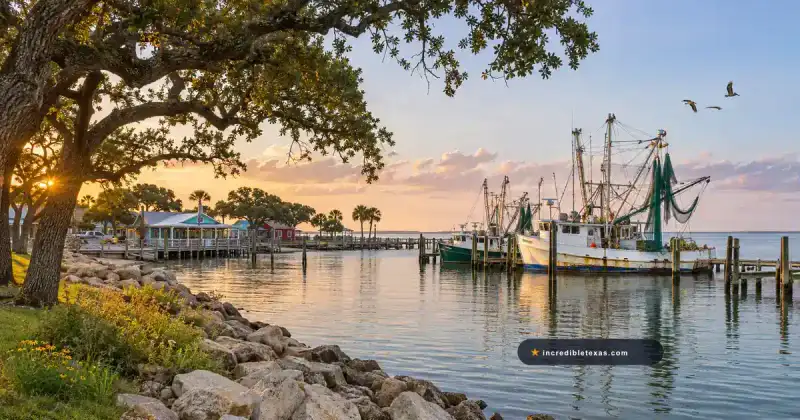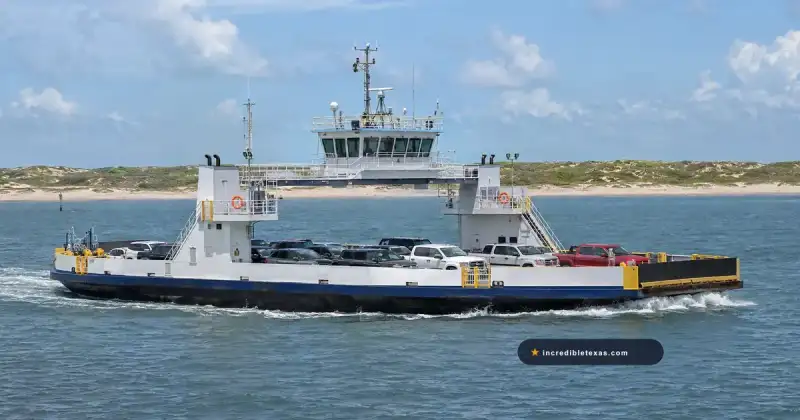
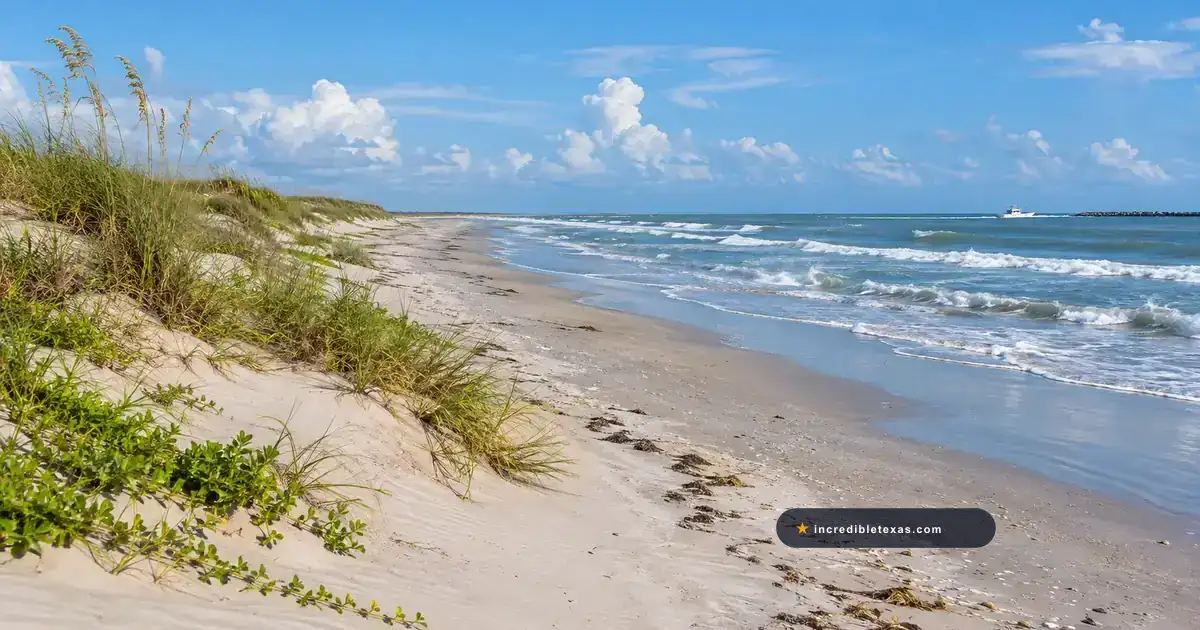
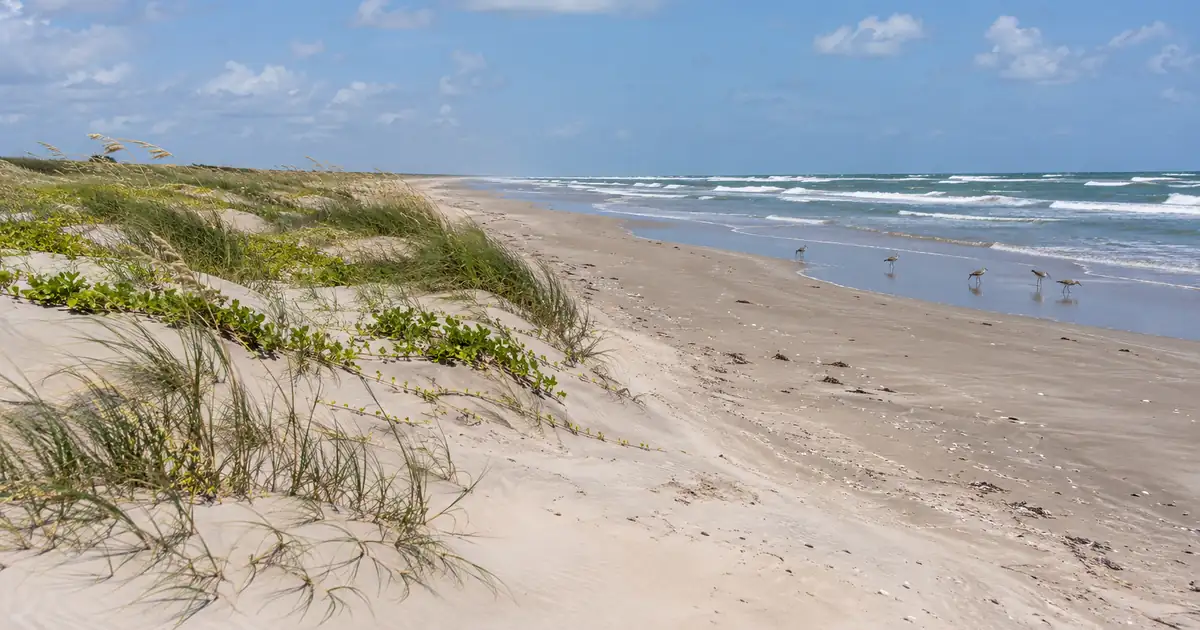
San Jose Island, affectionately known as St. Jo’s by Coastal Bend locals, is an uninhabited 21-mile barrier island that offers a glimpse of the Texas Gulf Coast in its completely wild, undeveloped state. Located across the Aransas Pass from Port Aransas, the island has no paved roads, no commercial buildings, and no motorized beach vehicles, making it the most productive shelling and beachcombing destination in Texas.
Note
Part of our comprehensive guide to the best things to do in Port Aransas TX. Explore our full island itinerary, dolphin watching spots, and beach camping routes.
Key takeaways
- Convenient Ferry Transit: The passenger Jetty Boat departs Fisherman’s Wharf in Port Aransas hourly, charging $25 round-trip for adults ($12 for kids) for a 7-minute water crossing.
- Texas Open Beaches Act Boundary: Visitors may freely walk the public shoreline between the water line and the vegetation line, while the interior dunes and ranch land remain strictly private.
- Top Texas Shelling: Renowned for intact sand dollars, lightning whelks, scotch bonnets, lettered olives, and giant Atlantic cockles washed ashore by Gulf currents.
- Zero On-Island Facilities: The island possesses no restrooms, shade shelters, running water, or food services; visitors must pack in all supplies and pack out all waste.
The Wild, Untouched Shoreline of San Jose Island
Unlike neighboring Mustang Island, which welcomes drive-on vehicles, vacation rentals, and resort developments, San Jose Island remains completely undeveloped. Visiting St. Jo’s feels like traveling back in time to the 19th-century Texas coast, creating a wild contrast to the bayside art galleries and best things to do in Rockport-Fulton across Aransas Bay.
Geography and Private Ranch History
San Jose Island spans approximately 21 miles in length and up to five miles in width, separating Aransas Bay from the Gulf of Mexico. In the mid-19th century, the island served as a key military depot during the Mexican-American War under General Zachary Taylor, who established a garrison at Aransas Pass in 1845.
In the 1930s, oil tycoon Sid W. Richardson purchased the island and established a private working cattle ranch. Today, the island remains private ranch property owned by Richardson’s heirs, who manage extensive grazing land, freshwater wetlands, and native wildlife habitats across its interior.
The Texas Open Beaches Act Boundary Rules
Because the interior is privately owned, understanding public access boundaries is essential. Under the historic Texas Open Beaches Act (Texas Natural Resources Code Chapter 61), the public holds an inalienable easement to access the wet sand and dry sand beach along the entire Gulf coast:
- Public Area: You may freely walk, fish, beachcomb, and swim anywhere between the mean low-tide line and the natural vegetation line (the line where dune grass begins).
- Private Property: Crossing past the base of the primary sand dunes, climbing the dunes, or wandering into the interior ranch grasslands constitutes criminal trespass under Texas law and is strictly enforced by local ranch managers.
- Leave Wildlife Undisturbed: The island provides critical nesting habitat for endangered Kemp’s ridley sea turtles and migratory shorebirds. Always maintain distance from resting coastal birds.
Riding the Jetty Boat from Fisherman’s Wharf
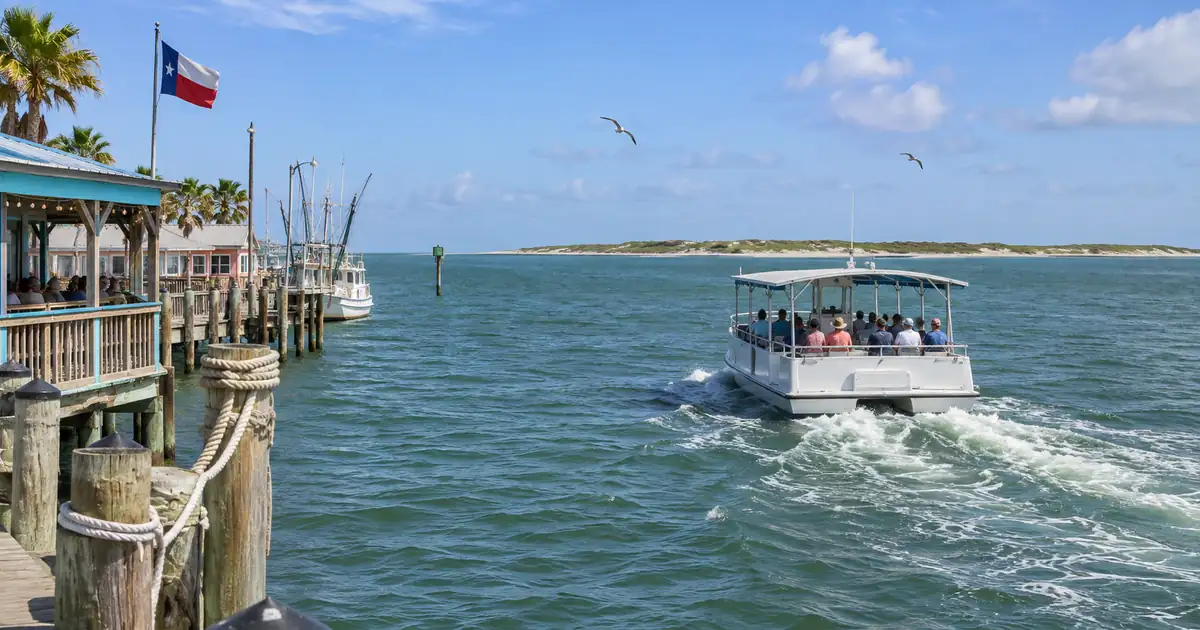
Because no bridge connects San Jose Island to the mainland or barrier islands, public access relies entirely on passenger ferry boats. The primary and most famous service is the Jetty Boat, operating continuously since the mid-20th century.
Departure Dock Location and Ticket Prices
The Jetty Boat departs from Fisherman’s Wharf, located in the heart of the Port Aransas historic harbor district at 900 Tarpon Street. Ample free vehicle parking is available on-site for boat passengers.
Ticketing details for the Jetty Boat:
- Adult Round-Trip Fare: $25.00
- Child Round-Trip Fare (Ages 6 to 12): $12.00
- Children 5 and Under: Free
- Tickets: Purchased in person inside the Fisherman’s Wharf tackle store on arrival; advance online reservations are not required for general passenger service.
- Luggage Allowance: Passengers can bring hand-carried beach wagons, coolers, fishing gear, and folded beach umbrellas without additional baggage fees.
Daily Ferry Schedule and Water Transit Times
The Jetty Boat runs daily departures year-round, operating on an hourly schedule from morning through mid-afternoon. During peak summer months, extra boats are added to handle passenger volume.
Typical operating rhythm:
| Direction | Scheduled Departure Times | Transit Time |
|---|---|---|
| Port Aransas to St. Jo’s | Hourly from 7:00 AM to 4:00 PM | 5 to 7 minutes |
| St. Jo’s to Port Aransas | Returns hourly; final pickup at 4:30 PM | 5 to 7 minutes |
The scenic boat ride crosses the mouth of the Aransas Pass ship channel, offering close views of passing maritime tankers and resident Atlantic bottlenose dolphins. The boat lands at a designated wooden ramp beside the granite boulders of the North Jetty on the southern tip of San Jose Island.
World-Class Shelling and Beachcombing Tactics
San Jose Island ranks among the top shelling destinations on the Gulf Coast. Strong ocean currents flowing north from Mexico collide with counter-currents along the Coastal Bend, depositing thousands of deep-water marine shells along St. Jo’s unraked sands.
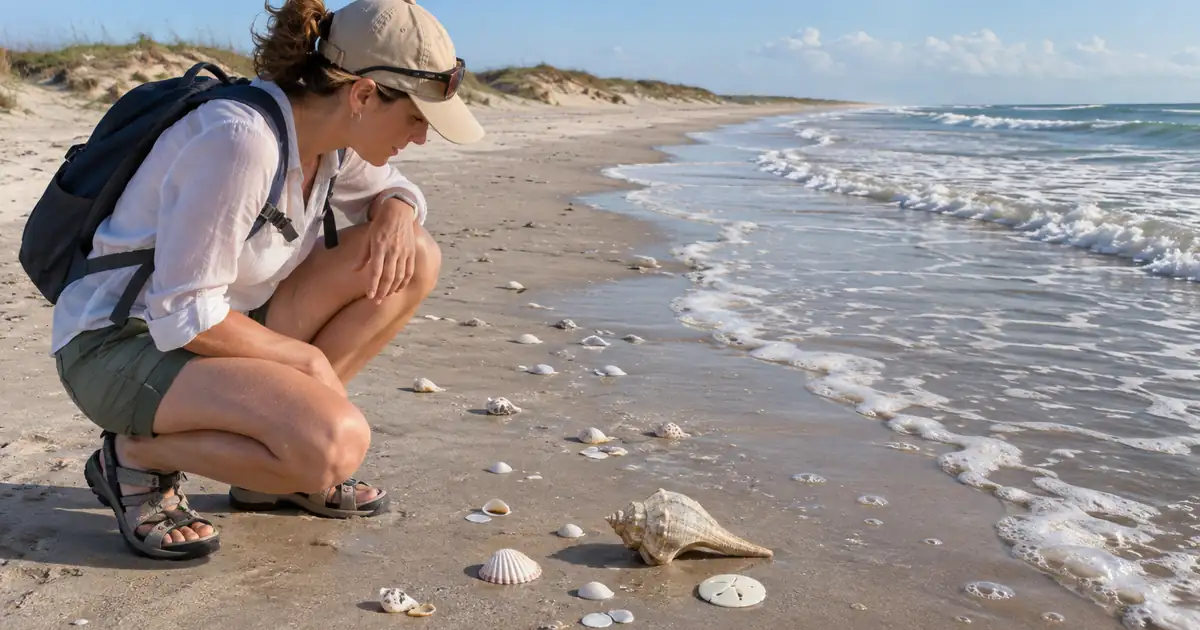
Prized Shells: Sand Dollars and Lightning Whelks
Because no municipal beach raking machines or vehicle tires crush shells on San Jose Island, beachcombers regularly find intact, museum-quality specimens:
- Lightning Whelk (Sinistrofulgur perversum): The official state shell of Texas, unique for opening on the left side (sinistral). Beachcombers find specimens ranging from tiny 1-inch spirals to massive 12-inch shells.
- Keyhole Sand Dollars (Mellita quinquiesperforata): Extremely abundant on morning sandbars during outgoing tides; look for white bleached skeletons.
- Lettered Olives (Oliva sayana): Glossy, smooth, cylindrical shells with delicate zigzag patterns, frequently found rolling in the wash line.
- Scotch Bonnets and Apple Murex: Highly prized predatory gastropod shells washed ashore after heavy southeast winds.
- Giant Atlantic Cockles: Large, sturdy bivalve shells measuring up to four inches across with deep vertical ridges.
Best Tides, Storm Swells, and Walking Routes
Shelling success on San Jose Island depends heavily on tidal timing and wind direction. The most productive shelling occurs during the first two hours of an outgoing low tide, which exposes previously submerged sandbars.
Winter cold fronts that blow strong northwesterly winds followed by shifting southeasterly swells produce the largest shell washouts. When you disembark from the Jetty Boat, walking north along the Gulf shoreline away from the jetty yields undisturbed shelling flats within a mile of the dock.
Essential Pack-In, Pack-Out Survival Discipline
San Jose Island is completely primitive. Once the Jetty Boat pulls away from the wooden dock, you are entirely responsible for your safety, hydration, and comfort.
Zero Amenities: Water, Shade, and First Aid
There are no facilities of any kind on the island. Planning ahead is mandatory:
- Drinking Water: Bring at least one gallon of fresh water per person for a half-day stay. Texas coastal humidity and constant ocean wind cause rapid dehydration.
- Sun Protection & Shade: Bring a sturdy pop-up beach tent or heavy-duty umbrella with screw-in sand anchors, alongside broad-spectrum sunscreen and wide-brimmed hats. There is zero natural tree shade on the open beach.
- Mesh Shell Bags: Bring breathable mesh shell bags and plastic containers lined with paper towels to protect fragile sand dollars from cracking.
- Trash Bags: You must carry every piece of food wrapper, bottle, and waste back to the mainland. Littering violates the Texas Open Beaches Act and harms nesting turtles.
Footwear and Granite Jetty Safety
The shoreline is sandy, but walking near the North Jetty requires sturdy water shoes or strapped sandals with traction. The massive granite jetty boulders are slick with algae and colonized by sharp barnacles and sea urchins.
Never attempt to climb or walk out onto wet jetty rocks in bare feet or flip-flops. Coastal anglers casting near the boulders must hold a valid fishing license under Texas Parks and Wildlife saltwater fishing regulations.
Pairing St. Jo’s with a Port Aransas Coastal Getaway
A half-day shelling expedition to San Jose Island fits naturally into a broader Coastal Bend vacation. After disembarking at Fisherman’s Wharf, travelers have ample afternoon time to relax, dine, and explore neighboring coastal highlights.
Fisherman’s Wharf sits within short walking distance of downtown Port Aransas seafood restaurants and harbor docks. Travelers can watch commercial shrimp boats unload daily catches or dine on fresh Gulf flounder and peel-and-eat shrimp at open-air waterfront patios.
Travelers spending several days along the coast can contrast the wild, undeveloped beaches of St. Jo’s with family-friendly mainland shorelines. Across the bay, enjoy calm, shallow wading under thatched cabanas by reviewing our guide to Rockport Beach Park. For current Jetty Boat ferry fares and departure schedules, consult the official Fisherman’s Wharf Port Aransas Portal.
Frequently Asked Questions About San Jose Island
How much does the Jetty Boat to San Jose Island cost?
The Jetty Boat round-trip passenger fare is $25 for adults and $12 for children ages 6 to 12, with children under 6 riding free. Tickets are purchased on arrival at the Fisherman’s Wharf tackle counter in Port Aransas.
Are there restrooms on San Jose Island?
No, there are zero restrooms, running water spigots, trash cans, or shade structures anywhere on San Jose Island. Visitors must be completely self-contained and pack out all trash, personal waste, and gear.
Can you drive vehicles or golf carts on San Jose Island?
No motorized vehicles or golf carts are permitted on the island; passenger ferries transport pedestrians only. Visitors explore the coastline entirely on foot along the wet-sand tideline.
What is the best time for shelling on San Jose Island?
Shelling is most productive during early morning outgoing low tides, particularly following winter cold fronts and offshore weather swells. Beachcombers should monitor daily low water cycles through the NOAA Port Aransas Tide Station to plan arrival during receding tides. These conditions wash untouched deep-water shells onto the hard sand.
Can you cross past the dunes into the interior of the island?
No, the entire interior of San Jose Island is privately owned cattle ranch land protected by law. Public access is strictly limited to the Gulf beach shoreline between the water line and the base of the natural sand dunes.
Can you camp overnight on San Jose Island?
No overnight camping or open campfires are permitted on San Jose Island. Visitors must return on the final scheduled Jetty Boat departure of the afternoon.