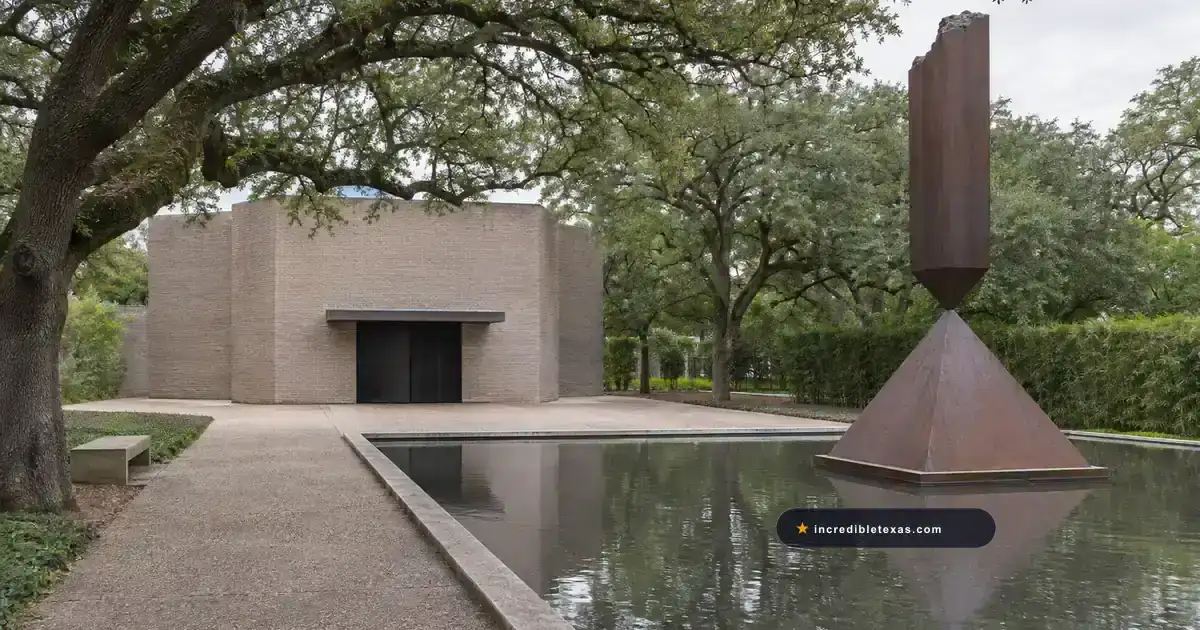
Set within the quiet, residential Montrose neighborhood beneath the sprawling shade of century-old live oaks, the Rothko Chapel and Cy Twombly Gallery form one of the world’s most revered sanctuaries of modern art and contemplative architecture.
Commissioned by visionary Houston philanthropists John and Dominique de Menil, these two peaceful institutions offer intimate spiritual counterpoints to the energetic urban pace of Texas’s largest city.
Key takeaways
- Sacred Art Pilgrimage: An intimate non-denominational chapel containing 14 monumental dark color-field canvases painted by Mark Rothko.
- Civil Rights Memorial: Barnett Newman’s Cor-Ten steel sculpture Broken Obelisk rises dramatically from an outdoor reflecting pool dedicated to Dr. Martin Luther King, Jr.
- Free Daily Admission: Both the Rothko Chapel and the Cy Twombly Gallery provide 100% free admission to all visitors year-round.
- Strict Contemplative Etiquette: Photography and phone calls are strictly banned inside the sanctuary to safeguard quiet meditation.
Pair this meditative walk with our dedicated Menil Collection Houston guide and our master Houston Museum District guide.
Plan your visit
Verified
- Location
- 3900 Yupon St, Houston, TX 77006
- Hours
- Rothko: Tue-Sun 10-6; Twombly: Wed-Sun 11-7; Closed Mon
- Admission
- Free admission daily (suggested donation $5)
- Best time to go
- Midday when moving clouds shift daylight across dark murals
Introduction to the Rothko Chapel and Menil Campus
Dedicated in 1971, the Rothko Chapel was conceived not merely as a museum gallery, but as a sacred space open to people of all religious beliefs and those of none. The founders sought to construct a place where human rights advocacy, interfaith dialogue, and personal contemplation could merge under one roof.
According to historical preservation documentation maintained by the City of Houston Historic Preservation Office and the Texas Commission on the Arts Cultural Districts, the chapel attracts over 100,000 pilgrims and art enthusiasts annually from more than 100 nations.
The building anchors a peaceful 30-acre residential campus that includes The Menil Collection main museum building, the Menil Drawing Institute, the Dan Flavin installation at Richmond Hall, and the Cy Twombly Gallery. Shaded neighborhood bungalows, gravel paths, and open lawns replace conventional concrete plazas, allowing visitors to decompress in an unhurried urban setting.
The Rothko Chapel: Architecture and the 14 Canvases
The chapel itself is an octagonal brick structure originally designed through a complex collaboration between Mark Rothko, Philip Johnson, Howard Barnstone, and Eugene Aubry.
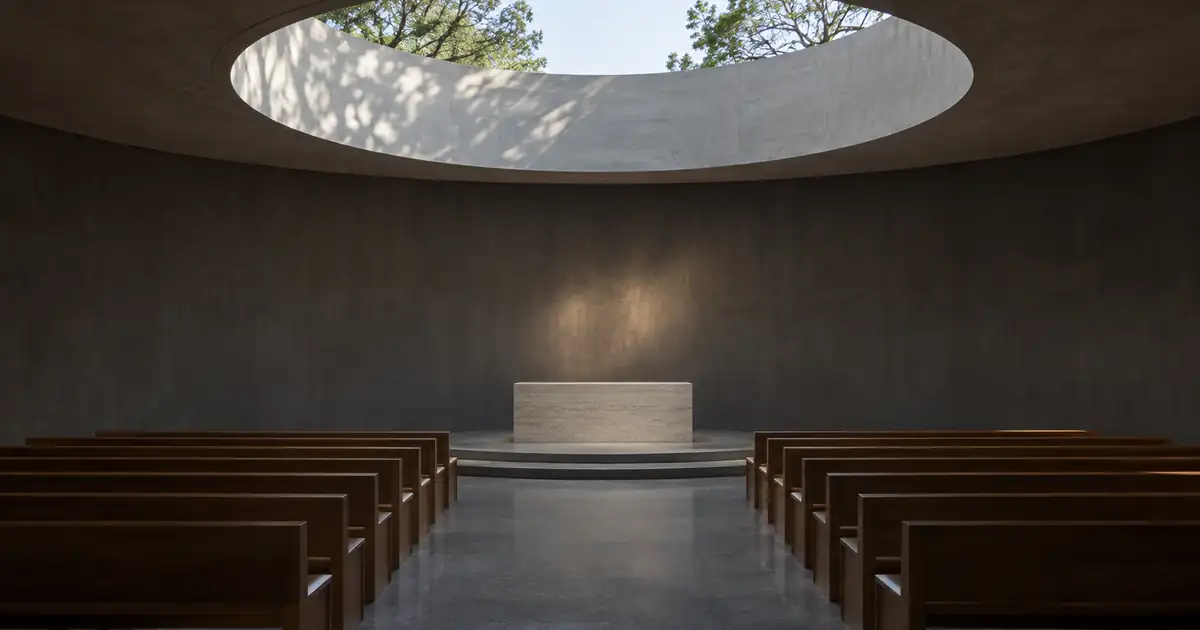
Inside the sanctuary, 14 monumental paintings executed in subtle, monochromatic washes of deep purple, plum, maroon, and velvety black wrap around the eight interior walls:
| Wall Position | Configuration | Color Field Palette | Emotional Impact |
|---|---|---|---|
| North Wall | Monumental Triptych (Centerpiece) | Deep maroon and plum field with intense chromatic depth | Formal meditative focal point of the octagonal axis |
| East & West Walls | Two Large Triptychs | Pure deep black rectangular fields on plum grounds | Shifts in texture as natural ceiling daylight drifts overhead |
| South & Diagonal Walls | Five Individual Panels | Subtle dark hues with feathered perimeter brushwork | Promotes peripheral immersion as you sit on wooden benches |
Restored in 2020 by Architecture Research Office (ARO), the sanctuary features a custom skylight louver system designed by George Sexton Associates. This innovation restores Rothko’s original vision: ambient Texas daylight filters softly into the center of the room, causing the micro-pigments in the black paint to reveal hidden nuances of violet, brown, and crimson as clouds drift across the Houston sky.
Broken Obelisk and the Martin Luther King Jr. Memorial Pool
Outside the chapel’s glass vestibule sits a tranquil plaza centered on a sunken reflecting pool. Poised at its center on an inverted pyramid point is Barnett Newman’s monumental Cor-Ten steel sculpture, Broken Obelisk.
Fabricated between 1963 and 1967, the sculpture depicts a fractured Egyptian obelisk balanced with precarious precision atop a pyramid base. When the City of Houston initially declined to accept the sculpture with a dedication to Dr. Martin Luther King, Jr. in 1969, John and Dominique de Menil purchased the artwork. They installed it permanently in front of the Rothko Chapel as a public civil rights statement.
Today, the reflecting pool serves as an international focal point for civil rights discussions, interfaith prayer vigils, and quiet contemplation. Visitors regularly sit along the pool’s stone coping to watch ripples in the water beneath the live oak canopy.
The Cy Twombly Gallery: Renzo Piano’s Temple of Light
Just across Sul Ross Street sits the Cy Twombly Gallery, opened in 1995 as a permanent home for 35 works by the celebrated American abstract artist.
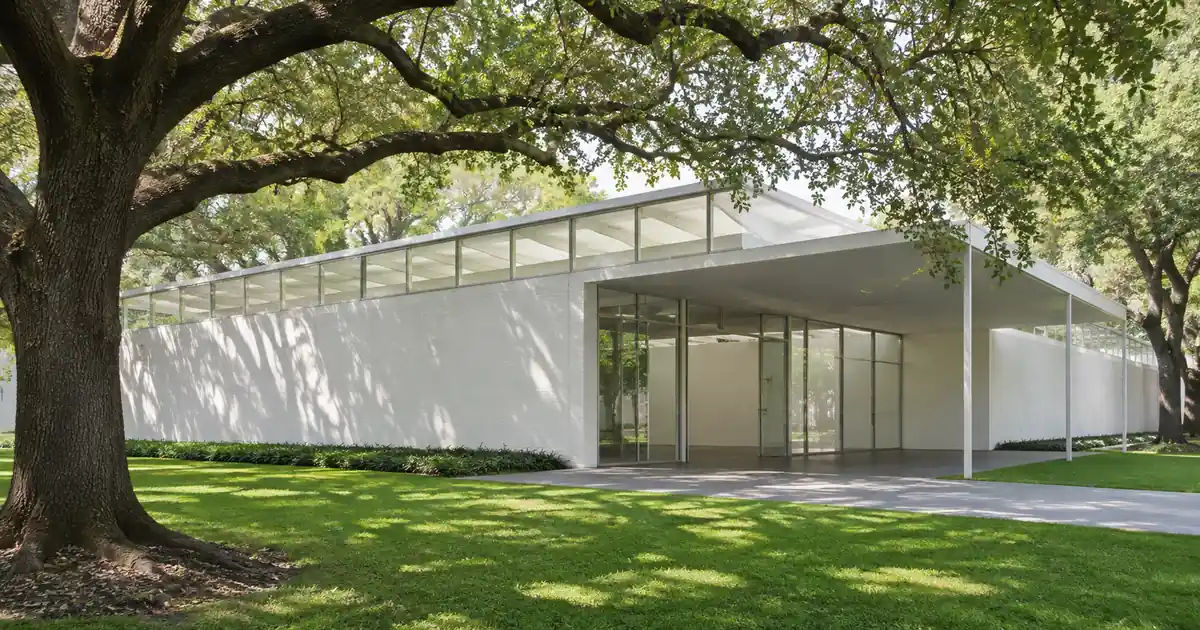
Designed by Pritzker Prize laureate Renzo Piano in close consultation with Twombly, the pavilion is an architectural achievement in natural daylighting:
- Natural Textile Baffle: Piano designed an overhead sailcloth ceiling screen that diffuses intense Texas sunlight into a velvety, shadow-free illumination that changes with exterior weather.
- Masterwork Breadth: Houses paintings, bronze sculptures, and large-format works spanning 1954 to 1994, including Twombly’s monumental 1994 Fifty Days at Iliam cycle and his expressive chalk-like white loops on dark backgrounds.
- Nine Distinct Rooms: The structure is organized into nine discrete square galleries that flow naturally, offering an expansive yet intensely quiet viewing rhythm.
- Acoustic Sanctuary: Thick cast-concrete walls insulate the interior from street sounds, creating an intensely peaceful viewing atmosphere.
Operating Hours, Free Admission, and Chapel Etiquette
Visiting policies reflect the sacred nature of the grounds and ensure uninterrupted contemplation for all visitors:
Rothko Chapel Hours
- Tuesday through Sunday: 10:00 AM – 6:00 PM
- Monday: Closed
- Admission: Free (walk-ins welcomed; online timed reservations available during peak holiday weeks)
Cy Twombly Gallery Hours
- Wednesday through Sunday: 11:00 AM – 7:00 PM
- Monday & Tuesday: Closed
- Admission: Free
Sanctuary Etiquette
Inside the Rothko Chapel, silence is actively maintained. Visitors are asked to observe the following quiet guidelines:
- Turn off or silence all mobile phones and electronic devices before entering.
- Refrain from speaking above a whisper in the vestibule and sanctuary.
- Observe the strict ban on photography, selfies, and audio recordings.
- Sit or kneel comfortably on the provided wooden benches and meditation floor cushions.
Parking and Walking the Menil Neighborhood
Visiting the Menil campus is refreshingly stress-free compared to conventional downtown museum garages:
- Main Menil Parking Lot: Located at 1515 West Alabama Street, directly behind the Menil Bistro. Parking is 100% free for all visitors.
- Curbside Neighborhood Parking: Free, unrestricted street parking is widely available along Sul Ross Street, Branard Street, and Yupon Street. Always verify posted city parking signs.
- Public Transit: The METRO Houston Route 56 Montrose stops two blocks away on Montrose Boulevard, linking easily with downtown and rail routes.
- Bicycle Racks: Biking racks are situated outside the chapel welcome pavilion and along the perimeter of Menil Park.
After your gallery tour, stop at the outdoor Menil Bistro for an espresso or fresh sandwich, or spread a picnic blanket beneath the mossy live oaks in Menil Park. If planning a weekend trip, this neighborhood anchors the Saturday morning itinerary in A Weekend in Houston 3-Day Itinerary.
Menil Park, Green Spaces, and Neighborhood Atmosphere
One of the defining pleasures of the Rothko Chapel is its natural integration into the surrounding residential neighborhood. Unlike monumental urban museum plazas, the Menil neighborhood consists of dozens of 1920s gray-painted bungalows owned and maintained by the foundation.
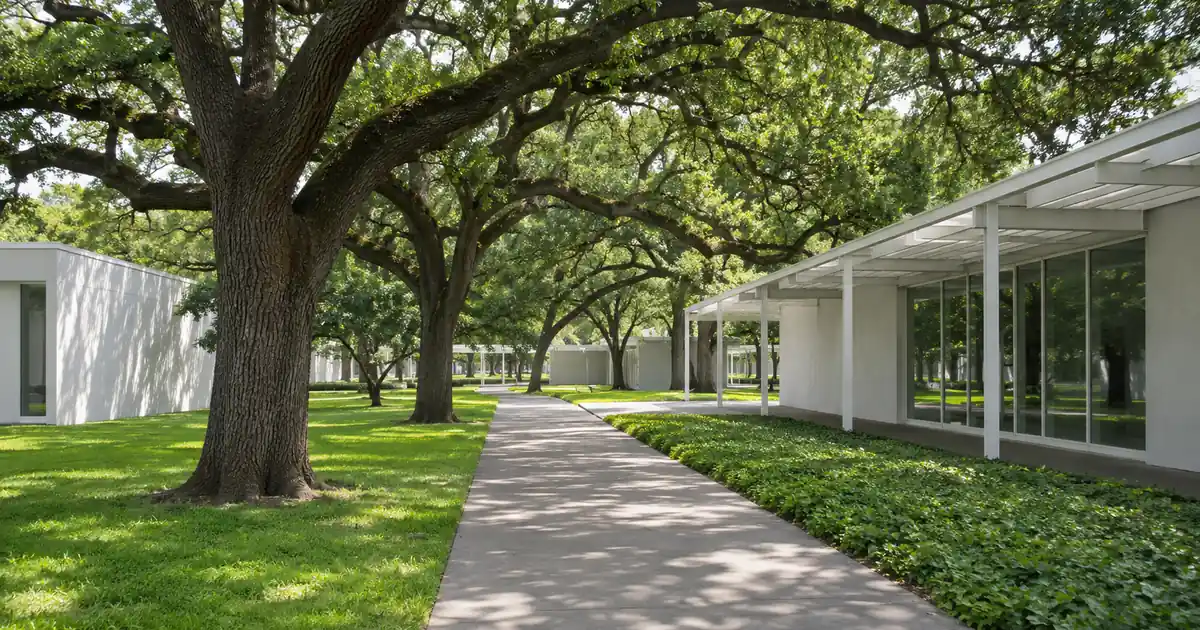
These cottages house curatorial offices, visiting scholar residences, and publishing suites. Between them lie unmanicured berms of native grass where neighborhood families walk dogs, read on shaded benches, and climb through the sprawling roots of century-old southern live oaks.
The deliberate absence of commercial billboards and perimeter fences creates an open, democratic campus where art and daily life coexist. Visitors frequently spend an hour after their chapel visit simply sitting in the grass or strolling the gravel residential footpaths.
Pairing Rothko with The Menil Collection and Museum District
Because the Rothko Chapel and Twombly Gallery are embedded within Montrose, they pair naturally with surrounding artistic and natural milestones:
- The Ismaili Center Houston: Located five minutes north along Montrose Boulevard, featuring Persian charbagh gardens and Islamic stone architecture.
- The Menil Collection: Walk 100 yards east across the lawn to explore Renzo Piano’s main museum housing Surrealist, Byzantine, and modern masterworks at zero admission cost.
- Museum of Fine Arts Houston: Drive five minutes southeast down Montrose Boulevard to experience the expansive Sarofim Campus and Cullen Sculpture Garden.
- Montrose Boulevard Bistros: Enjoy neighborhood cafe dining along Westheimer Road and Alabama Street within walking distance.
Combining the silence of Rothko’s canvases with the outdoor tranquility of the Menil grounds creates one of Texas’s most restorative urban cultural half-days.
Frequently Asked Questions About Rothko Chapel
Is admission to the Rothko Chapel free?
Yes, admission to the Rothko Chapel is completely free to the public six days a week. Voluntary tax-deductible donations of $5 are welcomed to support preservation.
Can you take photos inside the Rothko Chapel?
No, all photography, filming, and audio recordings are strictly prohibited inside the chapel sanctuary to maintain an atmosphere of quiet meditation.
What is the significance of the Broken Obelisk sculpture?
Barnett Newman’s monumental Cor-Ten steel sculpture sits in the chapel reflecting pool, dedicated in memoriam to civil rights leader Dr. Martin Luther King, Jr.
Where is the Cy Twombly Gallery located in relation to the chapel?
The Cy Twombly Gallery is located directly across Sul Ross Street, just one block northeast of the Rothko Chapel on the walkable 30-acre Menil Collection campus.
Where do you park when visiting the Menil campus?
Park in the free visitor lot at 1515 West Alabama Street or take advantage of free unmetered curbside street parking along Sul Ross, Branard, and Yupon streets.
How much time do you need to experience both spaces?
Budget roughly 45 to 60 minutes for the Rothko Chapel sanctuary and pool grounds, plus another 45 minutes for the Cy Twombly Gallery.