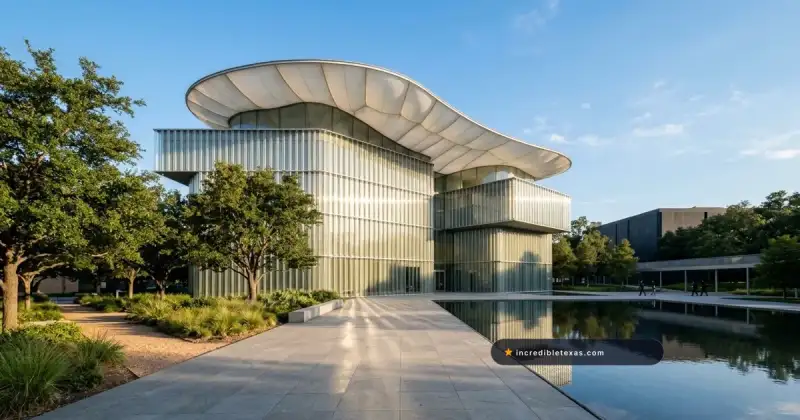
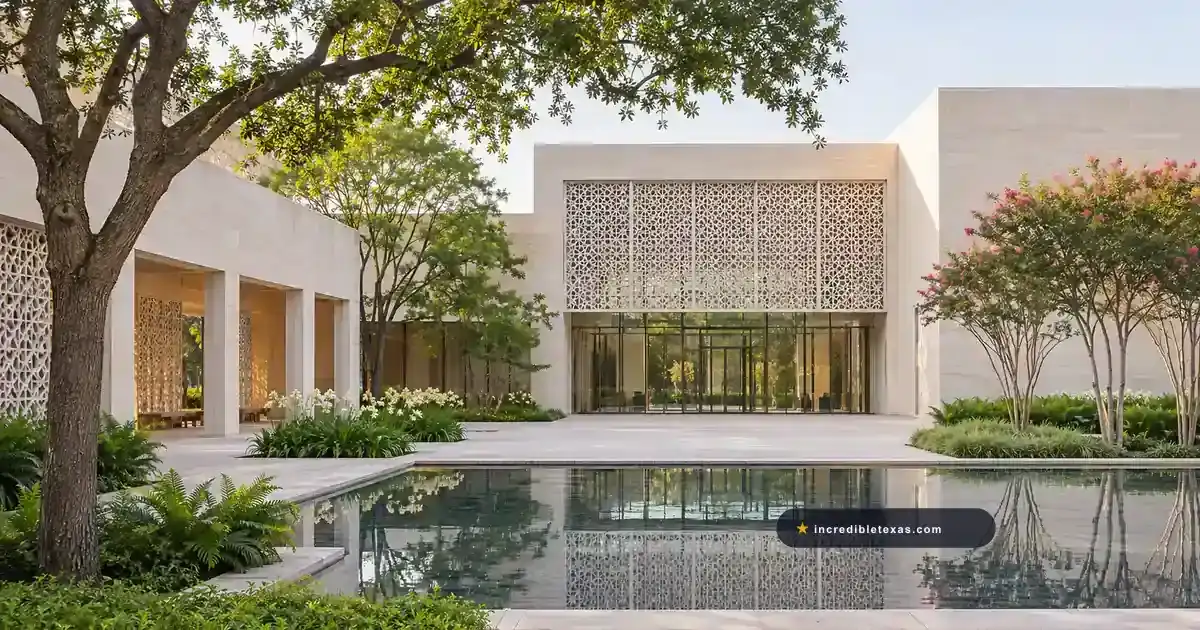
Representing the first Ismaili Center built in the United States and the seventh worldwide, The Ismaili Center Houston stands as a monumental cultural bridge along Montrose Boulevard and Allen Parkway. Spanning 11 lushly landscaped acres overlooking Buffalo Bayou, this architectural masterwork serves as an ambassadorial hub for cultural dialogue, educational exchange, and quiet spiritual reflection.
Key takeaways
- Historic Milestone: The first Ismaili Center in the United States, joining sister centers in London, Lisbon, Dubai, Dushanbe, Toronto, and Vancouver.
- World-Class Architecture: Designed by award-winning architect Farshid Moussavi with landscapes engineered by Nelson Byrd Woltz.
- Open Public Access: The sweeping 11-acre charbagh gardens, courtyards, reflecting pools, and Courtyard Cafe welcome the general public daily at zero charge.
- Complimentary Parking: Features a dedicated underground visitor parking garage with free parking and direct elevator access.
Pair your visit with our master Houston Museum District guide and our citywide itinerary for the 30 Best Things to Do in Houston TX.
Plan your visit
Verified
- Location
- 3120 Montrose Blvd, Houston, TX 77006
- Hours
- Gardens: 8 AM-Sunset daily; Tours & Cafe: Tue-Sun 9-5
- Admission
- Free garden access; free guided tours with advance RSVP
- Best time to go
- Morning golden hour for garden walks and cooler weather
Introduction to the Ismaili Center Houston
Commissioned by His Highness the Aga Khan, 49th hereditary Imam of the Shia Ismaili Muslims, The Ismaili Center Houston was conceived as a lasting gift to the city.
Rather than functioning solely as a private house of worship (Jamatkhana), the center features open public spaces, galleries, and gardens. Together with nearby sacred landmarks like the Rothko Chapel & Cy Twombly Gallery, it expands Houston’s architectural heritage.
According to regional cultural preservation records maintained by the City of Houston Planning and Development Department and the Texas Commission on the Arts Cultural Districts, the facility represents one of the most significant architectural investments in Houston’s civic corridor in decades.
Situated at the junction of Montrose Boulevard and Buffalo Bayou Park, the complex unites traditional Islamic geometric principles with contemporary environmental engineering designed specifically for the Gulf Coast climate.
Architectural Vision: Farshid Moussavi and Islamic Design
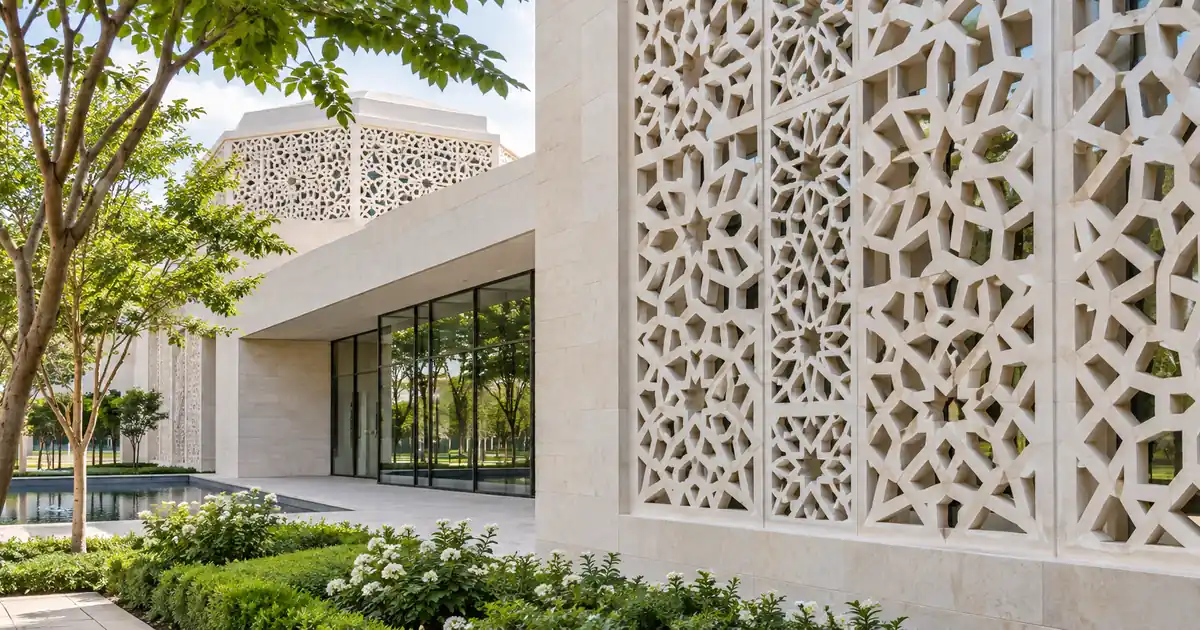
Renowned architect Farshid Moussavi designed the building with a contemporary interpretation of historic Islamic architecture:
| Architectural Element | Historical Inspiration | Modern Engineering Implementation |
|---|---|---|
| Limestone Jali Screens | Mughal and Persian perforated stone window lattices | Triangulated geometric screens that filter intense Texas sunlight into soft interior dappled shadows |
| Verandas and Eaves | Persian iwan portals and traditional shaded porches | Deep overhanging roof canopies that shield exterior glass walls from solar heat gain |
| Reflective Ceramic Tiles | Central Asian Islamic tilework and mosaic traditions | Subtle glazed terracotta surfaces that catch shifting hues of Houston morning and evening skies |
| Ascending Volumes | Layered courtyards of Isfahan and Alhambra | A sequence of interconnected pavilions that gradually rise to reveal panoramic views of the Downtown skyline |
The building’s exterior surfaces are clad in warm-toned natural stone, punctuated by custom-engineered stone screens. These geometric screens provide privacy while allowing Gulf Coast breezes to flow across outdoor shaded terraces.
Exploring the Public Gardens and Water Courtyards
Designed by celebrated landscape architect Thomas Woltz of Nelson Byrd Woltz Landscape Architects, the 11-acre grounds reinterpret the classical Persian charbagh (four-fold garden) for the ecology of coastal Texas.
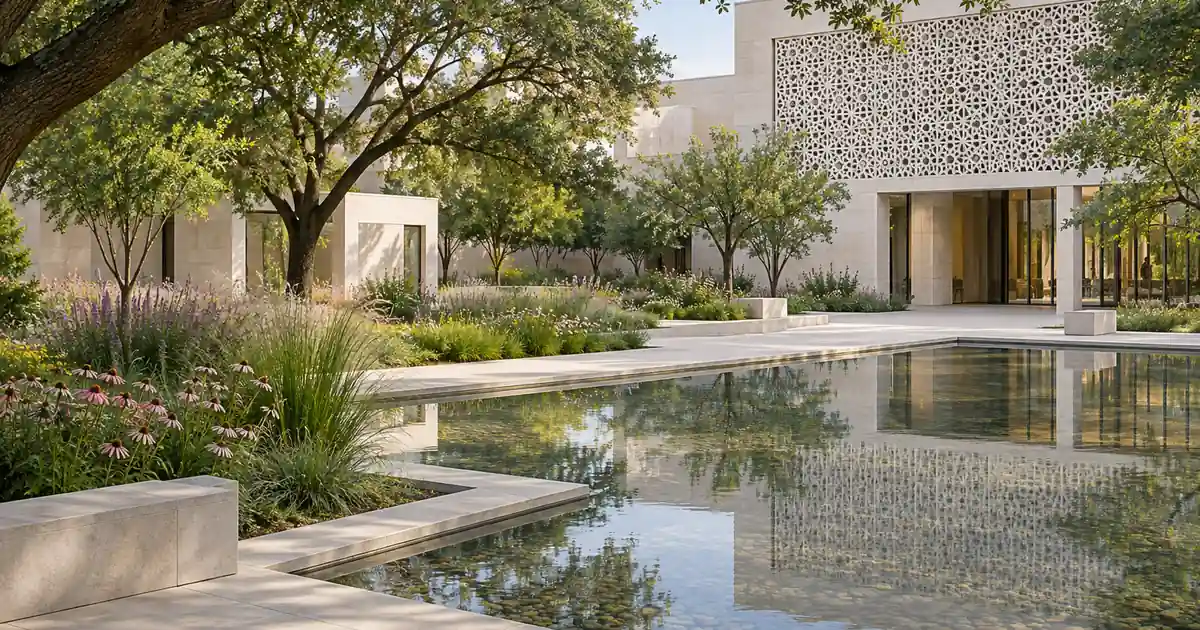
Water plays a central symbolic and cooling role throughout the campus:
- Central Fountain Basin: A tranquil, black granite reflecting pool anchored in the main courtyard, creating soothing acoustic masking that muffles traffic noise from Allen Parkway.
- Cascading Rills: Narrow water channels that gently carry water through tree-lined allées, referencing ancient Andalusian irrigation channels.
- Native Texas Flora: Shaded by towering live oaks, bald cypresses, and fragrant magnolias, interplanted with drought-hardy native grasses and pollinators that sustain local Gulf Coast bird species.
- Buffalo Bayou Trail Connectivity: Dedicated pedestrian and bicycle pathways directly connect the northern garden boundary to the paved hike-and-bike network of Buffalo Bayou Park.
Public Tours, Reservations, and Cultural Programming
While the outdoor gardens and courtyard terraces can be enjoyed at your own leisure from 8:00 AM until sunset daily, exploring the building’s interior public areas is best experienced through a docent-guided tour.
Guided Tour Details and Schedule
- Admission Fee: $0 (100% Free to the public)
- Tour Duration: Approximately 60 minutes of docent-led walking
- What You See: The grand central atrium, cultural exhibition gallery, black-box theater/auditorium, and architectural verandas overlooking the gardens.
- Booking Rules: Advance reservations are required online via the official portal. Weekend tour slots open 30 days in advance and fill quickly.
Throughout the year, the center hosts public lectures, classical music performances, art exhibitions, and academic symposiums addressing global architecture, sustainability, and ethics.
Courtyard Cafe and Visitor Hospitality
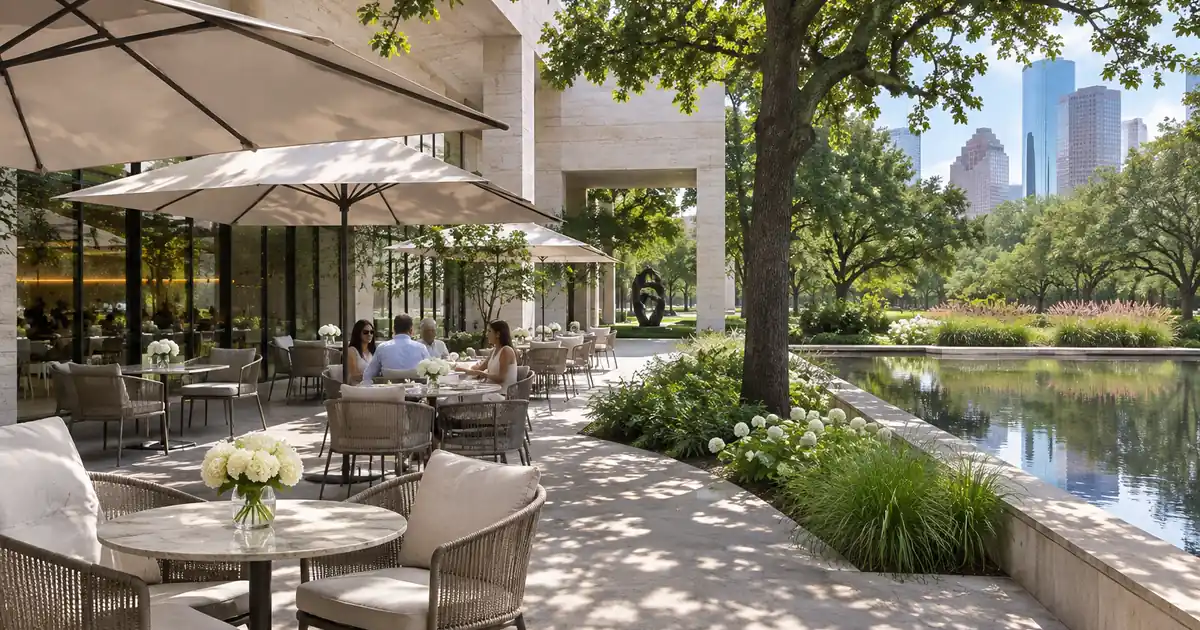
Located on the ground floor overlooking the courtyard gardens, the Courtyard Cafe embodies traditional Ismaili values of welcoming hospitality (mehmān-navāzi):
- Beverage and Food Menu: Highlights specialty coffees, loose-leaf teas infused with cardamom and saffron, fresh Mediterranean salads, artisan sandwiches, and traditional pastries.
- Garden Atmosphere: Bathed in natural indirect light with floor-to-ceiling glass doors opening directly onto shaded garden patios.
- Seating Layout: Features communal wooden tables and quiet reading corners equipped with Wi-Fi, making it a peaceful retreat for reflection or remote study.
Visitors can enjoy morning tea on the shaded terrace between 9:00 AM and 11:00 AM, when temperatures remain comfortable and garden breezes cool the outdoor verandas. The cafe sources ingredients from regional Texas organic farms, offering seasonal culinary rotations that reflect both Mediterranean culinary roots and Gulf Coast produce.
Location, Parking, and Arrival Guidelines
The Ismaili Center Houston is located at 3120 Montrose Boulevard, Houston, TX 77006, strategically positioned between Midtown, Montrose, and the River Oaks corridor.
- Complimentary Underground Parking: Visitors enter the dedicated underground parking facility from the Montrose Boulevard service drive. Parking is free for all registered tour participants, garden guests, and cafe patrons.
- Public Transit: The METRO Houston Route 56 Montrose stops steps from the entrance on Montrose Boulevard, connecting travelers directly with the Museum District and Downtown.
- Security Check-In: Upon arrival from the parking garage elevators, guests check in at the reception pavilion desk to receive a visitor sticker.
- Dress Code Etiquette: While garden walkers may wear comfortable casual sportswear, visitors taking indoor tours are asked to observe modest dress standards (clothing covering shoulders and knees; hats removed inside).
Landscape Engineering and Sustainable Water Conservation
The 11-acre grounds serve as a living demonstration of sustainable Gulf Coast landscape architecture. Because Houston experiences both intense subtropical cloudbursts and protracted summer droughts, the landscape features advanced stormwater management systems.
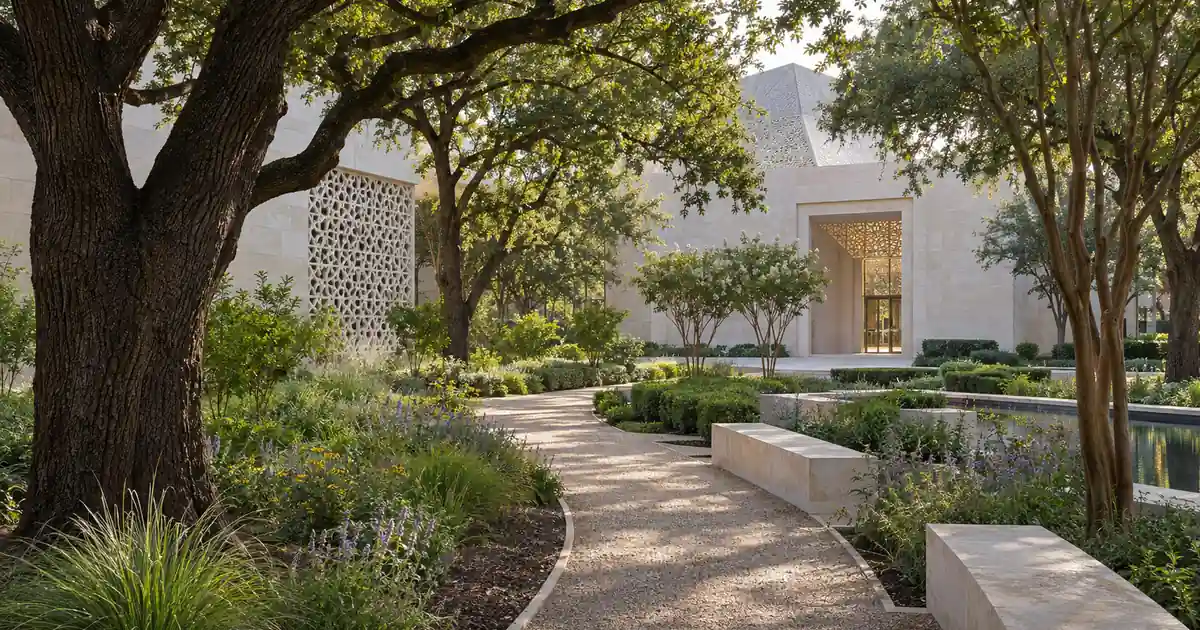
Deep bioswales and underground cistern storage capture thousands of gallons of rainwater from building roofs and stone plazas. This recycled water feeds the cascading rills and reflective basins, reducing municipal water consumption by over 60 percent.
Over 100 species of native Texas perennials, coastal prairie grasses, and shaded live oak groves provide canopy cover that lowers ground temperatures across the campus. Educational plaques along the trails explain how soil microbes filter runoff before it enters the bayou watershed. The system functions as an urban green sponge, buffering nearby neighborhood infrastructure during heavy Gulf precipitation events.
Pairing the Ismaili Center with Montrose and Buffalo Bayou
The center’s location makes it a natural focal point for an afternoon exploring Houston’s cultural corridor:
- Buffalo Bayou Park Cistern: Located just two minutes east along Allen Parkway, offering a dramatic contrast between sun-drenched gardens and subterranean industrial echo chambers.
- The Menil Collection: Walk half a mile south through the shaded residential streets of Montrose to explore this renowned free art museum campus.
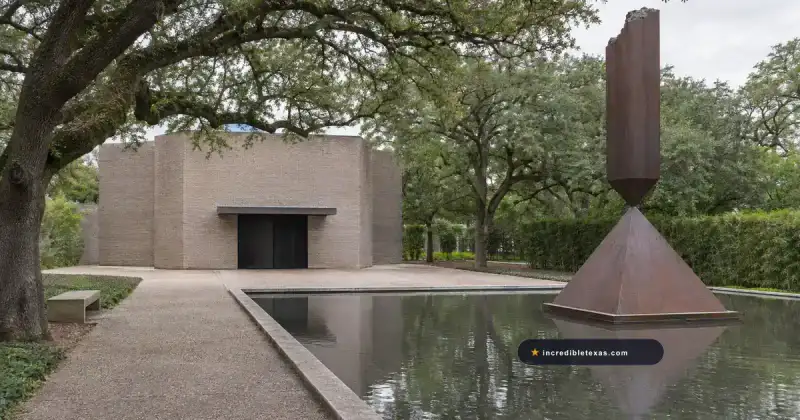
- Rothko Chapel: A contemplative spiritual stop featuring Mark Rothko’s meditative black murals and Barnett Newman’s Broken Obelisk.
- Museum of Fine Arts Houston: Located seven minutes south along Montrose Boulevard for world-class European and American gallery wings.
After strolling through the gardens, visitors can cross Allen Parkway via the pedestrian skybridge to access miles of paved walking trails lining Buffalo Bayou.
Frequently Asked Questions About the Ismaili Center Houston
Is the Ismaili Center Houston open to the public?
Yes, the exterior Persian-style gardens, Courtyard Cafe, and public exhibition galleries are openly accessible to visitors of all backgrounds and faiths.
How much does it cost to visit the Ismaili Center?
Visiting the gardens and attending guided architectural tours is completely free ($0). Guided indoor tours require complimentary advance digital reservation.
How do you book a guided tour of the building?
Visitors can reserve free timed tour passes online via the official Ismaili Center website. Docent-led tours cover the architectural motifs and cultural dialogue spaces.
Where do visitors park at the Ismaili Center?
Free visitor parking is available in the dedicated underground garage accessed via Montrose Boulevard. Spaces include EV charging stations and direct elevator access.
What is the dress code for visiting?
Modest casual attire is encouraged. While outdoor gardens have no strict requirements, indoor tour participants should wear attire covering shoulders and knees.
Can you take photographs in the gardens?
Yes, personal photography is permitted throughout the outdoor gardens, reflecting pools, and public courtyards. Commercial photo sessions require advance authorization.