Port Aransas presents two defining transportation rituals for coastal travelers: boarding the free 24-hour car ferry across the Aransas Pass ship channel and piloting a street-legal golf cart along coastal avenues and sand flats. Navigating these systems efficiently keeps your Mustang Island getaway relaxed and penalty-free.
Note
Part of our comprehensive guide to the best things to do in Port Aransas TX. Explore our full island itinerary, dolphin watching spots, and beach camping routes.
Key takeaways
- Zero-Toll Ferry Transit: The Texas Department of Transportation operates the free car ferry 24 hours daily between Harbor Island and Port Aransas with an average 5 to 10-minute water crossing.
- Strict Highway 361 Cart Ban: Golf carts are strictly prohibited on State Highway 361 south of Avenue G, and may only cross the highway at designated traffic lights.
- Valid Driver’s License Required: Golf cart drivers must hold a valid state driver’s license; unlicensed minors driving on city streets or beaches face immediate fines.
- Beach Parking Permit Math: Carts driving or parking on public Gulf beaches require an annual $12 Nueces County/Port Aransas beach parking sticker.
Essential Port Aransas Transit Logistics
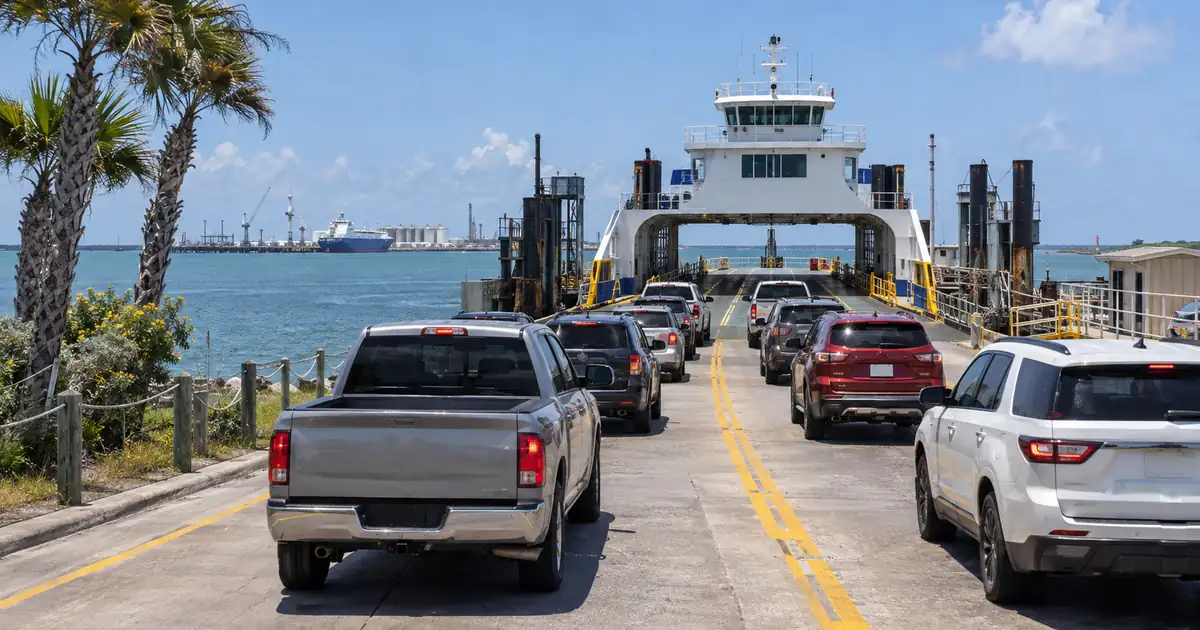
Reaching Port Aransas requires travelers to choose between two primary roadway approaches. From the north via Aransas Pass, motorists take State Highway 361 to Harbor Island and load onto the ferry, passing the departure docks for San Jose Island. From the south via Corpus Christi, drivers cross the JFK Causeway onto North Padre Island and travel north along Highway 361.
How the Free TxDOT Car Ferry Works
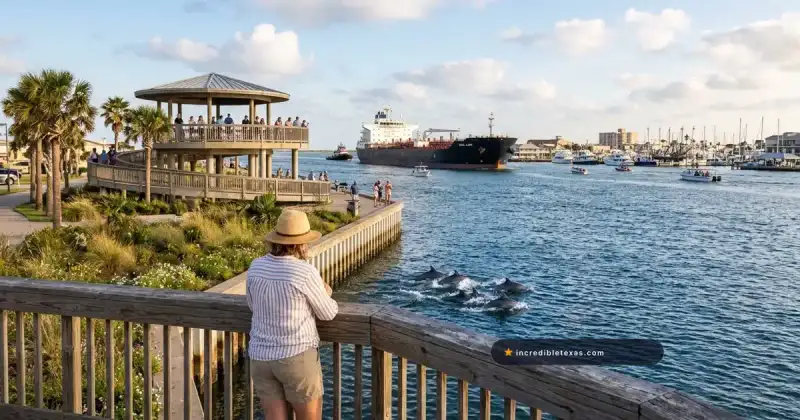
The Port Aransas ferry system connects Harbor Island to Mustang Island, providing a vital marine bridge across the Corpus Christi Ship Channel. The service is entirely free to all motorists, cyclists, and walk-on pedestrians, funded and operated through the Texas Department of Transportation Ferry Operations Division.
The ferry fleet consists of up to eight double-ended vessels, including the Charles W. Heald and Mark G. Goode. Each ferry accommodates between 20 and 28 passenger vehicles depending on vessel size.
The nautical crossing spans approximately 1,600 feet across active ship channels. Transits take between five and ten minutes once the ferry leaves the slip.
Vehicles enter designated staging lanes on either side of the channel:
- Harbor Island side: Lanes feed from TX-361 eastbound, with electronic overhead signs indicating wait times.
- Port Aransas side: Lanes originate along Cut-Off Road and Cotter Avenue near Dennis Dreyer Municipal Harbor.
- Boarding protocol: Follow deckhand signals closely, turn on parking lights at night, turn off engines once parked in gear, and set emergency handbrakes.
Monitoring Live Ferry Wait Times and Webcams
While ferry lines move steadily during standard winter and midweek periods, summer weekend wait times frequently exceed an hour. Holiday weekends like Memorial Day, Fourth of July, and Labor Day can create queues extending more than 90 minutes.
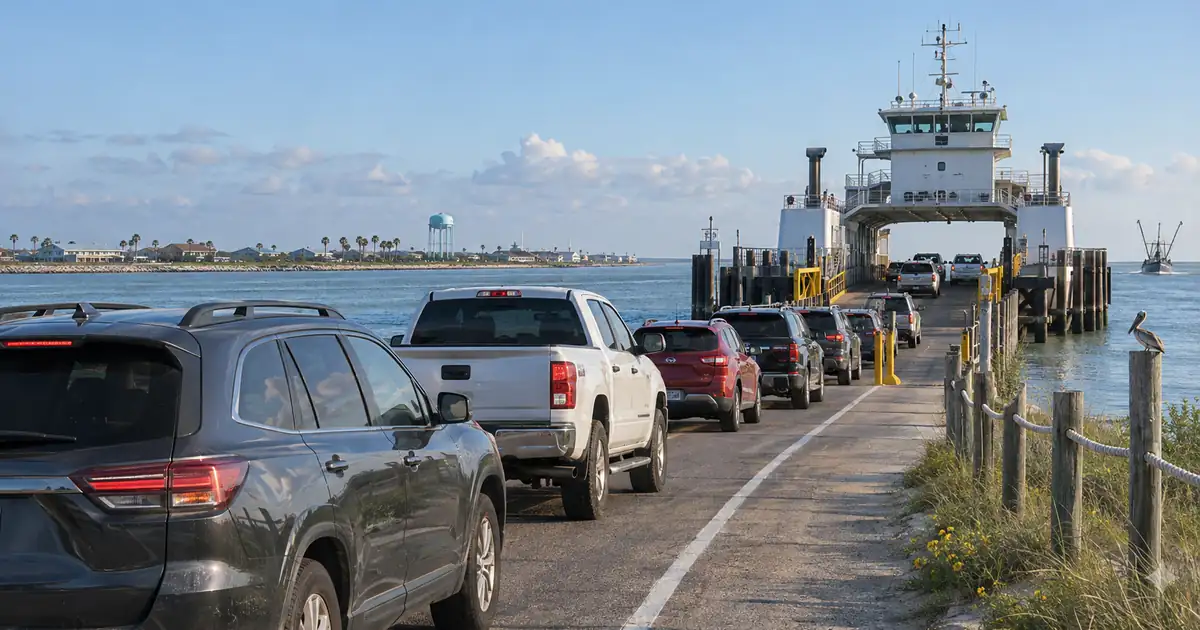
Travelers can monitor live conditions through official channels:
- Live TxDOT Ferry Webcams: TxDOT streams real-time queue cameras showing vehicle backups on both landings.
- Twitter/X Ferry Updates: Follow
@PortA_Ferryfor real-time wait-minute estimates updated hourly by harbor dispatchers. - The Southern Highway 361 Alternate: If ferry wait times exceed 45 minutes, driving around through Corpus Christi via Highway 358 and the JFK Causeway takes roughly 45 minutes from Aransas Pass and avoids idling in queue lines.
Port Aransas Street-Legal Golf Cart Laws
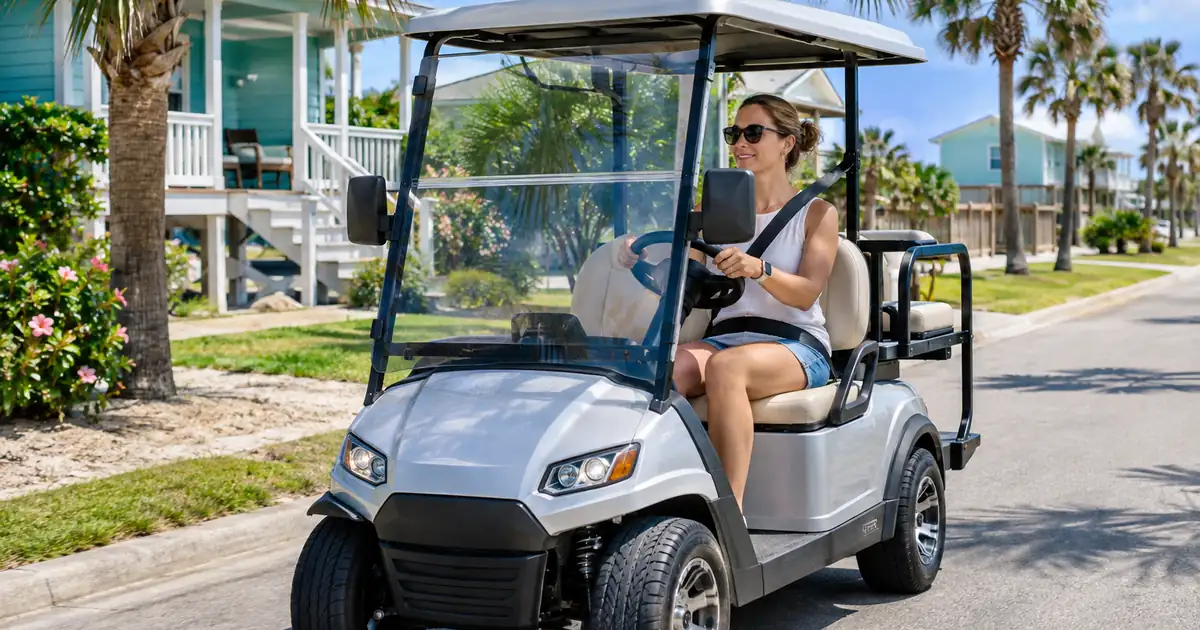
Within Port Aransas city limits, street-legal golf carts function as the primary recreational transportation mode. Families use carts to commute between rental cottages, grocery stores, seafood diners, and the beach. However, municipal police strictly enforce road safety regulations.
Required Safety Equipment and License Plates
To operate on Port Aransas municipal streets, golf carts must meet specific equipment mandates established under Texas Transportation Code Section 551.404. All carts must display an official City of Port Aransas golf cart license plate and registration sticker affixed to the rear bumper.
Required equipment on all operational carts includes:
- Operational headlamps, tail lamps, and hazard reflectors
- Front and rear turn signal indicators
- An exterior driver-side rearview mirror or wide-angle panoramic mirror
- Dedicated three-point seat belts for every seating position
- An orange slow-moving vehicle (SMV) reflective triangle emblem mounted on the rear
Speed Limits and Driver Licensing Mandates
Golf carts may only operate on public municipal roadways with a posted speed limit of 35 miles per hour or lower. Driving carts on pedestrian sidewalks, designated hike-and-bike trails, or private sand dunes is strictly prohibited.
The city enforces strict operator qualifications:
- Driver License Requirement: Operators must hold a valid, unexpired state driver’s license. Unlicensed teenagers or children sitting on parents’ laps steering the wheel draw immediate traffic stops.
- Passenger Capacity Limits: Every passenger must occupy a permanent factory seat with an individual seat belt buckled. Sitting on cargo racks, coolers, or hanging off side railings is illegal.
- Open Container and DWI Enforcement: Drinking alcohol while driving a golf cart or carrying open alcoholic beverage containers violates state motor vehicle laws, carrying the exact same penalties and arrest procedures as driving an automobile.
| Regulation / Requirement | Legal Standard | Penalty / Enforcement Note |
|---|---|---|
| Minimum Operator Age | 16 with valid driver’s license | Citations issued to parents of underage drivers |
| Max Street Speed Limit | 35 mph posted streets only | Prohibited on roads posted 40+ mph |
| State Highway 361 Driving | Strictly Illegal south of Ave G | Misdemeanor citation and vehicle towing |
| Seat Belt Mandate | 1 belt per passenger | No lap riding or overloading |
| Beach Parking Permit | $12 annual windshield sticker | Required when parking on city beach sand |
| Nighttime Operation | Headlights and taillights required | Must remain illuminated from dusk to dawn |
The Strict State Highway 361 Golf Cart Ban
The single most frequent and expensive traffic citation issued to Port Aransas vacationers involves State Highway 361. Also known as State Highway 361 or the Island Road, this high-speed highway carries heavy commuter and commercial truck traffic between Port Aransas and North Padre Island.
Why Highway 361 Is Strictly Prohibited
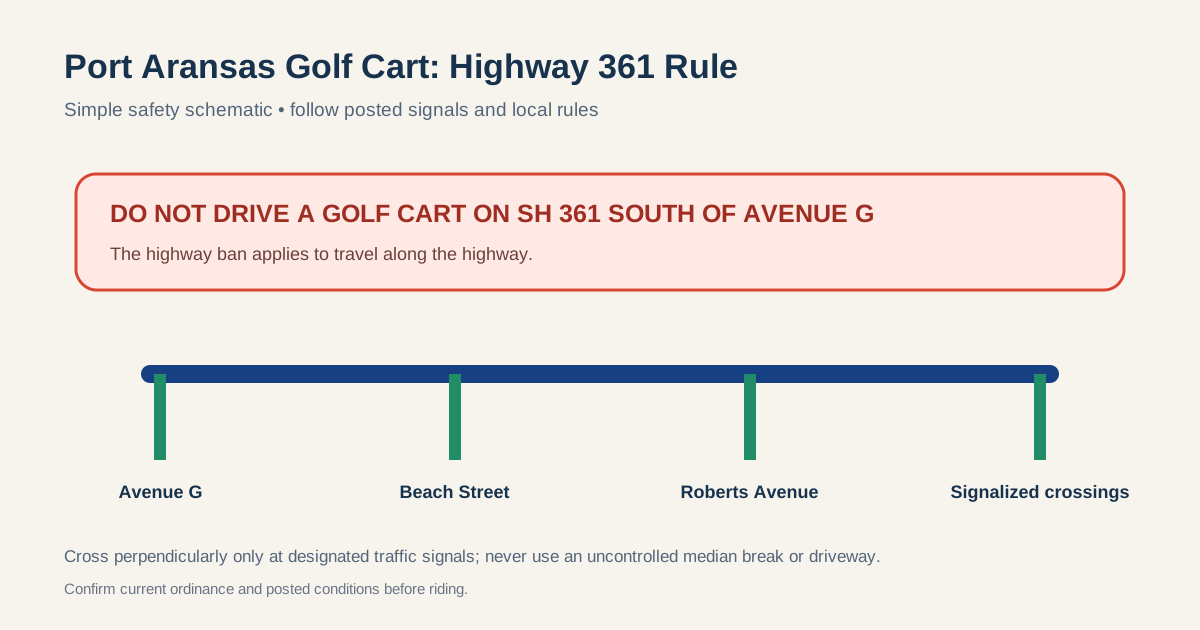
Port Aransas municipal code and Texas state statute strictly prohibit driving golf carts along Highway 361 south of its intersection with Avenue G. Highway 361 carries posted speed limits ranging from 45 to 65 miles per hour. Golf carts top out around 20 miles per hour, creating severe collision hazards with high-speed motorists.
Vacationers attempting to drive golf carts south along Highway 361 to reach Cinnamon Shore, Palmilla Beach Golf Club, Mustang Island State Park, or Corpus Christi will be pulled over by Port Aransas Police Department patrol units. Fines routinely exceed $250, accompanied by immediate vehicle impoundment fees.
Legal Crossing Points at Controlled Intersections
While driving along Highway 361 is illegal, golf carts are legally permitted to cross the highway perpendicularly to travel between residential neighborhoods and the beach. However, crossings may only take place at designated intersections controlled by full traffic signals:
- Avenue G and Highway 361: Signalized light allowing direct east-west passage.
- Beach Street and Highway 361: Controlled intersection leading toward beach access.
- Roberts Avenue and Highway 361: Signalized crossing near civic facilities.
Never attempt to cross Highway 361 at uncontrolled median breaks, private resort driveways, or blind curves. Wait for a green traffic signal before proceeding across all lanes.
Travelers planning day trips beyond the island can park their carts and take standard vehicles north across Aransas Bay to discover the best things to do in Rockport-Fulton.
Driving Golf Carts on Port Aransas Beaches
Driving your golf cart onto the sandy shores of the Gulf of Mexico is a signature island experience. Port Aransas beaches feature wide, hard-packed sand that easily supports standard electric and gas golf carts during normal tidal conditions. Drivers should always monitor local tides via the NOAA Port Aransas Tide Station before setting out.
Beach Parking Permit Stickers and Dune Rules
Carts operating on city beaches are subject to municipal beach driving laws:
- Annual Beach Permit Required: To park your cart on the beach between Beach Access Marker 0 and Access Marker 61, you must purchase and display an annual $12 beach parking permit sticker. The permit is sold at island H-E-B stores, Circle K stations, and the Port Aransas city hall.
- Designated Driving Corridors: Maintain travel along the marked 15-mph vehicular roadway situated between the dune line and the high-tide line. Never drive carts in shallow salt water, as corrosive seawater damages electric wiring and cart suspension.
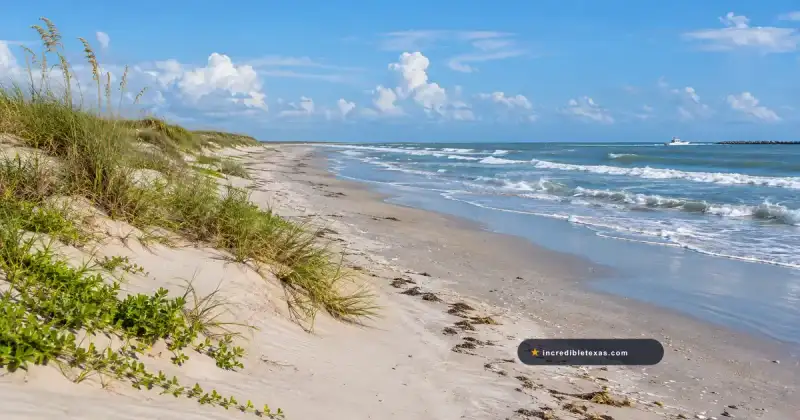
- Dune Protection Zone: Driving in, on, or over coastal sand dunes is a federal and state environmental violation. Stay strictly on the groomed beach flat.
After beach time, travelers can park their carts near waterfront parks like Roberts Point Park or board the passenger boat across the Aransas Pass channel for secluded beachcombing.
Rental Agencies, Pricing, and Charging Etiquette
More than two dozen licensed golf cart rental agencies operate within Port Aransas. Selecting the right cart configuration and understanding maintenance ensures a trouble-free stay.
Daily Rental Rates and Fuel vs. Electric Carts
Rental rates vary based on cart seating capacity and seasonal demand:
- 4-Passenger Carts: Typically range from $125 to $160 per 24-hour period during peak summer and holidays ($85 to $110 during winter).
- 6-Passenger Carts: Typically range from $175 to $225 per day, ideal for multi-generational families.
- Gasoline vs. Electric Power: Gas-powered carts offer unlimited range for long weekend beach exploration without worrying about battery drain. Electric carts provide whisper-quiet operation but require plugging into dedicated 110V household outlets overnight (typically taking 6 to 8 hours for a full charge).
When staying in island vacation rentals, ensure your accommodation provides exterior ground-fault (GFCI) electrical outlets and dedicated golf cart parking before renting an electric model. Official municipal regulations and vehicle guidelines are enforced alongside TxDOT Ferry System Guidelines for public safety.
Frequently Asked Questions About Golf Carts and Ferries
Can you drive a golf cart on Highway 361 in Port Aransas?
No, driving golf carts on State Highway 361 south of Avenue G is strictly illegal under city ordinance and Texas state law. Carts may only cross Highway 361 perpendicularly at signalized intersections like Avenue G and Roberts Avenue.
How much does the Port Aransas ferry cost?
The Port Aransas ferry is completely free of charge, operated 24 hours daily by the Texas Department of Transportation. Vehicles drive on and off without tolls or passenger fees across the 5 to 10-minute ship channel transit.
Do you need a driver’s license to drive a golf cart in Port Aransas?
Yes, all golf cart operators on public streets or city beaches must hold a valid driver’s license and be at least 16 years old. Underage driving or allowing unlicensed minors to steer results in citations and vehicle impoundment.
How long is the Port Aransas ferry wait?
Wait times typically range from 5 to 15 minutes on weekday mornings, but can surge past 45 to 90 minutes on peak summer weekends and holidays. Drivers should monitor live TxDOT ferry webcams or use Highway 361 through Corpus Christi as an alternate route.
Do golf carts need a beach permit in Port Aransas?
Yes, golf carts parked on the sand along Port Aransas city beaches must display an annual $12 beach parking permit sticker. The permit is available at local grocery stores, gas stations, and city hall.
Can you take open alcoholic containers in a golf cart?
No, Texas open container laws and DWI regulations apply to golf carts on public roadways and beaches exactly as they do to motor vehicles. Possessing open alcoholic beverages while driving a cart is a criminal offense.