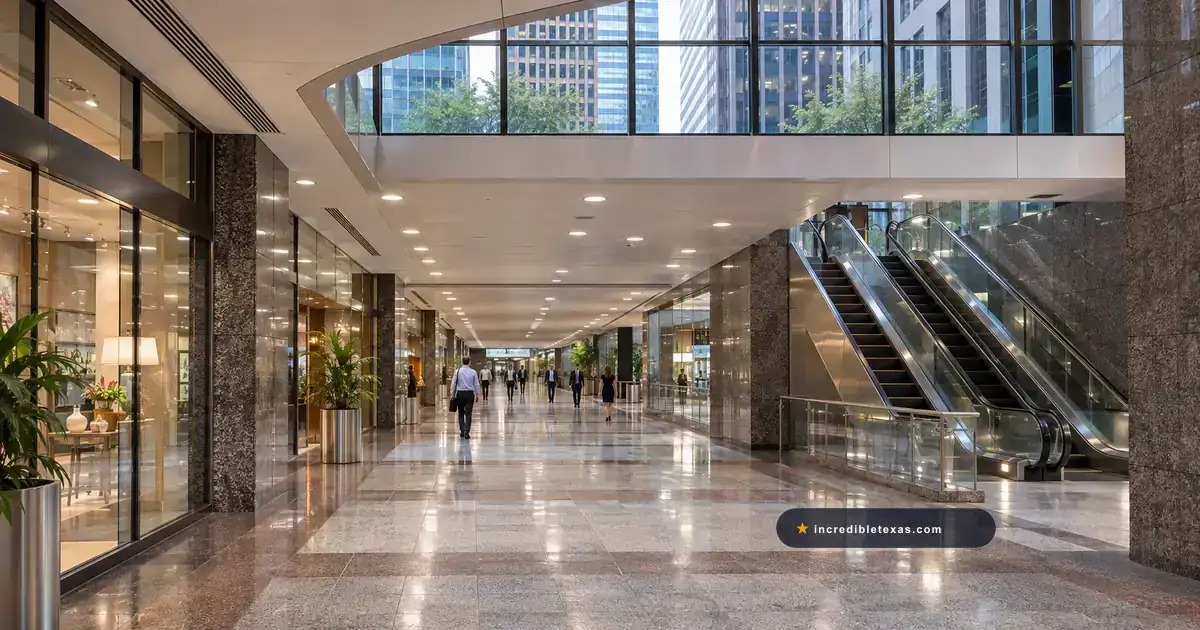
Hidden 20 feet below the surface of Downtown Houston lies an air-conditioned subterranean labyrinth spanning 6.2 miles across 95 city blocks. While street-level sidewalks can feel quiet during sweltering Gulf Coast summer afternoons, thousands of business professionals, commuters, and curious explorers circulate underground through an active network of food halls, retail boutiques, banking concourses, and skyscraper basements.
Key takeaways
- Scale and Scope: Spans 6.2 contiguous miles connecting 95 downtown skyscraper basements and commercial complexes.
- Weekday-Only Access: Open exclusively Monday through Friday from roughly 6:00 AM to 6:00 PM; closed entirely on weekends and major holidays.
- Primary Street Entry Points: Understory at Bank of America Tower (800 Capitol St) and Wells Fargo Plaza (1000 Louisiana St) offer the most welcoming public escalators.
- Subterranean Dining: Houses massive culinary centers including Understory, The Highlight at Houston Center, and Pennzoil Place food courts.
Combine your underground exploration with our master Houston Museum District guide and our citywide itinerary for the 30 Best Things to Do in Houston TX.
Understanding the Houston Tunnel Network
The Houston Tunnel System is not a municipal subway or transit authority installation. Instead, it is an interconnected series of privately owned, climate-controlled passageways that link commercial real estate across downtown.
According to municipal transit records preserved by the City of Houston Planning and Development Department and the Texas Historical Commission Historic Sites, the network began in the 1930s. Cinema magnate Will Horwitz first linked two of his downtown entertainment venues to share centralized cooling plant equipment.
Later in the 1950s, Texas cotton baron Will Clayton financed links between the historic Rice Hotel and nearby parking garages. That project sparked a multi-decade race among corporate energy towers to join the subterranean system.
Today, the system functions as a protected pedestrian boulevard that shields pedestrians from Houston’s notorious humidity, afternoon tropical storms, and midday vehicular traffic.
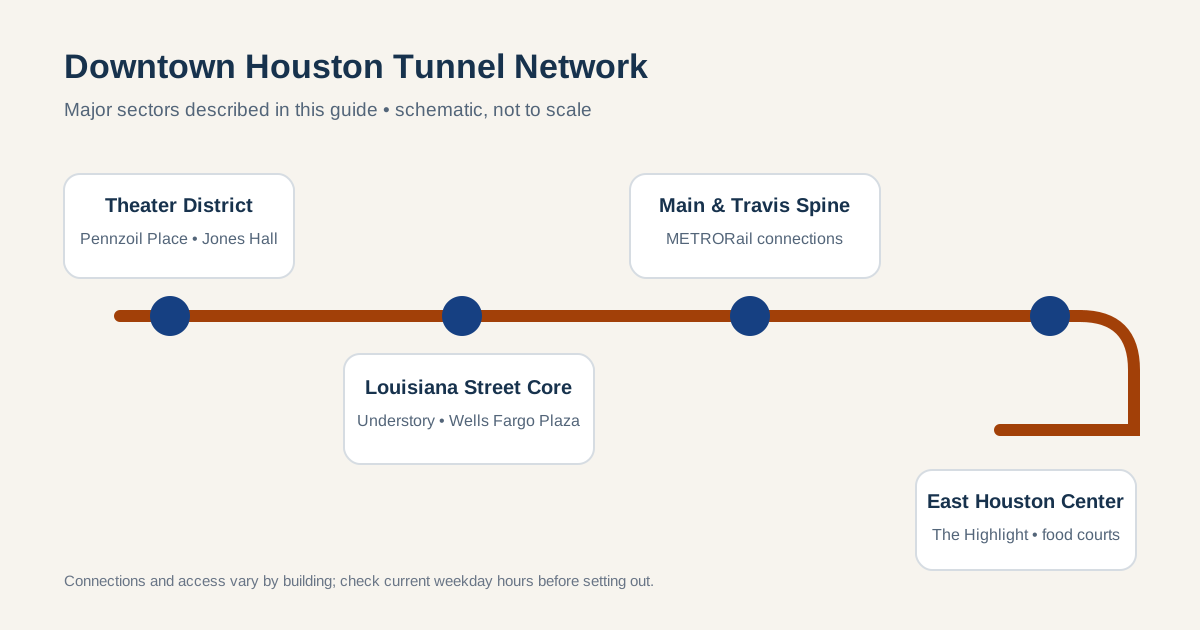
| Primary Tunnel Sector | Key Connecting Skyscrapers | Notable Subterranean Features |
|---|---|---|
| Theater District Loop | Pennzoil Place, Alley Theatre, Jones Hall | High-ceiling corridors, direct symphony hall access |
| Louisiana Street Core | Bank of America Tower, Wells Fargo Plaza | Understory culinary market, sunken glass elevators |
| Main & Travis Spine | 1000 Main, JPMorgan Chase Center | Direct METRORail escalators, banks, dry cleaners |
| East Houston Center | The Highlight, George R. Brown connectors | Multi-level skywalk bridges, extensive food courts |
How to Find Street Entrances and Access Points
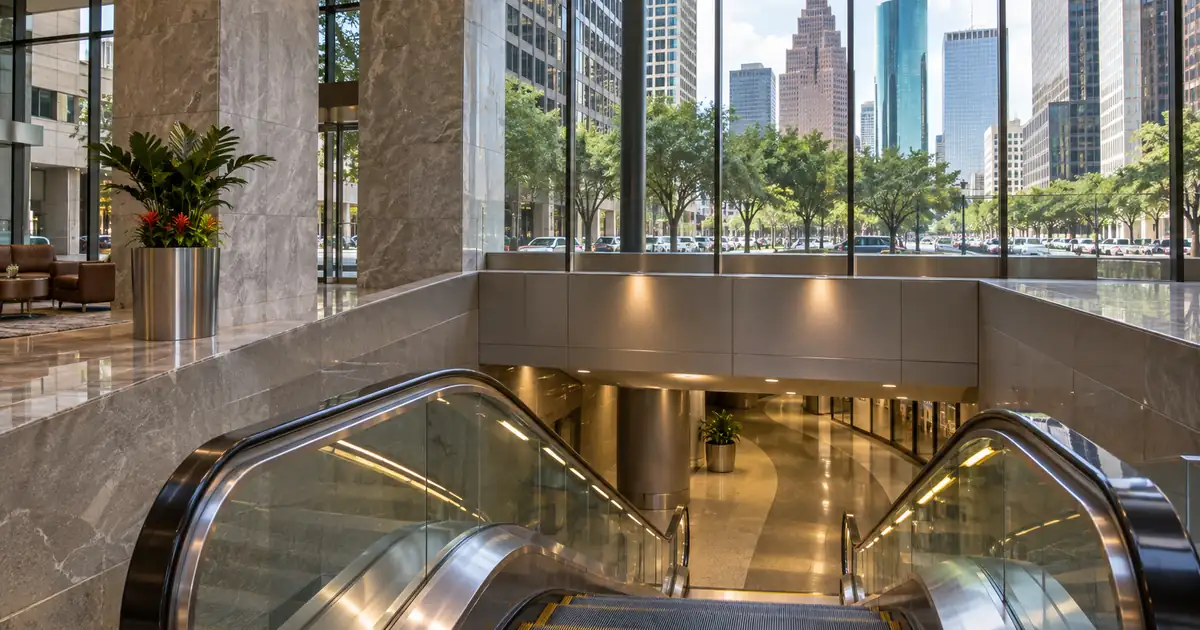
Because the tunnels are subterranean and privately maintained, street signs marking their presence are intentionally discreet. You will rarely see outdoor signs labeled “Tunnel Entrance.” Instead, look for major corporate office tower lobbies and public food atriums that feature descending escalators or basement elevators:
| Tower / Complex | Address | Entry Feature | Public Amenities |
|---|---|---|---|
| Bank of America Tower (Understory) | 800 Capitol St | Sweeping street-level atrium staircase and glass escalator | Modern 9,000 sq ft culinary market, cocktail bar, ample seating |
| Wells Fargo Plaza | 1000 Louisiana St | Sunken outdoor plaza fountain with descending glass elevators | Direct connector between south and central tunnel loops |
| Pennzoil Place | 711 Louisiana St | Triangular Philip Johnson glass atrium lobby | Fast-casual dining, coffee shops, direct link to Jones Hall |
| The Highlight at Houston Center | 1200 McKinney St | 3-story glass shopping pavilion escalator | Extensive food court, convenience retail, skybridge connections |
| Enterprise Plaza | 1100 Louisiana St | Escalators adjacent to main lobby reception | Central junction for Louisiana and Milam street corridors |
Entering through Understory at Bank of America Tower is the most accessible entry point for newcomers. The 40-foot glass curtain wall and wide cascading community steps welcome casual visitors without requiring security badges or reception check-ins.
Weekday Operating Hours and the Weekend Closure Rule
Understanding operating hours is critical to avoiding disappointment:
- Monday through Friday: 6:00 AM – 6:00 PM (majority of retail corridors)
- Lunch Rush: 11:00 AM – 2:00 PM (every food vendor and cafe is fully open with active lunch counters)
- Saturday and Sunday: 100% CLOSED
- Federal Holidays: Closed
Because the tunnels are tied to corporate office schedules, property managers lock access gates in the evening, on weekends, and on federal holidays like Thanksgiving, Christmas, and Labor Day. If you visit on a Saturday afternoon, street doors leading down to the tunnels will be locked.
If you are exploring the city on a weekend, pivot to outdoor options like things to do in Houston for free or visit the historic Buffalo Bayou Park Cistern.
Navigating the System: Maps, Connectors, and Skywalks
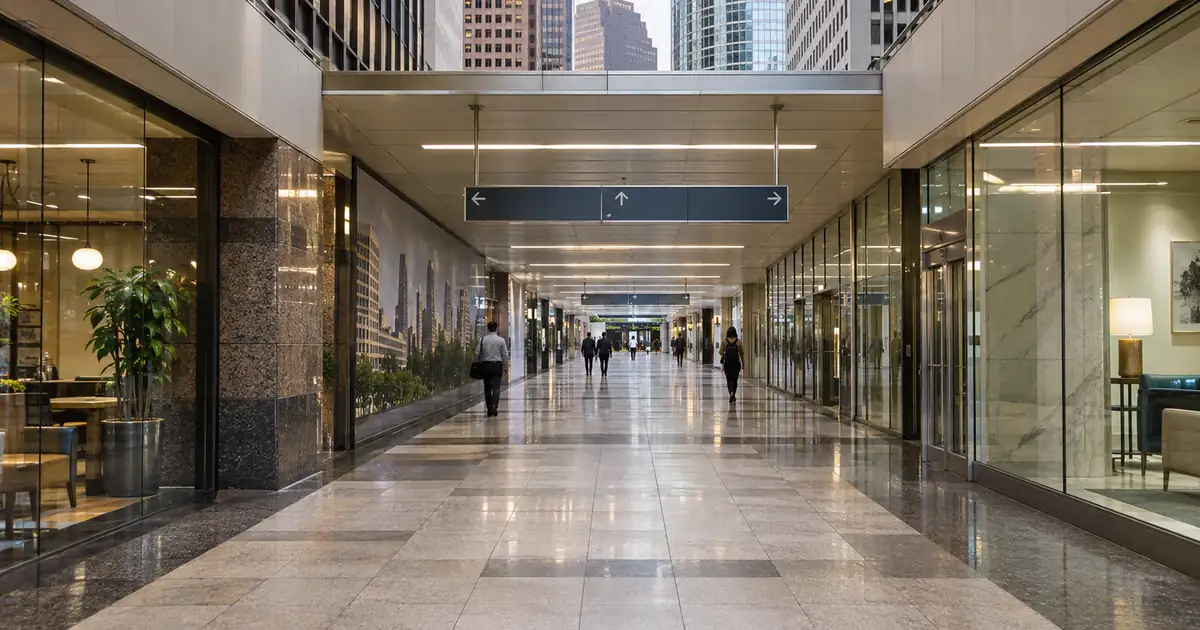
Exploring the tunnels without a map feels like wandering an underground maze. There is no single straight hallway; tunnels dog-leg beneath roadways, dip into building basements, and occasionally rise into second-story skywalk bridges.
Orientation Landmarks
- The Northern Arts Loop: Connects Theater District venues including Jones Hall, Alley Theatre, and Wortham Theater Center with Pennzoil Place and Bank of America Tower.
- The Central Core: Anchored by Enterprise Plaza, Wells Fargo Plaza, and 1000 Main Street, this section contains the highest concentration of corporate banking and retail services.
- The Eastern Retail Corridor: Stretches toward The Highlight at Houston Center and the George R. Brown Convention Center area via covered skywalk bridges.
Most intersections feature mounted digital wayfinding kiosks and overhead directional signage indicating which street and skyscraper sits above you. You can download official digital maps from the Downtown Houston+ Association. If you are organizing a weekend getaway, plan your tunnel walk as the cornerstone of Friday morning in A Weekend in Houston 3-Day Itinerary.
Dining Hubs: Understory, The Highlight, and Food Courts
Dining is the lifeblood of the tunnel system. Over 200 restaurants and food stalls operate below grade, serving everything from artisanal smash burgers to Vietnamese pho:
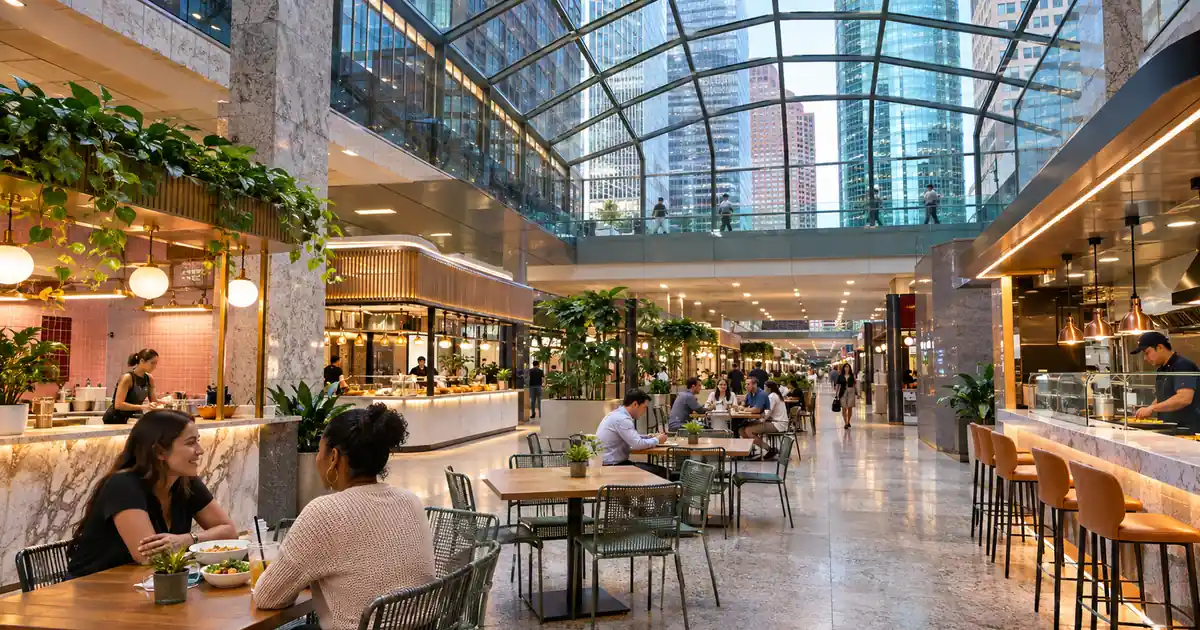
- Understory (Bank of America Tower): A high-end culinary hub featuring open-concept kitchens, locally roasted coffee from Boomtown Coffee, and craft cocktails at the central bar.
- The Highlight Food Hall (Houston Center): A sprawling modern food hall featuring quick-service options including Mediterranean bowls, authentic Texas barbecue, sushi rolls, and street tacos.
- Underground Delis & Taquerias: Throughout the older baseline tunnels along McKinney and Travis streets, family-owned breakfast taco stands and classic sandwich delis serve rapid-fire lunch options to office workers.
Tip
Visit between 11:30 AM and 1:15 PM to observe the fast-paced lunchtime rush of downtown professionals, or tour between 9:30 AM and 11:00 AM if you prefer quiet corridors for architectural photography.
History and Urban Design of Subterranean Houston
Urban planners frequently analyze the unique impact of Houston’s underground tunnel network on urban mobility and street culture. By shifting retail and pedestrian foot traffic beneath street level, building developers created an air-conditioned pedestrian oasis. This system allows the city’s downtown financial district to function comfortably during sweltering 100-degree summer heat waves.
Simultaneously, moving pedestrians subterranean left street-level sidewalks comparatively quiet during working hours. To restore street-level vitality, recent city initiatives led by Downtown Houston+ have focused on activating above-ground streetscapes with outdoor cafe patios, parklets, and expanded light-rail connectivity. The result is an active two-tier urban network where office workers commute subterranean by day and gather at street-level parks, rooftop lounges, and theater plazas after five o’clock.
Pairing Tunnel Walks with Downtown Sightseeing
A morning tunnel walk fits naturally into a broader Downtown Houston excursion:
- Buffalo Bayou Park Cistern: Located just one mile west along Sabine Street, pairing subterranean commercial architecture with dramatic underground water reservoir acoustics.
- Discovery Green: Exit the eastern tunnel corridor at Houston Center and walk two blocks east to stroll through this 12-acre downtown park featuring public art and interactive water features.
- Houston Museum District: Board the METRORail Red Line directly from Main Street Square in the heart of the tunnels and ride south for 10 minutes to reach Museum of Fine Arts Houston.
- Market Square Park: Walk north along Travis Street to discover 19th-century historic architecture, sidewalk cafes, and public green lawns.
Frequently Asked Questions About the Houston Tunnels
Are the Downtown Houston tunnels open on weekends?
No, the Downtown Houston Tunnel System is closed on Saturdays, Sundays, and major federal holidays because it operates on private commercial office schedules.
Where is the best public entrance to the Houston tunnels?
The easiest public access points are the glass escalator at Understory inside Bank of America Tower (800 Capitol St) and Wells Fargo Plaza (1000 Louisiana St).
Is there an admission fee to walk through the tunnels?
No, walking the tunnel system is completely free. The passages serve as open pedestrian rights-of-way connecting office towers, banks, and public food courts.
How long is the Downtown Houston tunnel system?
The continuous subterranean network spans 6.2 miles and connects 95 downtown city blocks roughly 20 feet beneath the street surface.
What restaurants operate inside the Houston tunnels?
Hundreds of eateries operate subterranean storefronts, from chef-driven food halls like Understory to Texas barbecue joints, Tex-Mex delis, and artisan bakeries.
Can you access the tunnels from METRORail?
Yes, pedestrian escalators and street elevators at Main Street Square Station and Central Station provide direct descending routes into adjacent tunnel basements.