Beyond Houston’s glittering museum towers and sleek corporate skyscrapers lies an extraordinary subculture of grassroots outsider architecture.
Built not by credentialed architects, but by eccentric retirees and determined postal workers with welding torches and scrap metal, landmarks like the Beer Can House, The Orange Show Monument, and Smither Park celebrate everyday ingenuity and playful Texas nonconformity.
Key takeaways
- The Aluminum Sanctuary: The Beer Can House is wrapped in over 50,000 flattened beer cans and shimmering pull-tab wind chimes in Rice Military.
- An Ode to the Orange: The Orange Show Monument is a whimsical 3,000-square-foot folk labyrinth in the East End built from recycled architectural iron and tiles.
- Smither Park Mosaic Wonderland: An adjacent urban park featuring towering mosaic sculptures made from broken mirrors, ceramic dishes, and guitar picks.
- Non-Profit Stewards: All three sites are preserved by The Orange Show Center for Visionary Art, organizers of the world-famous Houston Art Car Parade.
Pair these quirky sights with our guide to the Houston Art Car Parade and explore our master Houston Museum District guide.
Houston’s Visionary Outsider Art Heritage
In a sprawling metropolis with minimal traditional zoning laws, Houston has historically provided an fertile landscape for self-taught artists to transform ordinary residential lots into extraordinary environments.
According to cultural heritage archives maintained by the City of Houston Mayor’s Office of Cultural Affairs and the Texas Commission on the Arts Cultural Districts, Houston holds one of the dense concentrations of preserved visionary art environments in North America.
These sites are not passive galleries; they are deeply personal living testaments to obsessive craftsmanship and recycled materials:
| Folk Art Landmark | Creator | Neighborhood | Primary Materials | Regular Public Hours |
|---|---|---|---|---|
| Beer Can House | John Milkovisch (1912–1988) | Rice Military / Washington Corridor | 50,000+ beer cans, pull tabs, bottles, marbles | Sat & Sun 1:00 PM – 5:00 PM (Sidewalk view 24/7) |
| The Orange Show | Jeff McKissack (1902–1980) | East End / Gulfgate | Architectural iron, concrete, tile, wagon wheels | Sat & Sun 10:00 AM – 4:00 PM |
| Smither Park | Dan Phillips & 400+ Artists | East End (Adjacent to Orange Show) | Recycled ceramics, sea shells, mirrors, marble shards | Daily Sunrise – Sunset (Free admission) |
The Beer Can House: John Milkovisch’s Aluminum Wonder
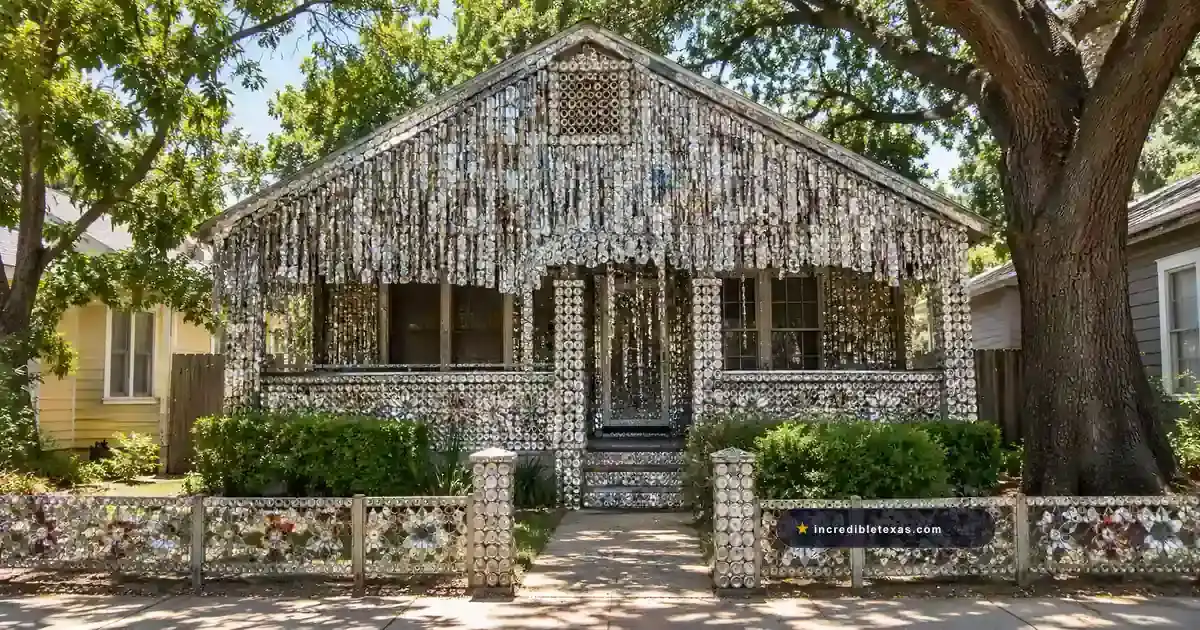
Located at 222 Malone Street just south of Washington Avenue, the Beer Can House began in 1968 when retired Southern Pacific Railroad upholsterer John Milkovisch decided he was tired of mowing his front lawn.
Milkovisch began inlaying thousands of marbles, rocks, brass buttons, and colored glass into concrete block pavers. Once the lawn was fully paved, he turned his attention to his modest wood-frame bungalow.
A dedicated consumer of mass-market American lagers (including Texas staples like Pearl, Lone Star, and Schlitz), Milkovisch began slicing the tops and bottoms off empty cans, flattening the aluminum cylinders, and nailing them to his home’s exterior walls as interlocking shingles.
Signature Features
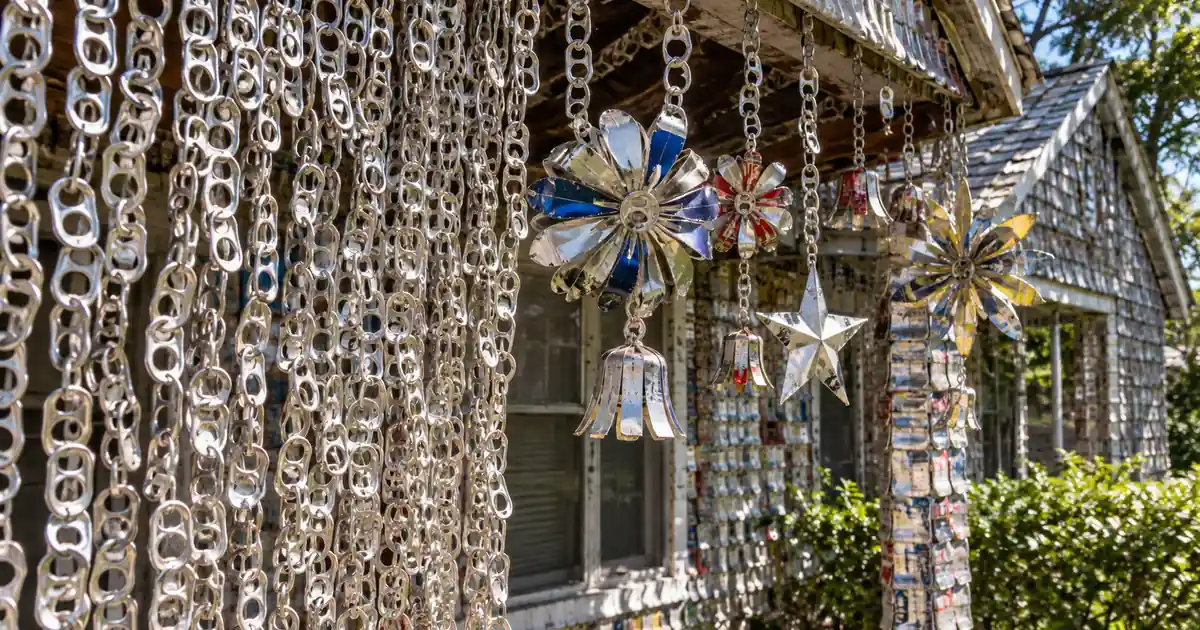
- Aluminum Wind Chimes: Long strings of interconnected pull tabs hang from roof eaves, creating a gentle metallic rustle reminiscent of bamboo chimes whenever Gulf breezes sweep across the yard.
- Beer Bottle Fences: Mortared borders constructed from upright brown and green glass beer bottles that catch morning sunlight like stained glass.
- Interior Visitor Gallery: The interior museum displays Milkovisch’s handmade can-flattening jigs, vintage family photographs, and oral history recordings from his late wife, Mary.
Visitors can view the exterior from the public sidewalk at any time. To walk into the backyard patio and interior rooms, visit during weekend open hours ($5 admission; free for children 12 and under).
The Orange Show Monument: Jeff McKissack’s Fruit Tribute
Across town at 2402 Munger Street in Houston’s historic East End stands The Orange Show Monument. Built single-handedly over 23 years by former US postal worker Jefferson Davis McKissack between 1956 and 1979, the monument serves as an elaborate homage to the orange, which McKissack believed held the secret to human longevity and physical stamina.
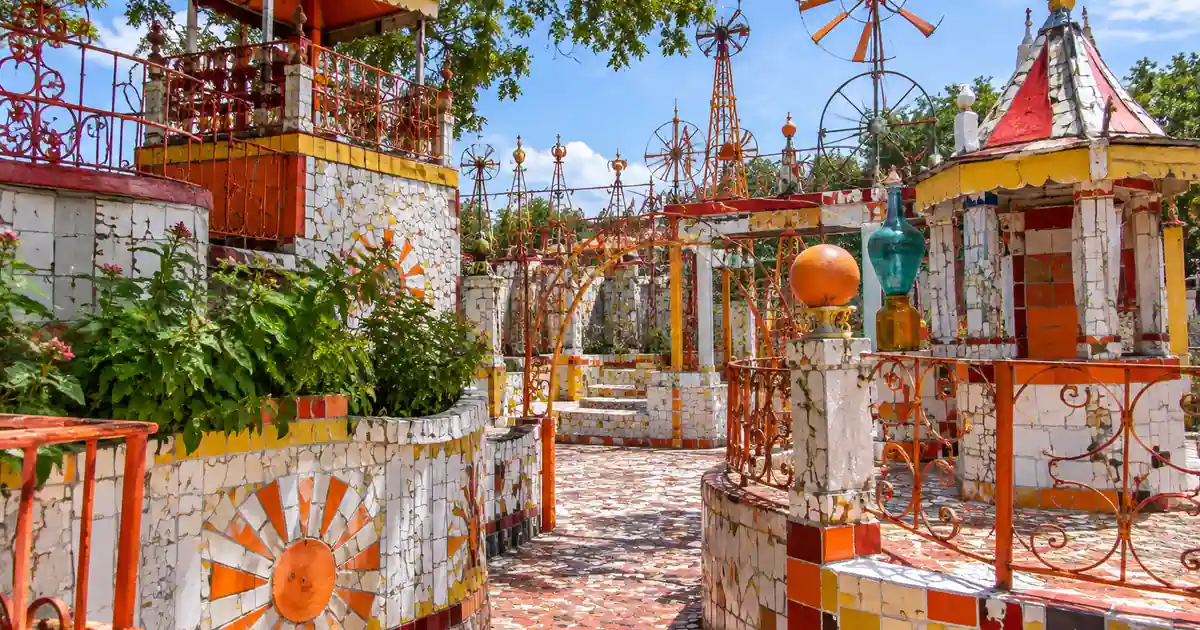
Using salvaged building supplies scavenged from demolished Houston hotels, junk yards, and industrial scrap yards, McKissack welded a sprawling folk labyrinth featuring:
- Narrow elevated catwalks and spiral observation decks.
- Iron tractor seats, circus bunting, and ornamental awnings.
- An amphitheater with colorful hand-painted banners.
- Wishing wells, water wheels, and steam engine artifacts.
Upon McKissack’s death in 1980, local arts patron Marilyn Oshman organized 21 civic leaders, including members of the rock band ZZ Top, to purchase and preserve the monument, founding The Orange Show Foundation.
Smither Park: Community Mosaics and Folk Sculpture
Directly adjacent to The Orange Show at 2441 Munger Street, Smither Park transforms visionary folk art into a living community gathering place. Conceived by Stephanie Smither in memory of her late husband John H. Smither, the park was designed by visionary builder Dan Phillips.
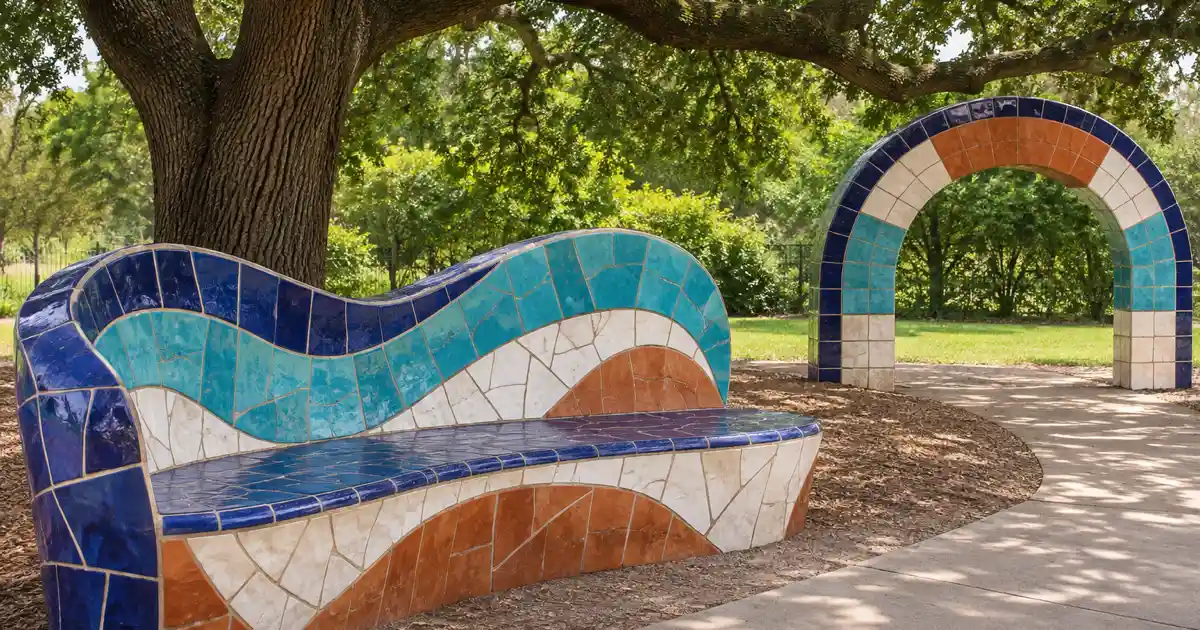
Over 400 Houston artists, schoolchildren, and neighbors have contributed hand-laid mosaic murals across the park’s structures:
- The Lindley Fish Amphitheater: An outdoor performance stage framed by the gaping jaws of a mosaic sea creature fabricated from thousands of broken CDs and iridescent tiles.
- The Memory Wall: A 400-foot curved perimeter wall featuring whimsical mosaic vignettes depicting dragons, sea turtles, Mexican sugar skulls, and Texas wildflowers.
- The Marble Tower & Swings: Interactive swing sets and picnic pavilions surrounded by repurposed recycled glass bottles and polished stone tiles.
Smither Park is open to the public daily at zero cost, making it an idyllic picnic destination before or after touring the adjacent monument.
Tickets, Operating Hours, and Visiting Logistics
Managing your visit across both neighborhoods requires noting their weekend operating windows and seasonal volunteer schedules:
- Beer Can House: Open Saturdays and Sundays from 1:00 PM to 5:00 PM. Admission is $5 for adults; free for children 12 and under. Tickets can be purchased at the front gate or online via The Orange Show Center for Visionary Art Official Portal.
- The Orange Show Monument: Open Saturdays and Sundays from 10:00 AM to 4:00 PM. Admission is $5 for adults.
- Smither Park: Open daily Monday through Sunday from sunrise to sunset. Admission is completely free ($0).
- Neighborhood Parking: Both locations feature free, plentiful curbside street parking. Malone Street offers curbside parking for the Beer Can House, while Munger Street provides direct parking for The Orange Show and Smither Park.
- Weather Advisory: Because all three folk art environments are largely open-air outdoor installations, visits may be suspended during heavy rainstorms or severe thunderstorm warnings. Check social media updates before driving across town on stormy afternoons.
The Annual Houston Art Car Parade Connection
The Orange Show Center for Visionary Art is also the driving engine behind one of Texas’s most iconic civic celebrations: the Houston Art Car Parade.
Held annually every April along Allen Parkway, the parade draws over 250,000 spectators along downtown boulevards. Attendees marvel at more than 250 custom-decorated, street-legal vehicles covered in everything from faux fur and neon tubes to welded scrap iron, broken stained glass, and kitchen utensils.
Touring these permanent folk art landmarks provides essential historical context for why Houston earned its reputation as the visionary art car capital of the world. McKissack and Milkovisch demonstrated that ordinary recycled materials could produce awe-inspiring sculpture, directly inspiring generations of Houston art car artists. Learn more about event schedules, prime bleacher seating, and route maps in our guide to the Houston Art Car Parade.
How to Plan a Houston Folk Art Day Trip
To experience Houston’s quirky outsider creativity in a single relaxed afternoon:
- Morning (10:30 AM): Arrive in the East End and explore The Orange Show Monument ($5 entry) to climb McKissack’s iron catwalks.
- Midday (11:45 AM): Walk next door into Smither Park (free) to inspect the intricate mosaic wall panels and enjoy a picnic lunch under the pavilion.
- Afternoon Drive (1:15 PM): Take I-45 North to I-10 West (a 15-minute cross-town drive) to the Rice Military neighborhood.
- Afternoon (1:45 PM): Tour the Beer Can House ($5 entry) to listen to the aluminum wind chimes and examine Milkovisch’s masonry work.
- Cultural Finale (3:30 PM): Drive five minutes south into the Houston Museum District or catch sunset at James Turrell’s Twilight Epiphany Skyspace.
Frequently Asked Questions About Houston Folk Art
How many beer cans are on the Beer Can House?
An estimated 50,000 aluminum beer cans, pull tabs, and glass bottles cover the exterior siding, fences, patio mosaics, and dangling wind-chime curtains.
Is the Beer Can House free to view from the street?
Yes, the exterior facade and aluminum pull-tab curtains are viewable from the public sidewalk 24 hours a day at zero cost. Entering the grounds costs $5 on weekends.
What is The Orange Show Monument?
Built between 1956 and 1979 by postal worker Jeff McKissack, it is an eclectic 3,000-square-foot architectural labyrinth celebrating his favorite fruit, the orange.
Is Smither Park free to enter?
Yes, Smither Park is an open public green space adjoining The Orange Show in Houston’s East End, accessible daily from sunrise to sunset with free admission.
Who operates and preserves these folk art sites?
All three environments are preserved and maintained by The Orange Show Center for Visionary Art, the non-profit organization that also produces the Houston Art Car Parade.
Where do you park when visiting these sites?
Both locations offer free neighborhood curbside street parking. Malone Street serves the Beer Can House, while Munger Street provides parking for The Orange Show and Smither Park.