
Key takeaways
- Heard Natural Science Museum & Wildlife Sanctuary in McKinney spans 289 protected acres featuring 6.5 miles of self-guided hiking trails through native Texas habitats.
- General admission costs $16 for adults, $14 for seniors (60+), $12 for children ages 3 to 12, and is free for children under 3 and museum members.
- The sanctuary operates Tuesday through Saturday from 9:00 AM to 5:00 PM and Sunday from 1:00 PM to 5:00 PM, with admissions ending at 4:00 PM (closed Mondays).
- Dinosaurs Live! runs seasonally from late September through early March, featuring life-size animatronic dinosaurs along a half-mile nature trail at no added charge.
- Domestic dogs and bicycles are strictly prohibited to protect ground-nesting birds, native reptiles, and fragile Blackland prairie ecosystems.
Plan your visit
Verified
- Location
- 1 Nature Place, McKinney, TX 75069
- Hours
- Tue-Sat 9 AM - 5 PM, Sun 1 PM - 5 PM (Last entry 4 PM, Closed Mon)
- Admission
- Adults $16, Seniors $14, Children $12, Under 3 Free
- Best time to go
- Morning hours for active wildlife and cooler trail temperatures
What to Expect at Heard Natural Science Museum & Wildlife Sanctuary
The Heard Natural Science Museum & Wildlife Sanctuary in McKinney stands as one of the largest privately funded, non-profit ecological reserves in the Dallas-Fort Worth metroplex. Encompassing 289 acres of protected land in south McKinney along State Highway 5, the preserve protects five distinct Texas ecological zones: Blackland prairie, bottomland hardwood forest, limestone bluffs, wetlands, and open water marshes.
Unlike municipal recreation parks designed for sports leagues, playgrounds, and paved bicycle loops, the Heard functions strictly as an educational sanctuary dedicated to conservation and environmental literacy. Visitors exchange urban traffic for winding woodland trails, birding observation platforms, and hands-on geology collections.
If you enjoy exploring preserved greenbelts like Arbor Hills Nature Preserve in Plano, the Heard provides a wilder, more educational experience where ecological restoration takes priority over recreational biking or dog walking.
The Legacy of Bessie Heard and Conservation Mission
The sanctuary was established in 1967 by Miss Bessie Heard, a devoted naturalist, educator, and philanthropist who founded the organization at the age of 80. Deeply concerned by rapid post-war urban expansion consuming North Texas prairie lands, Miss Heard purchased the acreage to safeguard native flora and fauna for future generations.
Her original vision emphasized environmental stewardship, youth outdoor education, and scientific research. Today, the non-profit sanctuary welcomes tens of thousands of students, researchers, and travelers each year. For field trip organizers Collin County educators frequently rely on the on-site science labs and outdoor study programs to meet Texas science curriculum goals.
Through cooperative programs with regional conservation organizations and the Texas Master Naturalist program supported by the Texas Parks and Wildlife Department, the sanctuary continues active prairie conservation across the Woodfin Restoration Prairie, preserving native big bluestem and indiangrass stands.
Campus Layout and Diverse Texas Ecosystems
The sanctuary property is arranged into clearly defined functional zones:
- Main Museum Complex: Houses indoor classrooms, native reptile vivariums, the gem and mineral gallery, prehistoric fossil hall, and the museum gift shop.
- Native Plant Gardens & Butterfly House: Located immediately behind the main building, showcasing drought-tolerant Texas perennials and native pollination gardens.
- The Trailheads: Multiple marked natural-surface paths branch directly from the museum grounds into deep hardwood forests and wetland basins.
- Pioneer Village: A collection of small-scale historic prairie structures near the education pavilion, designed for interactive children’s play.
- Outdoor Picnic Pavilions: Shaded tables situated near the parking area for visitors who pack outdoor lunches before hitting the trails.
| Sanctuary Attribute | Specification & Detail |
|---|---|
| Address | 1 Nature Place, McKinney, TX 75069 |
| Total Protected Land | 289 Contiguous Acres |
| Trail System | 6.5 Miles of Self-Guided Dirt & Boardwalk Paths |
| Signature Habitats | Blackland Prairie, Hardwood Bottomland, Marsh Wetlands |
| Public Operating Days | Tuesday through Sunday (Closed Mondays) |
| Primary Focus | Ecological Conservation, Wildlife Education, Nature Trails |
| County / Region | Collin County, North Texas |
Admission Pricing, Operating Hours, and Ticket Policies
Visiting the Heard Museum is straightforward, with a single admission fee covering both indoor museum galleries and all 289 acres of outdoor sanctuary trails. Planning your visit around scheduled operating hours prevents arrival after afternoon gate cutoffs, making it easy to pair with the historic square restaurants featured in our guide to the best things to do in McKinney.
General Admission Rates and Member Privileges
Daily tickets can be purchased at the indoor admissions counter upon arrival or pre-booked online through the museum website. General admission rates are structured by age bracket:
- Adults (Ages 13 to 59): $16 per person
- Seniors (Ages 60 and older): $14 per person
- Children (Ages 3 to 12): $12 per person
- Infants and Toddlers (Ages 2 and under): Free admission
- Heard Museum Members: Free unlimited daily admission
Annual memberships offer excellent value for local North Texas families, paying for themselves in just three visits. Membership tiers include reciprocal privileges at hundreds of science centers across North America through the Association of Science and Technology Centers (ASTC) Travel Passport Program.
Hours, Seasonal Schedules, and Last Entry Rules
The sanctuary maintains consistent operating hours throughout the year, with standard public schedules open Tuesday through Saturday 9am to 5pm:
- Tuesday through Saturday: 9:00 AM to 5:00 PM
- Sunday: 1:00 PM to 5:00 PM
- Monday: Closed for habitat maintenance, animal husbandry, and private school group reservations.
- Last Entry Policy: To ensure all hikers exit the trail network before dusk and staff secure the grounds, admissions stop strictly at 4:00 PM each day. Guests are not permitted to begin hiking trails after 4:00 PM.
Note
Outdoor trails may close temporarily after severe rainstorms or severe winter weather events to prevent soil erosion and protect hiker safety along slippery limestone riverbanks. Check the museum website for same-day trail status alerts.
| Visitor Group | Ticket Rate | Included Amenities |
|---|---|---|
| Adults (13-59) | $16 | Full indoor exhibits, trails, and Dinosaurs Live! |
| Seniors (60+) | $14 | Full indoor exhibits, trails, and Dinosaurs Live! |
| Children (3-12) | $12 | Full indoor exhibits, trails, and Dinosaurs Live! |
| Toddlers (0-2) | Free | Full grounds access with paid adult |
| Members | Free | Year-round access plus ASTC reciprocal perks |
Signature Attractions: Dinosaurs Live! and Seasonal Exhibits
While the sanctuary’s 6.5 miles of trails attract naturalists year-round, seasonal programming and rotating exhibits draw thousands of young families to the McKinney property.
Parents planning outdoor family adventures often balance natural exhibits with modern entertainment, pairing a visit to the Heard with the immersive lands being developed at Universal Kids Resort in Frisco just 20 minutes to the west.
Dinosaurs Live! Life-Size Animatronics and Fossil Dig
Every autumn and winter, the sanctuary hosts its flagship seasonal event: Dinosaurs Live! Life-Size Animatronic Dinosaurs. The exhibit runs from late September through early March along a shaded half-mile loop through the nature trail.
Rather than standing in a sterile indoor hall, the animatronic dinosaurs are positioned among real cedar trees, hardwood branches, and forest ferns. The life-size models move their heads, blink their eyes, open their jaws, and emit realistic vocal roars triggered by motion sensors as guests approach.
Signature creatures on display typically include:
- A 46-foot Tyrannosaurus Rex towering over the canopy.
- A massive Spinosaurus positioned near woodland underbrush.
- Herbivores like Triceratops, Stegosaurus, and Parasaurolophus.
- A hands-on outdoor fossil dig quarry where children use brushes to uncover replica dinosaur bones buried in clean sand.
Admission to Dinosaurs Live! is completely included with standard general museum tickets, making it one of the best entertainment values in North Texas.
Sensory-Friendly Dinosaurs Quiet Mornings
For children and adults with autism spectrum disorders, sensory processing sensitivities, or young toddlers who find roaring sounds intimidating, the Heard hosts dedicated Dinosaurs Quiet hours.
Scheduled on the second Saturday morning of each month during the exhibit run, the sound and motion mechanisms on all animatronics are turned off. Guests enjoy the visual majesty of the full-scale dinosaurs in a peaceful woodland setting without startling noises or abrupt movements.
Native Texas Butterfly House & Garden (May to October)
From mid-May through early October, the Native Texas Butterfly House opens behind the main science facility. Unlike tropical butterfly houses that import exotic species from South America or Asia, this open-air screened habitat focuses exclusively on native Texas lepidoptera.
Visitors can walk among hundreds of free-flying native butterflies, including Monarchs, Gulf Fritillaries, Eastern Tiger Swallowtails, and Black Swallowtails. Surrounding host plants and nectar stations provide close-up looks at butterfly lifecycles from caterpillar larvae to chrysalis cocoons.
Outside the screened enclosure, the Native Plant Garden provides inspiration for homeowners interested in water-smart Texas landscaping that supports native pollinators, songbirds, and hummingbirds.
Indoor Science Museum, Minerals, and Live Animals
The indoor science museum provides an air-conditioned retreat during warm summer afternoons. Inside, guests can explore permanent natural science galleries:
- Live Animal Exhibits: Up-close encounters with native non-releasable wildlife, including venomous and non-venomous Texas snakes, box turtles, amphibians, and nocturnal owls cared for by licensed staff.
- Gem and Mineral Gallery: An impressive collection of rare geodes, fluorescent minerals that glow under ultraviolet light, and carved gemstones.
- Marine and Prairie Fossil Exhibits: Marine fossils highlighting Texas’s prehistoric past as an ancient inland sea, featuring Mosasaur fragments, ammonites, and mammoth teeth found in regional creek beds.
| Exhibit Name | Typical Season | Location | Focus |
|---|---|---|---|
| Dinosaurs Live! | Late Sep – Early Mar | Woodland Nature Trail | Animatronic dinosaurs and fossil dig |
| Butterfly House | Mid-May – Early Oct | Screened Outdoor House | Native Texas butterfly species |
| Indoor Reptile Room | Year-Round | Main Science Center | Native Texas snakes and reptiles |
| Pioneer Village | Year-Round | Outdoor Learning Quad | Miniature 1800s prairie playhouses |
| Mineral Hall | Year-Round | Science Center Gallery | Fluorescent minerals and rare gemstones |
Hiking Trails, Wetland Boardwalk, and Wildlife Viewing
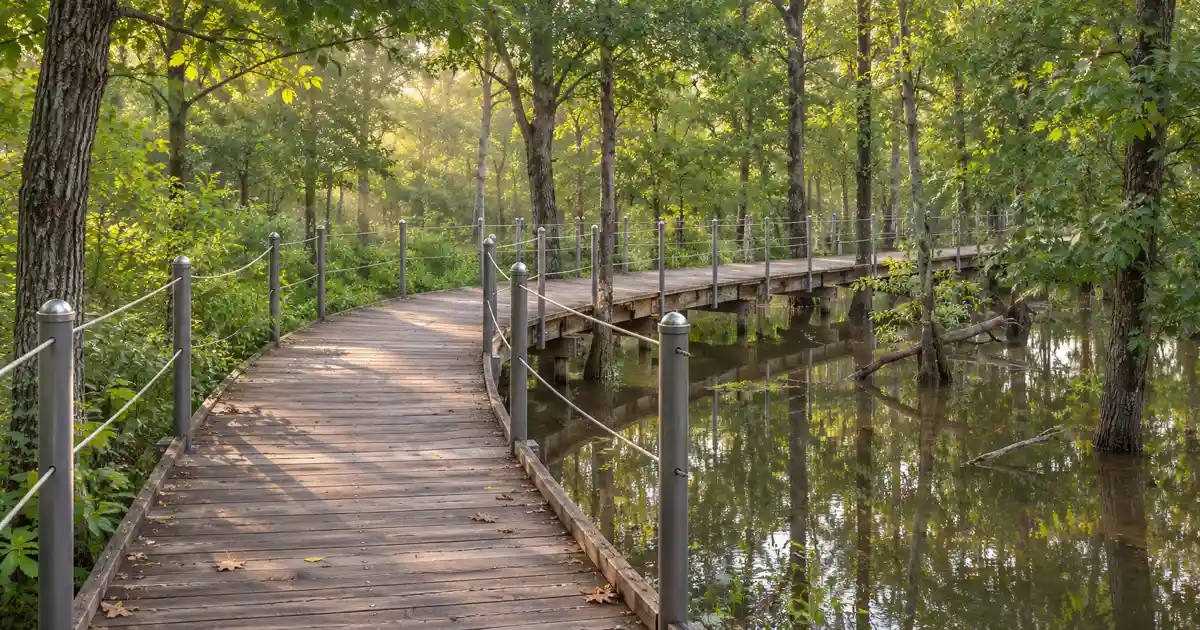
The heart of the Heard Sanctuary is its 6.5-mile network of self-guided nature trails. The paths guide visitors through diverse ecosystems, providing an immersive natural experience within Collin County.
Families building a comprehensive itinerary can combine a morning hike at the Heard with afternoon interactive museums highlighted in our guide to things to do in Frisco with kids.
The Wetland Boardwalk and Birdwatching Hotspots
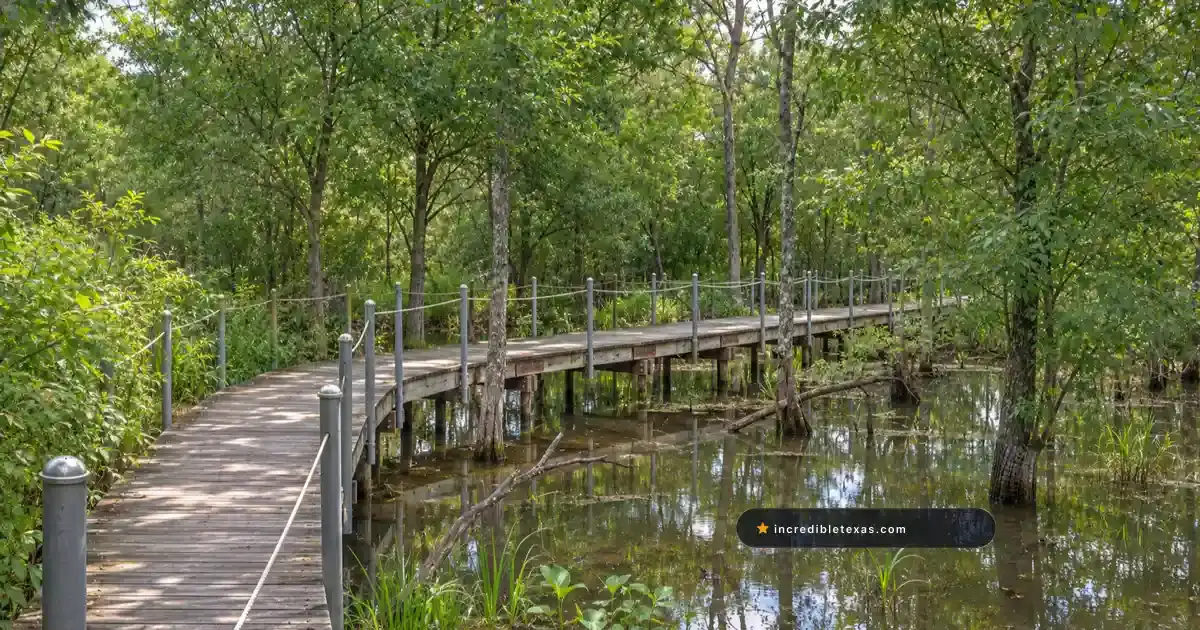
The crown jewel of the trail system is the Wetland Boardwalk, an elevated wooden boardwalk that crosses directly over the open waters and marshes of the preserve. The structure allows visitors to walk above the wetland canopy without disturbing sensitive aquatic habitats.
From the boardwalk, hikers frequently observe:
- Great blue herons, snowy egrets, and green herons wading among lily pads.
- Red-eared slider turtles basking in rows along submerged logs.
- Sunfish and catfish swimming in clear marsh pools.
- Seasonal migratory waterfowl, including wood ducks, mallards, and teal resting on North Texas flyways.
Strategically placed observation blinds feature identification placards detailing native wetland species. For birdwatchers Dallas Audubon members frequently document rare songbirds here, while nature photographers capture morning reflections of wading herons across the calm marsh waters.
Wood Duck Trail, Hoot Owl Trail, and Cedar Brake
The sanctuary paths accommodate a range of hiking abilities and time budgets:
- Wood Duck Trail (0.4 Miles): A gentle, level gravel loop connecting the museum grounds to the wetland boardwalk, making it the most accessible and popular route for families with small children.
- Hoot Owl Trail (0.5 Miles): Wends through dense cedar elm and oak woodlands, offering shaded walking conditions and frequent sightings of woodland songbirds, woodpeckers, and cottontail rabbits.
- Cedar Brake Trail (0.6 Miles): Climbs across limestone ridges and rocky outcroppings, showcasing native red cedars, juniper glades, and panoramic views of the creek valleys below.
- Sycamore Trail (0.9 Miles) & Laughlin Loop (1.0 Mile): The longest routes on property, leading deep into the sanctuary interior along Wilson Creek bottomlands. These unpaved, natural-surface trails feature dirt paths, tree roots, and mild incline changes, delivering a true backcountry hiking feel.
Pioneer Village and Prairie Playhouses for Children
Positioned along the edge of the woodland trail is Pioneer Village, an outdoor attraction consisting of miniature, child-sized historic buildings. Representing a 19th-century Texas prairie settlement, the village features:
- A one-room schoolhouse with child-scale benches and chalkboards.
- A miniature general store, doctor’s office, and pioneer cabin.
- Safe, open-air wooden play structures where young children can climb, explore, and role-play early pioneer life.
The village provides a welcome rest point for parents while children expend energy before continuing onto longer forested paths.
| Trail Name | Distance | Surface Type | Difficulty & Terrain | Key Highlights |
|---|---|---|---|---|
| Wetland Boardwalk | 0.3 Miles | Elevated Wood | Easy / Level | Heron sightings, turtles, open marsh views |
| Wood Duck Trail | 0.4 Miles | Crushed Gravel | Easy / Flat | Quick wetland access, suitable for strollers |
| Hoot Owl Trail | 0.5 Miles | Dirt & Packed Soil | Easy / Shaded | Dense hardwood canopy, songbird habitat |
| Cedar Brake Trail | 0.6 Miles | Rocky Limestone | Moderate / Uneven | Limestone ledges, native juniper woodlands |
| Laughlin Loop | 1.0 Mile | Natural Dirt / Roots | Moderate / Rolling | Deep forest interior, quiet solitude |
Essential Visitor Rules, Gear, and Planning Tips
Because the Heard is a working wildlife sanctuary and ecological reserve rather than a city recreation park, specific rules protect both visitors and the fragile ecosystems.
After a morning on the trails, many visitors head west across town to relax at the waterfront cafes and cobblestone avenues detailed in our guide to Adriatica Village in McKinney.
Strict Pet Policy: Why Dogs Are Prohibited
One of the most important regulations for visitors to understand is the strict ban on domestic pets:
Caution
Domestic pets, including dogs of any breed on leashes, are strictly prohibited across all 289 acres of the Heard Sanctuary. Leaving pets inside parked vehicles is illegal and dangerous in the Texas heat.
This policy protects native wildlife. Scent markers from domestic canines distress ground-nesting birds, rabbits, white-tailed deer, and native bobcats that inhabit the preserve. Additionally, venomous copperhead snakes and wild animals inhabit the sanctuary, posing a safety threat to curious pets. Only trained, certified service dogs performing active medical or physical assistance are permitted.
Stroller Accessibility and Trail Surfaces
Families visiting with infants and toddlers should plan their gear carefully:
- Boardwalks and Gravel Paths: The indoor museum galleries, paved courtyards, and Wood Duck Trail to the Wetland Boardwalk accommodate standard umbrella strollers and manual wheelchairs.
- Forest Trails: The outer paths (Sycamore, Cedar Brake, and Laughlin Loop) consist of natural dirt paths crisscrossed by large tree roots, loose limestone rocks, and narrow footbridges. Lightweight strollers will struggle or sustain damage.
- Recommended Gear: A sturdy, all-terrain jogger stroller with large rubber pneumatic tires or a wearable ergonomic baby carrier backpack provides the best mobility across natural terrain.
Picnic Areas, Hydration, and Heat Safety
Proper hydration and sun protection ensure a safe, comfortable outing in the Texas climate:
- Picnic Grounds: Outside meals and packed lunches may be consumed at outdoor picnic tables located near the front pavilion and parking lot. Food, coolers, and sugary beverages are not permitted on the nature trails to prevent litter and avoid attracting wildlife.
- Water Hydration: Drinking water stations are available inside the main museum building. Hikers should carry refillable water bottles on the trail, especially between May and September when temperatures frequently exceed 90 degrees Fahrenheit.
- Trail Footwear: Closed-toe walking shoes or hiking sneakers are strongly advised. Sandals and open-toed shoes leave feet vulnerable to trail roots, thorns, poison ivy, and limestone scrapes.
- Insect and Sun Defense: Apply insect repellent and sunscreen before leaving the main building. Chiggers and ticks can be present in tall prairie grasses during warmer months.
For seasonal program registrations and special event schedules, travelers can explore the Heard Natural Science Museum official portal and tourism guides from Visit McKinney. Conservation details and wildlife trail overviews are maintained through the Texas Parks and Wildlife Department education resources.
Frequently Asked Questions About Heard Natural Science Museum
What is included with general admission tickets?
General admission includes full access to the 289-acre wildlife sanctuary, 6.5 miles of nature trails, the indoor natural science museum, native gardens, and seasonal exhibits like Dinosaurs Live!
When does Dinosaurs Live! run at the sanctuary?
The animatronic Dinosaurs Live! exhibit runs seasonally from late September through early March along a shaded half-mile woodland trail, included at no extra charge with general admission.
Are dogs allowed on the wildlife trails?
No, pets and domestic dogs are strictly prohibited across the sanctuary to safeguard wild animals and nesting birds. Only trained ADA service animals are permitted on property.
How long are the hiking trails at the sanctuary?
The sanctuary features 6.5 miles of connected natural-surface trails ranging from short quarter-mile wetland boardwalk loops to the longer one-mile Sycamore and Laughlin loops.
Are strollers permitted on the hiking paths?
Strollers are permitted, but standard lightweight umbrella strollers struggle on natural dirt paths, roots, and crushed limestone. Heavy-duty all-terrain strollers or child carriers are recommended.
Can visitors bring picnics and outside food?
Outside food and drinks are welcome at outdoor picnic tables located outside the museum entrance, but food and open drink containers are prohibited along trail networks and inside exhibit galleries.